
Kitefoil racing is all about knowing the rules, courses, and gear. Make sure you understand the race layout and familiarize yourself with the start and finish lines. Safety gear like life jackets and helmets is mandatory, and your kite and board should match your skill level. Wind conditions play a huge role in your performance, so adjust your technique accordingly. There’s much more to explore on mastering your game in kitefoil racing.
Key Takeaways
- Familiarize yourself with the racing course layout, including start and finish lines, and waypoints for navigation.
- Adhere to safety regulations by using mandatory gear like life jackets, helmets, and impact vests.
- Choose high-quality gear that suits your skill level and racing style to enhance performance and safety.
- Monitor wind conditions, aiming for 10 to 25 knots, and adjust your kite and technique accordingly.
- Develop a strategic plan based on the course and wind forecasts to improve your racing performance.

Have you ever wondered what it feels like to race above the water, harnessing the power of the wind? Kitefoil racing offers that exhilarating experience, combining speed, skill, and strategy as you glide and soar over the waves. To truly enjoy this thrilling sport, you’ll want to familiarize yourself with the rules, courses, and gear necessary for success.
Understanding wind conditions is essential for kitefoil racing. The right wind can make all the difference, allowing you to maximize your speed and maneuverability. You’ll want to pay close attention to the forecast, as too little or too much wind can hinder your performance. Ideal wind conditions typically range from 10 to 25 knots, providing just enough lift for your foil to rise above the water. Learning how to read the wind can give you a competitive edge, allowing you to adjust your kite and technique according to the conditions you’re facing.
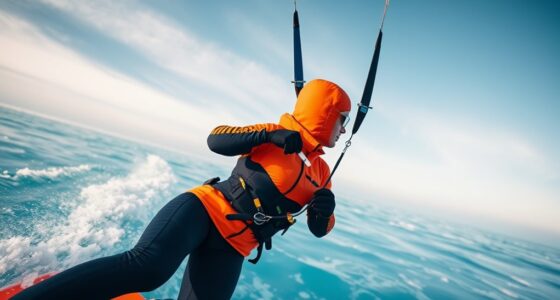
Safety regulations are another critical aspect of kitefoil racing. Before you hit the water, familiarize yourself with the safety guidelines set by the governing bodies of the sport. These regulations are designed to protect you and others around you. Always wear a life jacket, helmet, and impact vest, as they can considerably reduce the risk of injury. Additionally, make sure your gear is in good condition and suitable for your skill level. Taking the time to check your equipment can help you avoid accidents and guarantee a safe racing experience.
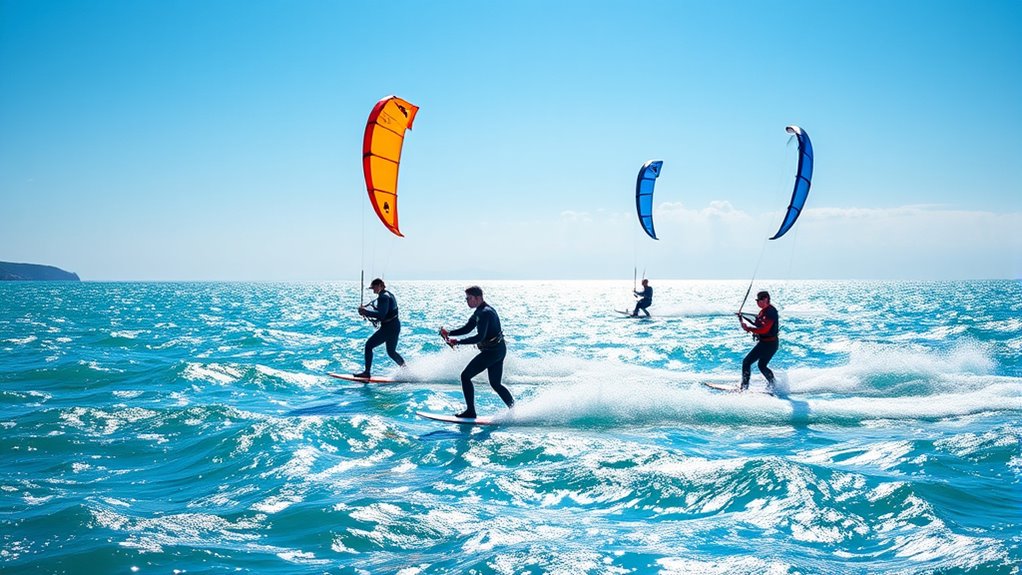
When it comes to racing courses, you’ll find that they can vary dramatically based on the event. Some races are held in open water, while others take place in sheltered bays or lagoons. Familiarizing yourself with the course layout and any specific rules for that particular event is essential. You’ll need to understand the start and finish lines, as well as any waypoints you must navigate during the race. Developing a strategic plan based on the course can give you a notable advantage, allowing you to optimize your speed and efficiency.
Finally, don’t forget about your gear. A high-quality kite, board, and foil can make all the difference in your performance. Invest in gear that fits your style and skill level, and don’t hesitate to seek advice from experienced racers. Taking safety precautions is an essential part of kitefoil racing, ensuring both your well-being and that of fellow competitors. Kitefoil racing is an incredible adventure, and with the right preparation, you’ll be ready to conquer the water and enjoy every moment of the ride.
Frequently Asked Questions
What Is the History of Kitefoil Racing?
Kitefoil racing’s history traces back to the early 2000s when enthusiasts began experimenting with foiling technology. You’ll notice how the historical evolution of this sport coincided with significant technological advancements in kite design and hydrofoil construction. By refining materials and shapes, riders gained speed and stability on the water. As the sport matured, competitions emerged, further driving innovation and attracting a dedicated community passionate about pushing the limits of kitefoil racing.
How Do I Get Started in Kitefoil Racing?
To get started in kitefoil racing, first, you’ll want to familiarize yourself with the basics. Imagine gliding effortlessly across the water; it’s exhilarating! Begin with beginner tips: practice your kite control and balance on a regular board before shifting to the foil. When selecting equipment, choose a suitable kite and foil that matches your skill level. As you progress, you’ll feel the thrill of racing against the wind, pushing your limits.
What Are the Physical Demands of Kitefoil Racing?
Kitefoil racing demands significant core strength and cardiovascular endurance. You’ll need to engage your core to maintain balance and control while steering the water, especially during high-speed maneuvers. Your endurance is vital as races can be long and physically taxing, requiring sustained effort. As you train, focus on exercises that enhance both your core stability and your cardiovascular fitness. This’ll help you perform better and enjoy the thrill of the race.
Are There Age Restrictions for Competitors in Kitefoil Racing?
Age restrictions can vary, but you’ll generally find that competitor eligibility isn’t too strict. “You’re only as old as you feel,” and in kitefoil racing, many athletes compete from their teens into their sixties. However, it’s essential to verify the specific event rules, as some races may have minimum age requirements. So, keep an eye on those guidelines to ensure you meet the criteria and can join the thrilling competition!
How Does Weather Affect Kitefoil Racing Events?
Weather critically affects kitefoil racing events. Wind impact is vital; too little wind can halt races while too much can make them dangerous. You’ll need to adjust your technique and gear based on conditions. Temperature effects also play a role, as extreme heat can lead to fatigue and impact performance. Staying aware of the weather forecast guarantees you’re prepared to adapt your strategy and equipment for ideal racing conditions.
Conclusion
In kitefoil racing, mastering the rules, courses, and gear can make all the difference in your performance. Remember, “practice makes perfect.” The more you train and familiarize yourself with the nuances of the sport, the better you’ll become. So gear up, hit the water, and embrace the thrill of competition. With dedication and passion, you’ll find yourself soaring to new heights in no time. Get ready to ride the wind and enjoy every moment on the course!