
To improve your balance for kitefoiling, focus on core stability exercises like planks and stability ball workouts. Incorporate variations such as limb lifts to enhance your strength. Proprioception drills, like standing on one leg or using balance boards, can substantially boost your body awareness. Regularly shifting your weight front to back will help you mimic the movements on water. Keep practicing these exercises, and you’ll find even more ways to enhance your skills on the board.
Key Takeaways
- Incorporate core stability exercises like planks to strengthen abdominal muscles, enhancing overall balance during kitefoiling maneuvers.
- Utilize plank variations, including limb lifts, to progressively challenge and improve core endurance and muscle engagement.
- Perform stability ball exercises to engage stabilizing muscles and simulate the dynamic shifting experienced on water while kitefoiling.
- Practice proprioception drills, such as single-leg stands and balance board activities, to heighten body awareness and improve balance control.
- Regularly dedicate time to balance board exercises, focusing on weight shifts and dynamic movements to enhance stability on the water.
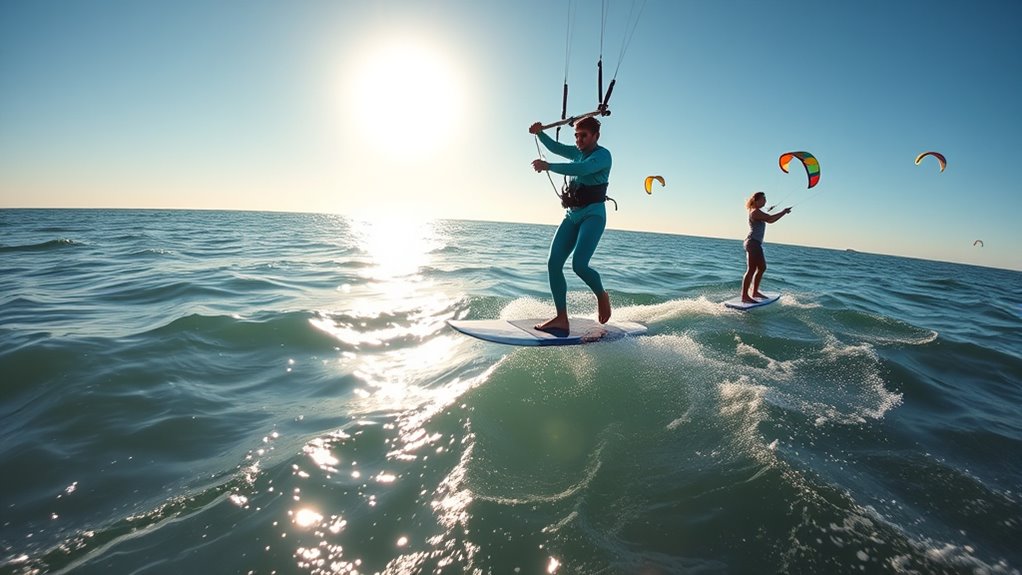
When you’re kitefoiling, maintaining balance is vital for both performance and safety. Your ability to stay upright on the board while controlling the kite can make or break your experience on the water. To enhance your balance, you’ll want to focus on core stability and engage in proprioception drills. These exercises not only improve your overall balance but also help develop the muscles that support your movements while kitefoiling.
Start with basic core stability exercises. A strong core acts as your foundation, allowing you to maintain control over your body as you maneuver through the wind and waves. Planks are a great place to begin. Position yourself in a plank stance, keeping your body straight from head to heels. Hold this position for 30 seconds to a minute, focusing on engaging your abdominal muscles. You can increase difficulty by lifting one leg or arm at a time while maintaining your balance.
Start your balance training with planks to strengthen your core and enhance control while kitefoiling.
Next, incorporate stability balls into your workout. Try performing push-ups or seated exercises on the ball. This forces your body to engage stabilizing muscles, enhancing your balance as you adapt to the shifting surface. It’s vital to make these exercises a routine part of your training, as they directly contribute to your performance on the water.
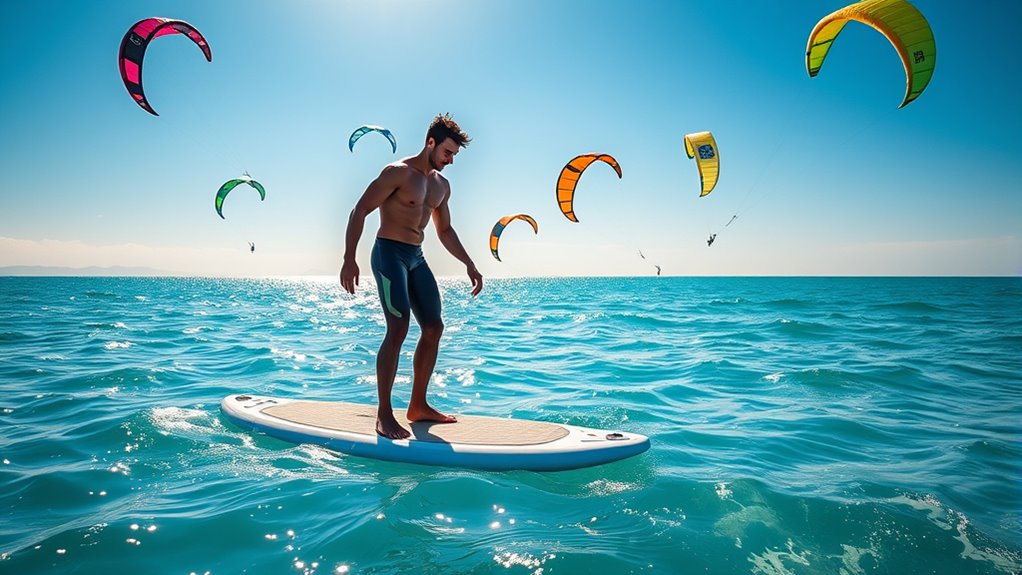
Proprioception drills are another key component to improving your balance. These drills help train your body’s awareness of its position in space, which is essential when kitefoiling. Simple exercises like standing on one leg can be incredibly effective. Start by standing on a flat surface, then lift one leg off the ground. Challenge yourself by closing your eyes or standing on an unstable surface like a balance board. This will force your body to recruit more stabilizing muscles, ultimately enhancing your balance.
Another fun proprioception drill involves using a balance board. Spend time shifting your weight from front to back and side to side. As you get comfortable, try to perform small movements like squats or reaching for an object while maintaining your balance. These activities mimic the shifting weight you’ll experience while kitefoiling.
Combining core stability exercises with proprioception drills will help you build a solid foundation. As you dedicate time to these workouts, you’ll notice improvements in your balance on the water. Not only will your performance enhance, but your overall safety while kitefoiling will also benefit greatly. Additionally, incorporating protective styling benefits into your training routine can further enhance your overall performance. So get out there, practice consistently, and enjoy the thrill of kitefoiling with newfound confidence.
Frequently Asked Questions
What Equipment Do I Need for Kitefoiling Training?
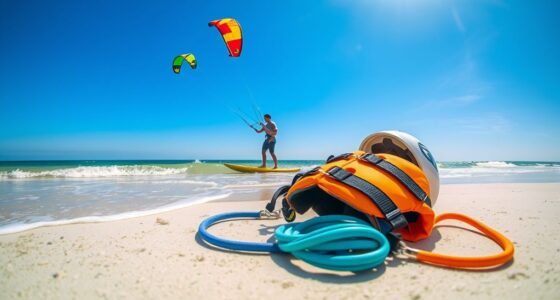
For kitefoiling training, you’ll need a few essential pieces of equipment. Start with a quality kite and board designed for foiling. Don’t forget a harness and a safety leash. To enhance your balance, incorporate balance drills into your practice, using equipment like a balance board or wobble cushion. When it comes to equipment selection, make sure everything fits your skill level and conditions to guarantee a safe and effective training experience.
How Long Does It Take to Learn Kitefoiling?
Learning kitefoiling can take anywhere from a few days to several weeks, depending on your prior experience and commitment. You’ll need to practice balance drills and core strengthening exercises to build stability on the board. If you’re consistent and take lessons, you might find yourself riding confidently within a couple of weeks. So, get out there, stay patient, and focus on improving your skills—you’ll be foiling before you know it!
Can I Kitefoil in Any Weather Conditions?
You can’t kitefoil in just any weather conditions, despite what your adventurous spirit might tell you! Strong winds and stormy skies can turn your thrill ride into a disaster. Kitefoil limitations come into play when the wind is too light or too strong; both can hinder your progress and safety. It’s essential to check forecasts and conditions before heading out, ensuring you enjoy your time on the water without unnecessary risks.
What Safety Gear Should I Use While Kitefoiling?
When you kitefoil, you should wear protective clothing like a wetsuit or impact vest to shield yourself from potential falls and the elements. Don’t forget your helmet for head protection and safety glasses for your eyes. Additionally, carry emergency signaling devices, such as a whistle or flares, to alert others if you encounter trouble. Ensuring you have the right safety gear will help keep you secure and prepared for unexpected situations on the water.
Is Kitefoiling Suitable for Beginners?
Absolutely, kitefoiling can be suitable for beginners! In fact, studies show that about 30% of new kiteboarders take to the water successfully within their first session. To help you get started, focus on balance drills and core strengthening exercises. These will enhance your stability on the board and make learning easier. With the right mindset and practice, you’ll find yourself gliding over the water in no time!
Conclusion
Improving your balance for kitefoiling can really enhance your overall performance on the water. Did you know that studies show over 80% of kiteboarders attribute their success to balance training? By incorporating these exercises into your routine, you’ll not only boost your stability but also enjoy a more thrilling ride. So, get out there, practice consistently, and watch your skills soar as you master the art of kitefoiling!