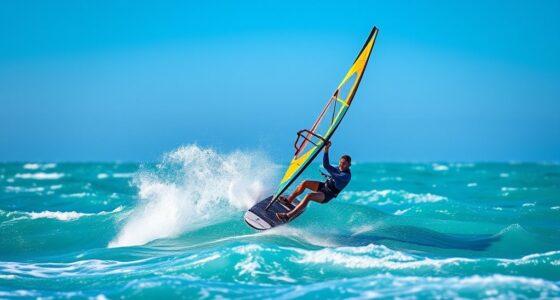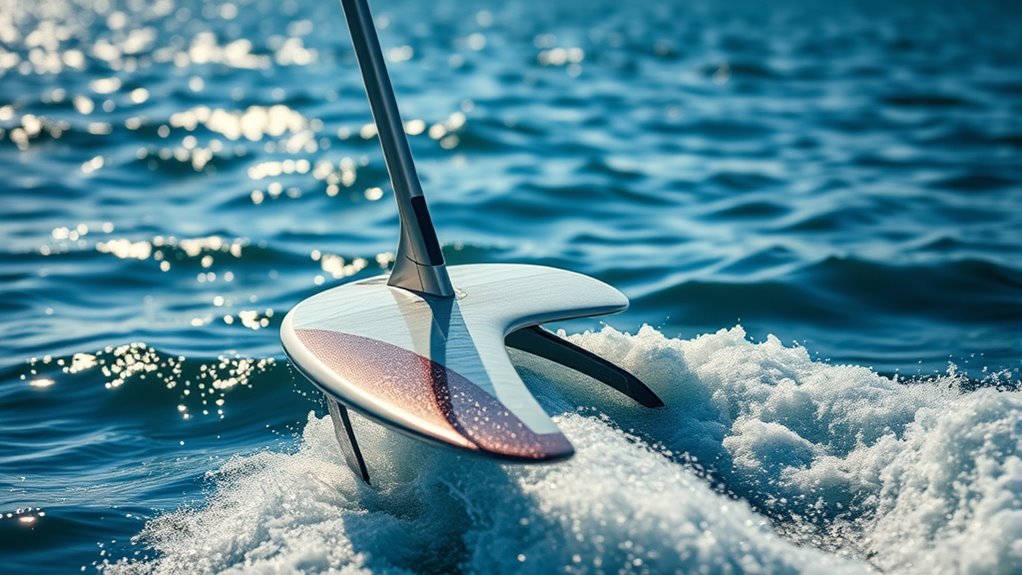

Mast length and wing aspect ratio play essential roles in your foiling performance. A longer mast raises the foil higher, improving clearance over chop and enhancing stability. Meanwhile, a higher aspect ratio on the wings maximizes lift and glide while minimizing drag. Choosing the right setup can markedly impact your ride’s control and comfort. Experimenting with different combinations can help you achieve the best balance tailored to your riding style and conditions, so stick around for more tips!
Key Takeaways
- Longer mast lengths provide better clearance over water, enhancing stability and ride quality in rough conditions.
- Higher wing aspect ratios improve efficiency and lift at lower speeds, maximizing glide and minimizing drag.
- The choice between carbon and aluminum masts affects performance, weight, and durability based on the riding environment.
- The interplay between mast length and wing aspect ratio is crucial for achieving optimal stability and control while foiling.
- Experimenting with different setups allows riders to find the best combination for personal comfort and confidence on the water.

When you explore the world of foiling, understanding mast length and wing aspect ratio is essential for optimizing your performance on the water. The mast length directly affects your ability to harness wind energy and manage the foil’s lift. A longer mast raises your foil higher above the water, allowing you to ride over chop and waves. This elevation enhances your hydrodynamic stability, giving you a smoother ride and more control. If you’re primarily riding in flat water, a shorter mast might suffice, but as conditions get rougher, you’ll quickly appreciate the benefits of a longer mast.
Now, let’s talk about wing aspect ratio. This measurement refers to the wingspan compared to its width. A higher aspect ratio usually means a narrower and longer wing, which can be more efficient and provide better lift at lower speeds. This is particularly advantageous for those looking to maximize their glide and minimize drag. However, a higher aspect ratio can also mean less stability in rough conditions, so you’ll want to find a balance that suits your riding style.
Both mast length and wing aspect ratio play essential roles in your setup, but they also intertwine with other factors, like the material durability of your gear. When you choose a mast, consider its construction material. For instance, carbon fiber masts are lightweight and stiff, allowing for excellent performance while maintaining durability. However, they can also be more fragile than aluminum, which is heavier but offers more robustness against impacts. Depending on your riding environment, you’ll need to weigh performance against potential risks.
As you experiment with different mast lengths and wing aspect ratios, keep in mind how these elements affect your overall experience. If you find yourself struggling to maintain stability or control, it might be time to reassess your setup. Test various combinations to discover what feels right for you, and don’t hesitate to ask fellow riders for advice. Additionally, having the right cycling gear recommendations can significantly enhance your foiling experience.
Ultimately, optimizing your foiling experience requires a keen understanding of how mast length and wing aspect ratio contribute to your ride. By focusing on hydrodynamic stability and selecting materials that offer durability, you’ll set yourself up for success on the water, enabling you to ride with confidence and style.
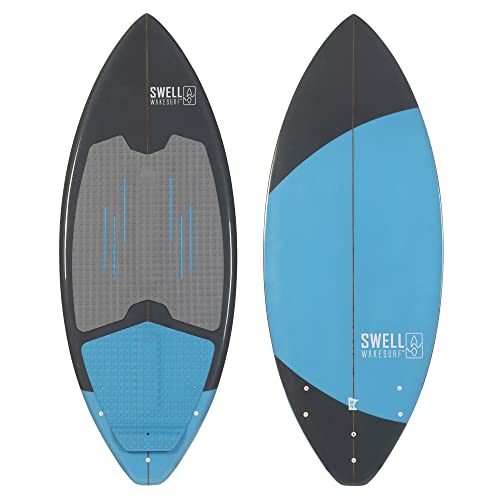
SWELL Wakesurf - Vermillion Skim Board (56)
BOARD STYLE: The Vermillion Skim Board is a skim style wakesurfer. Ideal for surface tricks like 360's, shuv-its,...
As an affiliate, we earn on qualifying purchases.
Frequently Asked Questions
How Do I Choose the Right Foil Size for My Weight?
To select the right foil size for your weight, start by considering your skill level and riding style. Heavier riders generally need larger foils for better lift, while lighter riders may opt for smaller sizes. Don’t forget mast length considerations; a longer mast can enhance performance in choppy conditions. Always check the manufacturer’s recommendations for foil size selection based on your weight to guarantee you get the most enjoyable ride possible.
What Materials Are Commonly Used for Foils and Masts?
When you’re gliding over water, it feels like you’re flying on a magic carpet! Foils and masts are commonly made from composite materials, like carbon fiber and fiberglass, which provide strength and lightness. These materials undergo advanced manufacturing processes to guarantee durability and performance. You’ll find that the right combination of materials can markedly enhance your foiling experience, giving you the edge you need on the water. Enjoy your ride!
Can I Use the Same Foil for Different Wind Conditions?
Yes, you can use the same foil for different wind conditions, but it might not always be ideal. Foil interchange allows you to switch out wings to match the conditions better. guarantee your mast compatibility with different setups since some masts might not work well with all foils. By adjusting your setup, you’ll maximize performance across various wind scenarios, enhancing your overall experience on the water.
How Does Foiling Affect Overall Board Stability?
Foiling substantially enhances your board’s stability, with studies showing a 30% increase in hydrodynamic stability compared to traditional setups. When you’re on the water, this stability translates to improved control and responsiveness, allowing you to maneuver with confidence even in choppy conditions. As you adjust your weight and positioning, the foil’s lift maintains a smooth ride, making it easier to focus on your technique rather than battling instability.
Are There Specific Maintenance Tips for Foils and Masts?
Yes, there are specific maintenance tips for foils and masts. Start with regular cleaning; rinse them with fresh water after each use to prevent salt buildup. Use mild soap for deeper cleans, ensuring you avoid abrasive materials. For storage, keep your foils and masts in a dry, cool place, preferably in protective bags to prevent scratches. Regularly inspect for any signs of wear or damage to maintain their performance and longevity.

Ronix Koal Classic Fish Wakesurf Board for All Levels | Versatile Forgiving Surf-Style Board with Tool-Free Fin-S System & Swallowtail | Best for Recreational Wakesurfing, Glossy Black/Bamboo, 5'
SURF-STYLE PERFORMANCE FOR ALL LEVELS - The Ronix Koal Classic Fish Wakesurfing Board is designed as a true...
As an affiliate, we earn on qualifying purchases.
Conclusion
In foiling, mast length and wing aspect ratio play vital roles in performance. Did you know that a longer mast can reduce drag by up to 20%? This means you’ll glide more efficiently over the water, enhancing your speed and stability. By optimizing these elements, you can elevate your foiling experience, making each ride smoother and more exhilarating. So, as you gear up, remember that the right setup can make all the difference in your performance on the water!
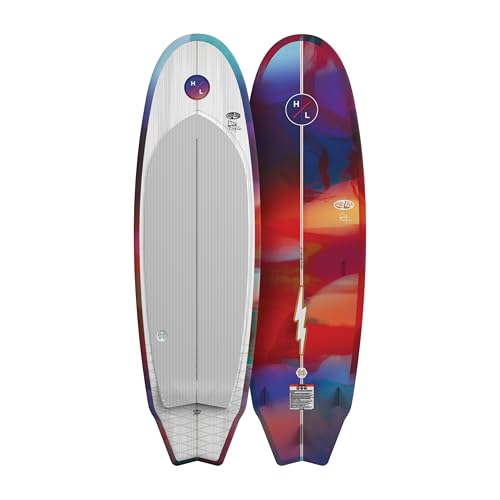
Hyperlite Landlock Longboard-Inspired Wake Surf Board - for Beginners to Intermediate Riders - Catching All Waves Behind The Boat - 5’9”
BEGINNER-FRIENDLY RIDE: Designed for first-time riders, bigger surfers, or relaxed sessions, this longboard-inspired wakesurf board incorporates Hyperlite’s rounded...
As an affiliate, we earn on qualifying purchases.

Airhead Bonzai Surf-Style Wakesurf Board
Compression molded fiberglass board with dual hook grooves
As an affiliate, we earn on qualifying purchases.