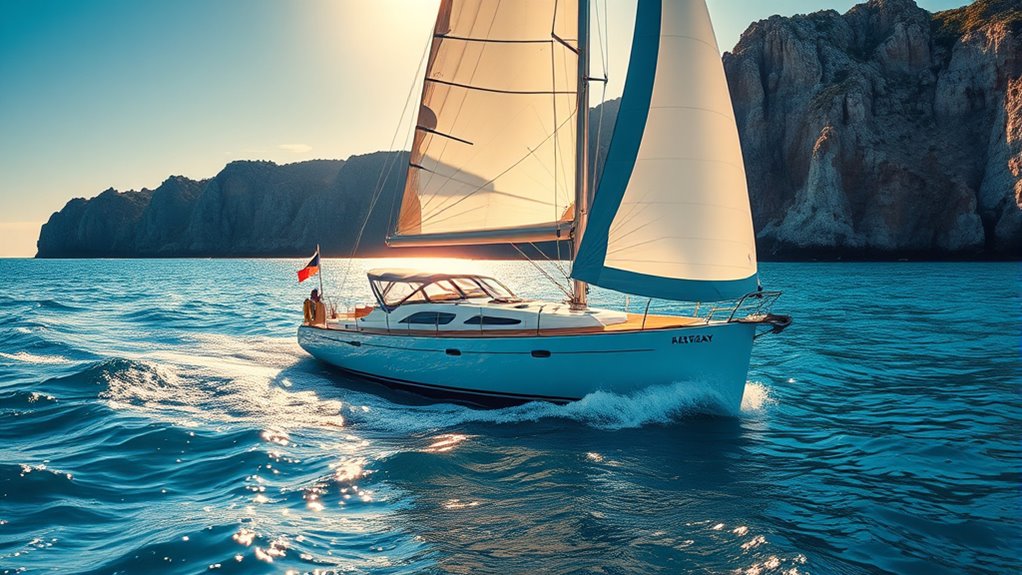

Combining sail power with auxiliary systems like solar and hydrogen gives you reliable and sustainable propulsion for your sailboat. With sails capturing wind energy, you enjoy the serenity of sailing. However, when the wind’s too light or inconsistent, auxiliary systems kick in, ensuring continuous movement. This hybrid approach enhances both safety and efficiency while promoting eco-friendly practices. There’s much more to explore about these technologies and how they can transform your sailing experience.
Key Takeaways
- Sailboats primarily use wind to propel forward, relying on sail design and aerodynamics to harness natural energy effectively.
- Auxiliary power systems, like engines, provide backup propulsion when wind conditions are insufficient or during storms.
- Integrating solar panels allows sailboats to convert sunlight into electricity, reducing reliance on fossil fuels during low wind periods.
- Hydrogen fuel cells offer an eco-friendly energy source, emitting only water vapor while powering onboard systems and propulsion.
- Combining traditional sail power with alternative energy solutions promotes sustainable boating practices and enhances reliability during voyages.
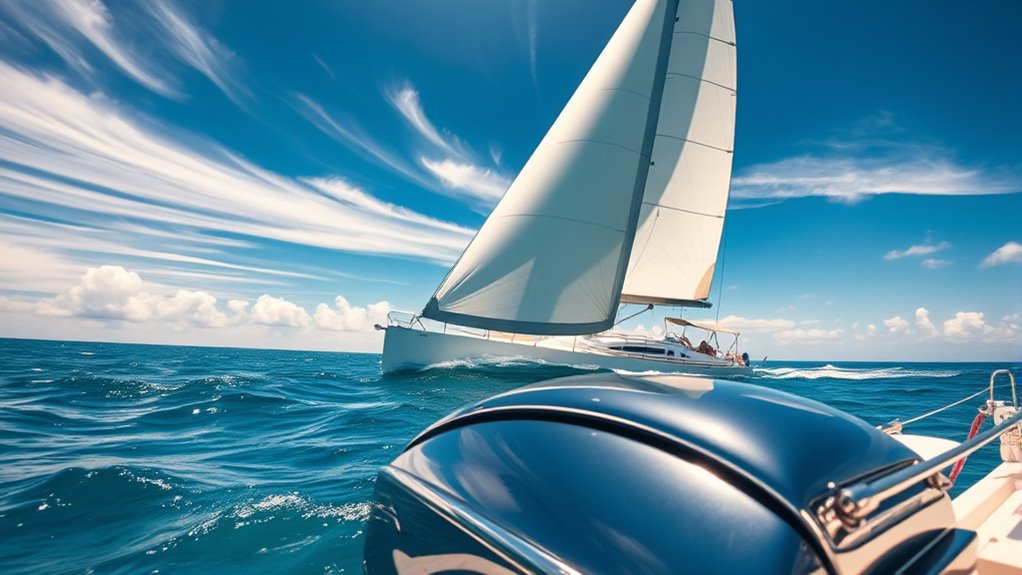
Have you ever wondered how sailboats harness the wind to glide across the water? The answer lies in their design and the principles of aerodynamics. Sailboats use large sails to capture the wind, creating lift much like an airplane wing. As the wind flows over the sails, it generates a pressure difference that propels the boat forward. This natural method of propulsion allows you to enjoy the serenity of sailing while relying on a renewable energy source.
However, the wind isn’t always reliable. There are days when the breeze is too light to fill your sails, or storms can force you to seek alternative power. That’s where auxiliary power comes in. Many modern sailboats are equipped with engines to provide necessary propulsion when the wind isn’t cooperating. Some innovative sailors are now turning to clean energy solutions like solar power and hydrogen fuel to enhance their sailing experience.
When the wind falters, auxiliary power ensures smooth sailing, with innovative solutions like solar and hydrogen fuel leading the way.
Solar power systems have become increasingly popular on sailboats. By installing solar panels on the deck, you can harness sunlight to generate electricity. This energy can run onboard systems, keeping your navigation tools and lights functioning without relying on fossil fuels. As you sail, you can enjoy the peace of mind that comes with knowing you’re using a sustainable power source. Plus, solar panels require minimal maintenance, making them a practical choice for long voyages.
Hydrogen fuel is another exciting development in sailboat propulsion. This technology utilizes hydrogen gas as a clean energy carrier, converting it into electricity through fuel cells. When you sail with hydrogen fuel, you’re emitting only water vapor, which is a significant improvement over traditional fuel sources. Though still emerging, hydrogen-powered sailboats promise a future where you can glide across the water without contributing to pollution.
Combining traditional sail power with these auxiliary systems creates a versatile approach to sailing. You can rely on the wind when conditions are favorable and switch to solar or hydrogen fuel when necessary. This combination not only enhances your sailing experience but also connects you to a larger movement towards sustainable boating. As technology advances, you’ll likely find even more innovative solutions to power your adventures on the water. Embracing these alternative energy sources makes sailing a more responsible and enjoyable pastime, allowing you to explore the world’s oceans while respecting the environment. Additionally, understanding safety in shark-infested waters can enhance your sailing experience when venturing into coastal areas known for marine life.
Top picks for "sailboat propulsion combin"
Open Amazon search results for this keyword.
As an affiliate, we earn on qualifying purchases.
Frequently Asked Questions
What Are the Benefits of Using Both Sail and Engine Power?
Using both sail and engine power offers you greater flexibility and efficiency on the water. Hybrid sailing lets you harness wind energy while retaining the option of using your engine when conditions are less favorable. This combination enhances fuel efficiency, reducing your overall consumption and costs. You’ll also enjoy smoother navigation in tricky situations, ensuring you reach your destination with less hassle. Ultimately, it’s a smart approach for any sailor.
How Do I Maintain My Sailboat’s Auxiliary Engine?
To maintain your sailboat’s auxiliary engine, start with regular engine maintenance, like checking oil levels and changing filters. Don’t forget about fuel management—keep your fuel clean and topped up to avoid issues. Have you checked your coolant levels lately? Regular inspections can help catch problems early. Additionally, run your engine periodically to ensure it stays in good working order. A little attention goes a long way in keeping your engine dependable!
Can I Convert a Sailboat to Solely Rely on Engine Power?
Yes, you can convert a sailboat to rely solely on engine power through engine conversion. This sailboat modification involves removing the mast and rigging, ensuring your engine is powerful enough for the boat’s size. You’ll also need to adapt fuel systems and possibly reinforce the hull for added weight. Keep in mind that sailing offers unique benefits, so consider your motivations before making such a significant change to your vessel.
What Safety Measures Should I Take When Using Auxiliary Power?
Did you know that nearly 70% of boating accidents involve engine failures? To guarantee safety when using auxiliary power, follow strict safety protocols. Always check your engine’s condition before setting out and keep essential tools onboard. Have a clear emergency preparedness plan, including life jackets and a working radio. Regularly practice man-overboard drills, and ensure your fire extinguisher is accessible. Staying prepared can make all the difference in an emergency.
How Does Weather Affect Sail and Engine Propulsion Efficiency?
Weather considerably affects your sail and engine propulsion efficiency. Wind variability can either enhance or hinder your speed, so you need to keep an eye on forecasts. If the wind’s consistent, sailing’s more effective, but sudden gusts can lead to instability. Engine power may become necessary in calm conditions or when facing adverse weather. By staying informed through weather forecasting, you can make the best decisions for ideal propulsion on your journey.
Conclusion
In blending sail and auxiliary power, you open a world of possibilities on the water. Imagine catching the wind just as a playful gust nudges your sail, while your engine hums softly beneath you, ensuring you glide effortlessly. This combination not only enhances your adventure but also gives you the freedom to navigate even the trickiest conditions. So, whether you’re racing the sunset or savoring a calm morning, you’ll find joy in the harmony of nature and technology.