When you’re exploring underwater, remember to respect coral and marine creatures. Avoid touching or stepping on coral, as it’s sensitive and critical to marine ecosystems. Keep your distance from animals, like sea turtles, to minimize stress. Use proper photography techniques to capture their beauty without causing disturbance. Be mindful of your gear to prevent accidental damage. By following these practices, you’ll enhance your underwater experience while protecting these precious environments. There’s more to discover about marine conservation!
Key Takeaways
- Avoid touching or stepping on coral to protect fragile ecosystems and maintain coral health.
- Keep a safe distance from marine animals to minimize stress and allow natural behaviors.
- Use non-intrusive underwater photography techniques to capture marine life without disturbing their habitat.
- Be mindful of your gear to prevent accidental contact with coral and other sensitive environments.
- Follow local guidelines and regulations to promote marine conservation and enjoy sustainable interactions with marine life.
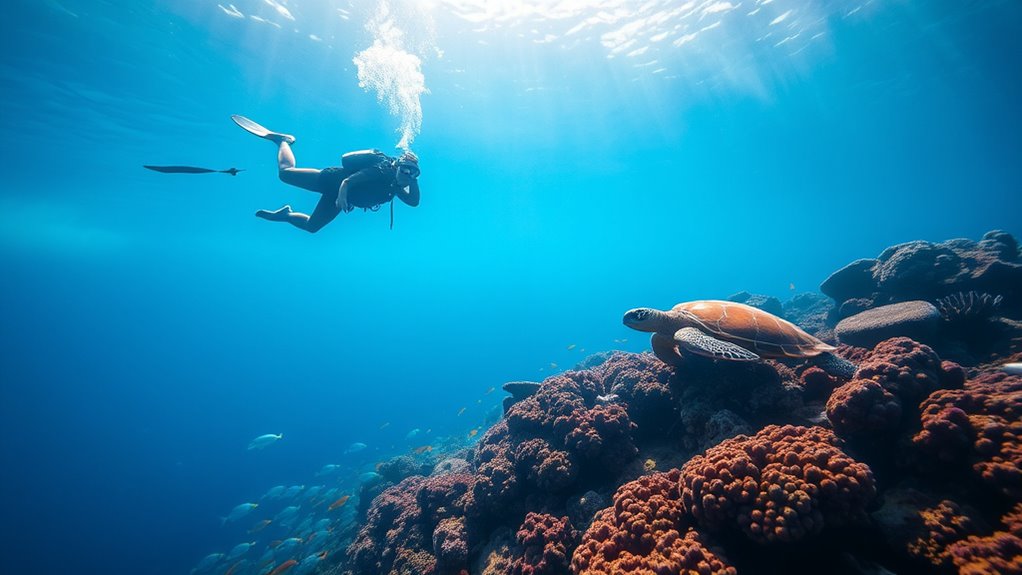
When you venture into the ocean’s depths, it is essential to remember that you’re a guest in the marine world. The vibrant ecosystem you’re exploring, teeming with life, deserves your utmost respect. One of the most fundamental aspects of marine life etiquette is understanding the significance of coral conservation. Coral reefs act as critical habitats for countless marine species, and every action you take can impact their health. So, whether you’re snorkeling or diving, tread lightly and be aware of your surroundings. Avoid touching or stepping on coral, as even the slightest contact can harm these delicate structures.
As guests in the marine world, let’s honor coral conservation and tread lightly to protect these vital ecosystems.
As you glide through the water, you might feel tempted to reach out and touch that colorful coral or the intriguing fish darting by. But remember, you’re not just an observer; you’re part of the ecosystem. Instead of physical interaction, focus on capturing the beauty of marine life through underwater photography. This allows you to appreciate and share the marine environment without disturbing it. When you take photos, use proper techniques to minimize your impact. Keep a safe distance from the coral and marine animals, making sure you don’t create sediment clouds that can smother the coral or scare away the fish.
If you’re fortunate enough to spot a magnificent creature, like a sea turtle or a school of vibrant fish, resist the urge to chase after them for that perfect shot. Instead, remain calm and let them come to you. This patience not only enhances your photography but also respects their natural behavior. By staying still, you can observe their interactions and the beauty of their environment without intruding on their space.
Moreover, always be mindful of your gear. Confirm that your fins, camera equipment, and buoyancy control devices don’t accidentally brush against the coral or disturb the marine life. Before you dive or snorkel, familiarize yourself with the local guidelines on marine conservation. Some areas may have specific rules regarding photography and interaction with wildlife. Following these guidelines helps protect the fragile ecosystems you’re exploring. Additionally, understanding sustainable building practices can inform your choices when constructing facilities near marine environments.
Ultimately, your experience in the ocean can be both fulfilling and responsible. By prioritizing coral conservation and practicing mindful underwater photography, you contribute to the preservation of these amazing ecosystems. Remember, each time you dive in, you have the power to make a positive impact. Your respect for the marine world not only enriches your adventure but also guarantees that future generations can enjoy these underwater wonders.

52 Assignments: Underwater Photography
As an affiliate, we earn on qualifying purchases.
As an affiliate, we earn on qualifying purchases.
Frequently Asked Questions
Can I Touch Coral if I’m Careful?
You shouldn’t touch coral, even if you think you’re being careful. Coral conservation is vital for maintaining healthy marine ecosystems, and touching it can cause irreversible damage. When you’re out snorkeling, practice responsible snorkeling by keeping a safe distance from coral reefs. This protects both the coral and the diverse marine life that depends on it. Enjoy the beauty of the underwater world without contributing to its harm; it’s the best way to appreciate it!
What Should I Do if I Encounter a Jellyfish?
When you cross paths with a jellyfish, it’s wise to admire from a distance. These graceful creatures can be unpredictable, so sting prevention is key. Maintain your space, and if one drifts too close, calmly back away. Observe its behavior—most jellyfish won’t pursue you. If you happen to get stung, rinse the area with seawater, and seek help if needed. Remember, it’s all about respecting their space while enjoying the ocean’s wonders.
Is It Okay to Feed Fish While Snorkeling?
No, it’s not okay to feed fish while snorkeling. Feeding wildlife can disrupt their natural behavior and diet, which isn’t good for them or the ecosystem. Instead, focus on enjoying the beauty around you and observing the fish in their environment. Stick to snorkeling tips like maintaining a respectful distance and not touching marine life. This way, you’ll help preserve the underwater world for future snorkelers and protect the creatures you admire.
How Can I Identify Protected Marine Species?
To identify protected marine species, you can start by researching local laws and guidelines on marine conservation. Use field guides or apps that specialize in species identification to help you recognize them underwater. Pay attention to specific markings, colors, and shapes that distinguish these species. If you’re unsure, take photos for later identification. Always remember, protecting these species is essential for maintaining healthy ecosystems, so be mindful of your interactions!
What Should I Do if I See a Distressed Animal?
If you see a distressed animal while snorkeling, stay calm and assess the situation. Avoid touching or chasing the creature, as that can cause further stress. Instead, observe from a distance and take note of its condition. Report your findings to local marine conservation authorities, who can take appropriate action. Remember, responsible snorkeling means prioritizing the well-being of marine life, ensuring they remain safe and undisturbed in their natural habitat.

SCUBAPRO Cruiser Adult Diving Vest, Yellow/Black (Medium)
Made of durable nylon and stretchable neoprene, the Cruiser keeps you comfortable and snug on the surface.
As an affiliate, we earn on qualifying purchases.
As an affiliate, we earn on qualifying purchases.
Conclusion
By embracing marine life etiquette, you not only protect the vibrant ecosystems that thrive beneath the waves but also enhance your own underwater experiences. Coincidentally, as you tread lightly around coral and respect the creatures that call it home, you may find that these delicate environments reveal their secrets, fostering a deeper connection with nature. So, the next time you plunge into, remember: your mindful actions can create harmony and preserve the beauty of our oceans for generations to come.

HUK Men's Standard Icon Hoodie, Hooded Fishing Shirt with Sun Protection, Coral Reef
HUK MENS ICON LONG SLEEVE HOODIE: Utilizing UPF 50+ Sun Protection. Provides superior sun protection, shielding your skin…
As an affiliate, we earn on qualifying purchases.
As an affiliate, we earn on qualifying purchases.

Mirfane Life Buoy Holder, Heavy Duty Marine Grade Stainless Steel Life Ring Holder for Boat, Corrosion Resistant Rescue Ring Bracket Fits 24”-30” Life Preserver (Wall Mount)
Marine Grade : Our ring holder is made of marine-grade stainless steel for superior durability and saltwater corrosion…
As an affiliate, we earn on qualifying purchases.
As an affiliate, we earn on qualifying purchases.