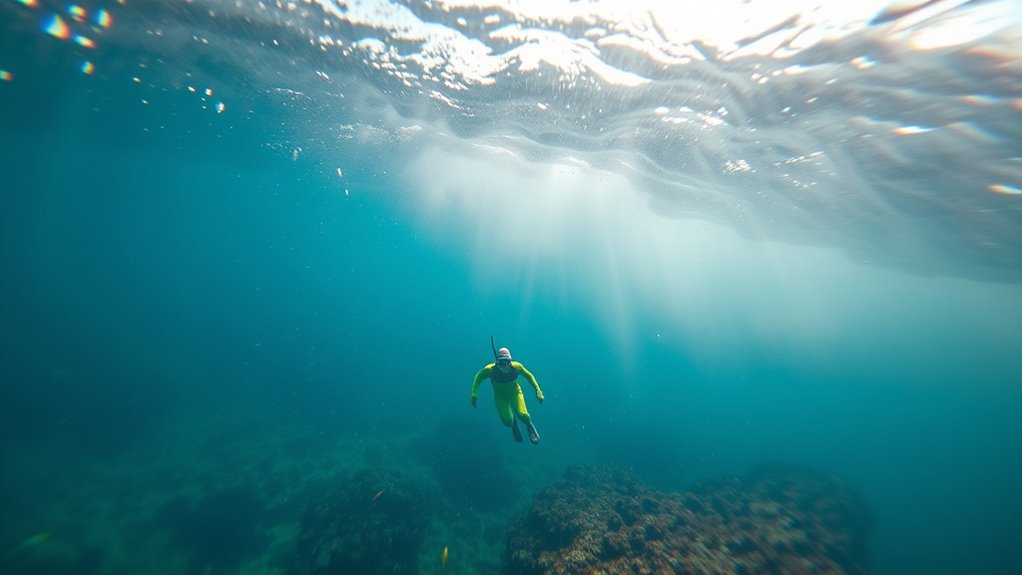

After heavy rain, the water clarity often drops, turning murky and reducing visibility. This is caused by sediment and debris stirred up, making marine life harder to see and changing animal behaviors. You might notice more cautious or active wildlife, but underwater scenes may look less vibrant. These conditions are temporary, and wildlife activity can shift, offering unique encounters. Understanding these changes helps you adjust your expectations and approach—there’s more to uncover about snorkeling after rain.

Get sports gear delivered free — and shop member deals
- Fast, free delivery on millions of items
- Access to Prime Big Deal Days deals on October 6–7
- Prime Video, Amazon Music and more included
Key Takeaways
- Rain stirs up sediment, causing water to appear cloudy and reducing underwater visibility.
- Reduced visibility makes marine life harder to spot but may increase animal activity in murky waters.
- Visibility typically improves as sediments settle, making conditions better over time.
- Lower clarity challenges snorkeling but offers opportunities to observe unique behavioral patterns.
- Safety precautions, like staying close to the group and moving slowly, are essential in reduced-visibility conditions.
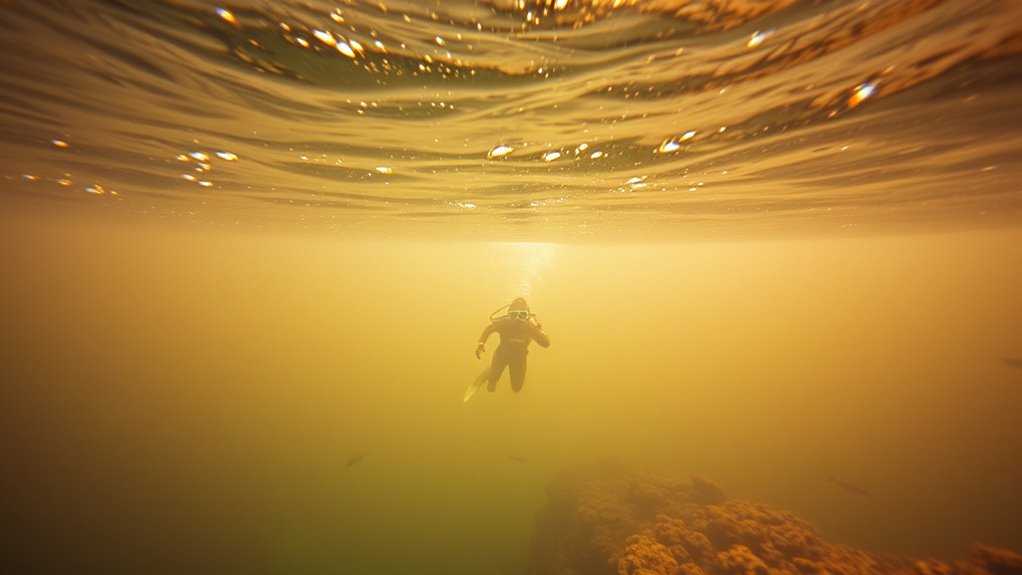
After a rainstorm, snorkeling can be both exciting and challenging. The first thing you’ll notice is the change in water clarity. Heavy rains often stir up sediment and debris, turning the water cloudy and reducing visibility. This drop in water clarity makes it harder to see the vibrant marine life that usually surrounds you. Instead of the clear, shimmering underwater world you’re used to, you might find yourself peering through a murky veil, which can be disappointing. But even with reduced visibility, the experience can still be rewarding if you adjust your expectations and approach the water cautiously.
As the water becomes more turbid, wildlife behavior tends to shift. Many marine animals instinctively respond to the influx of fresh water and sediment by retreating or hiding deeper within their habitats. Fish may scatter or seek shelter among rocks and coral, making sightings less frequent. Some creatures might become more cautious, avoiding the shallower waters where you’re snorkeling. Conversely, you might also observe an interesting change in wildlife activity — certain species are more active after rain because the reduced light and increased nutrients in the water can stimulate feeding behavior. You could see more feeding frenzies or notice unusual patterns in animal movement, offering a different kind of encounter than usual.
It’s important to remember that these changes in water clarity and wildlife behavior are temporary. The sediment will settle, and visibility will gradually improve as the water clears. During this period, your focus should shift from trying to spot every colorful fish to appreciating the more subtle aspects of the underwater environment. Look for signs of wildlife that may be more active or bold due to the altered conditions. Keep your movements slow and deliberate to avoid startling the animals that are still present. Be patient, and don’t be discouraged if your usual snorkeling spots seem less lively; sometimes, the post-rain environment offers a unique perspective on marine life behavior.
Additionally, the reduced water clarity can lead to an increase in marine animal activity, as some species are more willing to venture into open or murky waters when visibility is low. Finally, always prioritize safety. Reduced visibility increases the risk of bumping into sharp or dangerous objects, and the water conditions can be unpredictable. Make sure to stay close to your group, avoid venturing into unfamiliar or potentially unsafe areas, and be mindful of your surroundings. While rain may temporarily diminish your ability to see clearly, it also reminds you that underwater environments are dynamic and constantly changing. Embrace the challenge, stay alert, and appreciate the resilience of marine life as it adapts to these shifting conditions.
snorkel mask with anti-fog and wide view
As an affiliate, we earn on qualifying purchases.
As an affiliate, we earn on qualifying purchases.
Frequently Asked Questions
How Long Should I Wait to Snorkel After Heavy Rain?
You should wait at least 24 to 48 hours after heavy rain before snorkeling. Heavy rain often causes sediment disturbance, which reduces water clarity and makes the water murky. During this time, sediments settle back to the bottom, improving visibility. If you notice persistent murkiness or cloudiness, give it more time. Clear water means better visibility, safer snorkeling, and a more enjoyable experience.
Does Rain Affect Water Temperature for Snorkeling?
Rain impact on water temperature can be noticeable, especially after heavy showers. When rain falls, it cools the water surface, causing a temporary drop in water temperature. As a snorkeler, you might feel the water cooler than usual, which can affect your comfort and diving experience. So, if it’s been raining heavily, expect a slight decrease in water temperature, and consider wearing appropriate gear to stay warm.
Are Certain Marine Species More Active After Rain?
You might notice some marine species become more active after rain due to changes in marine behavior caused by the rain impact. Rain can stir up nutrients and reduce water clarity, prompting fish and other creatures to feed or move around more. Species like certain reef fish, crabs, and some invertebrates often respond to these shifts. So, if you’re snorkeling after rain, expect to see different activity levels in marine life.
Can Rain Cause Harmful Bacteria to Increase in the Water?
You might wonder if rain causes harmful bacteria to increase in the water. Rain can wash pollutants from land, leading to water pollution and bacterial contamination. This runoff often contains bacteria from sewage, animal waste, and chemicals, raising health risks for swimmers and snorkelers. So, after heavy rain, it’s safer to avoid water activities until authorities confirm the water quality is good again.
Is Snorkeling Safer Immediately After Rain or After Water Clears?
You should avoid snorkeling immediately after rain because water clarity is often poor, which impacts safety considerations. The rain stirs up sediment and pollutants, reducing visibility and making it harder to see hazards. Waiting until the water clears improves visibility, allowing you to better observe your surroundings and stay safe. So, for a safer experience, plan your snorkeling trip when the water has had time to settle and clarity improves.
Conclusion
Don’t let the rain scare you away from snorkeling. Yes, visibility drops, but the ocean still holds wonders worth exploring. Even if the water isn’t crystal clear, you might discover vibrant marine life or unique underwater landscapes you’d miss otherwise. Remember, some of the most memorable adventures happen when you embrace the unexpected. So, next time it rains, consider diving in—you might just find a hidden treasure beneath the clouds.
Halloween Picks
halloween
As an affiliate, we earn on qualifying purchases.