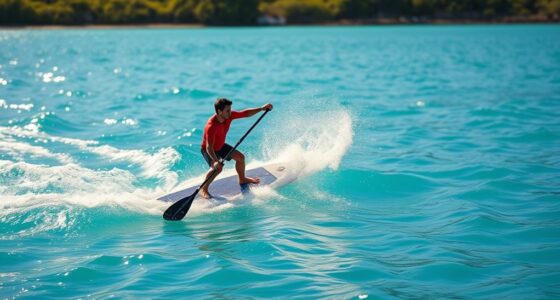
Cold water paddleboarding can be exhilarating, but you need the right gear to stay safe. Make sure you wear a wetsuit with a snug fit and at least 4/3 mm thickness. Layer up with a thermal base layer, and don’t forget accessories like booties, gloves, and hoods for added warmth. Always check the weather and water conditions, and consider paddling with a buddy for extra safety. There’s more to explore about staying safe in chilly waters.
Key Takeaways
- Choose a wetsuit with a thickness of at least 4/3 mm for effective insulation in cold water.
- Ensure your wetsuit fits snugly to trap warmed water and enhance warmth.
- Layer with a moisture-wicking base layer made of fleece or thermal fabrics for added heat retention.
- Always check weather and water conditions to assess safety before paddling.
- Paddle with a buddy to increase safety and provide assistance if needed.
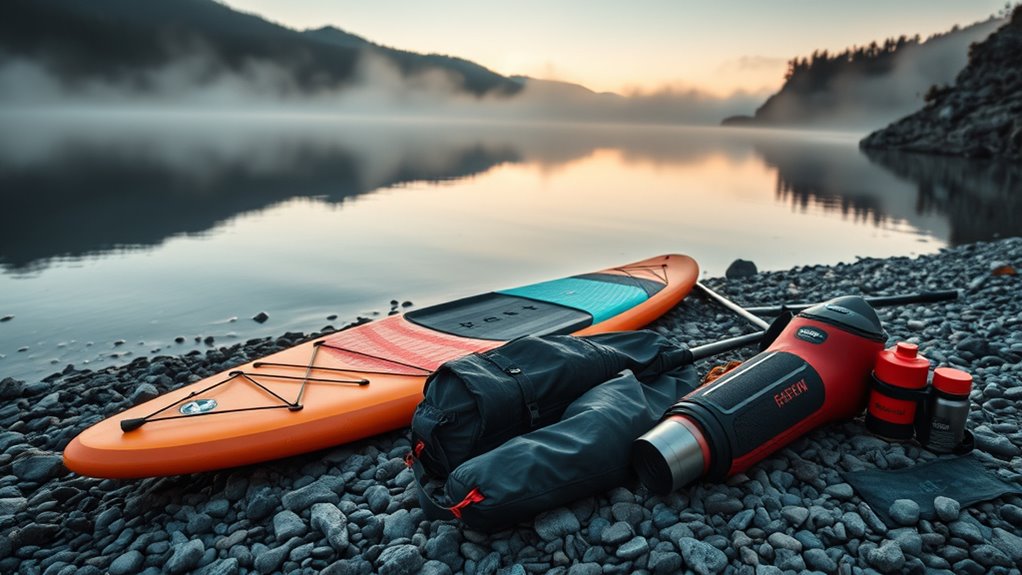
Cold water paddleboarding offers an exhilarating way to connect with nature while challenging your limits. But before you head out, it’s pivotal to prepare properly for the cold temperatures. One of the most important aspects of your preparation is understanding hypothermia prevention. When you’re paddling in chilly waters, your body loses heat rapidly, making it essential to dress appropriately. You don’t want to risk your safety while enjoying the great outdoors.
Choosing the right wetsuit is key to keeping warm and comfortable. When selecting a wetsuit, consider factors like thickness, fit, and material. Generally, a thicker wetsuit provides better insulation, so you might want to opt for one that’s at least 4/3 mm for cold water conditions. Don’t forget about the fit; a snug wetsuit helps trap a thin layer of water that your body warms up, creating an effective barrier against the cold. If the wetsuit is too loose, it won’t provide the insulation you need, and you’ll feel the chill much quicker.
Choosing a snug wetsuit of at least 4/3 mm thickness is essential for warmth and insulation in cold water conditions.
Layering is another intelligent strategy for hypothermia prevention. If you’re planning to spend extended time on the water, wearing a base layer underneath your wetsuit can enhance your warmth. Look for materials like fleece or thermal fabrics that wick moisture away while retaining heat. You should also consider accessories like booties, gloves, and hoods, especially if the water temperature dips markedly. These items can make a big difference in your overall comfort and safety.
Before you hit the water, always check the weather and water conditions. Knowing what you’re up against can help you decide whether to paddle that day or wait for better conditions. Familiarize yourself with the signs of hypothermia, such as shivering, confusion, or fatigue. If you notice any of these symptoms in yourself or your paddleboarding companions, it’s essential to get out of the water and warm up immediately.
Lastly, make sure you’re not alone out there. Paddleboarding with a buddy not only enhances safety but also makes the experience more enjoyable. Having someone by your side can be a great motivator, especially in challenging conditions. So grab your gear, make the right wetsuit selection, and prepare for an unforgettable adventure. You’re sure to create lasting memories while respecting the power of nature and prioritizing your safety. Additionally, remember that indoor air quality can be significantly improved using air purifiers, which is beneficial for those with respiratory concerns, especially after a day outdoors.

PSOS Dehumidifier, Dehumidifiers for Home, 98 OZ Water Tank, (1000 sq.ft) Quiet Dehumidifier for Basement Bedroom Bathroom with Humidity Display, Auto Shut Off, Relaxing 7 Color Ambient Light(Gray)
【DUAL-CORE HIGH-EFFICIENCY DEHUMIDIFICATION】Combat excess moisture with this ultra-quiet dehumidifier for home use, featuring advanced dual-core semiconductor technology,extracting up...
As an affiliate, we earn on qualifying purchases.
Frequently Asked Questions
What Are the Best Locations for Cold Water Paddleboarding?
For cold water paddleboarding, you’ll find great locations like the Pacific Northwest, Northern California, and the Great Lakes. Each spot offers stunning views, but the water temperature can drop markedly. Always prioritize winter safety by checking weather conditions and wearing appropriate gear. Remember to stay close to shore and keep an eye on your surroundings. With the right preparation, you can enjoy the beauty of these winter paddleboarding destinations while staying safe.
How Do I Transport My Paddleboard in Winter?
Did you know that over 70% of paddleboarders struggle with transporting their boards in winter? To safely transport your paddleboard during the colder months, consider using a roof rack, which secures your board while keeping it out of the elements. You can also use padded straps and tarps to safeguard your gear from snow and ice. Always check local regulations on transportation methods to ensure a hassle-free trip to your paddleboarding destination.
Can I Paddleboard Alone in Cold Water?
Yes, you can paddleboard alone in cold water, but safety’s your top priority. Make sure you wear appropriate clothing layers to keep warm and dry. Additionally, use safety equipment like a personal flotation device (PFD), a whistle, and a dry bag for your essentials. Check the weather and water conditions before heading out, and always let someone know your plans. It’s vital to stay safe while enjoying your adventure on the water!
What Should I Do if I Fall Into Cold Water?
“Better safe than sorry!” If you fall into cold water, stay calm and focus on hypothermia prevention. Quickly swim to your board, if possible, and try to climb back on. If you can’t, use the heat of your body to keep warm by treading water. Signal for help and perform rescue techniques like the huddle position to conserve heat. Get out of the water as soon as you can to warm up!
Are There Specific Paddleboard Types for Cold Water?
Yes, there are specific paddleboards designed for cold water. Look for ones with paddleboard insulation to help maintain warmth. These boards often feature thicker materials and added buoyancy to keep you afloat longer in chilly conditions. Always prioritize cold water safety; wear a wetsuit or drysuit and make sure your board has safety features like grab handles. Choosing the right board will enhance your experience and keep you safer while enjoying the water.
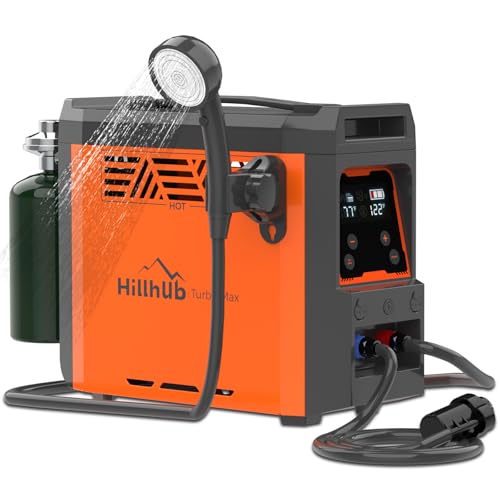
Hillhub Portable Propane Water Heater for Camping, Instant Hot Water Heater On Demand with 4000mAh Battery for Outdoor Showering and Cleaning, Included Water Pump & Showerhead
【3s Instant Heating】 Boasting 20,500 BTU ultra-heating efficiency, camping water heater delivers lightning-fast heating in just 3 seconds,...
As an affiliate, we earn on qualifying purchases.
Conclusion
As you gear up for cold water paddleboarding, remember that preparation is key. Just like a sturdy ship needs a solid anchor, you need the right gear and mindset to navigate the chilly waters safely. Embrace the adventure, stay aware of the conditions, and don’t forget to layer up! With the right tools and knowledge, you’ll glide through the waves, enjoying every moment in the invigorating embrace of nature’s chilly embrace. Happy paddling!
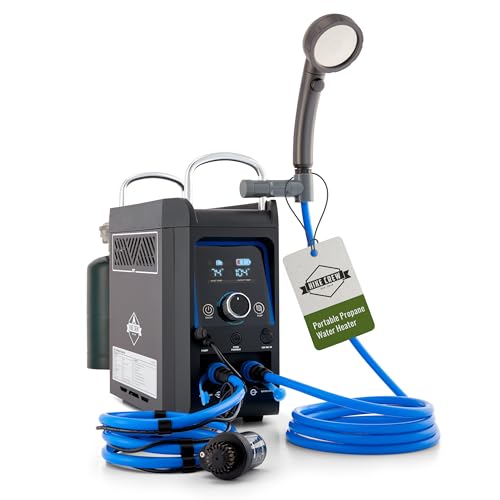
Hike Crew Propane Water Heater & Shower Pump | Rechargeable Portable Outdoor Water System w/Shower Head Attachment for Instant Hot Water While Camping, Hiking, Glamping & Vacationing
PORTABLE OUTDOOR WATER HEATER | Enjoy the Wonders of Nature – Along With the Comforts of Home |This...
As an affiliate, we earn on qualifying purchases.

Tankless Propane 4.74GPM 18L Outdoor Portable Instant Water Heater with Digital Display Multi-Protection for Camping Trips Boat Cabins
【Premiun Water Heater】-Tankless Water Heater with CSA Approved Regulator, with more safety protection such as flame failure device,...
As an affiliate, we earn on qualifying purchases.