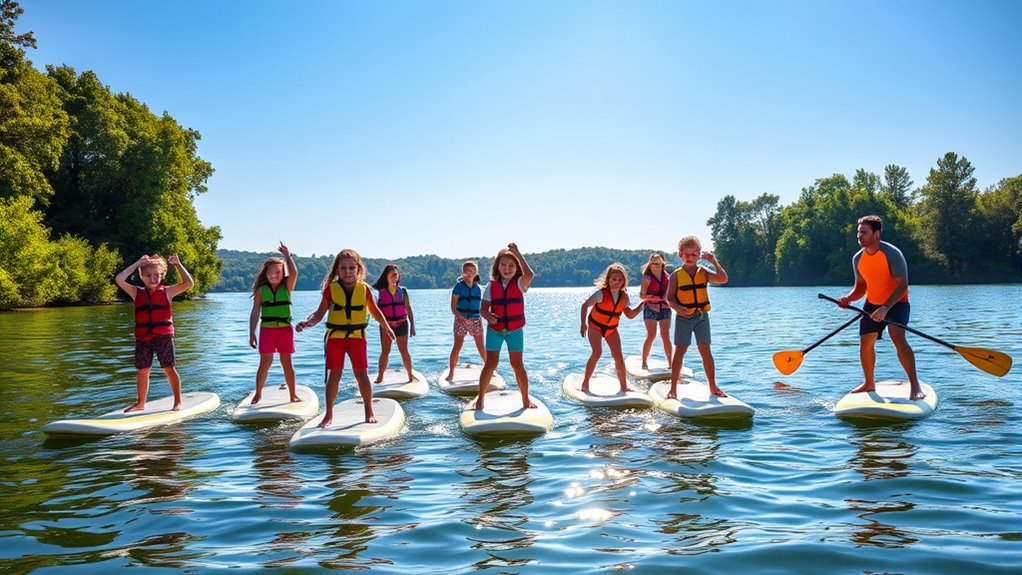

To teach kids to stand-up paddleboard safely, start by ensuring they wear properly fitted life jackets. Keep a close eye on them, especially in calm, shallow waters. Before hitting the water, explain the basics of paddleboarding and practice on dry land. Establish ground rules, like staying close and being aware of surroundings. Always check weather conditions to avoid unsafe waters. By focusing on these points, you’ll create a fun and secure paddling experience for your kids. There’s more to discover on this topic.
Key Takeaways
- Ensure all participants wear properly fitted life jackets for safety and comfort during paddleboarding.
- Supervise children closely, keeping them within arm’s reach in calm, shallow waters.
- Teach paddleboarding basics and practice techniques on dry land before entering the water.
- Establish clear ground rules for behavior and safety before starting the activity.
- Check weather and water conditions regularly to ensure a safe paddling environment.
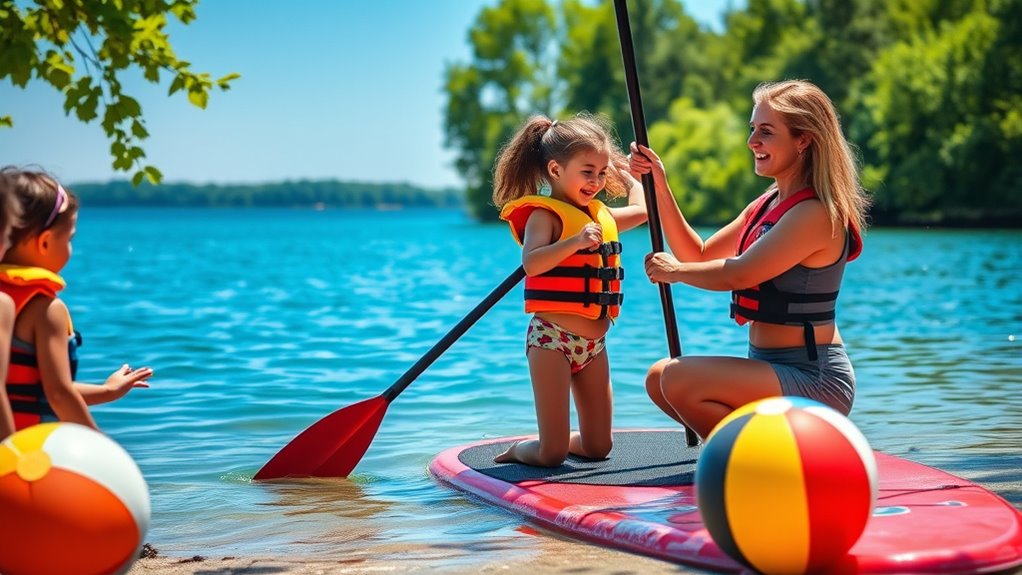
When you’re ready to introduce your kids to stand-up paddleboarding, safety should always come first. Before you hit the water, ensure that everyone’s equipped with the right safety gear. Life jackets are non-negotiable, especially for kids. Choose properly fitted personal flotation devices (PFDs) that allow for movement without being too bulky. Make sure they’re comfortable wearing them, as this will help instill confidence while paddling.
Child supervision is vital when it comes to paddleboard safety. Always keep a close eye on your little ones, especially if they’re new to the sport. It’s essential to stay within arm’s reach when they’re learning. Even if they seem confident, accidents can happen quickly in water. You should also consider paddling in calm, shallow areas where they can easily stand if they fall off. This way, they can focus on learning without the stress of deep water.
Child supervision is crucial for paddleboard safety; stay close and choose calm, shallow waters to ease their learning experience.
Before you get on the water, take a moment to explain the basics of paddleboarding to your kids. Teach them how to hold the paddle correctly, how to balance on the board, and what to do if they fall in. Making it a fun learning experience will help them feel more at ease. Encourage them to practice on dry land first, so they can get a feel for the movements without the instability of water.
Establish some ground rules about paddleboarding before you start. Discuss the importance of staying close to each other, not jumping off the board while in deep water, and being mindful of other paddlers and boat traffic. Reinforcing these rules will help keep everyone safe and ensure a more enjoyable experience.
As you paddle together, keep the conversation light and fun. Share tips and tricks as you go, and celebrate their progress. Remember, the goal is to foster a love for the sport while prioritizing safety. If they feel supported and encouraged, they’re more likely to enjoy their time on the water.
Finally, always check the weather and water conditions before heading out. Strong winds or rough waters can make paddleboarding dangerous, especially for kids. If conditions aren’t ideal, it’s better to wait for a better day. By prioritizing paddleboard safety and maintaining vigilant child supervision, you’ll set your kids up for a fun and safe adventure on the water. Additionally, understanding the importance of water safety guidelines will further enhance your family’s enjoyment and protection while paddleboarding.

Fender x Wavestorm Collaboration 8ft Surfboard | Graphic top Deck with high Density Slick Bottom | for Kids and Adults | Foam Construction with Accessories | Leg Leash and Fin Set Included
The Wavestorm 8ft surfboard dimensions are 96 l x 22.5" w x 3.25" thick - weight is 11.4lbs...
As an affiliate, we earn on qualifying purchases.
Frequently Asked Questions
What Age Is Appropriate for Kids to Start Paddleboarding?
You can start introducing kids to paddleboarding around ages 5 to 7, but it really depends on their developmental readiness. Some children may feel comfortable earlier, while others might need more time. Look for signs of confidence, balance, and coordination. Age considerations are important, but individual skills matter more. Make sure they’re excited and understand safety basics, so their experience is enjoyable and encourages a love for the water.
Do Kids Need to Wear Life Jackets While Paddleboarding?
Yes, kids need to wear life jackets while paddleboarding. Life jacket requirements vary by location, but it’s always best to prioritize safety. Make sure the life jacket fits properly and is Coast Guard-approved. It’s one of the essential safety gear essentials you should never overlook. Not only does it keep your child safe, but it also gives you peace of mind, allowing everyone to enjoy the water with confidence.
How Can I Choose the Right Paddleboard for My Child?
Choosing the right paddleboard for your child isn’t as simple as picking the shiniest one at the store! Consider their size and skill level—lightweight boards work best. Don’t forget paddleboard maintenance; a well-cared board lasts longer. And while you’re at it, choose paddle accessories like adjustable paddles to grow with them. Remember, a happy, safe paddler is one who’s got the right gear and a bit of humor on the water!
What Weather Conditions Are Safe for Kids to Paddleboard?
Safe weather conditions for kids to paddleboard include mild winds of 5-10 knots and water temperatures above 70°F (21°C). When the wind picks up, it can make paddling difficult and increase the risk of accidents. You’ll want to verify the local forecast before heading out. Always avoid paddling on stormy days or when strong currents are present. Keeping an eye on these factors ensures a fun and safe experience for your child.
Should Kids Take Lessons Before Paddleboarding Independently?
Yes, kids should definitely take lessons before paddleboarding independently. These lessons cover essential skills, like paddleboarding etiquette, which helps them navigate safely around others. Additionally, understanding supervision requirements guarantees they know when and how to signal for help. By learning the basics first, kids gain confidence and competence, making their paddleboarding experience more enjoyable and safe. It’s vital to lay a solid foundation before heading out on their own.

Anker SOLIX C1000 Gen 2 Portable Power Station, 2,000W (Peak 3,000W) Solar Generator, Full Charge in 49 Min, 1,024Wh LiFePO4 Battery for Home Backup, Power Outages, and Camping (Optional Solar Panel)
49 Min UltraFast Recharging: With upgraded HyperFlash tech, fully recharge at 1,600W—for outage prepping, camping trips, or tailgating...
As an affiliate, we earn on qualifying purchases.
Conclusion
As you watch your child paddle away, balancing like a tightrope walker on water, you realize that teaching them to stand-up paddleboard safely is more than just about staying upright. It’s about building confidence and resilience. Just like riding a bike, they’ll stumble and fall, but each splash teaches them to rise again. With every stroke, they’re not just steering the water; they’re learning to steer challenges, growing stronger and more capable with each adventure on the waves.

BLUESTORM Cirrus26 Inflatable PFD Life Jackets for Adults | US Coast Guard Approved Automatic Life Vest w/Manual Override Convertibility (Nitro Red)
US COAST GUARD-APPROVED TYPE V PFD: This USCG-approved Type 5 life jacket has Type 3 performance. This life...
As an affiliate, we earn on qualifying purchases.

BLUESTORM Cirro 26 Automatic/Manual Inflatable Life Jacket PFD for Adults (Apex Black) | US Coast Guard (USCG) Approved Self Inflating Life Vest Preserver
US COAST GUARD-APPROVED TYPE V PFD: This USCG-approved Type V lifejacket with Type III performace, inflates automatically upon...
As an affiliate, we earn on qualifying purchases.