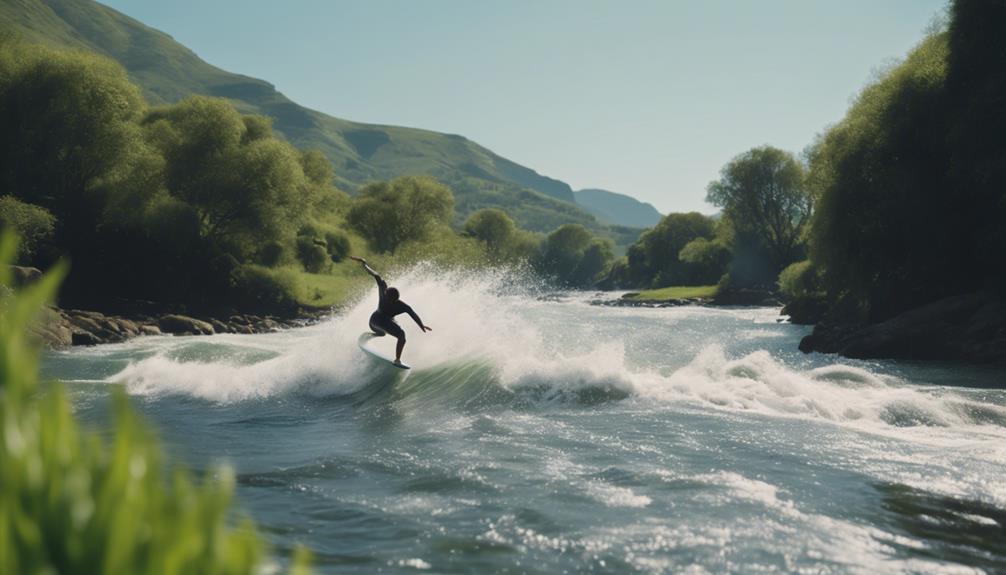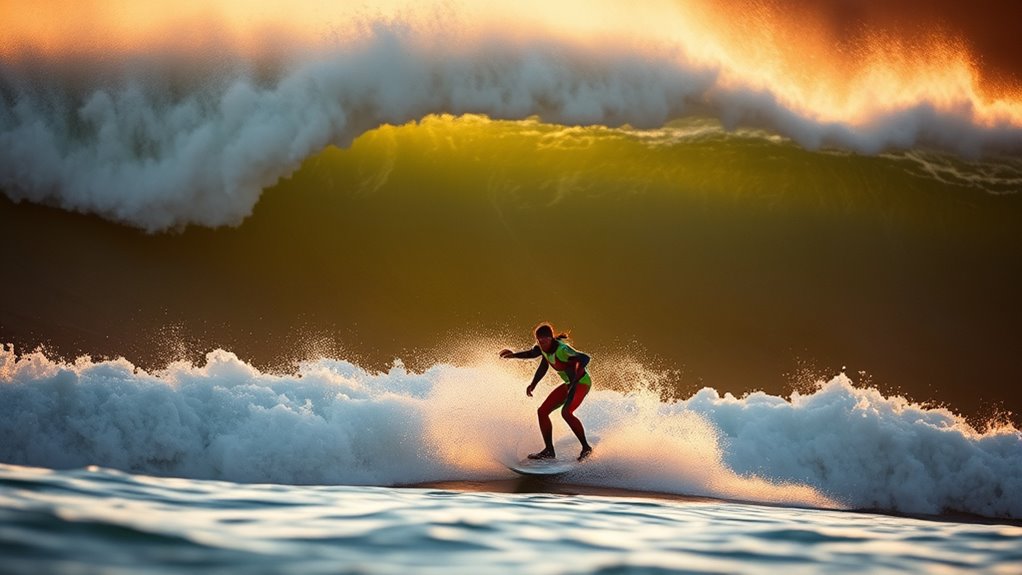

Big wave surfing requires you to prioritize safety and technique for success. Learn to fall safely by diving under waves and practice on smaller ones first. Knowing when to bail is essential to avoid injuries. Pay attention to wave size and behavior to make informed decisions. Equip yourself with the right gear, like a big wave gun and a thicker wetsuit, to enhance your performance. Stay safe while tackling ocean challenges, and there’s much more you can discover.
Key Takeaways
- Learn to fall safely by diving under waves instead of trying to ride them out during wipeouts.
- Practice on smaller waves to build confidence and technique before tackling big waves.
- Recognize when to bail to prevent serious injuries and enhance your safety.
- Understand proper body orientation during falls to minimize injury risk.
- Continuously observe ocean conditions, including wave behavior, to make informed decisions.

Have you ever wondered what it feels like to ride a wave towering over you like a skyscraper? The sheer rush of adrenaline, the power of nature beneath your board, and the thrill of conquering something so massive can be life-changing. But before you paddle out into the big blue, you need to guarantee you’re well-prepared. Safety and technique are essential, and they start long before you hit the water.
First, wave forecasting’s your best friend. It’s all about understanding when and where those colossal waves will break. You’ve gotta keep an eye on swell patterns, wind conditions, and tides. Knowing how to interpret forecasts will help you pick the right day to surf. Don’t just rely on your gut; use technology to your advantage. Apps and websites can provide real-time data, allowing you to choose the right conditions for your skill level. When you’re chasing those big waves, timing is everything.
Next comes equipment selection, which is just as vital for your safety and performance. You can’t surf a big wave on just any board. You need a specially designed big wave gun, which is longer and thicker than your standard board. This design helps you paddle faster and stay stable when the wave’s pushing you to your limits. Make sure you’ve got the right wetsuit too. A thicker wetsuit will keep you warm in colder waters, and it can even provide some buoyancy, which is essential when you wipe out.
Speaking of wipeouts, you must have a solid understanding of how to fall safely. Knowing how to dive under the wave instead of trying to ride it out can prevent serious injuries. Practice your technique on smaller waves before tackling the giants. Learn to judge when to bail and how to orient your body during a fall. The ocean will test you, so being prepared is half the battle. Additionally, understanding color accuracy in your gear can enhance your ability to see and react to wave conditions effectively.

Big Wave Surfing Knowledge Poster, Gun Surfboard, The Anatomy Of A Wave, Surfing Lover Gift Poster Decorative Painting Canvas Wall Art Living Room Posters Bedroom Painting 12x18inch(30x45cm)
1.There Are Frame and No Frame to Choose.
As an affiliate, we earn on qualifying purchases.
As an affiliate, we earn on qualifying purchases.
Frequently Asked Questions
What Equipment Is Essential for Big Wave Surfing?
For big wave surfing, you’ll need essential equipment like a sturdy, specially designed board to handle massive swells. Don’t forget protective gear, such as a wetsuit and impact vest, to safeguard against injuries. Additionally, carry emergency equipment like a leash, a personal flotation device, and a whistle. Having a reliable board and the right safety gear guarantees you’re prepared for the challenges of big waves and helps protect you during your epic rides.
How Do I Choose the Right Surfboard for Big Waves?
Choosing the right surfboard for big waves is like selecting the perfect weapon for battle. You need something sturdy and reliable. For wave sizes over 10 feet, look for a board made from durable materials like epoxy or fiberglass to withstand the power. A shorter board offers maneuverability, while a longer one provides stability. Make sure it’s got a wide outline for paddling into those massive swells. Trust your instincts, and you’ll ride those waves like a pro!
What Are the Best Locations for Big Wave Surfing?
You’ll find some of the best locations for big wave surfing at local surf spots like Jaws in Maui, known for its massive swells, or Teahupo’o in Tahiti, famous for its heavy, hollow waves. Mavericks in California is another iconic wave break that attracts surfers from all over the world. Each spot offers unique challenges, so you’ll want to assess conditions and your skill level before paddling out.
How Do I Recover From Wipeouts in Big Waves?
Ever been tossed like a rag doll by a wave? When you wipe out, breach safety is your first priority. Stay calm and protect your head, then kick towards the surface. Once you’re up, take a moment to regain your bearings. Mental resilience is key; visualize your next ride and don’t dwell on the fall. Each wipeout is a lesson, so embrace it and prepare to conquer those waves again!
What Fitness Training Is Recommended for Big Wave Surfers?
For big wave surfing, you’ll want to focus on core stability and cardiovascular endurance. Incorporate exercises like planks, sit-ups, and rotational movements to strengthen your core, which helps with balance on the board. Include high-intensity interval training (HIIT) or running to boost your cardiovascular endurance, ensuring you can paddle hard and recover quickly. Don’t forget to mix in flexibility training to enhance your overall performance and reduce injury risk!

O'Neill Men's Reactor-2 3:2mm Back Zip Full Wetsuit, Lightweight Warmth with Good Flexibility for Surfing, Paddleboarding, Kayaking, Black/Black, Large
Ideal Entry Level Value Driven Wetsuit; Perfect For Surfing, Diving, Paddle Sports, Lake Activities, And Beach Days
As an affiliate, we earn on qualifying purchases.
As an affiliate, we earn on qualifying purchases.
Conclusion
So, as you prepare to tackle those colossal waves, remember that safety and technique go hand in hand. With the right gear and skills, you can turn fear into exhilaration. Think about it: isn’t there something magical about conquering nature’s mightiest challenges? Embrace the thrill, respect the ocean, and stay vigilant. With practice and persistence, you’ll not only ride the waves but also forge unforgettable memories in the heart of the surf.

WYYHAA Mens Neoprene Wakesurf Impact Vest, Designed for Wake Surf and Skimboard, Great for Boating Rafting Surfing All Other Watersports Activities,L
Surf Fit: This vest is designed to be lightweight and flexible, allowing you to move better while surfing,…
As an affiliate, we earn on qualifying purchases.
As an affiliate, we earn on qualifying purchases.
wave forecasting app for surfers
As an affiliate, we earn on qualifying purchases.
As an affiliate, we earn on qualifying purchases.