When surfing in cold water, it’s essential to have the right gear to stay warm and safe. You’ll need a good wetsuit, ideally 4/3mm or 5/4mm, with sealed seams and thermal lining for added insulation. Don’t forget booties, gloves, and a hood to keep your extremities warm. Always check the weather and surf conditions, and consider surfing with a buddy for added safety. There’s more to explore about gear selection and preparation for tackling those chilly waves.
Key Takeaways
- Select a high-quality wetsuit with a thickness of 4/3mm or 5/4mm to maintain body warmth in cold water.
- Ensure the wetsuit features sealed seams and thermal linings for enhanced insulation and comfort.
- Equip yourself with booties, gloves, and a hood to retain warmth in your extremities while surfing.
- Always check weather and surf conditions to assess safety and personal limits before heading out.
- Surf with a buddy and keep your gear organized for efficient use and emergency readiness.
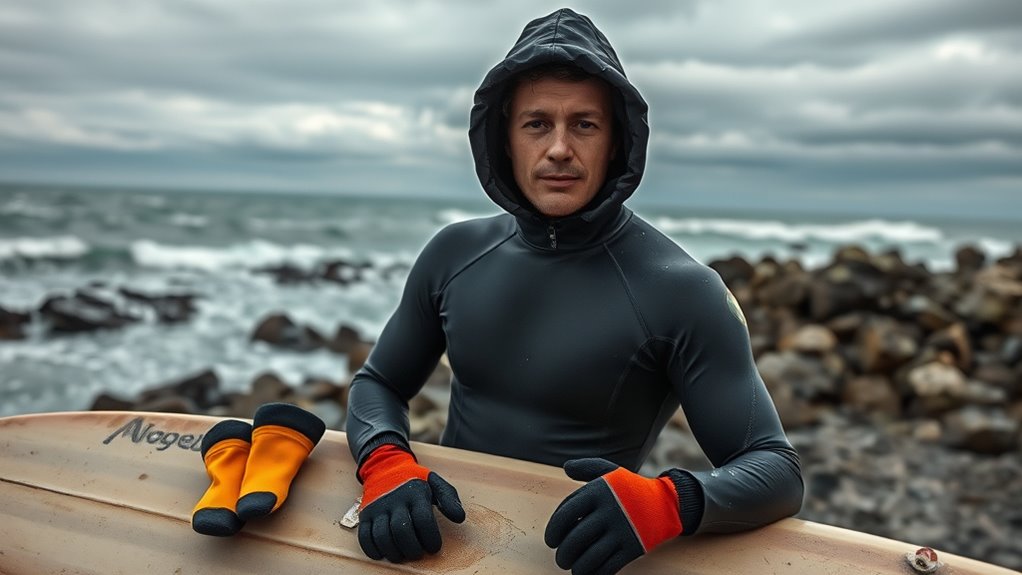
When you think of surfing, warm, sunny beaches might come to mind, but surfing in cold water offers a unique thrill that shouldn’t be overlooked. The rush of paddling out into chilly waves can be invigorating, and with the right gear and preparation, you can enjoy this experience safely and comfortably. The key to successful cold-water surfing lies in understanding wetsuit insulation and ensuring you have the necessary safety equipment.
First off, let’s talk about wetsuits. In cold water, a good wetsuit isn’t just a luxury; it’s essential. You’ll want to choose a wetsuit that provides adequate insulation to keep you warm while you’re out on the waves. Look for a suit made from high-quality neoprene, which traps a thin layer of water against your skin. This water warms up quickly, helping to keep your body temperature stable. Thickness matters too; a 4/3mm or 5/4mm wetsuit is often recommended for colder conditions, while thinner suits may suffice in milder climates. Make sure to check for features like sealed seams or thermal linings, as these can markedly enhance insulation.
Safety equipment is another fundamental aspect of cold-water surfing. Depending on the conditions, you might want to invest in a pair of booties, gloves, and even a hood. These accessories can help keep your extremities warm, ensuring you maintain good mobility while you surf. Cold hands and feet can quickly sap your strength and focus, making it harder to paddle and catch waves. If you’re surfing in harsher conditions, consider wearing a helmet as well; it can protect you from unexpected falls and collisions with your board or the ocean floor.
Preparation goes beyond just gear. Before you head out, check the weather and surf conditions. Cold waters can bring strong currents and large swells, which can be intimidating for even seasoned surfers. Knowing what to expect helps you assess your limits and stay safe. Always surf with a buddy when possible; having someone watch your back can make a markedly different in case of an emergency. Additionally, mindful decluttering of your surfing gear can help you ensure you have the best and most efficient equipment for cold-water conditions.

Hevto Men Wetsuit 4/3mm Neoprene GBS Full Wet Suit in Cold Water Back Zip for Surfing Swimming Diving Kayak SUP (Men Blue, XL)
Exceptional Warmth & Flexibility: The Hevto 4/3mm wetsuit for men is constructed from premium Neoprene SCR and super-stretch…
As an affiliate, we earn on qualifying purchases.
As an affiliate, we earn on qualifying purchases.
Frequently Asked Questions
How Do I Choose the Right Wetsuit Thickness for Cold Water?
To choose the right wetsuit thickness for cold water, consider the water temperature and your tolerance to cold. For temperatures between 50-60°F, a 4/3mm wetsuit usually offers enough thermal insulation. If it’s colder, opt for a 5/4mm suit. When selecting neoprene, look for high-quality materials that provide flexibility and warmth. Don’t forget to account for wind chill and your activity level, as these factors can influence your comfort in colder waters.
Can I Surf With a Regular Swimsuit in Cold Conditions?
Imagine diving into a wintery ocean, feeling like a brave knight in a swimsuit. While it sounds daring, you’ll quickly discover the limitations of your choice. In cold conditions, a regular swimsuit can expose you to chilling temperatures, leading to hypothermia and muscle cramps. The risks of cold water aren’t worth the thrill. To truly conquer those waves, you need proper gear that keeps you warm and safe, like a trusty suit of armor.
What Are the Best Cold Water Surf Spots Worldwide?
If you’re looking for the best cold water surf spots worldwide, try places like Iceland for iceberg surfing or the frigid waves in Norway. Don’t miss the polar bear swims in Canada, where you can catch stunning waves while enjoying the breathtaking scenery. Other top spots include the chilly coasts of New Zealand and Scotland. Each location offers unique challenges, but the thrill of cold water surfing is totally worth it!
How Do I Prevent Hypothermia While Surfing in Cold Water?
To prevent hypothermia while surfing in cold water, always wear a well-fitted wetsuit. Regularly check your wetsuit for leaks and tears; proper wetsuit maintenance keeps you warm. Stay active and take breaks to warm up when needed. Use cold water safety tips like surfing with a buddy and keeping an eye on weather conditions. Don’t underestimate the chill; being prepared helps you enjoy the waves safely and comfortably.
What Should I Eat Before Surfing in Cold Temperatures?
Before you hit those chilly waves, fuel your body with a hearty meal. Picture a warm bowl of oatmeal topped with bananas and nuts, or a protein-packed smoothie bursting with berries. These nutrition tips help keep your energy up while you paddle through the surf. Aim to eat about 1-2 hours before you surf for ideal meal timing. That way, you’ll feel invigorated and ready to ride those frosty waves!

LLPT Wetsuit Repair Tape Iron On 0.8” x 16.5 Ft Seam Sealing Patch Waterproof for Neoprene Wetsuit Drysuit Fishing Suits Industrial Standard Carrier Material Color Black(IR865)
PRODUCT FEATURES: Premium carrier material with extremely strong hot melt adhesive, industrial grade, waterproof, sweating resistance, humility resistance,…
As an affiliate, we earn on qualifying purchases.
As an affiliate, we earn on qualifying purchases.
Conclusion
Surfing in cold water can be an exhilarating experience, but it’s all about being prepared. Just when you think you’ve got everything covered, you might run into a sudden drop in temperature or unexpected waves. That’s why investing in the right gear and knowing how to layer up is essential. So, when you find yourself paddling out on a chilly morning, remember: the thrill of catching that perfect wave is worth every shiver! Stay warm and ride on!

Wsobue Neoprene Gloves and Socks, 3mm Thermal Diving Gloves Wetsuit Socks, Sand Proof Beach Socks Water Gloves for Diving, Surfing, Kayaking Rafting (Medium)
【Cool Water Socks】These 3mm neoprene socks for water sports and beach activities are cool, the ergonomic design makes…
As an affiliate, we earn on qualifying purchases.
As an affiliate, we earn on qualifying purchases.

O’Neill Psycho 3mm Neoprene Wetsuit Hood, Wind-Resistant Head Warmth and Protection for Cold Water Surfing and Diving, Black, Large
ANATOMICAL 3D DESIGN: Features a snug, comfortable fit that keeps warmth locked in. Adjustable cinch allows fine-tuning of…
As an affiliate, we earn on qualifying purchases.
As an affiliate, we earn on qualifying purchases.