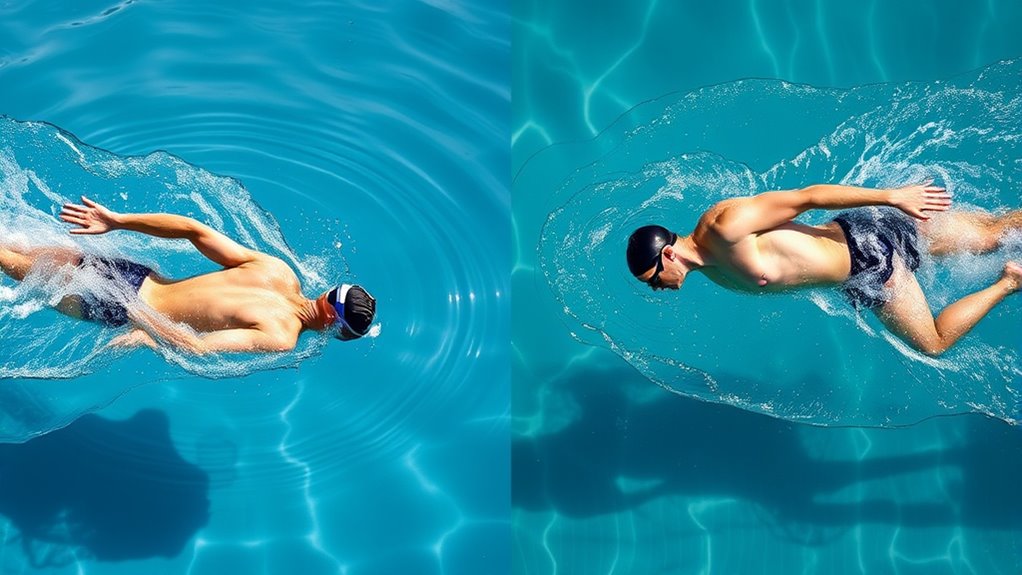

When comparing breaststroke and front crawl, you’ll notice key differences in technique and benefits. Breaststroke offers a relaxed, steady pace, making it great for beginners or leisure swimming. In contrast, front crawl is faster and more intense, promoting cardiovascular fitness and endurance. Mastering both strokes can enhance your swimming skills and keep workouts engaging. If you’re curious about how to improve your technique and make the most of each stroke, there’s much more to explore.

Get sports gear delivered free — and shop member deals
- Fast, free delivery on millions of items
- Access to Prime Big Deal Days deals on October 6–7
- Prime Video, Amazon Music and more included
Key Takeaways
- Breaststroke offers a relaxed, rhythmic flow, making it suitable for beginners or those seeking comfort in the water.
- Front crawl emphasizes speed and efficiency, promoting cardiovascular fitness and endurance for more advanced swimmers.
- Technique varies: breaststroke involves simultaneous arm and leg movements, while front crawl uses an alternate arm stroke with a flutter kick.
- Beginners should master breaststroke first to build confidence before transitioning to the more intense front crawl.
- Alternating between both strokes diversifies workouts and targets different muscle groups, enhancing overall swimming skills.
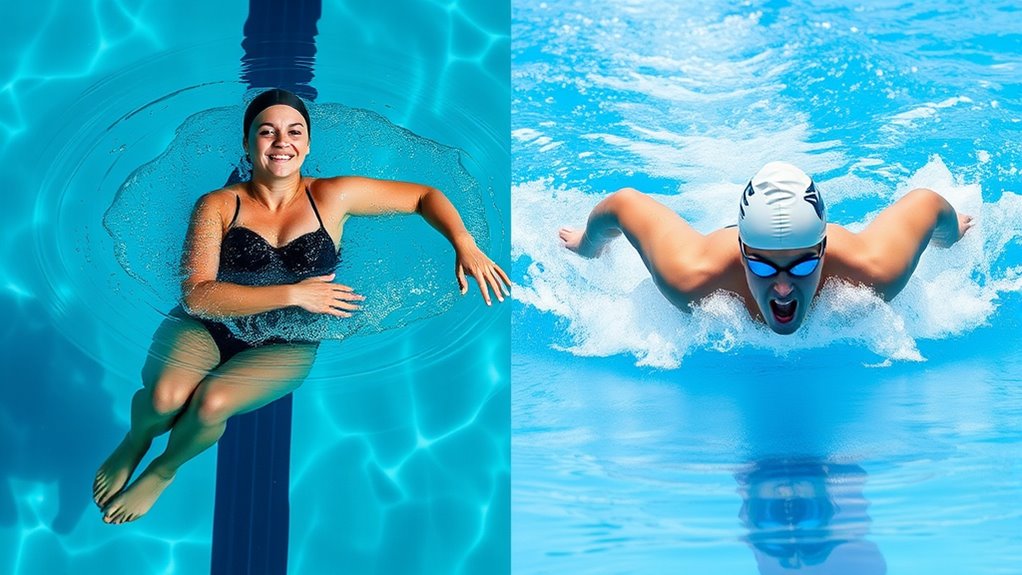
When you’re deciding between breaststroke and front crawl, it’s essential to contemplate your goals and comfort level in the water. Each stroke offers unique advantages and challenges. If you’re looking for a steady, relaxed pace, breaststroke might be your go-to. The breaststroke technique involves a simultaneous arm and leg movement that creates a rhythmic flow, allowing you to breathe easily. This stroke is perfect for beginners or those who might feel less confident in their swimming ability.
On the other hand, if speed is your priority, the front crawl is likely the better choice. Known for its efficiency and rapid pace, front crawl can help you cover distances quickly. It requires a flutter kick with alternate arm strokes, which can feel more intense but delivers impressive results in terms of speed. If you’re aiming to improve your overall performance in the pool, mastering front crawl speed will be *pivotal*.
Consider also how each stroke feels to you. Breaststroke is often favored for its gentler nature. You can maintain a slower pace while enjoying the water, making it a great option for leisure swimming or long-distance events. However, you might find that it doesn’t facilitate the same level of cardiovascular workout that front crawl does. If you want to build endurance and get your heart rate up, front crawl can help you achieve that.
If you’re new to swimming, focus on mastering the breaststroke technique first. It’s simpler and allows you to build confidence in the water. As you get comfortable, you can gradually introduce front crawl into your routine. This progression will not only enhance your skills but also make the *shift* smoother.
Ultimately, your choice between these two strokes should align with your personal swimming goals, fitness level, and enjoyment. Don’t hesitate to experiment with both. You might find that alternating between the two keeps your workouts fresh and engaging. Plus, each stroke can improve different muscle groups and skills, enriching your overall swimming experience. So *plunge into* it, explore, and discover what works best for you. Whether you prefer the calm of breaststroke or the exhilarating speed of front crawl, both strokes can help you become a more well-rounded swimmer.
Additionally, finding best practices for swimming techniques can further enhance your experience and effectiveness in the water.
As an affiliate, we earn on qualifying purchases.
Frequently Asked Questions
Which Stroke Is More Effective for Weight Loss?
The front crawl is generally more effective for weight loss due to its higher calorie burning and workout efficiency. When you swim front crawl, you engage multiple muscle groups, leading to a more intense workout. This stroke allows you to maintain a faster pace, which can considerably increase your heart rate and calorie expenditure. If you’re aiming for maximum weight loss, incorporating front crawl into your routine is a smart choice.
Can I Swim Both Strokes in a Triathlon?
Yes, you can swim both strokes in a triathlon! Many athletes use triathlon swim strategies that incorporate stroke change techniques to optimize their performance. While the front crawl is typically more efficient for speed, you can switch to breaststroke if you need a breather or want to conserve energy. Just practice your transitions so you can maintain momentum and avoid losing precious time during the swim segment of your race.
What Are the Best Drills for Improving Breaststroke?
To improve your breaststroke, think of it as a graceful dance in water. Start with breaststroke drills like the “3-2-1 drill,” where you focus on kick, pull, and glide. Incorporate front crawl techniques to enhance your overall swimming efficiency. Use a snorkel to maintain proper head position and work on your timing. By practicing these drills regularly, you’ll find your rhythm, and your breaststroke will flow more smoothly than ever.
How Can I Prevent Shoulder Injuries in Front Crawl?
To prevent shoulder injuries in front crawl, focus on shoulder mobility and a proper warm-up. Start with dynamic stretches and mobility exercises targeting your shoulders to increase flexibility. Incorporate resistance bands to strengthen shoulder muscles. During your swim, pay attention to your technique—avoid overreaching and make sure your hand enters the water at shoulder width. Gradually increase your training intensity, and don’t forget to rest when needed to allow for recovery.
Is One Stroke Better for Beginners Than the Other?
Yes, breaststroke is often better for beginners. Its slower pace and straightforward movements allow you to focus on technique without feeling rushed. You can maintain your head above water, which helps build confidence. However, front crawl has benefits too, like improved speed and endurance. As you gain experience, incorporating front crawl into your practice can enhance your overall swimming skills. Ultimately, both strokes can be valuable as you progress.
Conclusion
In the showdown of strokes, breaststroke and front crawl both boast their benefits. Whether you’re seeking a steady, soothing swim or a speedy splash, knowing their nuances can enhance your experience. Remember, practice makes perfect, so plunge into drills that develop your skills. With dedication and determination, you’ll discover which stroke suits your style. So, gear up and glide into the water—your swimming success awaits!
Halloween Picks
halloween
As an affiliate, we earn on qualifying purchases.