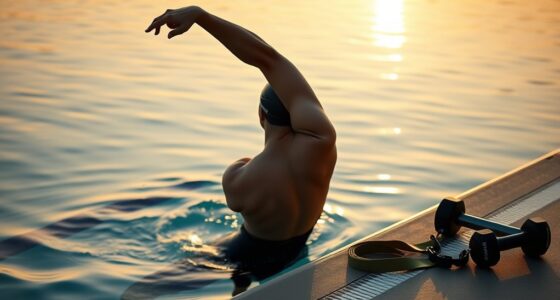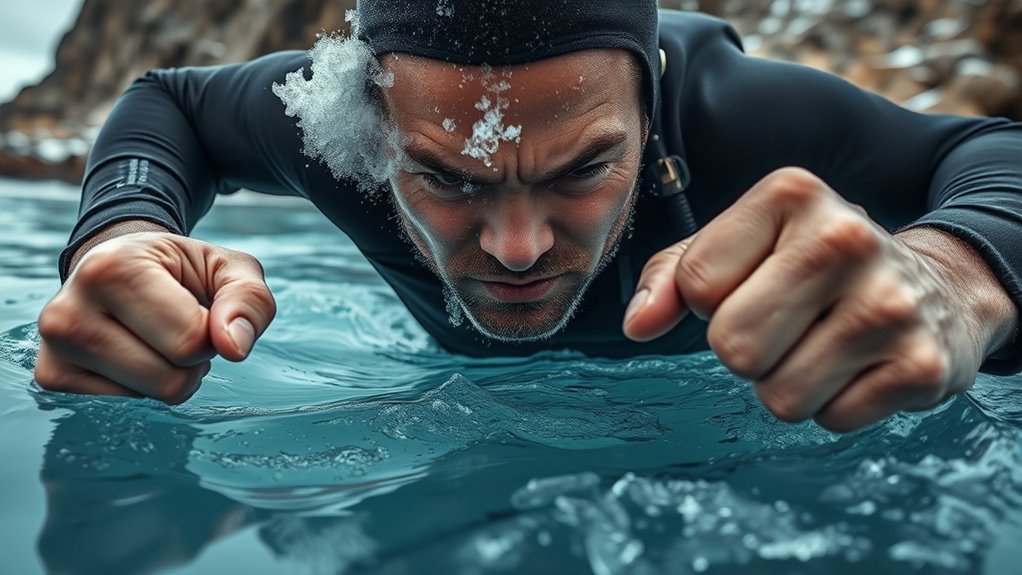

To safely acclimate to cold water, avoid rushing the process and neglecting gradual exposure. Always prioritize safety, listen to your body, and don’t push through signs of distress. Focus on controlling your breath and calming your mind, building mental resilience along the way. Mistakes like skipping steps or ignoring safety precautions can lead to serious risks. Keep learning the proper techniques, so you can adapt effectively without harm.

Get sports gear delivered free — and shop member deals
- Fast, free delivery on millions of items
- Access to Prime Big Deal Days deals on October 6–7
- Prime Video, Amazon Music and more included
Key Takeaways
- Avoid skipping practice sessions; gradual exposure is essential for safe acclimatization.
- Prioritize safety by monitoring physical and mental signals, and have an emergency plan in place.
- Increase cold exposure gradually, respecting your body’s signals to prevent shock or hypothermia.
- Focus on proper breathing techniques and mental calmness during each session.
- Cultivate mental resilience and perseverance to overcome psychological challenges of cold-water adaptation.
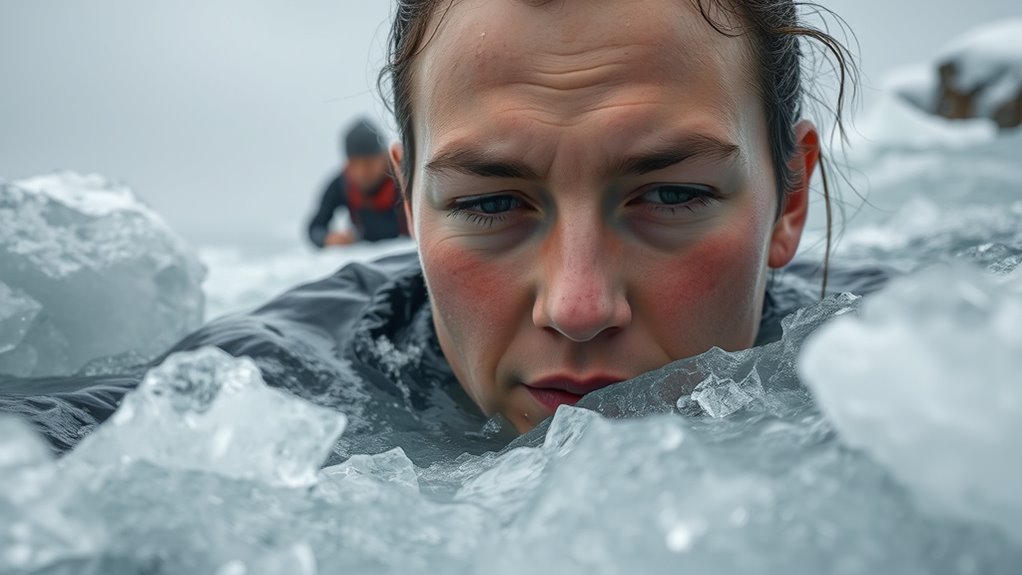
Many people overlook the importance of consistent practice. Cold-water adaptation isn’t achieved overnight, and skipping sessions or rushing into colder conditions can set you back. Instead, focus on incremental exposure, always prioritizing safety. During each session, pay close attention to your breath control and mental state. If you notice signs of distress, such as hyperventilation or panic, get out and regroup. Over time, as your mind and body adapt, you’ll find it easier to stay calm and breathe steadily, even in colder water. Developing a mindset of resilience is essential for overcoming the initial shock and staying committed to your acclimatization journey.
As an affiliate, we earn on qualifying purchases.
Frequently Asked Questions
How Long Should I Acclimate Before Cold-Water Exposure?
When you start cold-water exposure, it’s important to follow the duration guidelines for a safe acclimatization timeline. Typically, you should begin with short sessions of about 3-5 minutes, gradually increasing over 1-2 weeks. Listen to your body and avoid rushing the process. This gradual approach helps your body adapt without risking hypothermia or shock. Patience and consistency are key to safely building your cold-water tolerance.
Can Previous Cold Exposure Impact Future Acclimatization?
You might think previous cold exposure helps, but ironically, it can actually delay your acclimatization. When you’ve already been exposed, your body may temporarily resist further adaptation, thinking it’s done. This “acclimatization delay” means you could take longer to adjust the next time. So, don’t assume past exposure guarantees quick adaptation—your body might need extra time to reset and prepare for new cold challenges.
What Are Signs of Over-Acclimatization or Hypothermia Risk?
You should watch for signs of hypothermia, like intense shivering, confusion, or slow, shallow breaths. Over-acclimatization symptoms may include loss of sensation, dizziness, or fatigue. If you notice these signs, stop exposure immediately, as they indicate your body is struggling to adapt safely. Recognizing these symptoms early helps prevent serious risks, ensuring you stay safe while gradually building your cold-water tolerance.
Is There a Recommended Temperature Range for Safe Acclimatization?
When considering water temperature for safe acclimatization, it’s best to stay within a range of 50°F to 60°F (10°C to 15.5°C). Follow safety guidelines to gradually expose yourself, avoiding sudden dips into colder water. This range helps your body adapt without risking hypothermia or cold shock. Always listen to your body and consult experts if you’re unsure, ensuring a safe and effective acclimatization process.
How Does Acclimatization Differ Across Age Groups?
You might notice that acclimatization varies with age because of age-related adaptations and developmental differences. Younger individuals generally adapt more quickly due to better circulation and thermoregulatory responses, while older adults may need more time and caution due to decreased efficiency in these systems. Understanding these differences helps you tailor your acclimatization plan, ensuring safe exposure and reducing the risk of cold-related injuries across different age groups.
Conclusion
Avoiding these cold-water acclimatization mistakes is your key to safely embracing the chill. Think of it like forging your own legend—each cautious step builds resilience and confidence. Remember, even heroes face setbacks, but they learn and adapt. By respecting the cold and listening to your body, you’ll craft a story of strength and survival. Immerse yourself wisely, and let the icy waters transform you into your best, bravest self.
Evergreen bestsellers Picks
bestsellers
As an affiliate, we earn on qualifying purchases.