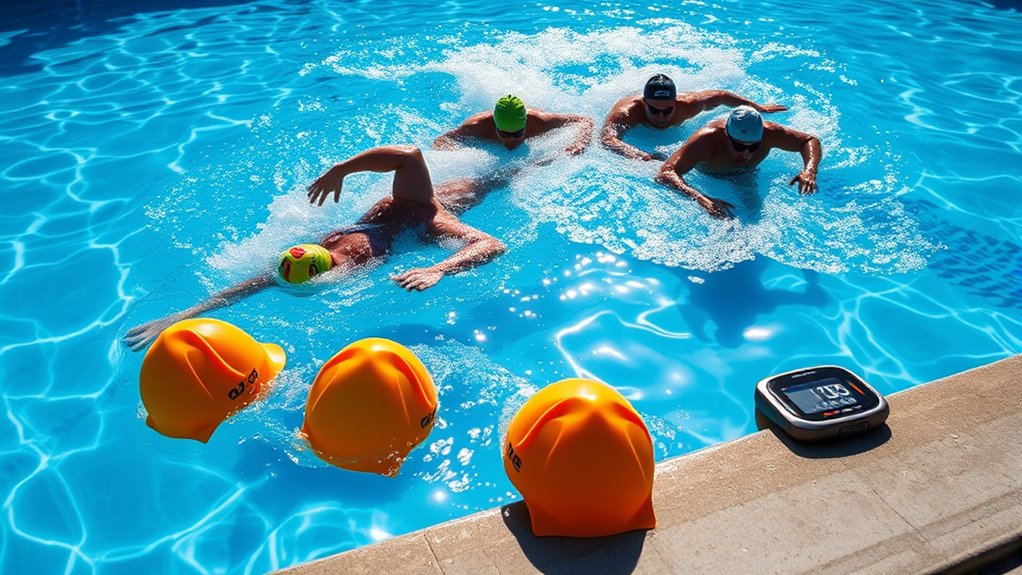

Swimming’s vital for triathlon success, and balancing your training with changeover efficiency can make a big difference. Mastering technique and breathing is essential for reducing fatigue in later disciplines. You’ll also want to practice open water skills to build confidence and improve pacing. Don’t forget quick transitions; they can save valuable seconds during your race. With dedication to both swimming and transitions, you’ll enhance your performance considerably. There’s more to uncover about optimizing your approach.
Key Takeaways
- Prioritize swimming technique and breathing exercises to enhance efficiency and reduce fatigue during the swim portion of the triathlon.
- Incorporate open water practice to develop skills for navigating waves and currents, improving confidence on race day.
- Focus on quick and efficient transitions by practicing wetsuit removal and organizing gear beforehand to save valuable time.
- Balance swim training with transition drills to ensure smooth shifts between disciplines, enhancing overall race performance.
- Consistent training in both swimming and transitions helps build familiarity, reducing anxiety and improving execution during competition.
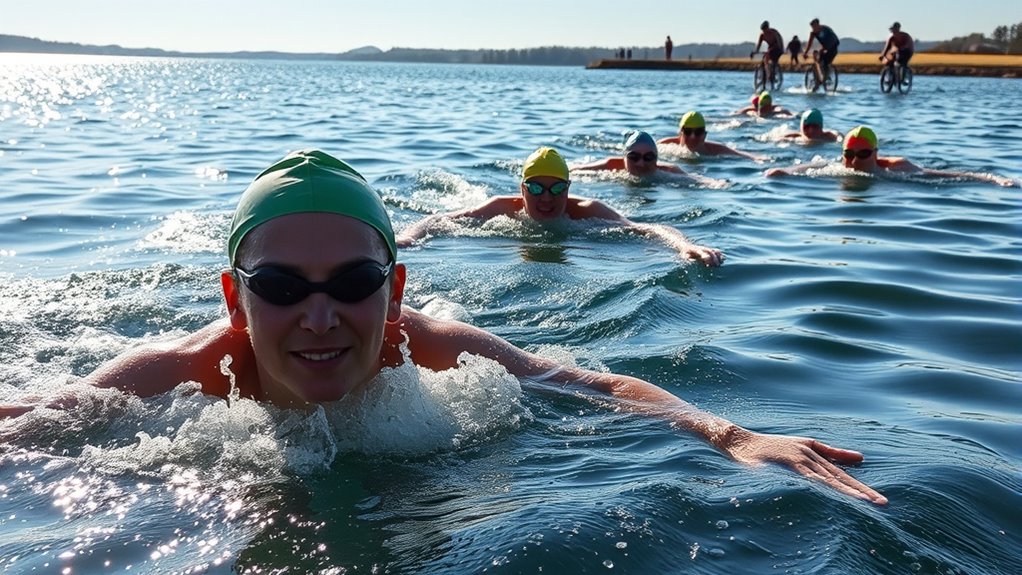
Have you ever wondered how mastering swimming can set you apart in a triathlon? The swim portion often determines your overall performance, and having a strong foundation in swimming can give you the edge you need. Focusing on your technique, especially your breathing techniques and open water skills, can markedly enhance your race experience and performance.
Mastering swimming can be your secret weapon in a triathlon, significantly influencing your overall performance.
When it comes to swimming, effective breathing techniques are vital. You’ve probably heard that proper breathing not only helps you stay relaxed but also allows you to maintain a steady rhythm. Practicing bilateral breathing, which involves breathing to both sides, can help you adapt to different conditions in open water. It keeps your neck and shoulders balanced, reducing fatigue and optimizing your stroke efficiency. As you swim, you can’t afford to waste energy gasping for air. Instead, focus on a smooth inhale and an extended exhale. The more you practice this, the more natural it’ll feel, making the swim leg of your triathlon a breeze.
Open water skills are another essential aspect of your swimming training. Unlike a pool, open water presents challenges such as waves, currents, and the unpredictability of other athletes. To prepare, you should get comfortable swimming in lakes, rivers, or oceans. The more you expose yourself to these conditions, the less anxiety you’ll feel on race day. Practice sighting to stay oriented while swimming; it’s easy to lose your direction when you can’t see the bottom. You’ll want to lift your head occasionally to spot buoys or land markers without disrupting your stroke. This technique will help you maintain a steady pace while ensuring you’re on track.
Transitioning from swimming to the bike can also be smoother if you’re well-prepared. Work on your exits from the water, as this can save precious seconds. Practice removing your wetsuit quickly, and have your gear organized for a fast transition. Keeping your mind focused and calm can make a world of difference in how you handle the switch between disciplines.
Ultimately, mastering your swimming technique, refining your breathing techniques, and honing your open water skills will set you up for success in any triathlon. Embrace the challenge, put in the effort, and you’ll find that swimming can truly become your strongest asset in the race.
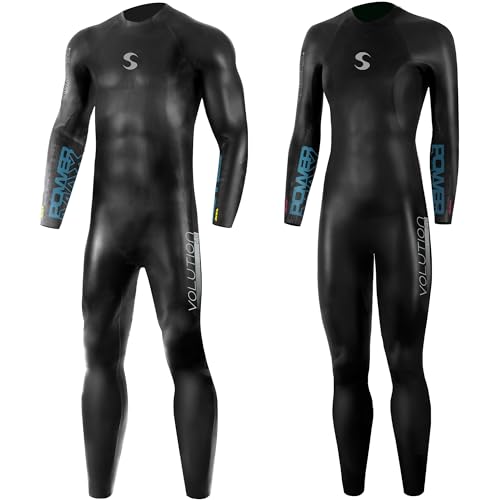
Synergy Triathlon Wetsuit 3/2mm – Volution 2.0 Full Sleeve Smoothskin Neoprene for Open Water Swimming (Men 2.0, Men's L2)
Suitable For All Levels – Athlete endorsed. Comes in wide range of sizes to ensure a perfect fit.
As an affiliate, we earn on qualifying purchases.
As an affiliate, we earn on qualifying purchases.
Frequently Asked Questions
How Do I Choose the Right Swim Gear for Triathlons?
To choose the right swim gear for triathlons, start with swim cap selection—opt for a snug fit to reduce drag and keep your hair streamlined. Next, focus on wetsuit fitting; it should be tight but not restrictive, allowing for full range of motion. Test the wetsuit in the water to ensure comfort and buoyancy. Finally, consider goggles that provide clear visibility and a secure fit for your swim.
What Are Common Swimming Injuries Triathletes Face?
You’d think swimming’s all about grace, but triathletes often face a few unwelcome companions—overuse injuries. Who knew enjoying the water could lead to shoulder pain and lower back issues? The infamous breaststroke strain strikes when you’re trying to show off your technique, making you wish you’d stuck to dog-paddling. Remember, balance your training to avoid these pesky injuries and keep your swim game strong while still looking like a pro in the water!
How Often Should I Incorporate Swimming Into My Training Plan?
You should incorporate swimming into your training plan about three to four times a week. Aim for swim session durations of 30 to 60 minutes, depending on your fitness level and goals. This frequency helps build endurance while allowing recovery time to prevent injuries. Adjust your training frequency based on how your body responds, ensuring you’re not overtraining. Consistency in your swim sessions will markedly enhance your performance over time.
What Should I Eat Before a Swim Training Session?
Imagine your body as a high-performance engine, ready to roar. Before your swim training session, fuel it with the right pre-workout snacks like bananas or energy bars for quick energy. Don’t forget your hydration strategies; sip water or a sports drink to keep your engine running smoothly. This combination primes you for an effective swim, ensuring you glide through the water with power and grace, leaving no drop of potential behind.
How Can I Improve My Mental Focus During Swimming?
To improve your mental focus during swimming, try incorporating mindfulness techniques. Before you plunge in, take a few moments to clear your mind and concentrate on your breathing. You can also use visualization exercises, imagining yourself gliding effortlessly through the water. Picture your strokes and breathing patterns in your mind. This practice not only enhances your focus but also helps you stay calm and centered, allowing for a more productive training session.

SLS3 Triathlon Transition Mat – Triathlon Gear and Accessories Must Have – Great Gift for Triathletes and Outdoor Swimmers as Wetsuit Changing Mat (Red)
BRIGHT COLORS: The bright colors of this transition mat triathlon gear make it easy for YOU to find…
As an affiliate, we earn on qualifying purchases.
As an affiliate, we earn on qualifying purchases.
Conclusion
In the grand tapestry of triathlon, swimming is the thread that weaves it all together. Embrace the water as your ally, where each stroke becomes a brushstroke on your canvas of endurance. As you glide through the waves, remember that shifts are just as crucial; they’re the bridges connecting your swimming to cycling and running. So, balance your training like a skilled artist, and you’ll create a masterpiece of performance on race day.

Swim Snorkel for Lap Swimming,No Loud gurgling Noise No Hurt Forehead No Slip Swimming Snorkeling Training for Adult/Youth,Swimmer Snorkle Center Mount Snorkel One-Way Purge Valve
Third-generation snorkel, not slide.Present swimming nose clip and swimming earplugs— Our third-generation snorkel adopts a new design, it…
As an affiliate, we earn on qualifying purchases.
As an affiliate, we earn on qualifying purchases.

Sporti Power Swim Paddles – Swimming Training Hand Paddles – Adjustable Straps – Lap Swimming Gear (Medium, Black)
𝗘𝗡𝗛𝗔𝗡𝗖𝗘 𝗬𝗢𝗨𝗥 𝗦𝗪𝗜𝗠 𝗧𝗥𝗔𝗜𝗡𝗜𝗡𝗚: Perfect for lap swimming, these Sporti Swim Paddles are specially designed for adults, both…
As an affiliate, we earn on qualifying purchases.
As an affiliate, we earn on qualifying purchases.