Interval training in swimming quickly boosts your speed and efficiency. Start with a warm-up, then swim sets of 25 to 100 meters at a fast pace, taking rest periods that match or slightly exceed your swim time. Incorporate good gear, effective breathing techniques, and a proper cool-down to maximize benefits. Gradually increase your intensity and distance to push your limits. Keep exploring strategies to enhance your training, and you’ll be on your way to swim faster than ever.
Key Takeaways
- Begin with a dynamic warm-up to prepare muscles before starting high-intensity interval sets.
- Focus on short distances (25-100 meters) at a fast pace to build speed and endurance.
- Implement rest periods equal to or slightly longer than swim times to ensure recovery.
- Gradually increase intensity or distance in your workouts for continuous improvement.
- Always conclude with a cool-down to aid in muscle recovery and enhance performance benefits.
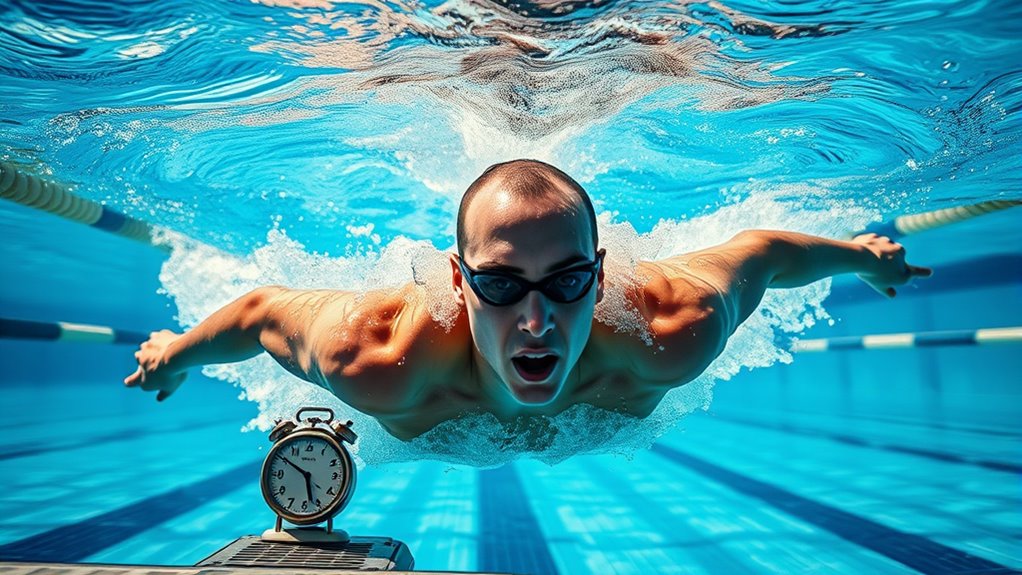
If you want to boost your swimming performance, interval training is a game-changer. It’s a proven method that helps you build speed, endurance, and overall efficiency in the water. By incorporating short bursts of high-intensity swimming with periods of rest or lower intensity, you’ll challenge your body and push your limits, ultimately leading to better race times and improved fitness levels.
Interval training transforms your swimming, enhancing speed, endurance, and efficiency through intense bursts followed by recovery.
To get started, you should first focus on swim gear selection. Choosing the right equipment can make a significant difference in your performance. Invest in a good pair of goggles that provide clear vision and comfort, as well as a well-fitted swimsuit that minimizes drag. Consider using a swim cap to streamline your head and reduce water resistance. If you’re serious about your training, you might also look into fins or paddles to enhance your workouts. These tools can help you develop strength and improve your technique during interval sessions.
Next, let’s talk about breathing techniques. Mastering your breath while swimming is vital, especially during intense interval workouts. You’ll want to practice rhythmic breathing, which allows you to maintain a steady oxygen flow while keeping your stroke efficient. Try to exhale fully underwater, as it’ll make inhaling quicker and more effective when you turn your head to breathe. Experiment with different breathing patterns to find what works best for you. For instance, if you usually breathe every two strokes, try switching to every three or four strokes during your intervals to build endurance.
Now that you’ve got your gear and breathing techniques sorted, it’s time to implement an interval training plan. Start with a warm-up to get your muscles ready. Then, aim for sets of 25 to 100 meters at a fast pace, followed by equal or slightly longer rest periods. For example, if you swim 50 meters at a sprint pace, rest for 30-60 seconds before your next interval. Over time, you can gradually increase the distance or intensity of your intervals to keep challenging yourself. Incorporating swimming performance enhancements can also take your training to the next level.
Lastly, don’t forget to cool down after your session. This part is just as important as the workout itself. A proper cool-down helps your body recover and prevents injury. Incorporating interval training into your routine will not only enhance your speed but also improve your overall swimming performance. So, gear up, refine your breathing, and plunge into those intervals!
Frequently Asked Questions
How Often Should I Incorporate Interval Training Into My Swimming Routine?
You should incorporate interval training into your swimming routine about two to three times a week. This frequency allows you to push your limits while still giving your body time to recover. Pair your sessions with effective recovery strategies like stretching and hydration to enhance your performance. Listen to your body; if you’re feeling fatigued, don’t hesitate to adjust your training frequency or take an extra rest day to prevent burnout.
Can Interval Training Help With Endurance in Swimming?
Absolutely, interval training can boost your endurance in swimming! Think of it as a workout buffet, where each set enhances your breath control and stroke efficiency. By pushing your limits with short bursts of high-intensity effort followed by rest, you’re teaching your body to adapt and sustain longer swims. You’ll notice improved stamina and a more efficient stroke, which means you can swim further without feeling exhausted. plunge in and feel the difference!
What Equipment Do I Need for Swimming Interval Workouts?
For swimming interval workouts, you’ll need essential swimming gear like a comfortable swimsuit, swim cap, and goggles. Training accessories like fins, a kickboard, and a pull buoy can enhance your workout, helping you focus on specific techniques and build strength. Don’t forget a water bottle to stay hydrated during your sessions. With the right equipment, you’ll maximize your interval training and see improvements in your speed and endurance in the pool.
Is Interval Training Suitable for Beginners in Swimming?
Absolutely, interval training can be suitable for beginners in swimming! Think of it as building a strong foundation for a house; mastering swimming fundamentals is key. By incorporating beginner techniques into your workouts, you can gradually increase your stamina and speed. Start with shorter intervals and focus on your form. As you progress, you’ll find that these sessions boost your confidence and enhance your overall swimming experience. So plunge in and enjoy!
How Do I Track My Progress With Interval Training in Swimming?
To track your progress with interval training in swimming, start by keeping detailed progress logs. Record your training metrics, like lap times, distances, and rest intervals. Use a stopwatch or a swim watch to measure your times accurately. After each session, note how you felt and any improvements. Reviewing these logs regularly will help you see trends and set achievable goals, making it easier to stay motivated and focused on your swimming journey.
Conclusion
In swimming, speed’s secret lies in savvy interval training. By mixing up your sets and pushing your pace, you’ll swiftly see significant strides in your performance. So, leap in and dedicate yourself to these dynamic drills. With dedication and determination, you’ll transform your technique and conquer the competition. Remember, every lap leads you closer to your goals. So, embrace the excitement, enjoy the journey, and watch your swimming skills soar!