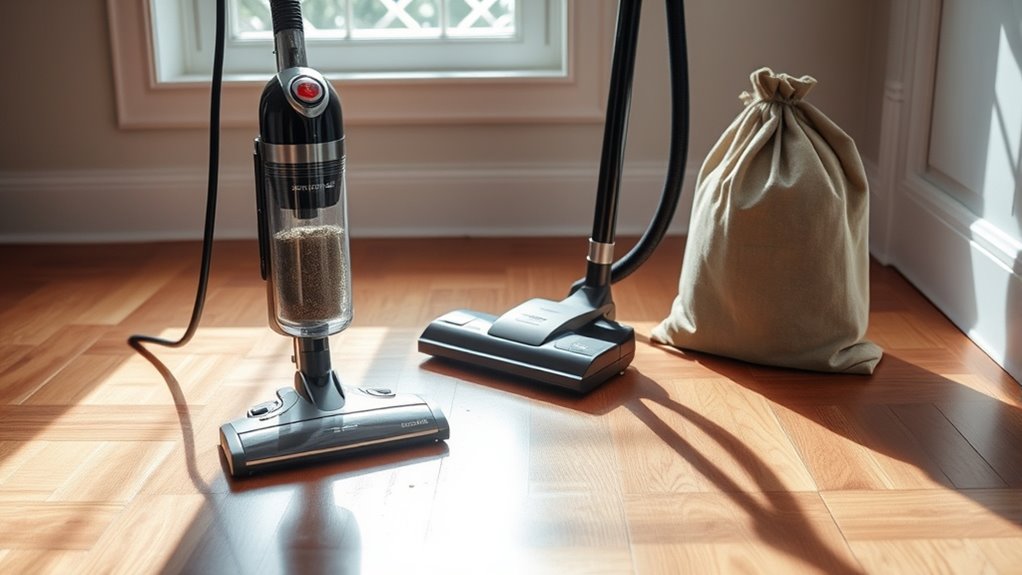

When deciding between bagged and bagless vacuums, you should weigh the pros and cons of each. Bagged models are great for allergy sufferers since they trap allergens and minimize dust exposure during disposal. On the other hand, bagless vacuums save you money since you won’t need to buy replacement bags. However, emptying a bagless vacuum can kick up dust. Both options have their merits, so keep exploring to find which one fits your cleaning needs best.
Key Takeaways
- Bagged vacuums are better for allergy sufferers due to HEPA filters and minimal dust exposure during disposal.
- Bagless vacuums eliminate ongoing costs of replacement bags but may release dust during emptying.
- Bagged models provide straightforward and mess-free dust disposal, while bagless models offer visibility of dirt levels.
- Corded vacuums generally deliver more powerful suction, while cordless models enhance mobility and convenience for quick clean-ups.
- Long-term savings may favor bagless vacuums, especially for frequent users, despite initial investment differences.

When deciding between bagged and bagless vacuums, it’s essential to contemplate your cleaning habits and preferences. Both types have their unique benefits and drawbacks, making it vital to understand how they align with your lifestyle. For instance, if you or anyone in your household suffers from allergies, you might lean towards bagged vacuums. They often come with HEPA filtration systems that trap allergens and dust more effectively, ensuring cleaner air in your home.
Bagged vacuums have a straightforward approach to dust collection. When the bag fills up, you simply replace it, minimizing your exposure to dust and debris during disposal. This feature can be particularly appealing if you dislike the mess that sometimes comes with emptying a bagless vacuum. However, you need to consider the ongoing cost of buying replacement bags, which can add up over time. If you value convenience and don’t mind spending a little extra on bags, this could be a worthwhile investment.
Bagged vacuums offer easy dust disposal, reducing exposure during emptying, but keep in mind the ongoing cost of replacement bags.
On the other hand, bagless vacuums offer the advantage of never having to buy bags. You can empty the dust container directly into the trash, making it a cost-effective option in the long run. This type also allows you to see how much dirt you’re collecting, which can be satisfying and help you gauge when it’s time to clean. However, keep in mind that emptying the container can sometimes stir up dust, which might not be suitable for allergy sufferers. If you choose a bagless model, look for one with a good HEPA filtration system to mitigate allergens.
When it comes to corded vs cordless options, both bagged and bagless vacuums offer models in each category. Corded vacuums typically provide more powerful suction and don’t require recharging, which can be a significant advantage for larger homes. However, if you value mobility and convenience, a cordless vacuum may be the way to go. These models allow you to easily reach tight spaces and are generally lighter, making them more user-friendly for quick clean-ups. Additionally, similar to electric dirt bikes, some bagless vacuums provide excellent suction power, making them suitable for various cleaning tasks.
Frequently Asked Questions
Which Type Is Better for Allergy Sufferers?
If you’re an allergy sufferer, bagged vacuums are often better for you. They typically come with HEPA filters that trap allergens effectively, ensuring cleaner air as you vacuum. The sealed bags also provide excellent allergen containment, preventing dust and particles from escaping back into your home. While bagless models can be convenient, they might release allergens during emptying. So, consider a bagged vacuum for a healthier, allergy-friendly environment.
Are Bagged Vacuums More Expensive to Maintain?
Yes, bagged vacuums often have higher maintenance costs. You’ll need to regularly purchase replacement bags, which adds to the overall cost over time. In a cost comparison, while the initial price might be similar, the ongoing expense of bags can make bagged models pricier in the long run. However, if you prioritize cleaner air and less mess, the extra maintenance might be worth it for you.
Can Bagless Vacuums Effectively Clean Pet Hair?
Yes, bagless vacuums can effectively clean pet hair. They often have larger dust capacity, allowing you to pick up more hair without frequent emptying. However, you’ll need to stay on top of filter maintenance to guarantee peak performance. Regularly cleaning or replacing the filters helps maintain suction power, which is vital for tackling stubborn pet hair. So, with proper care, you’ll find a bagless vacuum can be a great choice for pet owners.
How Often Should Vacuum Bags Be Replaced?
You should replace vacuum bags every 1 to 3 months, depending on how often you vacuum. Notably, studies show that a full vacuum bag can reduce suction power by up to 50%. To maintain peak performance, keep track of your bag change frequency. If you have pets or a high-traffic home, you might need to replace them more often. Regular vacuum bag replacement ensures your vacuum works efficiently and keeps your home clean.
What Is the Lifespan of a Bagless Vacuum?
A bagless vacuum typically lasts around 5 to 10 years, depending on usage and maintenance. To extend its lifespan, keep an eye on the vacuum filter and clean or replace it regularly. Also, pay attention to the dust bin capacity; overfilling can strain the motor. By properly maintaining these components, you can guarantee your vacuum runs efficiently and lasts longer, making your cleaning routine smoother and more effective.
Conclusion
When choosing between bagged and bagless vacuums, it really boils down to your preferences and needs. Did you know that bagged vacuums can hold up to 50% more dirt and allergens compared to their bagless counterparts? This means less frequent emptying and potentially better air quality in your home. Whether you value convenience or cleanliness, both options have their unique advantages. Ultimately, it’s about finding the right fit for your lifestyle and cleaning habits!