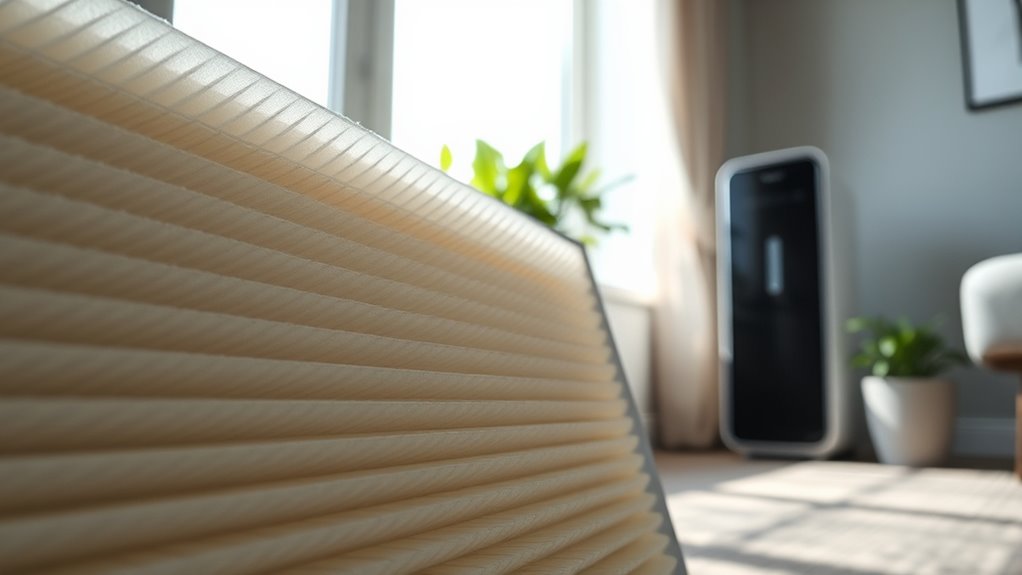
HEPA filters are key for improving your indoor air quality. They capture up to 99.97% of airborne particles like dust, pollen, and pet dander. Made from dense fiberglass mats, these filters allow for efficient airflow while trapping harmful pollutants. Regular maintenance, including replacing filters every 6 months to a year, guarantees they perform at their best. By investing in HEPA filters, you’ll create a healthier living environment. Keep exploring to discover more benefits of these essential tools.
Key Takeaways
- HEPA filters capture up to 99.97% of airborne particles, significantly enhancing indoor air quality.
- They effectively remove dust, pollen, pet dander, bacteria, and some viruses from living spaces.
- Constructed from dense fiberglass mats, HEPA filters balance high filtration efficiency with adequate airflow for HVAC systems.
- Regular maintenance and replacement (every 6 months to 1 year) are crucial for optimal filter performance.
- Investing in HEPA filters contributes to healthier indoor environments, especially for those with allergies or respiratory issues.
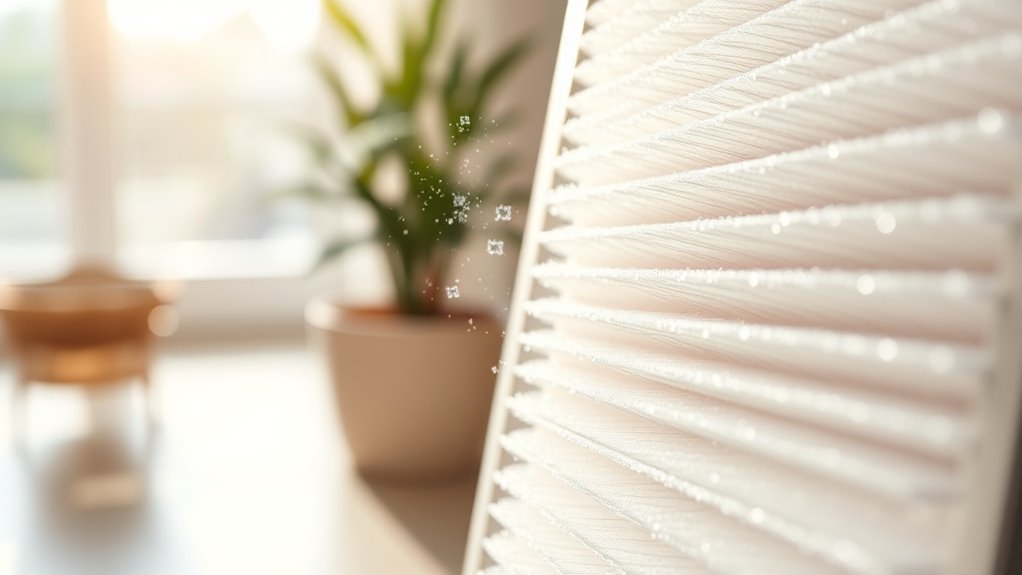
You might be surprised to learn that HEPA filters can trap up to 99.97% of airborne particles, making them a popular choice for improving indoor air quality. These filters are designed to capture a wide range of pollutants, including dust, pollen, pet dander, and even some bacteria and viruses. When you invest in a HEPA filter, you’re not just getting a piece of equipment; you’re making a vital step toward creating a healthier living environment.
One of the key factors that contribute to the efficiency of HEPA filters is the type of filter materials used in their construction. Typically, these filters are made from a dense mat of fiberglass fibers, arranged in a way that maximizes particle capture while allowing adequate air flow. This design is essential because it means that the filter doesn’t just trap particles; it does so without appreciably impeding your air conditioning or heating system. When you choose a HEPA filter, you’re opting for a solution that balances efficiency with practicality, enhancing your home’s air quality without causing strain on your HVAC system.
Efficiency ratings are another important aspect to think about. A true HEPA filter must meet strict standards set by the U.S. Department of Energy, ensuring that it can capture particles as small as 0.3 microns with at least 99.97% efficiency. This high efficiency rating is what sets HEPA filters apart from standard air filters, which often can’t capture as small of particles. So, when you see a product labeled as HEPA, you can trust that it’s been tested and proven to perform at a high level.
When you’re shopping for a HEPA filter, you should also look at the recommended lifespan of the filter. Most HEPA filters need to be replaced every six months to a year, depending on usage and the level of pollutants in your home. Regular maintenance is key to maintaining their effectiveness, ensuring that you continue to enjoy clean air. Additionally, dog owners may benefit from using HEPA filters, as they help reduce allergens like pet dander in the home.
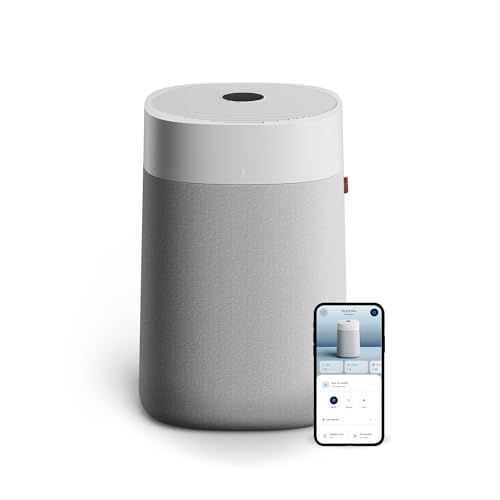
BLUEAIR Air Purifiers for Large Rooms, Cleans 3,048 Sqft In One Hour, HEPASilent Smart Air Cleaner For Home, Pets, Allergies, Virus, Dust, Mold, Smoke - Blue Pure 211i Max
BLUEAIR’S TOP-PERFORMING AIR PURIFIER LINE: Blue family’s new Pure Max series with our proprietary HEPASilent performance now even...
As an affiliate, we earn on qualifying purchases.
Frequently Asked Questions
How Often Should I Replace My HEPA Filter?
You should replace your HEPA filter every 6 to 12 months, depending on usage and air quality. If you notice decreased airflow or increased dust, it might be time for a change sooner. Regularly checking your filter’s lifespan can help maintain peak performance. Keep in mind that high-traffic areas or homes with pets may require more frequent replacements to ensure you’re breathing the best air possible.
Can HEPA Filters Remove Odors From the Air?
HEPA filters can’t perform magic, but they’re great for air purification! While they excel in trapping tiny particles, they don’t effectively remove odors. For true odor elimination, you’ll need additional solutions like activated carbon filters or air purifiers with specialized features. Combining these tools can create a fresher environment in your home. So, if you want to tackle those lingering smells, consider supplementing your HEPA filter with other options.
Are All HEPA Filters the Same Quality?
No, not all HEPA filters are the same quality. Their filter material and filter efficiency can vary considerably. Higher-quality HEPA filters use denser materials that capture smaller particles more effectively, while lower-quality options may not meet the standard. When choosing a filter, check its efficiency rating and confirm it’s certified to meet HEPA standards. Investing in a good quality filter can greatly improve the air you breathe in your home.
Do HEPA Filters Work for Smoke Removal?
Yes, HEPA filters do work for smoke removal! They’re excellent at smoke particle filtration, capturing tiny particles from tobacco or wildfire smoke. However, to maximize effectiveness, make sure your air purifier is compatible with HEPA filters. When used in a quality air purifier, these filters can considerably improve your indoor air quality by reducing smoke and other harmful particles. You’ll breathe easier knowing you’ve taken steps to minimize smoke exposure!
Can I Wash and Reuse a HEPA Filter?
You can’t have your cake and eat it too when it comes to washing HEPA filters. Most manufacturers advise against it since washing can damage the filter’s durability and effectiveness. Instead, consider using a vacuum cleaner with a brush attachment for light cleaning. If you’re looking for longevity, simply replace the filter regularly according to the manufacturer’s guidelines, ensuring peak performance without any hassle from cleaning methods that could backfire.

PuroAir 240 HEPA Air Purifier for Home Large Rooms - Covers Up To 1,000 Sq Ft - Filters Up To 99.9% of Pollutants, Smoke, Pollen, Dust - Quiet HEPA Air Filter - Air Purifiers for Bedroom
Cleaner Air in Minutes: PuroAir is proven to filter the pollutants lurking in your home’s air. This large...
As an affiliate, we earn on qualifying purchases.
Conclusion
In summary, HEPA filters are your best bet for boosting indoor air quality. They capture countless contaminants, creating cleaner, crisper air for you and your loved ones. By investing in these mighty machines, you’re not just filtering dust and debris; you’re fostering a fresher, healthier haven. So, take the plunge and breathe easy—these filters promise a positive, pleasing environment for all who enter your space. Don’t underestimate their power; your lungs will thank you!

CADPXS Shield-550 Air Scrubber 550 CFM with 3-Stage Filtration, Negative Air Machine, Airborne Cleaner HEPA Scrubber, Water Damage Restoration Equipment, Commercial Air Purifier
【Whole-Home HEPA Air Scrubber】 CADPXS Shield-550 HEPA air purifier removes large airborne particles, including smoke, pet dander, pollen,...
As an affiliate, we earn on qualifying purchases.

VEVOR Air Scrubber with 3-Stage Filtration, Stackable Negative Air Machine 550 CFM, Air Cleaner with MERV10, Carbon, H13 HEPA, for Home, Industrial and Commercial Use
3-stage Filtration: This air scrubber features a three-stage filtration system consisting of a pre-filter (MERV-10), carbon filter, and...
As an affiliate, we earn on qualifying purchases.