When vacuuming carpets, use a vacuum with a HEPA filter and a rotating brush to lift dust and allergens. Make sure to cover the same area multiple times for stubborn dirt. For hardwood floors, opt for a specialized vacuum that won’t scratch the surface and move in the direction of the wood grain. Follow up with a microfiber mop to pick up remaining particles. There’s plenty more to discover about maximizing your cleaning routine.
Key Takeaways
- Use a vacuum with a HEPA filter for carpets to trap allergens and dust mites effectively.
- For carpets, vacuum multiple times over the same area to dislodge stubborn dirt and allergens.
- Utilize a vacuum designed for hardwood floors to prevent scratches and maintain surface integrity.
- Always follow hardwood vacuuming with a microfiber mop to capture any remaining dust particles.
- Tailor cleaning techniques based on surface type to optimize allergen removal and indoor air quality.

When it comes to keeping your home clean, the choice between vacuuming carpets and hardwood floors can be a bit tricky. Each surface has its own unique challenges, especially when it comes to dust mite removal and allergens control. You need to think about the best techniques to tackle both effectively, ensuring a clean and healthy environment for you and your family.
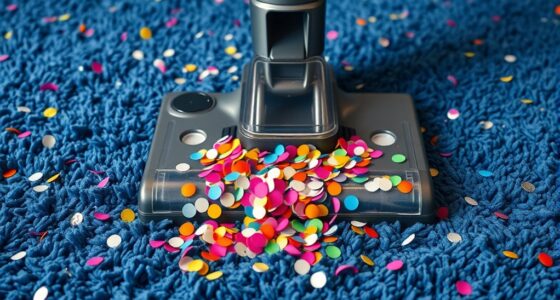
If you’ve got carpets, you know they can be a magnet for dirt, dust, and allergens. Regular vacuuming is essential, but you need to use the right technique to get the job done. Start by choosing a vacuum with a HEPA filter, as this type is designed to capture the tiniest particles, including dust mites, that often lurk deep within the carpet fibers. When you vacuum, make sure to go over the same area multiple times. This helps to dislodge those stubborn allergens and removes them efficiently. Consider using a vacuum with a rotating brush, too; it’s great for loosening dirt that gets trapped. Don’t forget to pay attention to corners and edges where dust tends to accumulate.
On the other hand, hardwood floors present a different set of challenges. While they may seem easier to clean at first glance, they can also harbor allergens if not maintained properly. You’ll want to use a vacuum specifically designed for hardwood, as traditional vacuums can scratch the surface. When vacuuming, keep the nozzle close to the floor, and move in the direction of the grain to avoid damaging the wood. This technique not only helps with effective dirt removal but also assists in controlling allergens. After vacuuming, a quick sweep with a microfiber mop can help capture any remaining dust particles.
Whichever surface you’re cleaning, remember that consistent maintenance is key. Set up a regular vacuuming schedule that accommodates both your carpets and hardwood floors. This way, you can stay ahead of dust mites and other allergens, keeping your home’s air quality in check. Additionally, consider using cleaning products that specifically target allergens; they can enhance your dust mite removal efforts and contribute to a healthier living space. Furthermore, utilizing data-driven strategies for your cleaning routine can yield measurable results in maintaining a cleaner home environment.

Shark Upright Vacuum, Navigator Lift-Away Deluxe with Large Dust Cup Capacity, HEPA Filter, Swivel Steering, Upholstery Tool & Crevice Tool, Blue, NV360
POWERFUL SUCTION: Deep-clean carpets and tackle bare floors with multi-surface powerful suction.
As an affiliate, we earn on qualifying purchases.
As an affiliate, we earn on qualifying purchases.
Frequently Asked Questions
How Often Should I Vacuum My Carpets and Hardwood Floors?
You should vacuum your carpets at least once a week, while hardwood floors can be vacuumed every two weeks, depending on foot traffic. If you have pets or allergies, consider increasing your vacuuming frequency. Incorporating a cleaning schedule helps maintain your home’s cleanliness and extends the life of your flooring. Don’t forget to use the right attachments for each surface to guarantee effective cleaning and prevent damage.
What Vacuum Types Are Best for Carpets Versus Hardwood Floors?
When you’re choosing a vacuum, think about how a gentle breeze glides over hardwood versus the cozy embrace of carpet. For carpets, a vacuum with a strong motor and a HEPA filter works wonders, capturing dust and allergens. On hardwood, a lightweight, cordless vacuum with soft bristles is ideal, letting you easily maneuver without scratching the surface. Cordless vacuums offer the freedom to clean without being tethered, making your cleaning routine a breeze.
Can I Use the Same Vacuum for Both Surfaces?
Yes, you can use the same vacuum for both surfaces, but it’s best to select a model with vacuum compatibility. Look for one that has surface specific tools designed for carpets and hardwood floors. A vacuum with adjustable settings or interchangeable attachments will make your cleaning more effective. If you often switch between surfaces, investing in a versatile vacuum ensures you tackle dirt and debris on both types of flooring efficiently.
What Additional Tools Are Helpful for Cleaning Hardwood Floors?
To dance gracefully across the sleek surface of hardwood floors, you’ll need a few trusty companions. Dust mops glide effortlessly, sweeping away debris like a gentle breeze. Pair them with microfiber cloths, which trap dust and dirt like a spider’s web, ensuring a thorough clean. These tools not only protect your floors but also enhance their natural beauty, letting them shine like polished jewels under the warm glow of your home.
Are There Specific Vacuuming Techniques for Pet Hair on Carpets?
To effectively remove pet hair from carpets, use a vacuum with a strong suction and a specialized pet hair attachment. Start by vacuuming in different directions to lift trapped hair, ensuring thorough carpet maintenance. Don’t forget to vacuum edges and corners where hair tends to accumulate. For stubborn spots, consider using a rubber broom or a lint roller afterward. Regularly maintaining your carpet will keep it looking fresh and free from pet hair!

Selgo Hardwood Universal Vacuum Cleaner Floor Brush 1 ¼ inch (1.25'') (32mm) Inner Diameter with Horse Hair Soft Bristles 10” Wide (White – Plastic)
UNIVERSAL FIT FOR MOST VACUUMS – Featuring a 1 ¼ inch (1.25'') (32mm) inner diameter, this floor brush…
As an affiliate, we earn on qualifying purchases.
As an affiliate, we earn on qualifying purchases.
Conclusion
In summary, whether you’re vacuuming carpets or hardwood floors, using the right techniques can make all the difference. Did you know that vacuuming carpets can trap up to 80% of dust and allergens? This highlights the importance of proper cleaning methods for your health. So, next time you tackle your floors, remember to adjust your vacuum settings and be mindful of the surface you’re cleaning. Your home—and your well-being—will thank you!

Microfiber Mops for Hardwood Floor Cleaning – BPAWA Flat Floor Mop with 4 Washable Pads for Laminate Wood Tile Vinyl Home Kitchen Bathroom – 59" Adjustable Handle
Microfiber Mops for Floor Cleaning: Flat floor mop with adjustable long handle, flexible lightweight but sturdy, great for…
As an affiliate, we earn on qualifying purchases.
As an affiliate, we earn on qualifying purchases.

FEPPO Mattress Vacuum Cleaner, 16Kpa Bed Vacuum Cleaner with 253.7nm UV-C Light, 140°F Heat, HEPA Filter & Ultrasonic, Versatile Handheld Vacuums for Bed, Sofa, Couch, Crib(Corded, 500W)
【High-Efficiency Deep Cleaning】Our UV mattress vacuum cleaner features a powerful 500W motor, providing 16kPa of strong suction and…
As an affiliate, we earn on qualifying purchases.
As an affiliate, we earn on qualifying purchases.