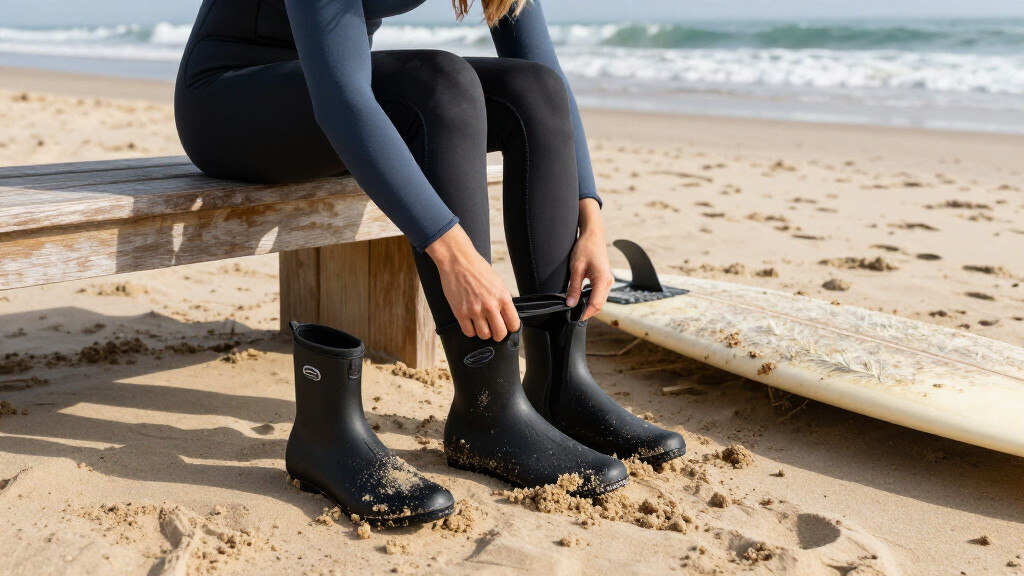
The best surf boots balance warmth, grip, and a secure fit without making it harder to feel your board. My best overall pick is the O’Neill Heat 3mm Round Toe Neoprene Boot, a practical middle ground for surfers who want insulation without the bulk of a winter boot. For colder sessions, the O’Neill Heat 7mm Round Toe Booties put warmth first, while the O’Neill SuperFreak 2mm Tropical Split-Toe Neoprene Boots suit warm-water surfers who want a close, flexible fit. The main tradeoffs are thickness versus board feel, split-toe stability versus easy on-off, and surf-specific construction versus lower-cost water shoes. Read on for the full breakdown and help matching a boot to your water temperature and surfing needs.

Get sports gear delivered free with Prime
- Fast, free delivery on millions of items
- Prime Video, Amazon Music and more included
- Member-only deals all year
Complete the kit


Key Takeaways
- The O’Neill Heat 3mm Round Toe is the strongest all-around choice in this lineup because it sits between thin tropical booties and much warmer cold-water models.
- The 7mm O’Neill Heat is the clear warmth-first option, but its extra insulation is unnecessary bulk for mild water and can reduce board feel.
- O’Neill‘s 2mm SuperFreak models target warm conditions; the split-toe version prioritizes toe separation and a more locked-in feel, while the round-toe version favors a familiar fit.
- The lineup includes several lower-cost dive shoes and neoprene socks, but they are not automatic substitutes for surf boots: sole protection, fit security, and board contact can differ.
- Split-toe and round-toe designs solve different fit preferences rather than making one style universally better; the right choice depends on comfort, stance, and how much separation you want between your toes.
| O’Neill Heat 3mm Round Toe Neoprene Boot |  | Best Overall | Neoprene thickness: 3 mm | Fabric: 90% neoprene, 10% nylon | Sole: Rubber | VIEW LATEST PRICE | See Our Full Breakdown |
| Phantom Aquatics Rapido Boutique Collection Enclave 3.0 Neoprene Water Shoe |  | Best for Rocky Entries | Model: Enclave 3.0 | Neoprene: 3 mm Nylon-2 | Sole: Ribbed anti-slip | VIEW LATEST PRICE | See Our Full Breakdown |
| O’Neill SuperFreak 2mm Tropical Round Toe Neoprene Boots |  | Best for Warm-Water Beginners | Material: FluidFlex neoprene and rubber | Thickness: 2 mm | Toe shape: Round toe | VIEW LATEST PRICE | See Our Full Breakdown |
| O’Neill SuperFreak 2mm Tropical Split-Toe Neoprene Boots |  | Best for Warm-Water Board Feel | Brand: O’Neill | Material: 2mm FluidFlex neoprene | Design: Split toe | VIEW LATEST PRICE | See Our Full Breakdown |
| SUJAYU 3mm Neoprene Diving Socks |  | Best Lightweight Coverage | Material: Neoprene | Thickness: 3 mm | Fit: Adjustable, snug fit | VIEW LATEST PRICE | See Our Full Breakdown |
| Ho Stevie! 5mm Surfing Wetsuit Booties |  | Best for Cold-Water Value | Material: 5mm limestone-based neoprene | Thickness: 5 mm | Toe design: Round toe | VIEW LATEST PRICE | See Our Full Breakdown |
| O’Neill Ninja 3mm Split-Toe Neoprene Boots |  | Best for Board Feel | Material: Neoprene rubber with UltraFlex neoprene | Thickness: 3 mm | Toe design: Anatomical split toe | VIEW LATEST PRICE | See Our Full Breakdown |
| O’Neill Heat 7mm Round Toe Booties |  | Best for the Coldest Conditions | Fabric: Neoprene rubber | Thickness: 7 mm | Toe style: Round toe | VIEW LATEST PRICE | See Our Full Breakdown |
| Skyone 3 mm Neoprene Dive Boots with Rubber Soles |  | Best for Multi-Activity Use | Brand: Skyone | Model: 3029 | Material: Neoprene | VIEW LATEST PRICE | See Our Full Breakdown |
| O’Neill Heat 3mm Split Toe Neoprene Boot |  | Best for Flexible Everyday Surfing | Thickness: 3 mm | Toe design: Split toe | Outer material: Neoprene | VIEW LATEST PRICE | See Our Full Breakdown |
| Skyone 5 mm Neoprene Dive Boots with Anti-Slip Rubber Sole |  | Best for Cold-Water Versatility | Material: 5 mm neoprene | Sole: Anti-slip rubber | Closure: Zipper | VIEW LATEST PRICE | See Our Full Breakdown |
| 3mm Neoprene Water Socks with Rubber Grip |  | Best Lightweight Value | Material: 90% neoprene, 10% nylon | Thickness: 3 mm | Fit: Snug | VIEW LATEST PRICE | See Our Full Breakdown |
| O’Neill Reactor Reef Boot, Black/Coal |  | Best for Warm-Water Reef Protection | Material: Neoprene | Thickness: 2 mm | Weight: 6.08 ounces | VIEW LATEST PRICE | See Our Full Breakdown |
| surf boot | Material | Thickness | Sole |
|---|---|---|---|
| O’Neill Heat 3mm Round Toe Neo | — | — | Rubber |
| Phantom Aquatics Rapido Boutiq | — | — | Ribbed anti-slip |
| O’Neill SuperFreak 2mm Tropica | FluidFlex neoprene and rubber | 2 mm | Textured rubber |
| O’Neill SuperFreak 2mm Tropica | 2mm FluidFlex neoprene | — | Textured rubber |
| SUJAYU 3mm Neoprene Diving Soc | Neoprene | 3 mm | Rubber grip |
| Ho Stevie! 5mm Surfing Wetsuit | 5mm limestone-based neoprene | 5 mm | — |
| O’Neill Ninja 3mm Split-Toe Ne | Neoprene rubber with UltraFlex neoprene | 3 mm | Lightweight micro-diamond textured |
| O’Neill Heat 7mm Round Toe Boo | — | 7 mm | — |
| Skyone 3 mm Neoprene Dive Boot | Neoprene | 3 mm | — |
| O’Neill Heat 3mm Split Toe Neo | — | 3 mm | — |
| Skyone 5 mm Neoprene Dive Boot | 5 mm neoprene | — | Anti-slip rubber |
| 3mm Neoprene Water Socks with | 90% neoprene, 10% nylon | 3 mm | — |
| O’Neill Reactor Reef Boot | Neoprene | 2 mm | Extra-thick textured rubber |
More Details on Our Top Picks
O’Neill Heat 3mm Round Toe Neoprene Boot
I’d put the O’Neill Heat 3mm Round Toe first for surfers who want one boot for warmth, foot protection, and everyday versatility. Its taped, blindstitched seams and anti-flush fit features help limit water entry, while the textured rubber sole adds grip on rough entries and reef. Compared with the warmer O’Neill Heat 7mm, this 3mm version is less cumbersome for moderate conditions; the SuperFreak 2mm models are lighter for warm water but give up insulation. The tradeoff is that 3mm can feel too warm in tropical surf, and the snug fit may take care when choosing a size, especially between sizes. I’d favor this over the more dive-oriented Phantom Aquatics Enclave when surfing is the main use.
Pros:- 3mm neoprene balances warmth and flexibility for moderate conditions.
- Textured rubber sole helps with traction and protection on rough surfaces.
- Taped, blindstitched seams and anti-flush features help reduce water entry.
- Heel pull tab makes putting the boots on and removing them easier.
Cons:- May feel too warm for tropical or otherwise warm-water sessions.
- Snug sizing can be challenging for shoppers between sizes.
Best for: Surfers in cool or changeable water who want moderate insulation, a protective sole, and a boot that can also serve for other water sports.
Not ideal for: Warm-water surfers prioritizing the lightest feel, or buyers who need the extra insulation of a 5mm or 7mm boot.
- Neoprene thickness:3 mm
- Fabric:90% neoprene, 10% nylon
- Sole:Rubber
- Shaft height:7 inches
- Toe shape:Round
- Seams:Taped and blindstitched
- Origin:Imported
Our verdict“Choose this as a versatile moderate-water surf boot if you want more insulation than a 2mm tropical boot without moving up to a heavier 7mm option.”
Phantom Aquatics Rapido Boutique Collection Enclave 3.0 Neoprene Water Shoe
The Phantom Aquatics Enclave 3.0 is the pick I’d favor when getting across rocks or shells is as much a concern as warmth. Its ribbed anti-slip sole and vulcanized toe and heel caps are aimed at protecting the areas that take the most contact, while 3mm Nylon-2 neoprene keeps the boot flexible enough for movement. Compared with the O’Neill Heat 3mm, the Enclave puts more emphasis on reinforced protection and grip than on a specifically surf-focused fit system. Its short-boot, diving-boot design can suit mixed water activities, but surfboard-focused buyers may prefer the lighter, more surf-specific feel of O’Neill’s SuperFreak 2mm boots. The 3mm insulation is also not the choice for very cold water, and its protective construction may feel like more boot than warm-water surfers need.
Pros:- Ribbed anti-slip sole is suited to slippery rocks and shells.
- Vulcanized toe and heel caps add protection in high-contact areas.
- Flexible 3mm Nylon-2 neoprene supports movement while adding insulation.
- Glued and blindstitched seams provide water-resistant construction.
Cons:- 3mm insulation may not be enough for very cold-water sessions.
- Its diving-boot emphasis may feel less surf-specific than the O’Neill SuperFreak models.
Best for: Surfers and water-sport users who frequently cross rocky or shell-covered shorelines and want a flexible 3mm boot with reinforced toe and heel areas.
Not ideal for: Warm-water surfers seeking minimal bulk and maximum board feel, or cold-water users who need thicker insulation than 3mm.
- Model:Enclave 3.0
- Neoprene:3 mm Nylon-2
- Sole:Ribbed anti-slip
- Toe and heel:Vulcanized rubber caps
- Stitching:Glued and blindstitched
- Heel type:Flat
- Item weight:1.4 pounds
- Warranty:1 year manufacturer
Our verdict“Pick the Enclave 3.0 when reinforced protection and grip over rocky access matter more than a lightweight, surf-specific feel.”
O’Neill SuperFreak 2mm Tropical Round Toe Neoprene Boots
For warm-water sessions where a boot is mainly there to protect against reef and abrasion, I’d choose the O’Neill SuperFreak 2mm Tropical Round Toe. The lightweight FluidFlex neoprene is less insulating than the O’Neill Heat 3mm, which helps keep the boot from feeling unnecessarily warm when temperatures rise. A round toe gives the toes room to move, while the ankle cinch cord and forefoot strap help hold the boot close to the foot. Compared with the split-toe SuperFreak, this version avoids a divided toe fit, which may suit buyers who prefer a conventional shape. The tradeoff is limited cold-water warmth, and the snug fit may not appeal to anyone who dislikes close-fitting footwear. Flatlock seams are another reason I’d keep this to warmer conditions rather than expecting the water-blocking feel of the Heat 3mm.
Pros:- Lightweight 2mm FluidFlex neoprene suits warm-water use.
- Round-toe shape avoids the divided fit of the SuperFreak split-toe model.
- Ankle cinch cord and forefoot strap help secure the fit.
- Textured rubber sole offers traction and abrasion protection.
Cons:- Provides less insulation than the O’Neill Heat 3mm in cooler water.
- Flatlock seams and warm-water design are not aimed at maximum water retention.
- Snug fit may not suit surfers who prefer more room around the foot.
Best for: Warm-water surfers new to surf boots who want a conventional round-toe shape, lightweight reef protection, and adjustable fit features.
Not ideal for: Cold-water surfers needing substantial insulation, or anyone who prefers a relaxed fit rather than a snug boot.
- Material:FluidFlex neoprene and rubber
- Thickness:2 mm
- Toe shape:Round toe
- Seam construction:Flatlock stitching
- Closure:Drawstring ankle cinch cord and forefoot strap
- Sole:Textured rubber
- Origin:Imported
Our verdict“Choose this round-toe SuperFreak for warm-water surfing when light protection matters more than cold-water insulation.”
O’Neill SuperFreak 2mm Tropical Split-Toe Neoprene Boots
I’d steer warm-water surfers who value foot articulation toward the O’Neill SuperFreak 2mm Tropical Split-Toe. Its split-toe shape separates the big toe from the rest, giving this model a different feel from the round-toe SuperFreak: the aim is more natural movement and board feedback, not extra warmth. Lightweight 2mm FluidFlex neoprene, a textured rubber sole, and the ankle cinch cord plus forefoot strap create a secure, low-bulk setup. Compared with the round-toe version, the divided shape is the defining choice; compared with the O’Neill Heat 3mm, this boot gives up insulation for a lighter tropical-water fit. That tradeoff rules it out for colder sessions, and it needs to fit snugly to help limit water entry. I’d skip it if a split-toe sensation feels restrictive or unfamiliar.
Pros:- Split-toe design supports natural movement and board feel.
- Lightweight 2mm FluidFlex neoprene suits tropical conditions.
- Textured rubber sole helps with traction and abrasion protection.
- Ankle cinch cord and forefoot strap help keep the boot secure.
Cons:- Too lightly insulated for many cold-water conditions.
- Snug fit is needed to help limit water entry.
- Split-toe feel may not suit surfers who prefer the round-toe SuperFreak.
Best for: Warm-water surfers who want a lightweight boot with a split-toe shape for natural movement and board feel.
Not ideal for: Cold-water surfers needing more insulation, or buyers who prefer a conventional round-toe fit.
- Brand:O’Neill
- Material:2mm FluidFlex neoprene
- Design:Split toe
- Sole:Textured rubber
- Closure:Ankle cinch cord and forefoot strap
- Seam construction:Flatlock
- Item weight:6 ounces
- Warranty:1-year limited manufacturer warranty
Our verdict“Pick this for warm-water sessions if split-toe articulation and a lightweight feel matter more than insulation.”
SUJAYU 3mm Neoprene Diving Socks
The SUJAYU 3mm Neoprene Diving Socks make the most sense for buyers who want a flexible layer against rough ground without the structure of a conventional surf boot. Their stretchy neoprene and rubber grip sections add warmth and traction for short crossings over slippery or abrasive surfaces. Compared with the O’Neill Heat 3mm, these socks are a simpler, less structured option; they are also less protective than the Phantom Aquatics Enclave 3.0, which has reinforced toe and heel caps. That lighter construction is useful for swimmers and surfers who dislike a bulky boot, but the product is explicitly not fully waterproof, so I wouldn’t choose it when keeping water out is the main goal. Hand washing and flat drying add care steps that the more conventional boot options may avoid.
Pros:- Stretchy 3mm neoprene adds warmth while allowing flexible movement.
- Rubber grips improve traction on slippery surfaces.
- Provides a light barrier against rough ground, rocks, and shells.
- Suitable for several water activities, including surfing and swimming.
Cons:- Not fully waterproof, so it is not a substitute for a more water-resistant surf boot.
- Less structured and protective than the O’Neill Heat 3mm or Phantom Aquatics Enclave 3.0.
- Requires hand washing and flat drying.
Best for: Swimmers and warm-to-moderate-water surfers who want a flexible 3mm layer with grip for brief contact with rough or slippery surfaces.
Not ideal for: Surfers needing a structured, water-resistant boot for cold conditions or extended travel over sharp rocks.
- Material:Neoprene
- Thickness:3 mm
- Fit:Adjustable, snug fit
- Sole:Rubber grip
- Water resistance:Not fully waterproof
- Care:Hand wash; lay flat to dry
- Origin:Imported
Our verdict“Choose these socks for flexible, light coverage and grip, but pick a structured boot if water resistance or stronger impact protection is your priority.”
Ho Stevie! 5mm Surfing Wetsuit Booties
5mm limestone-based neoprene and a thermal lining make these a sensible choice for surfers who need more insulation than a 3mm boot provides. The maker specifies use in water as cold as 44°F, while glued and blind-stitched seams help limit cold water entering through the stitching. Compared with the thinner O’Neill Ninja 3mm Split-Toe, the Ho Stevie! favors warmth over flexibility and board feel. Its round toe may suit surfers who dislike split-toe styles, and the grippy sole helps when crossing rocks to reach the break. A heel tab aids entry, though the snug fit can make pulling them on more demanding. Women should check the brand’s sizing conversion carefully. I’d choose these for cold sessions, not for warm water where 5mm insulation may feel excessive.
Pros:- 5mm neoprene and thermal lining target cold-water warmth.
- Glued and blind-stitched seams help limit water entry.
- Grippy soles aid footing on boards and rocky ground.
- Heel tab helps with pulling the booties on.
Cons:- Thicker construction gives up flexibility and board feel compared with the O’Neill Ninja 3mm.
- Snug sizing can make entry less easy despite the heel tab.
- Women need to use a sizing conversion when choosing a size.
Best for: Surfers facing cold water who want 5mm insulation, a round toe, and traction for rocky approaches.
Not ideal for: Warm-water surfers or anyone who prioritizes a thin, flexible boot with maximum board feel; the 5mm build is likely more insulation than they need.
- Material:5mm limestone-based neoprene
- Thickness:5 mm
- Toe design:Round toe
- Seams:Glued and blind stitched
- Closure:Pull-on
- Color:Black
- Included components:Pair of 5mm wetsuit booties
- Warranty:1 year manufacturer warranty
Our verdict“Choose the Ho Stevie! for cold surf and a round-toe fit, but opt for a 3mm boot if flexibility matters more than insulation.”
O’Neill Ninja 3mm Split-Toe Neoprene Boots
The 3mm UltraFlex neoprene keeps this boot more flexible than the thicker Ho Stevie! 5mm, which can help surfers feel the board while still adding warmth and foot protection. Its anatomical split toe separates the big toe for a more structured fit, though that shape is not for everyone. A lightweight micro-diamond sole balances traction with a less bulky feel, while Krypto Armor protects the top of the foot from abrasion. Watertight seams and an adjustable ankle strap help keep the boot secure, but the snug fit means anyone between sizes should pay close attention to sizing guidance. This is the more surf-focused pick for riders who value flexibility and board connection; those wanting a round toe or maximum insulation should look at the Ho Stevie! or O’Neill Heat 7mm instead.
Pros:- Stretchy UltraFlex neoprene supports flexibility and a snug fit.
- Lightweight textured sole combines traction with board feel.
- Krypto Armor adds abrasion protection over the foot.
- Watertight seams and an adjustable ankle strap help secure the fit.
Cons:- The split-toe shape may feel awkward to surfers who prefer a round toe.
- Snug sizing can be difficult for shoppers between sizes.
- At 3mm, it offers less insulation than the Ho Stevie! 5mm and O’Neill Heat 7mm.
Best for: Surfers who want a flexible 3mm boot with split-toe structure, board feel, and added abrasion protection.
Not ideal for: Surfers who dislike split-toe footwear, need heavy insulation for very cold water, or prefer a more spacious fit.
- Material:Neoprene rubber with UltraFlex neoprene
- Thickness:3 mm
- Toe design:Anatomical split toe
- Seams:Watertight
- Sole:Lightweight micro-diamond textured
- Fit feature:Adjustable ankle strap
- Foot protection:Krypto Armor
- Uses:Surfing, paddleboarding, kayaking, boating, beach activities, and reef protection
Our verdict“Pick the Ninja if flexible board feel and split-toe support matter more than heavy insulation or a round-toe fit.”
O’Neill Heat 7mm Round Toe Booties
When warmth takes priority over a light, close-to-board feel, the 7mm neoprene construction makes the O’Neill Heat a more specialized choice than the 3mm O’Neill Heat Split Toe. Its taped interior seams add another barrier at the seams, while anti-flush construction and adjustable shin and forefoot straps are designed to help reduce water movement through the boot. The round toe avoids the divided fit of the O’Neill Ninja 3mm, which may suit surfers who prefer their toes together. That extra insulation has a cost: this is the bulkiest option in this five-product group, so it is a poor match for warm water or riders seeking maximum board sensitivity. I’d reserve it for harsh, cold surf where thinner boots are not enough.
Pros:- 7mm neoprene is the thickest insulation in this group.
- Interior seam tape adds coverage over the glued and blindstitched seams.
- Anti-flush construction is designed to reduce water movement inside the boot.
- Shin and forefoot straps provide adjustable points of fit.
Cons:- The thick build sacrifices flexibility and board feel compared with the O’Neill Ninja 3mm.
- May be unnecessarily warm and bulky in milder surf conditions.
Best for: Cold-water surfers who need substantial insulation and prefer a round-toe boot with adjustable straps.
Not ideal for: Warm-water surfers and riders who want a thin boot for flexibility and board feel; 7mm construction is likely too bulky for those needs.
- Fabric:Neoprene rubber
- Thickness:7 mm
- Toe style:Round toe
- Seams:Glued and blindstitched; interior taped
- Straps:Shin strap and forefoot strap
- Construction feature:Anti-flush construction
- Origin:Imported
Our verdict“Choose the Heat 7mm for harsh cold-water sessions when insulation outweighs flexibility and board feel.”
Skyone 3 mm Neoprene Dive Boots with Rubber Soles
The Skyone is a practical crossover boot for surfers who also dive, snorkel, or kayak. Its 3mm neoprene offers some warmth without the bulk of the Ho Stevie! 5mm or O’Neill Heat 7mm, and the rubber sole is geared toward protecting feet on rough surfaces. Glued and blind-stitched seams add construction support, while an ankle drawstring helps keep the opening snug. Unlike the surf-focused O’Neill Ninja 3mm, the Skyone uses a closed toe and is described for several water activities rather than board feel. It is water resistant, not fully waterproof, so I would not choose it when keeping feet dry is the priority. Check the size markings carefully: the interior label uses women’s sizing, which can complicate matching the listed US size range.
Pros:- Rubber soles help protect feet and provide grip on rough surfaces.
- 3mm neoprene offers warmth without the bulk of 5mm or 7mm boots.
- Ankle drawstring helps create a snug opening.
- Designed for several water activities beyond surfing.
Cons:- Water resistant but not fully waterproof.
- Interior size marking uses women’s sizing, so buyers need to verify the conversion.
- Closed-toe design offers a different fit and board feel from the split-toe O’Neill Ninja 3mm.
Best for: Water-sport users who want one 3mm boot for surfing, snorkeling, diving, kayaking, and rough shore entries.
Not ideal for: Surfers seeking a fully waterproof boot or a purpose-built split-toe design for close board feel; its water-resistant construction and closed toe suit broader use instead.
- Brand:Skyone
- Model:3029
- Material:Neoprene
- Thickness:3 mm
- Sole material:Rubber
- Toe style:Closed toe
- Closure:Pull-on with ankle drawstring
- Water resistance:Water resistant; not fully waterproof
- Size range:US men’s and women’s sizes 6–11
Our verdict“Choose the Skyone if you need a versatile 3mm boot for several water sports and can accept water resistance rather than full waterproofing.”
O’Neill Heat 3mm Split Toe Neoprene Boot
The 3mm neoprene build makes this a more flexible everyday surf boot than the O’Neill Heat 7mm, while the split toe gives a more divided fit than the round-toe Ho Stevie! 5mm. A textured rubber sole adds grip and protection for walking over rough ground, and taped seams plus an anti-flush shin strap help keep the boot secure in the water. The heel pull tab is a useful entry aid, especially when neoprene fits snugly. That snug fit still calls for care when choosing a size, particularly for shoppers between sizes. With less insulation than the Ho Stevie! and Heat 7mm, it suits moderate conditions better than the coldest sessions. I’d favor this model for surfers who want a flexible split-toe boot with practical traction, not maximum warmth.
Pros:- Flexible 3mm neoprene supports movement and a less bulky feel.
- Textured rubber sole provides traction and foot protection.
- Split-toe design offers a distinct fit compared with round-toe boots.
- Taped seams, an anti-flush shin strap, and heel pull tab support secure wear and easier entry.
Cons:- Less insulating than the Ho Stevie! 5mm and O’Neill Heat 7mm.
- Snug sizing may require careful size selection when between sizes.
- Split-toe fit may not suit surfers who prefer a conventional round toe.
Best for: Surfers in moderate conditions who prefer a flexible 3mm split-toe boot with a grippy sole and secure fit.
Not ideal for: Surfers in very cold water who need heavier insulation, or buyers who prefer a round-toe boot and do not want a divided toe fit.
- Thickness:3 mm
- Toe design:Split toe
- Outer material:Neoprene
- Inner material:Neoprene
- Sole material:Rubber
- Seams:Reinforced and taped
- Fit feature:Anti-flush shin strap
- Entry feature:Heel pull tab
- Origin:Imported
Our verdict“Pick the O’Neill Heat 3mm Split Toe for flexible surfing in moderate conditions, but choose a thicker boot for colder water.”
Skyone 5 mm Neoprene Dive Boots with Anti-Slip Rubber Sole
The 5 mm neoprene makes these a warmer, more protective choice than the thinner O’Neill Reactor Reef Boot, whose 2 mm construction is better suited to milder conditions. A zip closure simplifies getting the high-top boot on, while the rubber sole helps shield feet from sharp or uneven ground. They are also designed to work with open-heel fins, a useful distinction for surfers who also snorkel or dive. The tradeoff is that this is a dive-oriented boot rather than a lightweight surf sock: it weighs 2 lb, and its thickness may feel cumbersome in warmer water. The product data also says it is not fully waterproof, and the fit can vary with foot shape, so a close fit is worth checking before relying on it for warmth.
Pros:- 5 mm neoprene provides more insulation than thinner reef boots
- Rubber anti-slip sole helps protect against sharp and rough surfaces
- Zipper makes the high-top design easier to put on
- Designed for use with open-heel fins
Cons:- Not fully waterproof
- At 2 lb, it is heavier than lightweight surf socks and thin reef boots
- Fit may vary depending on foot shape
Best for: Surfers and water-sports users who want thicker neoprene, sole protection, and a boot compatible with open-heel fins.
Not ideal for: Warm-water surfers seeking a light, low-bulk boot, or buyers who need a fully waterproof fit.
- Material:5 mm neoprene
- Sole:Anti-slip rubber
- Closure:Zipper
- Fit range:Men’s and women’s US sizes 4–12
- Shoe height:High-top
- Toe style:Open toe
- Weight:2 lb
- Water resistance:Not water resistant
Our verdict“Choose the Skyone if warmth, sole protection, and open-heel fin compatibility matter more than a lightweight feel.”
3mm Neoprene Water Socks with Rubber Grip
These 3 mm neoprene socks suit surfers who want basic insulation and underfoot grip without the bulk of a boot. Their snug, stretchy construction is a lighter alternative to the Skyone 5 mm Dive Boots, but it offers less thickness and does not have the same substantial boot-style sole. Rubber grips and reinforced glued blind-stitched seams add useful protection for beach entries and rough surfaces, while quick-drying fabric makes them practical for mixed water activities. Machine-wash care is another convenience. The compromise is support and coverage: these are socks, not rugged high-top boots, so they are a weaker fit for sharp rocky shorelines or surfers who need strong abrasion protection. They are also not fully waterproof, which limits how much warmth they can retain in colder sessions.
Pros:- Lightweight, stretchy 3 mm neoprene offers modest insulation
- Rubber grip helps with traction on wet or rough surfaces
- Reinforced glued blind-stitched seams add durability
- Quick-drying and machine washable
Cons:- Not fully waterproof
- Less underfoot protection than a boot with a thick rubber sole
- 3 mm thickness may not provide enough warmth for colder sessions
Best for: Warm- to cool-water surfers who want a light, snug layer for sandy beaches, board use, and varied water activities.
Not ideal for: Surfers tackling cold water or rocky entries who need thicker insulation and a substantial protective sole.
- Material:90% neoprene, 10% nylon
- Thickness:3 mm
- Fit:Snug
- Features:Rubber grip, reinforced glued blind-stitched seams, quick-drying
- Care:Machine wash
- Suitable activities:Swimming, diving, surfing, snorkeling, wakeboarding, kayaking, sailing, and beach volleyball
- Water resistance:Not fully waterproof
Our verdict“Pick these socks for a lightweight, grippy layer in milder conditions, but choose a thicker boot for cold water or rough entries.”
O’Neill Reactor Reef Boot, Black/Coal
The O’Neill Reactor Reef Boot prioritizes lightness and natural movement over insulation. At 2 mm thick and 6.08 ounces, it is a leaner option than the Skyone 5 mm boot and the 3 mm neoprene socks, making more sense for warm-water sessions where reef or rough-ground protection is the main need. Its extra-thick textured rubber sole gives it a more substantial barrier underfoot than a sock-style option, while the anatomical round toe is designed to allow natural movement. Drainage panels and a double-seal O’Ring closure support water flow and a secure fit; the heel pull tab helps with entry. The tradeoff is limited warmth. The snug fit needed to reduce water entry may also be hard to dial in, and the supplied information lists only size 11, leaving other buyers without sizing guidance.
Pros:- Lightweight 2 mm neoprene suits warm-water use
- Extra-thick textured rubber sole helps protect against abrasion and improve traction
- Anatomical round toe supports natural movement
- Heel pull tab and double-seal O’Ring closure aid entry and fit
Cons:- Thin neoprene offers limited insulation in cold water
- A snug fit is needed to help reduce water entry
- Product data provides only size 11, with no broader sizing guidance
Best for: Warm-water surfers and reef-goers who want a lightweight boot with a sturdy sole and room for natural toe movement.
Not ideal for: Cold-water surfers who need thicker neoprene, or buyers who need sizing information beyond the listed size.
- Material:Neoprene
- Thickness:2 mm
- Weight:6.08 ounces
- Color:Black/Coal
- Closure:Pull-on with double-seal O’Ring and heel pull tab
- Sole:Extra-thick textured rubber
- Toe style:Anatomical round toe
- Size listed:11
- Additional features:Flatlock seams and drainage panels
Our verdict“Choose this boot for warm-water reef protection and a light feel, not for cold sessions or buyers who need clear sizing options.”

How We Picked
I ranked these options around the jobs surf boots need to do: provide suitable warmth, stay on during paddling and wipeouts, protect feet from reef or rough entries, and preserve enough board feel for confident foot placement. I also weighed thickness, toe construction, sole design, and whether the product is presented as a surf boot or a more general water shoe. Those details affect how a boot performs in the water and how well it suits repeated surf sessions.
The order favors versatile, surf-oriented choices first, then models that excel in a narrower temperature range or trade surf-specific fit for broader water use. A 3mm boot earns a higher general-use position than a 7mm model because it suits more conditions, while the warmer boot remains a strong specialist pick. Neoprene socks and dive boots rank lower for surf use when their design gives less assurance of a close, secure fit or refined board feel. I distinguish options by likely use and construction, not by unsupported claims of hands-on testing.
Factors to Consider When Choosing Best Surf Boots
Choosing surf boots is less about finding the thickest pair and more about matching the boot to your water, break, and preferred feel on the board. I would start with temperature and entry conditions, then check fit and sole design before choosing a toe style. These broader tradeoffs can help prevent buying a boot that is warm but awkward, or light but inadequate for your sessions.
Match Neoprene Thickness to Your Water
Thickness affects warmth, flexibility, and how much of the board you can feel through the sole. A thinner boot generally suits mild water and surfers who value mobility, while thicker neoprene makes longer cold sessions more manageable. Avoid choosing based only on the coldest day you might surf: a boot that is too warm for your usual conditions can feel restrictive and uncomfortable. Think about wind, session length, and whether your feet get cold quickly, not just the water temperature. If conditions vary widely, a moderate thickness may be more useful than a specialized extreme. The Heat 3mm and Heat 7mm illustrate that tradeoff, with the former serving a broader range and the latter targeting serious cold.
Choose a Sole for Your Surf Entry and Break
A sole can help shield feet from sharp reef, shells, and rough paths to the water, but a thick or stiff sole may mute board feedback. Surfers entering over rocks or reef should give protection more weight than someone walking across clean sand. Check whether the sole is designed to flex with your foot and whether it looks suited to repeated surf use rather than casual swimming. A general-purpose dive boot may offer a sturdy outsole, yet its fit or flexibility may not match a surf boot. Avoid assuming that more rubber always means better performance: the extra protection has a feel and mobility cost. Choose the lightest sole that adequately addresses your entry hazards.
Get the Fit Right Before Choosing Toe Style
A surf boot should fit closely without pinching, bunching, or leaving a pocket of water around the foot. Excess space can make the boot shift during a duck dive or wipeout, while a cramped fit can cause discomfort and distract you in the water. Split-toe designs separate the big toe from the others and may feel more anchored to some surfers; round-toe designs keep the toes together and may feel more familiar. Neither style guarantees better control for every foot. Try the boot with the same wetsuit configuration you will use, and check whether the cuff overlaps or seals against your suit. If you cannot try it on, use the maker’s sizing guidance and review the return policy before ordering.
Prioritize Surf-Specific Security Over a Low Profile
Boots made for surfing need to stay in place through paddling, pop-ups, and repeated immersion. A low-profile neoprene sock may feel light, but it may not provide the same protection or secure fit as a boot with a more substantial construction. Consider how often you surf and whether your feet encounter reef or rocky access; occasional warm-water use calls for different protection than frequent winter sessions. Water shoes and dive boots can be sensible for mixed activities, but do not treat their labels as proof of surf-ready board feel. Check cuff height, closure or retention details, and sole flexibility where product information provides them. Paying more for a surf-focused design makes the most sense when fit security and regular use matter more than occasional versatility.
Think About Warmth as Part of Your Whole Wetsuit Setup
Boots work alongside your wetsuit, gloves, and hood, so the right thickness depends on the rest of your cold-water kit. If your suit already keeps your core warm but your feet lose heat quickly, boot insulation may be the most useful upgrade. On the other hand, overly warm boots can make your feet sweat or feel confined during active sessions. Match the boot to typical session length and local conditions rather than buying the thickest option as a precaution. Also check how the boot cuff sits with your wetsuit leg: a poor overlap can let water flush in and undercut the warmth you paid for. A balanced kit often feels better than oversizing one piece of insulation.
Plan for Drying, Wear, and Session Frequency
Neoprene lasts longer when it is rinsed with fresh water and dried fully between sessions, away from strong heat and direct sun. Boots that stay damp can develop odor and become less pleasant to put on, especially if they are worn often. If you surf on consecutive days, think about whether you can give the pair enough time to dry or whether a second pair would make more sense. Inspect seams, sole edges, and toe areas for early wear, since those spots take repeated stress. A cheaper general-use option may suit occasional trips, while frequent cold-water surfers may benefit from prioritizing durable, surf-oriented construction. Care habits can matter as much as the initial feature list when judging long-term value.
Frequently Asked Questions
Are 3mm surf boots enough for cold water?
They can be enough in cool conditions, particularly for shorter sessions or surfers whose feet do not chill quickly, but they are not a universal cold-water solution. Wind, time in the water, and your wetsuit setup all affect comfort. If your feet regularly go numb or sessions are long, a thicker boot such as a 7mm model is a more suitable direction. The tradeoff is reduced flexibility and board feel. Choose based on the conditions you surf most often rather than a rare cold snap.
Should I choose split-toe or round-toe surf boots?
Choose the style that feels secure and comfortable on your foot rather than assuming one is inherently better. Split-toe boots separate the big toe and may appeal to surfers who want a more defined, anchored feel. Round-toe boots keep the toes together and often feel more familiar to people who dislike toe separation. Fit, thickness, and sole flexibility can matter just as much as toe construction. If possible, try both styles while standing in a surf stance before deciding.
Can I use dive boots or neoprene water socks for surfing?
You can use them for some sessions, but their suitability depends on how well they stay put and how much protection the sole provides. Dive boots with rubber soles may be useful for rocky access, though they can feel less flexible or less connected to the board than surf-specific booties. Neoprene socks are lighter but may offer less protection from sharp surfaces and less secure retention. For frequent surfing, look for a close fit and construction suited to active movement in waves. For occasional warm-water use, a lighter water sock may be a reasonable compromise.
How should surf boots fit with my wetsuit?
The boot should sit snugly without painful pressure, heel lift, or loose material that can fill with water. Check how its cuff overlaps with your wetsuit leg, since the arrangement can affect flushing and warmth. Some surfers prefer the suit leg over the boot cuff, while others follow the boot maker’s guidance; the main aim is a secure, comfortable seal. Test the setup with your actual wetsuit rather than judging the boots alone. If a size feels loose in the heel or cramped across the toes, try another size or shape instead of expecting it to improve in the water.
When is it worth choosing a thicker, more expensive surf boot?
Paying more for a warmer or more specialized boot makes sense when you surf often in cold water, need dependable protection on reef, or value a secure fit across long sessions. A thicker boot is not automatically an upgrade if you mainly surf warm breaks, because extra neoprene can reduce flexibility and board feel. Occasional surfers may be better served by a simpler option that fits their conditions. Compare the boot’s intended use, sole construction, and fit details rather than relying on thickness alone. The best choice is the one that solves a real problem in your regular sessions.
Conclusion
For most surfers seeking one dependable pair, I recommend the O’Neill Heat 3mm Round Toe as the best overall balance of warmth and versatility. The Skyone 3 mm Neoprene Dive Boots with Rubber Soles are the best value-oriented choice for buyers who prioritize a protective sole and can confirm the fit suits surfing. For premium cold-water focus, choose the O’Neill Heat 7mm Round Toe Booties; just be ready to trade some board feel for insulation. Beginners who want an uncomplicated warm-water option can start with the O’Neill SuperFreak 2mm Tropical Round Toe, while surfers who prefer toe separation can choose the matching split-toe version. For reef protection or mixed water activities, compare the Skyone dive boots and O’Neill Reactor Reef Boot against your need for flexibility and surf-specific fit. Match the boot to your conditions first, then choose the toe style and sole that feel right for your sessions.
Columbus Day / Indigenous Peoples' Day Picks
long weekend sales
As an affiliate, we earn on qualifying purchases.