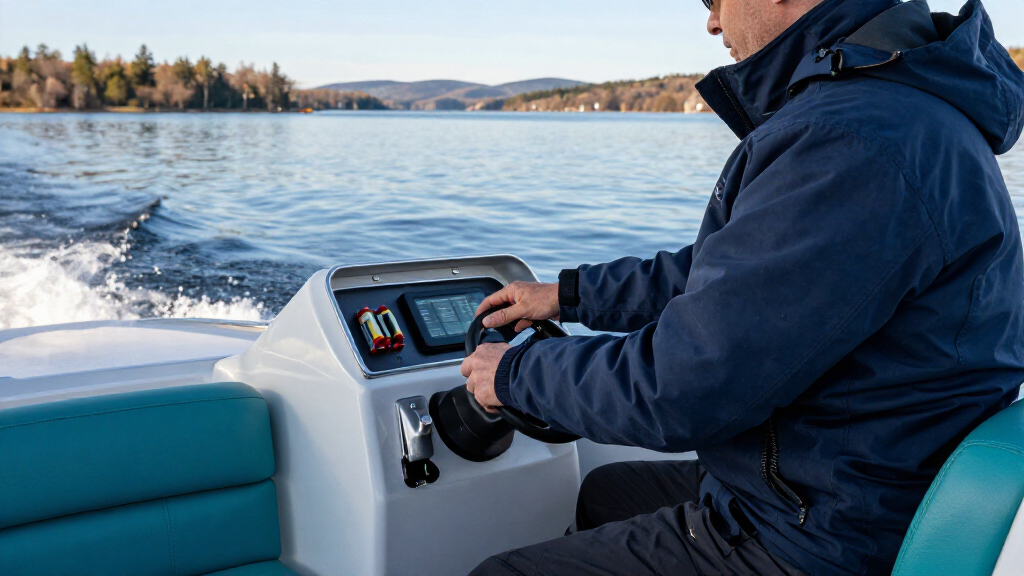
The best electric boat battery for most buyers is the LiTime 12V 100Ah LiFePO4 Trolling Motor Battery with Bluetooth, pairing useful capacity and monitoring with a practical fit for many 12V setups. For a high-capacity 36V system, the LiTime 36V 100Ah Marine Battery Kit stands out for including a charger and breaker, while the WannaPow 12V 120Ah is a straightforward choice when more 12V capacity matters. The main tradeoffs are voltage compatibility, usable capacity, battery chemistry, onboard space, and whether a charger or protection hardware comes with the battery. Lead-acid and AGM options may suit simpler or occasional-use setups, while LiFePO4 models focus on lower weight and greater cycle life. Read on for the full breakdown and advice on matching a battery to your boat and motor.

Get sports gear delivered free with Prime
- Fast, free delivery on millions of items
- Prime Video, Amazon Music and more included
- Member-only deals all year
Complete the kit



Key Takeaways
- The roundup splits into two practical groups: 12V batteries for compatible motors and onboard loads, and dedicated 36V LiTime options for 36V trolling motors.
- The 36V 100Ah Marine Kit has the most complete package: its included charger and breaker reduce the need to source key system parts separately, though buyers still need to confirm installation compatibility.
- Bluetooth is useful for checking battery state, not a substitute for sizing: the DC HOUSE, LiTime, and Hey Future 12V 100Ah models add monitoring, but the required voltage and runtime still come first.
- Capacity choices vary widely: the 10Ah NERMAK two-pack and 55Ah Mighty Max or 50Ah Newport batteries suit smaller demands better than sustained high-draw trolling.
- LiFePO4 dominates the choices, but AGM remains relevant: lithium favors lighter, longer-cycle use, while the Mighty Max sealed lead-acid and Newport AGM models offer alternatives for buyers with different budgets, chargers, or usage patterns.




| electric boat batterie | Capacity | Voltage | Chemistry | Weight |
|---|---|---|---|---|
| WannaPow 12V 120Ah LiFePO4 Dee | 120Ah | 12V | LiFePO4 | 19 lb |
| SUPER EMPOWER 12.8V 100Ah LiFe | 100Ah | 12.8V | LiFePO4 | 21.6 lb |
| Mighty Max Battery ML55-12 12V | 55Ah | 12V | — | — |
| DC HOUSE 12V 100Ah Bluetooth L | 100Ah | 12.8V | LiFePO4 | 10.8 kg |
| LiTime 36V 100Ah Bluetooth LiF | 100Ah | 38.4V | LiFePO4 | 67.46 lb |
| LiTime 12V 100Ah LiFePO4 Troll | 100Ah | 12.8V | LiFePO4 | 22.2 lb |
| NERMAK 12.8V 10Ah LiFePO4 Deep | 10Ah per battery | 12.8V per battery | LiFePO4 | 1.2kg per battery |
| LiTime 36V 50Ah Bluetooth LiFe | 50Ah | 36V | LiFePO4 | 33.14 lb |
| Newport 12V 50Ah Deep Cycle AG | 50Ah | 12V | — | 32 lb |
| LiTime 36V 100Ah Marine LiFePO | 100Ah | — | LiFePO4 | — |
| LiTime 36V 50Ah LiFePO4 Trolli | 50Ah | 36V | LiFePO4 | 39.4 lb |
| HumsiENK 12V 160Ah LiFePO4 Lit | 160Ah | 12V | LiFePO4 | 41.2 lb |
| LiTime 36V 100Ah Lithium Batte | 100Ah | 36V | LiFePO4 | 63.1 lb |
| Hey Future 12V 100Ah Bluetooth | 100Ah | 12.8V | LiFePO4 | 21.5 lb |
More Details on Our Top Picks
WannaPow 12V 120Ah LiFePO4 Deep Cycle Battery
I’d choose the WannaPow 120Ah when a 12V boat setup needs more stored energy than a typical 100Ah battery can offer. Its 1,536Wh capacity can support longer periods between charges, while the 19-pound weight is far below what buyers generally face with a comparable lead-acid battery. The built-in 100A BMS adds protection against common electrical faults, and the five-year warranty is longer than the Mighty Max ML55-12’s one-year coverage.
The tradeoff is fit and connection planning: the included waterproof connector is rated at just 20A, so it may not suit a higher-current motor connection. The listed 14.6V specification also merits a check against your charger and boat system. Unlike SUPER EMPOWER’s Group 24 battery, this model offers more capacity but no stated cold-temperature controls.
Pros:- 120Ah capacity and 1,536Wh energy storage provide more runtime reserve than the 100Ah options here.
- 19-pound listed weight is relatively easy to handle for its capacity.
- Built-in 100A BMS includes overcharge, over-discharge, overcurrent, and short-circuit protection.
- Five-year manufacturer warranty.
Cons:- Included waterproof connector is rated at 20A, which may not match higher-current applications.
- Listed 14.6V specification calls for checking charger and system compatibility.
- No low-temperature charging or discharge cutoff is specified.
Best for: Boat owners with a compatible 12V trolling motor or onboard loads who want more capacity than a 100Ah battery and can verify connector and charger compatibility.
Not ideal for: Buyers who need a ready-made high-current waterproof motor connection or automatic cold-weather charging protection.
- Chemistry:LiFePO4
- Voltage:12V
- Capacity:120Ah
- Energy:1,536Wh
- BMS:100A
- Weight:19 lb
- Dimensions:10.82 × 9.25 × 6.49 in
- Terminals:M8
- Warranty:5 years
Our verdict“Pick the WannaPow if extended runtime in a lightweight 12V LiFePO4 battery matters more than a high-current included connector or specified cold-weather controls.”
SUPER EMPOWER 12.8V 100Ah LiFePO4 Deep Cycle Battery, Group 24
The SUPER EMPOWER is my pick for boaters who need a standard-size deep-cycle battery with clearly specified temperature protections. Its Group 24 format and M8 terminals suit many existing battery boxes, while the BMS pauses charging below 32°F and stops discharge below −4°F. That protection gives it a more clearly defined cold-weather operating plan than the WannaPow 120Ah, which lists no temperature cutoffs.
This is a 100Ah, 1,280Wh battery, so it gives up capacity to the WannaPow and the LiTime 36V 100Ah, which is built for higher-voltage motor systems. The SUPER EMPOWER is for deep-cycle use, not engine starting, and charging below freezing is disabled rather than enabled by a heater. Buyers also need a compatible lithium charger; a conventional lead-acid charger is not recommended.
Pros:- Group 24 dimensions and M8 terminals fit many standard battery-box setups.
- 100A BMS provides electrical and temperature protection.
- Low-temperature controls specify charging and discharge cutoff points.
- Supports up to four batteries in series and four in parallel in compatible configurations.
Cons:- Not suitable for engine starting or cranking.
- Charging pauses below 32°F, so it cannot charge in freezing conditions.
- Requires a compatible lithium charger; non-lithium chargers are not recommended.
Best for: Boaters replacing a Group 24 deep-cycle battery who want explicit cold-temperature charge and discharge protections.
Not ideal for: Anyone needing engine-cranking power, charging below freezing, or a higher-voltage battery for a 36V trolling motor.
- Chemistry:LiFePO4
- Voltage:12.8V
- Capacity:100Ah
- Energy:1,280Wh
- BMS:100A
- Group size:BCI Group 24
- Dimensions:6.49 × 10.24 × 8.98 in
- Weight:21.6 lb
- Warranty:5 years
Our verdict“Choose the SUPER EMPOWER for a Group 24 deep-cycle replacement with stated cold-weather cutoffs, not for cranking or charging below freezing.”
Mighty Max Battery ML55-12 12V 55Ah Sealed Lead Acid Deep Cycle Battery
I’d shortlist the Mighty Max ML55-12 for a modest 12V boat load where a straightforward, sealed AGM battery is a better fit than a larger lithium setup. Its 55Ah capacity is well below the WannaPow’s 120Ah, so it is better suited to lighter or shorter-duration use than long trolling-motor days. The spill-proof, maintenance-free design can be mounted in any position, and its resistance to shock and vibration makes it a practical option for a small boat installation.
Compared with the lithium models in this group, this AGM battery brings lower capacity and lacks a stated BMS, app monitoring, or the same long-cycle-life claims. Its one-year warranty is also shorter than the five-year coverage listed for WannaPow and SUPER EMPOWER. The package includes screws, but not wiring or mounting accessories, so installation may require extra parts.
Pros:- Maintenance-free, spill-proof AGM construction.
- Can be mounted in any position.
- Designed to resist shocks and vibration in marine use.
- UL certified.
Cons:- 55Ah capacity is substantially lower than the 100Ah and 120Ah lithium options.
- Wiring and mounting accessories are not included.
- One-year warranty is shorter than the five-year coverage listed for several lithium alternatives.
Best for: Small-boat owners with modest 12V power needs who prefer sealed AGM construction and do not need long runtime or lithium monitoring features.
Not ideal for: Trolling-motor users seeking extended runtime, lower battery weight, or lithium battery cycle-life advantages.
- Battery type:Sealed lead-acid (AGM)
- Voltage:12V
- Capacity:55Ah
- Cells:6
- Terminal:F2
- Dimensions:9.06 × 5.43 × 8.98 in
- Mounting:Can be mounted in any position
- Certification:UL certified
- Warranty:1 year
Our verdict“Choose the Mighty Max for a simple, sealed AGM setup with modest power demands, but look to the lithium options for longer runtime and lighter weight.”
DC HOUSE 12V 100Ah Bluetooth LiFePO4 Battery, Group 24
The DC HOUSE stands out for boaters who want to check battery status without opening a compartment or relying on a basic voltage reading. Its Bluetooth 5.1 monitoring reports charge, voltage, current, and cell information, with alerts that can help identify a problem before it cuts a trip short. The Group 24 format is close to the SUPER EMPOWER’s, though this model is listed as slightly taller than a standard Group 24 battery. It also includes low-temperature cutoffs and supports compatible series or parallel expansion.
At 100Ah and 12.8V, it has less capacity than the 120Ah WannaPow, and its app range is only 5–10 meters. The stated cycle life is up to 15,000 cycles, but the service warranty is three years—shorter than the five years listed for SUPER EMPOWER and WannaPow. It cannot crank an engine and needs a dedicated lithium charger.
Pros:- Bluetooth app displays charge, voltage, current, and cell status.
- Low-temperature charging and discharge cutoffs are specified.
- Supports compatible series or parallel battery configurations.
- Compact Group 24-style form for many boat battery spaces.
Cons:- Not designed for starting or cranking.
- Requires a dedicated lithium battery charger.
- Slightly taller than standard Group 24 dimensions and carries a three-year service warranty.
Best for: Boat owners who want app access to charge, current, voltage, and cell status in a 12V Group 24-style deep-cycle battery.
Not ideal for: Buyers who need engine-starting capability, a standard-height Group 24 fit without checking clearance, or a longer stated warranty.
- Chemistry:LiFePO4
- Voltage:12.8V
- Capacity:100Ah
- Bluetooth:Bluetooth 5.1; 5–10 m signal range
- Low-temperature charging cutoff:19.4°F
- Low-temperature discharge cutoff:−4°F
- Dimensions:6.6 × 10.2 × 9.2 in
- Weight:10.8 kg
- Warranty:3 years of service
Our verdict“Pick the DC HOUSE if remote battery-status checks matter more than the WannaPow’s extra capacity or SUPER EMPOWER’s longer stated warranty.”
LiTime 36V 100Ah Bluetooth LiFePO4 Battery for Trolling Motors
For a compatible 36V–72V trolling motor or electric outboard, the LiTime’s main advantage is a single 38.4V, 100Ah battery rather than three separate 12V batteries wired in series. That can simplify the battery bank and reduce series connections, while 3,840Wh of energy gives it far more stored capacity than the 12V WannaPow or the 100Ah 12.8V options. Bluetooth monitoring makes charge and battery status easier to check, and IP67 protection adds a defined level of water and dust resistance for marine use.
The tradeoff is that this is not a general-purpose 12V replacement: motor voltage and compatibility must match. At 67.46 lb, it still takes planning to lift and install, and buyers need space for its larger case. Its 4,000+ cycle-life claim is specified at 100% depth of discharge, a different rating basis from the DC HOUSE’s maximum cycle-life claim.
Pros:- 38.4V and 3,840Wh capacity suit compatible higher-voltage motors.
- One battery can replace a three-battery 12V series setup.
- Bluetooth 5.0 monitoring provides battery-status access.
- IP67 protection and low-temperature cutoff support marine installation.
Cons:- Compatibility is limited to suitable 36V–72V systems and motors.
- 67.46-pound weight requires careful handling and secure installation.
- Larger dimensions may not fit spaces designed for a 12V battery.
Best for: Owners of compatible 36V–72V trolling motors or electric outboards who want one high-capacity battery with Bluetooth monitoring and marine-rated protection.
Not ideal for: Boaters with 12V-only equipment, limited installation space, or a need to avoid lifting a 67-pound battery.
- Chemistry:LiFePO4
- Voltage:38.4V
- Capacity:100Ah
- Energy:3,840Wh
- Weight:67.46 lb
- Dimensions:15.35 × 7.99 × 10 in
- Water and dust protection:IP67
- Bluetooth:Bluetooth 5.0
- Cycle life:4,000+ cycles at 100% depth of discharge
Our verdict“Choose the LiTime for a compatible high-voltage trolling motor when consolidating a three-battery bank matters more than a lighter, 12V-format battery.”
LiTime 12V 100Ah LiFePO4 Trolling Motor Battery with Bluetooth
I’d pick this LiTime for a 12V boat setup where checking battery status without opening a compartment is useful. Its 100Ah capacity and 1,280Wh of energy offer substantially more reserve than the NERMAK 10Ah two-pack, which is better suited to small electronics than powering a trolling motor. At 22.2 pounds, it is also far lighter than the Newport 50Ah AGM, though the Newport may appeal to buyers who prefer a sealed lead-acid option with a simple maintenance-free format.
The Bluetooth monitoring, IP65 rating, and cold-weather charge and discharge cutoffs add practical protections for marine use. Its tradeoffs are a 100A maximum current and a Bluetooth activation procedure that may require a compatible charger. I’d skip it for engine starting, and its 12V output won’t directly serve a 36V motor.
Pros:- 100Ah capacity and 1,280Wh provide useful reserve for a 12V deep-cycle setup.
- Bluetooth monitoring lets owners check battery status from a phone.
- At 22.2 pounds, it is lighter than the 32-pound Newport 50Ah AGM.
- IP65 protection and low-temperature cutoffs suit varied marine conditions.
Cons:- Not intended for engine starting, golf carts, or jacks.
- Bluetooth may require activation with a lithium-activation or MPPT charger.
- 12V output does not directly match 36V trolling motors.
Best for: Boat owners with a 12V trolling motor or marine electronics who want 100Ah capacity, lighter weight, and phone-based battery monitoring.
Not ideal for: Owners of 36V motors or engine-starting systems, and anyone who needs Bluetooth monitoring to work without a compatible activation or MPPT charger.
- Chemistry:LiFePO4
- Voltage:12.8V
- Capacity:100Ah
- Energy:1,280Wh
- Maximum current:100A
- Weight:22.2 lb
- Dimensions:13 × 6.77 × 8.5 in
- Protection and monitoring:IP65; Bluetooth; low-temperature charge and discharge protection
- Warranty:5 years
Our verdict“Choose this LiTime for a lightweight, app-monitored 12V trolling-motor battery, but look elsewhere for engine starting or a 36V system.”
NERMAK 12.8V 10Ah LiFePO4 Deep Cycle Batteries, 2-Pack
This NERMAK pair is the small-load choice in this group, not a substitute for a full-size trolling-motor battery. Each unit supplies 12.8V and 10Ah, making the pair more relevant to fish finders, lighting, or other modest 12V equipment than to a motor that calls for the LiTime 12V 100Ah. The batteries can be wired in series or parallel, which gives buyers some flexibility when matching a compatible system, but the listed continuous discharge is only 10A per battery.
A built-in BMS covers common electrical faults, and the compact 1.2kg-per-battery form makes handling easier than the larger Newport AGM. The tradeoff is limited capacity and a one-year warranty; compared with LiTime’s larger Bluetooth model, NERMAK offers neither app monitoring nor enough stored energy for longer motor runs. Use a LiFePO4-compatible charger.
Pros:- Two separate batteries suit small accessory loads and flexible installation.
- Built-in BMS protects against overcharge, over-discharge, over-current, and short circuits.
- Series or parallel connection supports compatible system configurations.
- Each battery weighs 1.2kg and measures under 6 inches long.
Cons:- 10Ah capacity and 10A continuous discharge limit use to relatively small loads.
- Requires a LiFePO4-compatible charger.
- One-year warranty is shorter than the five-year coverage listed for the LiTime batteries.
Best for: Kayak anglers and small-boat owners powering a fish finder, lights, or another low-draw 12V accessory, especially when two compact batteries are useful.
Not ideal for: Trolling-motor owners needing substantial runtime or loads above 10A per battery, and buyers who want Bluetooth monitoring or a longer stated warranty.
- Chemistry:LiFePO4
- Quantity:2 batteries
- Voltage:12.8V per battery
- Capacity:10Ah per battery
- Continuous discharge:10A per battery
- Weight:1.2kg per battery
- Dimensions:5.94 × 2.56 × 3.91 in per battery
- Cycle life:Up to 2,000 cycles
- Warranty:1 year
Our verdict“Choose the NERMAK two-pack for small marine electronics and accessory loads, not as the main battery for a power-hungry trolling motor.”
LiTime 36V 50Ah Bluetooth LiFePO4 Trolling Motor Battery
For a compatible 36V trolling motor, this LiTime keeps the system in one battery rather than asking the buyer to assemble a bank of smaller units. Its 50Ah capacity is half that of the LiTime 36V 100Ah kit, so it makes more sense when lower weight and a smaller capacity target matter more than extended run time. At 33.14 pounds, it is still a substantial battery, but the product data cites a high energy density that can help reduce weight compared with traditional lead-acid alternatives.
Bluetooth 5.0 provides real-time status checks, while the 50A BMS and stated 60A discharge limit for up to 30 minutes define the load envelope. The 100Ah kit is the stronger fit for buyers seeking more reserve and included wiring accessories; this 50Ah model keeps the capacity and package simpler. Its startup procedure and short-duration discharge limit need attention.
Pros:- 36V design directly suits compatible 36V trolling-motor systems.
- Bluetooth 5.0 supports real-time battery status monitoring.
- LiFePO4 chemistry and stated 4,000-plus-cycle life suit repeated deep-cycle use.
- Supports parallel expansion with up to four units.
Cons:- 50Ah capacity provides less reserve than the LiTime 36V 100Ah kit.
- 60A maximum continuous discharge is specified only for 30 minutes.
- Requires a specific startup procedure after initial shutdown or first use.
Best for: Owners of compatible 36V trolling motors up to 120lb thrust who want a single LiFePO4 battery with Bluetooth monitoring and do not need 100Ah capacity.
Not ideal for: Boaters seeking long run time, engine starting, or a ready-to-install kit with charger, breaker, and cables.
- Chemistry:LiFePO4
- Voltage:36V
- Capacity:50Ah
- BMS current:50A
- Maximum continuous discharge:60A for up to 30 minutes
- Weight:33.14 lb
- Dimensions:13 × 8.5 × 6.77 in
- Connectivity:Bluetooth 5.0
- Warranty:5 years
Our verdict“Pick this LiTime for a compatible 36V motor when a lighter, lower-capacity single-battery setup matters more than the 100Ah kit’s longer reserve.”
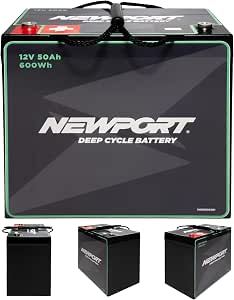
Newport 12V 50Ah Deep Cycle AGM Marine Battery
The Newport is the straightforward lead-acid pick for a small 12V boat setup: a sealed AGM design avoids routine maintenance, and its carrying handle helps when removing the battery from a kayak or compact boat. Its 50Ah capacity is more substantial than the NERMAK batteries’ 10Ah each, making it a more plausible choice for a modest trolling-motor load. It does not match the LiTime 12V 100Ah for reserve, lower weight, or phone-based monitoring, so I’d favor Newport when a familiar AGM format matters more than those advantages.
The main compromise is portability: at 32 pounds, it weighs more than the LiTime despite offering half the listed capacity. It is also limited to 12V systems, and the supplied information does not list Bluetooth, low-temperature cutoffs, or a cycle-life figure. Buyers should match its capacity to their motor and expected run time.
Pros:- Sealed AGM construction is described as maintenance-free.
- 50Ah deep-cycle capacity suits some modest 12V marine loads.
- Carrying handle supports moving the battery on and off a small boat.
- Marine terminals are specified for boat use.
Cons:- At 32 pounds, it is heavier than the LiTime 12V 100Ah LiFePO4 despite having half its capacity.
- 12V output limits compatibility with higher-voltage motor systems.
- Product data does not specify Bluetooth monitoring, low-temperature protection, or cycle life.
Best for: Small-boat and kayak owners who want a sealed, maintenance-free 12V AGM battery for compatible marine electronics or modest trolling-motor use.
Not ideal for: Boaters prioritizing low carry weight, higher capacity, Bluetooth monitoring, or a 36V trolling-motor system.
- Battery type:AGM lead-acid
- Voltage:12V
- Capacity:50Ah
- Weight:32 lb
- Design:Sealed, maintenance-free
- Terminals:Marine terminal
- Intended vehicle type:Boat
Our verdict“Choose the Newport if you want a simple sealed AGM battery for a small 12V boat and can accept its weight and lower capacity.”
LiTime 36V 100Ah Marine LiFePO4 Battery Kit with Charger and Breaker
This is the most complete high-capacity 36V package here: the kit combines a 100Ah LiFePO4 battery with a waterproof charger, breaker, and connecting cables. That bundled hardware gives it an installation advantage over the LiTime 36V 50Ah battery, which is a smaller-capacity option without those listed kit components. For electric outboard or trolling-motor owners who want one 36V battery system and substantial stored energy, the included accessories can simplify sourcing a compatible setup.
The 100A continuous current, 500A one-second peak, Bluetooth 5.0 monitoring, and stated moisture and salt-spray resistance suit demanding marine use. It is less compelling for a 12V boat or a buyer who already owns compatible charging and wiring equipment. Cold-weather cutoffs also stop charging at or below 32°F and discharging at or below -4°F, so temperature can restrict use.
Pros:- Includes a waterproof charger, breaker, and connecting cables.
- 100Ah capacity and 100A continuous current suit substantial 36V marine loads.
- Bluetooth 5.0 supports battery monitoring and control.
- Designed for moisture and salt-spray resistance, with a BMS listing more than 20 protections.
Cons:- 36V output is not a direct match for 12V marine systems.
- Charging is disabled at or below 32°F, and discharging at or below -4°F.
- The supplied product data does not list the battery’s weight or dimensions.
Best for: Owners of compatible 36V trolling motors or electric outboards who want 100Ah capacity and a bundled charger, breaker, and connecting cables.
Not ideal for: 12V boat owners, buyers with compatible charging and protection equipment already in hand, or anyone who needs battery operation below the stated temperature cutoffs.
- Chemistry:LiFePO4
- Nominal voltage:38.4V
- Capacity:100Ah
- Continuous charge/discharge current:100A
- Peak current:500A for 1 second
- Charger:43.8V, 25A, waterproof
- Low-temperature cutoffs:Charging at 32°F; discharging at -4°F
- Connectivity:Bluetooth 5.0
- Included components:Battery, charger, breaker, and connecting cables
Our verdict“Choose this kit for a compatible 36V marine motor when you want 100Ah capacity and the charger and wiring accessories together.”
LiTime 36V 50Ah LiFePO4 Trolling Motor Battery with 25A Charger
For a boat already set up for 36V, this LiTime pairs a 50Ah LiFePO4 battery with a dedicated 25A charger, making it a more complete option than a battery that requires a separate charger purchase. The charger’s IP65 rating is useful around spray, while the 60A BMS adds temperature and charge protections. Its capacity suits trolling motors rated up to 120 lb of thrust, though runtime will depend on motor draw and conditions. Compared with the 36V 100Ah LiTime model, this one weighs less and takes up less space, but provides half the capacity. It can expand to a 4P setup, yet the 39.4 lb unit is still substantial to lift, and it is not for engine starting. A first-use activation charge is also required.
Pros:- Includes a 25A charger with IP65 water resistance and LED status monitoring.
- 60A BMS provides overcharge, over-discharge, and temperature protection.
- Supports expansion in parallel up to four batteries.
- LiFePO4 cells are specified for 4,000+ deep cycles.
Cons:- Not designed for engine starting.
- Requires an activation charge after first use.
- At 39.4 lb, it is not especially easy to move around.
Best for: Anglers with a 36V trolling motor up to 120 lb of thrust who want a matched charger and a lighter, lower-capacity alternative to a 100Ah pack.
Not ideal for: Boaters seeking all-day power for a high-draw motor, a starting battery, or a lightweight battery that is easy to carry with one hand.
- Chemistry:LiFePO4
- Voltage:36V
- Capacity:50Ah
- BMS:60A
- Included charger:43.8V, 25A; IP65 water resistance
- Cycle life:4,000+ deep cycles
- Weight:39.4 lb
- Expansion:Up to 4P; 36V 200Ah / 7.68kWh
Our verdict“Choose this LiTime if your 36V trolling motor needs a ready-to-charge 50Ah pack and you can trade the 100Ah model’s longer reserve for lower weight and a smaller battery.”
HumsiENK 12V 160Ah LiFePO4 Lithium Battery with 150A BMS
The HumsiENK’s 160Ah capacity and 2,048Wh of energy make it the high-capacity 12V choice in this group, better suited to a boat’s electronics and auxiliary loads than a compact trolling-motor setup. Its 150A BMS supports up to 1,920W continuous output and includes protections against overcurrent and short circuits. The stated 6,000+ cycles at 80% depth of discharge also give it a longer cycle-life claim than the LiTime 36V 50Ah battery, though the two serve different system voltages and uses. It weighs 41.2 lb and has a compact stated footprint, but it does not include a charger: buyers need an LFP-compatible model. Series or parallel expansion is possible up to 4S4P, but requires additional batteries and a correctly designed system.
Pros:- 160Ah capacity provides more stored energy than the 100Ah 12V options in this lineup.
- 150A BMS supports up to 1,920W continuous output and multiple safety protections.
- IP65-rated design and stated operating range of -4°F to 140°F.
- Supports up to 4S4P configurations for larger battery banks.
Cons:- An LFP-compatible charger must be purchased separately.
- Series and parallel expansion requires additional batteries and compatible system components.
- At 41.2 lb, it is not the lightest option for frequent removal or carrying.
Best for: Boat owners building a 12V house-power bank for electronics, lighting, and other sustained loads who want more capacity than a 100Ah battery.
Not ideal for: Trolling-motor owners who need a 36V battery and included charger, or buyers who want a ready-to-install system without sourcing compatible charging equipment.
- Chemistry:LiFePO4
- Voltage:12V
- Capacity:160Ah
- Energy:2,048Wh
- Continuous output:1,920W
- BMS:150A
- Cycle life:6,000+ cycles at 80% depth of discharge
- Weight:41.2 lb
- Expansion:Up to 4S4P; maximum configured energy 32.76kWh
Our verdict“Pick the HumsiENK for a high-capacity 12V marine house bank, but choose a 36V LiTime instead if your main need is powering a 36V trolling motor.”
LiTime 36V 100Ah Lithium Battery with 25A Charger for Trolling Motors and Electric Outboards
When 36V compatibility is fixed and a longer reserve matters more than easy handling, this LiTime’s 100Ah capacity gives it a clear advantage over the 36V 50Ah LiTime: it stores twice the capacity for extended time on the water, though actual runtime varies with motor draw. The included 25A charger and Bluetooth 5.0 monitoring make charging and checking battery status more straightforward, while the IP65 rating and marine terminal suit boat installations. Its 100A BMS lists more than 20 protections, including low-temperature cutoff and overload recovery. The tradeoff is physical: at 63.1 lb and over 20 inches long, it is much harder to move and fit than the smaller 50Ah model. It also calls for an initial activation charge after first use or power-off.
Pros:- 100Ah capacity offers twice the reserve of the 36V 50Ah LiTime model.
- Bluetooth 5.0 enables real-time battery status monitoring.
- Includes a 25A charger and has an IP65 rating for marine use.
- 100A BMS includes low-temperature cutoff and automatic overload recovery.
Cons:- Weighs 63.1 lb, making installation and removal difficult for some owners.
- Its 20.47-inch length may not fit smaller battery compartments.
- Requires an initial activation charge after first use or power-off.
Best for: Boat owners with a 36V trolling motor or electric outboard who prioritize substantial battery reserve and want Bluetooth status checks.
Not ideal for: Small-boat owners with tight battery compartments, or anyone who frequently needs to lift a battery weighing more than 60 lb.
- Chemistry:LiFePO4
- Voltage:36V
- Capacity:100Ah
- Included charger:25A
- BMS:100A; 20+ protections
- Monitoring:Bluetooth 5.0
- Weight:63.1 lb
- Dimensions:20.47 × 10.55 × 8.66 in
- Maximum configuration:2S4P
Our verdict“Choose this 100Ah LiTime over the 50Ah version when a 36V boat setup needs more reserve and has room for a heavier battery.”
Hey Future 12V 100Ah Bluetooth LiFePO4 Deep Cycle Battery, Group 24
The Hey Future stands out as a lightweight Group 24 option: at 21.5 lb, it is far easier to handle than the 41.2 lb HumsiENK 160Ah battery. Its 12.8V, 100Ah capacity suits smaller 12V boats and trolling-motor applications, while built-in Bluetooth provides battery monitoring without adding a separate display. The BMS covers overcharge, over-discharge, overcurrent, and overheating, with a low-temperature cutoff. Compared with the HumsiENK, the Hey Future sacrifices capacity and output headroom, but its lighter format can make installation and removal much less of a chore. It supports series or parallel expansion up to 48V 400Ah, though the manufacturer recommends professional setup. Older lead-acid charging systems may need upgrades, so this is not always a simple drop-in replacement.
Pros:- At 21.5 lb, it is much easier to lift than the HumsiENK 160Ah battery.
- Bluetooth supports battery monitoring without a separate display.
- Built-in BMS includes low-temperature cutoff and common electrical protections.
- Group 24 format and 100Ah capacity suit many compact 12V marine installations.
Cons:- Offers less capacity than the 160Ah HumsiENK for extended auxiliary loads.
- May not work with older lead-acid charging systems without upgrades.
- Series and parallel battery setups are recommended to be built by professionals.
Best for: Small-boat owners seeking a light Group 24 12V battery for a trolling motor or onboard loads, especially if they value Bluetooth monitoring.
Not ideal for: Owners who need 160Ah-class capacity, or buyers expecting compatibility with an older lead-acid charger without checking or changing the charging setup.
- Chemistry:LiFePO4
- Voltage:12.8V
- Capacity:100Ah
- Size:Group 24
- Monitoring:Bluetooth
- Weight:21.5 lb
- Dimensions:6.61 × 10.24 × 8.3 in
- Terminal:M8
- Maximum configuration:48V 400Ah (4S or 4P)
Our verdict“Choose the Hey Future for a lightweight, Bluetooth-equipped Group 24 battery, but opt for the HumsiENK if your 12V boat needs substantially more stored energy.”
How We Picked
I ranked these batteries around the job they must do on an electric boat: supply the correct voltage, support the motor’s draw, and provide enough usable capacity for the intended trip. I compared chemistry, stated capacity, battery-management features, monitoring, form factor, and whether practical extras such as a charger or breaker are included. A listed amp-hour figure alone does not establish runtime; actual results depend on motor draw, operating conditions, and the usable capacity allowed by the battery and system.
The order favors useful fit and completeness over headline capacity alone. The 12V 100Ah LiTime earns the overall spot for its balance of capacity and Bluetooth monitoring, while the 36V kit ranks highly for buyers who need that voltage and value included system components. Dedicated 36V batteries are not interchangeable with 12V picks, and compact or lead-acid options rank lower for sustained trolling because their intended use is narrower. I also weighed the tradeoffs: chemistry, weight, system compatibility, included hardware, and the likelihood that a buyer will need additional equipment.
Factors to Consider When Choosing Best Electric Boat Batteries
Before choosing by capacity or features, I would match the battery to the boat’s electrical system and the way it will be used. These broader checks can prevent a battery that looks suitable on paper from becoming an expensive mismatch.
Match Battery Voltage to the Motor
Start with the motor manufacturer’s required voltage, not the battery that appears to offer the most capacity. A 36V motor generally needs a compatible 36V battery system; a 12V battery cannot replace it simply because its amp-hour rating is high. Check whether the motor supports a single battery or a particular series configuration, since wiring several batteries changes system voltage and installation demands. Confirm connector type, cable gauge, breaker requirements, and any limits in the motor manual before ordering. A ready-made 36V battery can simplify the battery side of the setup, but it does not remove the need to check boat wiring and protection. Avoid mixing batteries with different chemistry, age, capacity, or charge state in a series bank unless the manufacturers specifically allow it.
Estimate Runtime From Your Real Load
A battery’s amp-hour rating is not a direct promise of hours on the water. Runtime depends on the motor’s draw at the speed you use, alongside electronics and other loads sharing the bank. Trolling at modest thrust can use far less power than running near maximum, so base your estimate on typical conditions rather than a best-case claim. Add a reserve for wind, current, detours, and the fact that battery capacity and performance can vary with temperature and age. If your trips are long or unpredictable, extra capacity can be more useful than Bluetooth monitoring or a small accessory feature. For a boat with separate starting and house needs, plan those loads independently rather than assuming one deep-cycle battery should handle everything.
Choose Chemistry for Weight, Charging, and Use
LiFePO4 batteries are often appealing for electric boats because they can reduce battery weight and support many charge cycles, but they require a compatible charging setup. Lead-acid and AGM batteries can fit some established systems, yet their weight and usable capacity may make them less convenient for repeated deep discharges. Check the charger’s chemistry profile and charging voltage before connecting a new battery; a charger suited to one chemistry may not be appropriate for another. Consider how often the boat is used: frequent outings can make cycle life and weight more meaningful, while occasional short trips may put more emphasis on simplicity and existing equipment. Also confirm the battery’s low-temperature charging rules, since cold-weather restrictions can affect when lithium packs may safely be charged.
Check Physical Fit and Installation Limits
Group-size labels can help narrow down fit, but they do not guarantee that a battery will match every tray, hold-down, or terminal layout. Measure the available space, including height under a seat or hatch, and leave room for cable bends and ventilation where the installation calls for it. Compare the battery’s weight with the boat’s payload limits and the practical effort required to move it between storage and the boat. A larger-capacity pack may sound attractive, but it is a poor choice if it cannot be secured or serviced safely. Review terminal polarity, terminal style, enclosure protection, and the manufacturer’s mounting guidance before finalizing the setup. For a boat exposed to spray, check the specified protection and installation location rather than assuming any “marine” label means the battery can be left unprotected.
Decide Whether Included Hardware Is Worth It
A battery bundled with a charger or breaker may save time, but the included part must match the whole system. Confirm charger output and chemistry compatibility, breaker rating and placement, and whether the package covers every component your installation needs. Buying a bare battery can make sense if you already own suitable equipment or need a specialized charger, but a low-cost charger mismatch can create safety and battery-life problems. Bluetooth monitoring can make state-of-charge checks more convenient, yet it does not replace a correctly sized battery monitor or reliable trip planning. Compare the full setup list, including cables, fuses, connectors, mounting hardware, and charging equipment, before choosing between a kit and a standalone battery. The best package is the one that fits your existing components, not simply the one with the longest included-parts list.
Frequently Asked Questions
Can I use a 12V battery with a 36V trolling motor?
Not as a direct replacement for a motor that requires 36V. The motor must receive the voltage specified by its manufacturer, so a single 12V battery will not provide the required supply. Some systems use multiple batteries in series, but that approach requires compatible batteries, correct wiring, and the manufacturer’s approval. A dedicated 36V battery can reduce the number of separate packs, though you still need to verify its connections, protection, and charging requirements. Choose the voltage first, then compare capacity and features within that group.
How many amp-hours do I need for a day of electric boating?
There is no single capacity that guarantees a full day because runtime changes with motor draw, speed, wind, current, boat load, and other electrical devices. Estimate how much power your motor uses during the speeds you actually run, then compare that demand with the battery’s usable capacity rather than its label alone. Leave reserve for changing conditions and the trip back, especially if you cannot recharge on the water. A larger battery can extend runtime, but it also takes up more space and may add weight. If your trips vary, a battery monitor and a conservative power plan can help you avoid relying on an optimistic runtime estimate.
Can I charge a LiFePO4 boat battery with my existing charger?
Only if the charger supports the battery’s chemistry and specified charging profile. Some chargers offer a LiFePO4 setting, while others are designed for lead-acid or AGM and may not be suitable. Check the battery manual for charging voltage, current limits, and low-temperature restrictions, then compare those requirements with the charger label or manual. For a 36V system, the charger must also match the system voltage; a 12V charger is not an equivalent substitute. When the documentation is unclear, confirm compatibility with the battery or charger maker before connecting them.
Should I choose one 36V battery or three 12V batteries wired in series?
Either arrangement can work when the motor and battery manufacturers support it, but they differ in installation and maintenance. A single 36V pack can reduce the number of batteries, interconnects, and charging connections, while three 12V batteries may be easier to replace individually or fit into existing compartments. A series bank must use compatible batteries and be charged with equipment suited to the full bank and its chemistry. Separate packs also create more connections that need secure installation and inspection. Compare total fit, system documentation, charging method, and service needs rather than choosing solely by the nominal voltage.
Are AGM or sealed lead-acid batteries a sensible choice for an electric boat?
They can be sensible when the boat already uses a compatible charging system, trips are relatively short, or the buyer prefers to avoid changing the existing electrical setup. Their main tradeoffs for trolling use are greater weight and less practical usable capacity during deep, repeated discharge compared with many LiFePO4 options. That can mean carrying more battery to achieve a similar on-water plan. Check the battery’s deep-cycle rating, the motor’s current draw, and charging guidance before relying on an AGM or sealed lead-acid pack for long outings. For frequent use where weight and repeated cycling matter, compare the full system cost and fit against lithium alternatives.
Conclusion
For most buyers with a compatible 12V motor, I would start with the LiTime 12V 100Ah LiFePO4 with Bluetooth as the best overall balance of capacity and monitoring. The best value for a straightforward 12V setup is the WannaPow 12V 120Ah if added capacity matters more than app monitoring, while buyers wanting a complete 36V package should look first at the LiTime 36V 100Ah Marine Kit as the premium, bundled choice. For beginners, the 36V kit’s included charger and breaker may simplify parts selection, provided its voltage and installation suit the boat. Choose the 36V 50Ah LiTime models when a compatible motor and shorter or lighter-duty trips make less capacity a reasonable fit; the 10Ah NERMAK pair is better reserved for small loads than primary trolling power. If you need a conventional alternative, compare the Newport AGM or Mighty Max sealed lead-acid with your existing charger and trip demands before deciding. The right pick is the one that matches your motor voltage, realistic runtime, charger, and available mounting space.