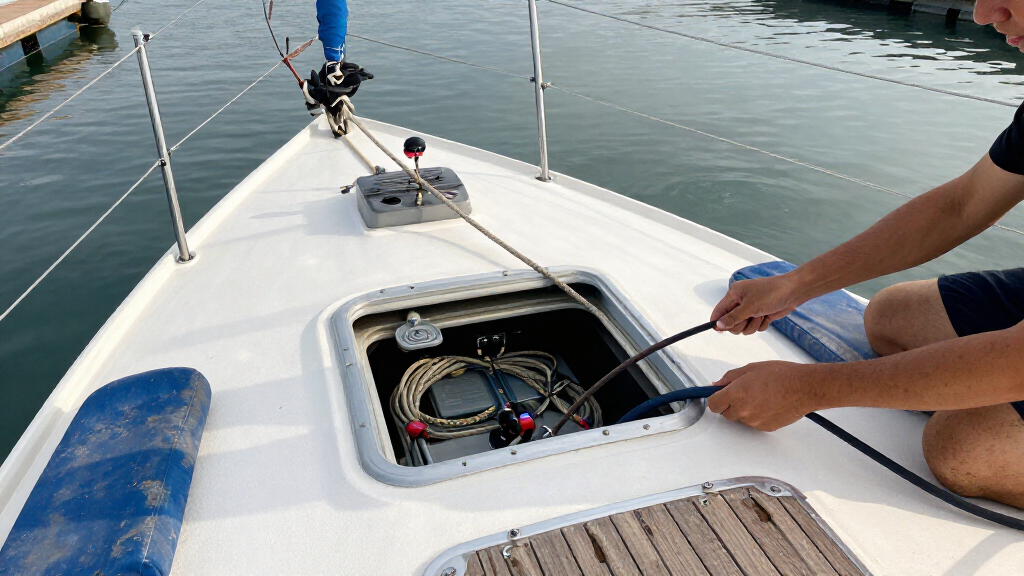
When searching for the best marine battery systems, the LiTime 12V 100Ah Dual-Purpose LiFePO4 Marine Battery stands out as the most versatile option for boaters who need both starting power and deep-cycle capability in a single unit. For those prioritizing pure energy density and longevity in a house bank, the SUPER EMPOWER 12V 100Ah LiFePO4 Battery offers exceptional cycle life and lightweight construction. However, choosing the right system involves balancing chemistry benefits against installation complexity and switching hardware requirements. This guide breaks down the key tradeoffs between lithium and lead-acid alternatives, helping you match the right battery configuration to your vessel’s specific power demands.

Get sports gear delivered free with Prime
- Fast, free delivery on millions of items
- Prime Video, Amazon Music and more included
- Member-only deals all year
Complete the kit



Key Takeaways
- Dual-purpose LiFePO4 batteries like the LiTime simplify wiring by eliminating the need for separate starting and house batteries in smaller vessels.
- Switching hardware from Blue Sea Systems is not an optional accessory but a critical safety component that prevents accidental discharge when managing multiple battery banks.
- Lighter weight in lithium systems reduces overall vessel displacement, which can improve fuel efficiency and handling, a factor often overlooked in battery selection.
- Group 24 and Group 27 form factors are not interchangeable in tight battery boxes; measuring physical dimensions is as important as checking capacity ratings.
- Starter-specific lithium batteries require different internal resistance profiles than deep-cycle units, meaning a standard deep-cycle battery may fail to crank a large engine reliably.
| Blue Sea Systems Add-A-Battery Kit, 120 A |  | Best Overall for Dual-Bank Systems | Certifications: ETL, IP54 | Mounting Type: Panel mount | Operation Mode: Automatic | VIEW LATEST PRICE | See Our Full Breakdown |
| Redodo 12V 100Ah LiFePO4 Deep Cycle Battery and 12V 20Ah Marine Starting Battery |  | Best Value Complete Set | Deep Cycle Capacity: 12V 100Ah LiFePO4 | Starting Battery: 12V 20Ah, 800 CCA | Cycle Life: 4000–15000 cycles | VIEW LATEST PRICE | See Our Full Breakdown |
| SUPER EMPOWER 12V 100Ah LiFePO4 Battery, Group 24 Deep Cycle |  | Best for Scalable Energy Storage | Voltage: 12.8V | Capacity: 100Ah | Max Expansion: 4S4P (20.48kWh) | VIEW LATEST PRICE | See Our Full Breakdown |
| LiTime 12V 100Ah Dual-Purpose LiFePO4 Marine Battery |  | Best Compact Dual-Purpose | Cold Cranking Amps: 900 CCA at 14°F | Capacity: 100Ah | Connectivity: Bluetooth 5.0 | VIEW LATEST PRICE | See Our Full Breakdown |
| Blue Sea Systems Mini Add-A-Battery Kit, 65 A |  | Best for Small Boats and Tight Spaces | Battery Banks: 2 | Dimensions: 11.75 x 7.63 x 3.2 inches | Weight: 1.4 pounds | VIEW LATEST PRICE | See Our Full Breakdown |
| Redodo 12V 100Ah Group 27 Dual-Purpose Lithium Marine Battery, 3-Pack |  | Best High-Capacity Value Pack | Brand: Redodo | Battery Type: Lithium-ion | Voltage: 12.8V | VIEW LATEST PRICE | See Our Full Breakdown |
| Blue Sea Systems m-Series Mini Selector Battery Switch, Red |  | Best Compact Switch for Small Boats | Color: Red | Positions: 4 | Maximum Voltage: 32 V DC | VIEW LATEST PRICE | See Our Full Breakdown |
| marine battery system | Weight |
|---|---|
| Blue Sea Systems Add-A-Battery | 1.5 pounds |
| Redodo 12V 100Ah LiFePO4 Deep | — |
| SUPER EMPOWER 12V 100Ah LiFePO | 21.6 lbs |
| LiTime 12V 100Ah Dual-Purpose | 22.7 pounds |
| Blue Sea Systems Mini Add-A-Ba | 1.4 pounds |
| Redodo 12V 100Ah Group 27 Dual | 23.1 lbs |
| Blue Sea Systems m-Series Mini | — |
More Details on Our Top Picks
Blue Sea Systems Add-A-Battery Kit, 120 A
This kit stands out for boaters who need robust management of separate starting and house banks without complex wiring. The SI-ACR relay automatically combines banks during charging and isolates them to prevent drain from electronics, a critical function for preserving starting power. Compared to the Blue Sea Mini Add-A-Battery Kit, this 120 A model handles higher current loads, making it suitable for larger engines and bigger house banks. The Dual Circuit Plus switch simplifies operation with a single lever, though it requires panel mounting space. Its ETL certification and IP54 rating ensure durability in harsh marine environments. While it lacks smart monitoring features found in some modern lithium setups, its mechanical reliability and straightforward installation make it a dependable choice for traditional marine electrical systems.Pros:- Automatically combines and isolates banks to protect starting power.
- High 120 A rating supports larger engines and house loads.
- Emergency combine feature provides backup starting capability.
- Corrosion-resistant tin-plated copper studs ensure longevity.
Cons:- Requires panel mounting, which may be difficult in tight spaces.
- Limited to two-bank configurations, lacking flexibility for complex multi-bank setups.
Best for: Boat owners with separate starting and house banks who need a reliable, high-amperage switching and charging solution.
Not ideal for: Owners of single-bank systems or those seeking Bluetooth monitoring and smart features in their battery management.
- Certifications:ETL, IP54
- Mounting Type:Panel mount
- Operation Mode:Automatic
- Connector Type:Stud
- Weight:1.5 pounds
Our verdict“This is the go-to choice for standard dual-bank marine systems needing reliable, high-capacity automatic charging and switching.”
Redodo 12V 100Ah LiFePO4 Deep Cycle Battery and 12V 20Ah Marine Starting Battery
This bundle offers a strategic solution for boaters wanting lithium deep-cycle capacity without sacrificing dedicated starting power. The 100Ah LiFePO4 battery provides massive energy storage for electronics and trolling motors, while the 20Ah starting battery handles engine cranking. Unlike the LiTime Dual-Purpose Battery, which attempts to do both jobs in one unit, this separation ensures the house bank is never drained to the point where you cannot start the engine. The inclusion of built-in BMS in both units protects against over-discharge and thermal issues. However, the starting battery has strict compatibility limits with certain outboards, requiring careful verification of your motor’s voltage regulation. It is an economical entry into lithium power for those comfortable managing two distinct battery types.Pros:- Combines high-capacity deep cycle with dedicated starting battery.
- Both units include built-in Battery Management Systems.
- Deep cycle battery supports series/parallel expansion up to 4S4P.
- Marine-rated protection against salt spray and vibration.
Cons:- Starting battery incompatible with many outboards without voltage regulators.
- Batteries may ship separately, complicating installation timing.
Best for: Budget-conscious boaters who want a complete lithium deep-cycle and lead-free starting solution in one purchase.
Not ideal for: Owners of outboards without voltage regulators or those seeking a single-battery dual-purpose solution.
- Deep Cycle Capacity:12V 100Ah LiFePO4
- Starting Battery:12V 20Ah, 800 CCA
- Cycle Life:4000–15000 cycles
- Expansion Capability:Up to 4S4P
- Warranty:5 Years
- Total Weight:31.7 pounds
Our verdict“A practical, cost-effective kit for boaters who prioritize separate starting and house power sources.”
SUPER EMPOWER 12V 100Ah LiFePO4 Battery, Group 24 Deep Cycle
This battery is designed for boaters who need to expand their energy storage significantly over time. Its 4S4P expansion capability allows you to start with one unit and grow to a 20.48kWh system, a feature less emphasized in the Redodo set. The integrated 100A BMS protects against electrical faults, while the automatic low-temperature cutoff prevents charging damage below freezing. At only 21.6 pounds, it is remarkably light compared to lead-acid equivalents, reducing vessel weight. However, it is strictly a deep-cycle battery; it cannot start an engine. If you are comparing it to the LiTime Dual-Purpose, note that this unit requires a separate starting battery. It is the ideal foundation for serious off-grid or long-range cruising setups where capacity scalability outweighs the convenience of a single all-in-one unit.Pros:- Scalable up to 4S4P for large energy systems.
- Extremely lightweight at 21.6 lbs.
- Drop-in replacement for Group 24 battery boxes.
- Robust BMS with temperature protection.
Cons:- Cannot be used for engine starting.
- Charging disabled below 32°F without external heating solutions.
Best for: Cruisers and off-grid boaters planning to expand their battery bank capacity in the future.
Not ideal for: Boaters needing a single battery for both starting and house loads, or those who charge in freezing temperatures.
- Voltage:12.8V
- Capacity:100Ah
- Max Expansion:4S4P (20.48kWh)
- BMS Current:100A
- Weight:21.6 lbs
- Group Size:Group 24
Our verdict“The best choice for boaters building a modular, high-capacity lithium power system.”
LiTime 12V 100Ah Dual-Purpose LiFePO4 Marine Battery
This unit solves the space constraint issue by combining 900 CCA starting power and 100Ah deep-cycle capacity into a single Group 24 battery. For smaller boats where space is at a premium, this eliminates the need for two separate batteries, unlike the Redodo set. The Bluetooth 5.0 monitoring provides real-time data on state of charge and health, offering insights that the Blue Sea kits cannot match. Its self-heating function allows charging in temperatures as low as -4°F, a significant advantage over the Super Empower which cuts off charging in the cold. However, compatibility is tricky; it excludes Yamaha outboards and requires voltage regulators, so checking your engine’s specs is mandatory. It is a sophisticated, space-saving solution for modern small craft.Pros:- Combines starting and deep-cycle power in one unit.
- Bluetooth app for monitoring and firmware updates.
- Self-heating allows charging in cold weather.
- IP67 rated for water and dust resistance.
Cons:- Strict compatibility list excludes Yamaha and some Evinrude/Johnson models.
- Requires voltage regulator on outboard.
Best for: Owners of small to mid-sized boats with compatible outboards who need space-saving dual-purpose power.
Not ideal for: Boaters with Yamaha outboards or engines lacking voltage regulators.
- Cold Cranking Amps:900 CCA at 14°F
- Capacity:100Ah
- Connectivity:Bluetooth 5.0
- Cold Charging:Self-heating to -4°F
- Weight:22.7 pounds
Our verdict“A smart, compact solution for boaters needing both starting and house power in one lightweight battery.”
Blue Sea Systems Mini Add-A-Battery Kit, 65 A
Designed for smaller vessels, this kit provides the same automatic charging logic as the larger Blue Sea 120 A model but in a compact package. The 65 A rating is sufficient for small outboards and modest house loads, making it ideal for dinghies, jon boats, or small center consoles. Its compact dimensions allow installation in spaces where the full-sized kit would not fit. Like its larger sibling, it features an emergency combine switch for backup starting. While it lacks the high-amperage capacity needed for large engines or extensive electronics, it offers reliable, simple management for basic two-bank systems. If you are upgrading from a manual switch, this kit automates the process, preventing accidental battery drain and ensuring your starting battery stays charged during operation.Pros:- Compact size fits tight installation spaces.
- Automatic bank combining and isolating.
- Emergency combine function for backup starting.
- Lightweight and easy to install.
Cons:- 65 A limit restricts use to smaller systems.
- Not suitable for high-draw trolling motors or large house banks.
Best for: Owners of small boats with limited installation space and lower electrical demands.
Not ideal for: Boats with large engines or high-draw electronics requiring more than 65 amps of switching capacity.
- Battery Banks:2
- Dimensions:11.75 x 7.63 x 3.2 inches
- Weight:1.4 pounds
- Components:ACR and Mini Switch
- Stud Material:Tin-plated copper
Our verdict“The perfect automated battery manager for small boats where space and current limits are primary concerns.”
Redodo 12V 100Ah Group 27 Dual-Purpose Lithium Marine Battery, 3-Pack
This three-pack of Redodo lithium batteries offers a compelling solution for boaters needing significant energy storage without the premium price tag of single-unit luxury brands. Unlike the LiTime 12V 100Ah Dual-Purpose LiFePO4 Marine Battery, which is sold individually, this bundle provides three separate 100Ah units, allowing for flexible bank configuration or replacement of existing lead-acid groups. The IP67-rated housing and self-heating capability are standout features, enabling reliable charging even in sub-zero temperatures where standard lithium cells might fail. However, this convenience comes with strict compatibility requirements. The system requires a compatible charger or DC-to-DC converter and explicitly warns against use with unregulated outboard motors or generators lacking voltage regulators. While the Bluetooth 5.0 monitoring adds valuable diagnostic data, the need for specific charging infrastructure means this pack is not a simple drop-in replacement for every existing electrical setup.Pros:- Three 100Ah units provide substantial total capacity for trolling or hotel loads.
- Self-heating technology allows safe charging in cold marine environments.
- IP67 water resistance ensures durability against spray and minor submersion.
- Bluetooth app enables real-time monitoring and remote updates.
Cons:- Strictly incompatible with unregulated chargers or specific outboard motors.
- Requires compatible charging equipment, potentially adding hidden costs.
- Not designed for vehicle starting applications despite dual-purpose label.
Best for: Boaters replacing multiple lead-acid batteries who have compatible charging infrastructure and need high capacity for trolling motors or hotel loads.
Not ideal for: Users with older, unregulated chargers or generators, and those seeking a simple, unmonitored drop-in replacement for small auxiliary systems.
- Brand:Redodo
- Battery Type:Lithium-ion
- Voltage:12.8V
- Capacity:100Ah
- Pack Size:3 batteries
- Cold Cranking Amps:900 CCA
- Water Resistance:IP67
- Bluetooth:Bluetooth 5.0
- Weight:23.1 lbs
Our verdict“Choose this pack if you need high-capacity lithium storage and already possess compatible charging gear, but avoid it if your boat relies on older, unregulated power sources.”
Blue Sea Systems m-Series Mini Selector Battery Switch, Red
The Blue Sea Systems m-Series Mini Selector is a specialized component rather than a complete battery system, serving a distinct role in managing dual battery banks. Compared to the Blue Sea Systems Mini Add-A-Battery Kit, 65 A, which includes isolation diodes for automatic charging, this selector switch requires manual intervention to combine or isolate banks. Its primary advantage is its compact 7 x 4 x 3-inch footprint, making it ideal for tight spaces where larger switches or kits cannot fit. The make-before-break contact design ensures that power is never fully interrupted during switching, protecting sensitive electronics from voltage spikes. However, it is limited to a maximum operating voltage of 32 V DC and handles only a single load group. This means it is not suitable for complex systems with multiple independent loads that need simultaneous power management. It is ignition-protected, allowing safe installation in gasoline engine compartments, but users must manually manage charging priorities.Pros:- Extremely compact size fits in cramped engine compartments.
- Make-before-break design prevents power loss during switching.
- Ignition protection allows safe use near gasoline engines.
- Versatile mounting options for surface, flush, or rear installation.
Cons:- Limited to 32 V DC maximum voltage.
- Handles only a single load group, restricting system complexity.
- Requires manual operation to combine or isolate banks.
Best for: Owners of small boats or kayaks with tight mounting spaces who need a manual, reliable way to switch between two battery banks.
Not ideal for: Users needing automatic charging isolation or systems with multiple independent load groups requiring simultaneous power.
- Color:Red
- Positions:4
- Maximum Voltage:32 V DC
- Mounting Options:Surface, flush, or rear
- Contact Design:Make-before-break
- Ignition Protection:Suitable for gasoline compartments
- Contact Material:Copper
- Terminal Material:Tin-plated copper
- Dimensions:7 x 4 x 3 inches
Our verdict“This switch is the right choice for small vessels needing a space-saving manual bank selector, but skip it if you require automatic charging management or multi-load control.”
How We Picked
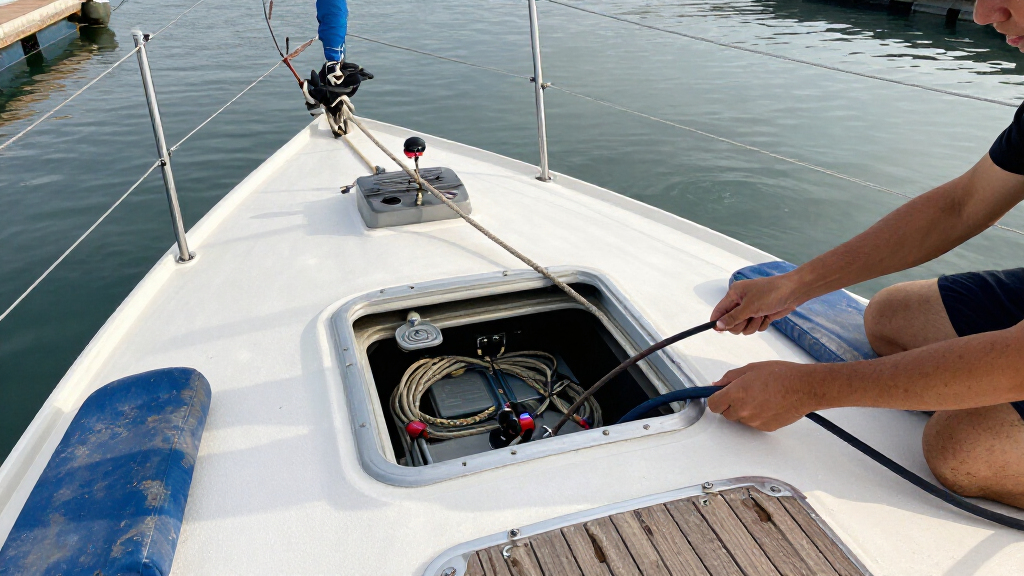
To determine the best marine battery systems, I evaluated products based on four core criteria: energy density, cycle life, integration compatibility, and safety features. I prioritized LiFePO4 (Lithium Iron Phosphate) options because they represent the current standard for reliability and longevity in marine applications, offering significantly more usable capacity than traditional AGM or flooded lead-acid batteries. Each product was assessed for its ability to handle the harsh marine environment, including vibration resistance and moisture protection.
The ranking logic favors systems that offer a balance of performance and ease of installation. While raw capacity is important, I gave higher weight to products that include robust Battery Management Systems (BMS) and those that pair seamlessly with common marine switching hardware. Products that failed to account for the need for proper isolation or those with poor physical fitment data were ranked lower, as these issues lead to frequent user frustration and potential system failures.
Factors to Consider When Choosing Best Marine Battery Systems
Selecting the right power source for your boat goes beyond just picking a brand name. It requires understanding how your specific vessel consumes power and what hardware is needed to manage that energy safely. This section highlights the broader considerations that dictate whether a battery system will serve you well for years or become a maintenance headache.
Understanding Battery Chemistry and Usable Capacity
Many buyers mistake the rated capacity on the label for the amount of power they can actually use. With lead-acid batteries, discharging below 50% causes rapid degradation, meaning a 100Ah battery only provides 50Ah of usable energy. LiFePO4 batteries differ dramatically here, allowing you to discharge down to 80-90% without significant damage. This means a 100Ah lithium battery effectively replaces a 200Ah lead-acid bank, halving the weight and space required. When comparing systems, calculate your daily amp-hour consumption and divide by 0.8 for lithium or 0.5 for lead-acid to find the true bank size you need.
The Critical Role of Battery Switching Hardware
A battery is only as good as the circuit managing it. Adding a second battery without a proper selector switch or combiner is a common mistake that leads to dead starting batteries. If you install two batteries in parallel without isolation, a heavy load from electronics will drain both the house and starting banks simultaneously. The Blue Sea Systems Add-A-Battery Kit and similar switching components are designed to prevent this by allowing you to run house electronics off one bank while keeping the other fully charged for engine cranking. Never assume your existing switch is compatible with new lithium chemistries; check for voltage drop ratings and contact capacity.
Physical Fitment and Vibration Resistance
Marine engines generate constant vibration, which can destroy internal battery plates over time. Lithium batteries generally handle vibration better than lead-acid, but the physical mounting is still critical. Before purchasing, measure your existing battery tray and compare it to the product’s dimensions, paying close attention to terminal height and orientation. Some Group 24 LiFePO4 batteries are slightly taller or wider than their lead-acid counterparts due to the casing needed to house the BMS. A battery that doesn’t fit securely can shift during rough water, causing short circuits or terminal damage.
Charging Compatibility and Alternator Health
Standard marine alternators are designed to charge lead-acid batteries, which have a different voltage acceptance curve than lithium. Charging LiFePO4 directly with an old alternator can overheat the alternator or fail to fully charge the battery. While some Redodo marine batteries feature built-in heaters for cold charging, they still require a compatible charger profile. You may need to install a DC-to-DC charger or a smart regulator to protect your alternator and ensure the battery reaches full capacity. Ignoring this compatibility can lead to premature alternator failure, a repair cost that often exceeds the price of the battery upgrade.
Frequently Asked Questions
Can I use a deep-cycle LiFePO4 battery to start my engine?
Generally, you should not use a standard deep-cycle LiFePO4 battery for starting unless it is explicitly rated as dual-purpose or starting. Deep-cycle batteries are optimized for sustained, low-current discharge, whereas starting requires a massive burst of current (Cold Cranking Amps) in seconds. A standard deep-cycle unit may have internal resistance too high to deliver that burst, potentially leaving you stranded. If you need one battery for both tasks, select a model like the LiTime Dual-Purpose which is engineered with lower internal resistance to handle both high-crank loads and long-duration power delivery.
Do I need a heater in my marine lithium battery?
If you boat in regions where temperatures frequently drop below 32°F (0°C), a built-in heater is strongly recommended. Lithium batteries cannot be safely charged in freezing temperatures because the lithium ions can plate onto the anode, permanently damaging the cell. A heated battery will warm itself before accepting a charge, protecting its lifespan. For boaters in warmer climates or those who store their boats indoors during winter, this feature adds cost and weight that may not be necessary. Always check your local climate history before deciding if the extra expense for a heated BMS is justified for your use case.
Why do I need a battery combiner instead of just wiring batteries in parallel?
Wiring batteries in parallel connects them constantly, meaning they share the load and discharge together. If you use your house electronics, you will drain the starting battery along with the house bank, risking a no-start situation. A battery combiner or relay allows the alternator to charge both banks when the engine is running, but disconnects them when the engine is off. This isolation ensures that your house bank can be fully drained by electronics without affecting the cranking power stored in the starting battery. It is a simple wiring change that saves significant stress and potential towing fees.
How does the weight difference between lead-acid and lithium impact my boat?
Replacing a lead-acid battery with a lithium equivalent can reduce weight by 60-70%. For a small fishing boat or kayak, this weight reduction improves stability, planing speed, and fuel efficiency. In larger vessels, the weight savings are less noticeable in performance but still beneficial for trailer loading and ease of maintenance. However, weight distribution matters; removing a heavy battery from the bow or stern and replacing it with a lighter one can change the boat’s trim. You may need to adjust ballast or move other gear to maintain the correct hull balance for optimal handling.
Are 3-pack battery bundles better than buying individual units?
Buying a 3-pack of identical batteries, such as the Redodo Group 27 set, ensures that all cells are from the same manufacturing batch, which is critical for parallel performance. Mixed batches can have slight variations in internal resistance and capacity, leading to uneven charging and discharging that shortens the lifespan of the entire bank. Bundles also often provide a better cost-per-amp-hour ratio. However, verify that the total physical footprint of three batteries fits your available space. If you only need one or two batteries, buying a pack of three may result in unused inventory or improper storage conditions for the extras.
Conclusion
Choosing the best marine battery systems depends entirely on your vessel’s size, power demands, and how you intend to use it. For most boaters seeking a balance of performance and simplicity, the LiTime 12V 100Ah Dual-Purpose is the top choice, offering the versatility to handle both starting and house loads without complex wiring. If you are building a dedicated house bank for long-term anchoring or heavy electronics use, the SUPER EMPOWER 12V 100Ah provides superior cycle life and energy density, making it the best premium option for serious cruisers.
For those on a tighter budget or upgrading a single battery, the Redodo 12V 100Ah LiFePO4 offers excellent value and reliable performance, provided you pair it with appropriate charging hardware. Beginners should prioritize the Blue Sea Systems Mini Add-A-Battery Kit alongside a dual-purpose battery to simplify installation and reduce the risk of wiring errors. Always verify that your switching hardware matches your battery chemistry and that your physical space accommodates the new form factor. By matching the right battery type to your specific application, you ensure reliable power and a safer boating experience.