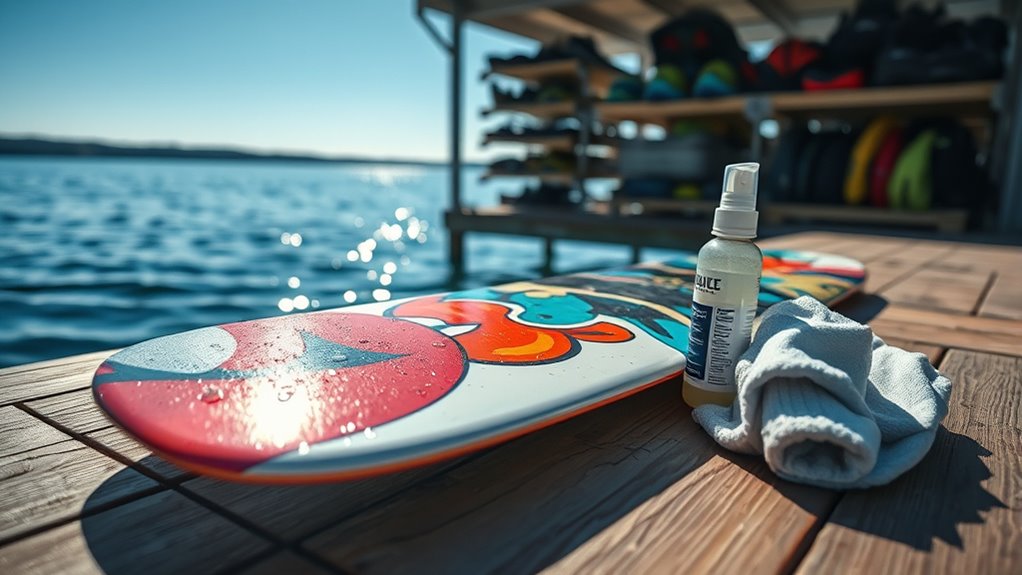

To maintain your wakeboard, rinse it with fresh water after every session to remove salt, sand, and debris. Use a soft cloth to wipe it down and apply a good marine wax for a smooth glide. When storing, keep it in a cool, dry place, away from direct sunlight, and use a board bag for added protection. Taking these steps helps preserve performance and durability. You might be surprised by what other tips can enhance your wakeboarding experience.
Key Takeaways
- Rinse your wakeboard with fresh water after each session to remove saltwater, sand, and debris.
- Use a soft cloth to gently wipe the board and eliminate stubborn dirt to prevent corrosion.
- Apply a quality marine wax to the bottom of the board for a smooth glide, following manufacturer instructions.
- Store your wakeboard in a cool, dry place away from direct sunlight to avoid fading and warping.
- Use a board bag during transport to protect against damage and ensure longevity.
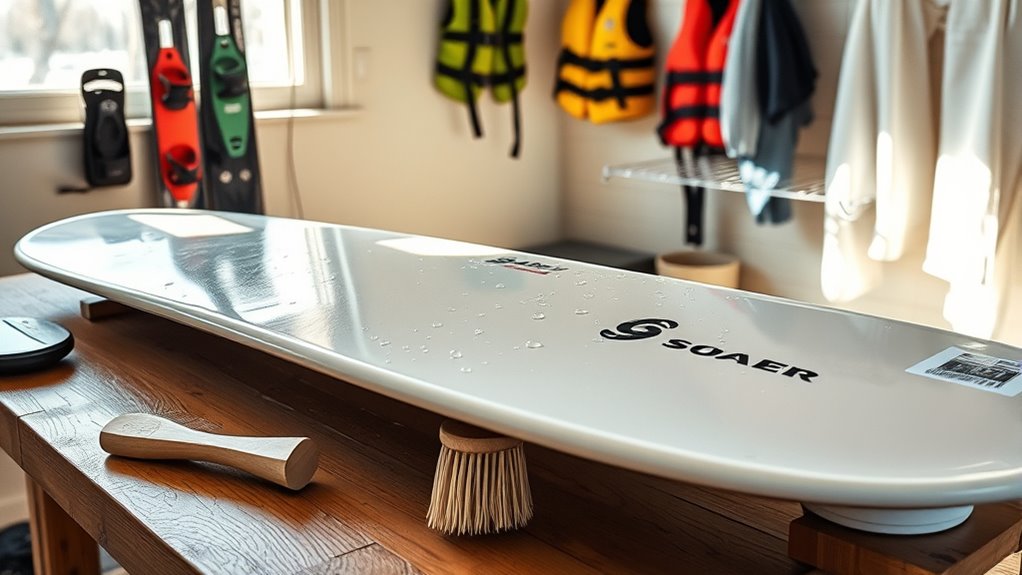
Whether you’re a seasoned pro or just getting into wakeboarding, keeping your gear in top shape is vital for both performance and safety. A well-maintained wakeboard not only enhances your riding experience, but it also extends the life of your equipment. One of the first steps in maintaining your wakeboard is keeping it clean. After each session, rinse off any saltwater, sand, or debris using fresh water. This simple step helps prevent corrosion and damage to the board’s surface. Use a soft cloth to gently wipe down the board, ensuring you remove any stubborn dirt or grime that might stick to it.
Once your board is clean, it’s time to focus on the wax application. A good wax job can greatly improve your board’s glide on the water. Apply a quality marine wax to the bottom of your board, following the manufacturer’s instructions. Make sure to cover the entire surface to guarantee a smooth ride. If you’re unsure about how much wax to use, remember that a little goes a long way. After applying the wax, buff it gently with a clean cloth to achieve that slick finish. This process not only enhances performance but also protects the board from minor scratches and abrasions.
A quality wax job enhances glide and protects your wakeboard, ensuring a smooth ride and longevity.
Another essential aspect of wakeboard maintenance is ding repair. Dings and chips can happen, especially if you’re riding in choppy waters or hitting obstacles. If you notice any damage, address it immediately to prevent further issues. For minor dings, you can use a repair kit that typically includes resin and sandpaper. Clean the damaged area thoroughly, apply the resin, and let it cure as per the instructions. Once it’s dried, sand it down to make the surface smooth again. Taking the time to repair dings will help maintain your board’s structural integrity and performance.
Finally, consider how you store your wakeboard when you’re not using it. Keep it in a cool, dry place, away from direct sunlight to prevent fading and warping. Use a board bag for added protection, especially if you transport it often. Storing your board properly can make a meaningful difference in its longevity. By following these maintenance tips, you’ll keep your wakeboard in prime condition, ensuring that every ride is as thrilling as the last. Remember, a little care goes a long way in prolonging the life of your gear. Additionally, understanding industry trends regarding wakeboard maintenance can help you stay informed about the best practices and products available.

SCUBAPRO MK11 EVO/C370 Dive Regulator System, INT
Compact, air-balanced diaphragm design, MK11 EVO delivers top performance and reliability
As an affiliate, we earn on qualifying purchases.
Frequently Asked Questions
How Often Should I Clean My Wakeboard?
You should clean your wakeboard after every session to keep it in top shape. Regularly rinsing off dirt and debris helps maintain performance. Every few weeks, consider board waxing to protect the surface and enhance glide. Don’t forget about edge sharpening; it’s essential for better grip and maneuverability on the water. By staying on top of these tasks, you’ll enjoy a smoother ride and prolong your board’s lifespan.
Can I Use Soap on My Wakeboard?
Sure, you can use soap on your wakeboard, but it’s gotta be mild! Think of it like giving your board a gentle shower. Just avoid harsh chemicals that could strip your board wax or damage the grip. For grip maintenance, a soft cloth and warm water usually do the trick. So, keep it clean and your ride will be smooth, letting you focus on catching those waves!
What Is the Best Way to Dry My Wakeboard?
To dry your wakeboard, lay it flat in a shaded, well-ventilated area. Avoid direct sunlight, which can warp the board. Once it’s dry, check for any dings or scratches; if you find any, consider board repair techniques to keep it in top shape. After repairs, applying board wax helps protect the surface and enhances performance. Keeping your board dry and well-maintained guarantees you’re ready for your next ride!
Should I Store My Wakeboard Indoors or Outdoors?
You should definitely store your wakeboard indoors. Think of it like a cozy blanket in winter; it needs protection from harsh elements. Indoor storage keeps your board safe from UV rays, moisture, and temperature extremes, ensuring it stays in top shape. Outdoor storage exposes it to the weather, which can lead to fading and damage. So, treat your wakeboard like a prized possession and give it a warm, dry home indoors.
How Can I Prevent Mold on My Wakeboard?
To prevent mold on your wakeboard, ensure it’s completely dry before storing it. Use a soft cloth to wipe down any moisture after each use. Store your board in a cool, dry place, ideally indoors. Regularly check for any signs of mold and clean them immediately if you spot any. Practicing these mold prevention techniques is essential for effective wakeboard maintenance, helping you keep your gear in top shape for your next session.
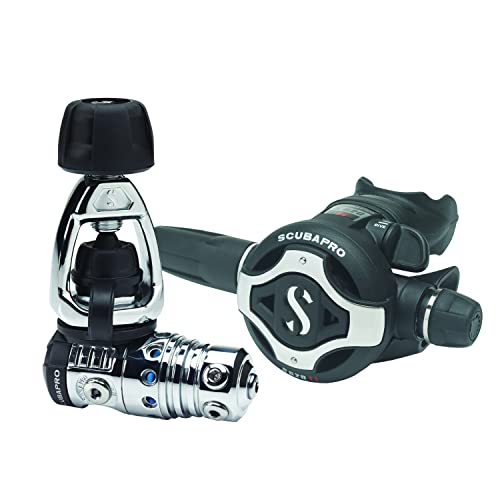
SCUBAPRO MK25 EVO/S620 Ti Diving Regulator System for Scuba Diving, INT
Air-Balanced Flow-Through Piston First Stage: Chrome plated brass body delivers smooth airflow regardless of depth, tank pressure or...
As an affiliate, we earn on qualifying purchases.
Conclusion
By keeping your wakeboard clean and storing it properly, you’ll guarantee it lasts for many seasons of fun on the water. For instance, imagine a rider who neglects maintenance and ends up with a cracked board mid-session. They miss out on countless rides while waiting for repairs! So, take a few minutes after each outing to rinse off your board and store it in a cool, dry place. You’ll be glad you did when you’re back on the water!

Cressi XS2/AC2 Regulator and XS Octopus Package
INCLUDED - 1'st Stage, 2'nd Stage, Octopus, Owner's Manual, and a MFG 2 Year Limited Warranty for comprehensive...
As an affiliate, we earn on qualifying purchases.

Cressi MC9-SC/Compact Pro + Octopus Compact Pro Complete Regulator Set, INT
The scuba diving regulator is engineered and certified to meet European standards for cold water use, ensuring versatility...
As an affiliate, we earn on qualifying purchases.