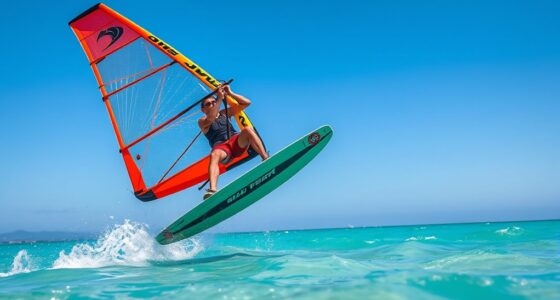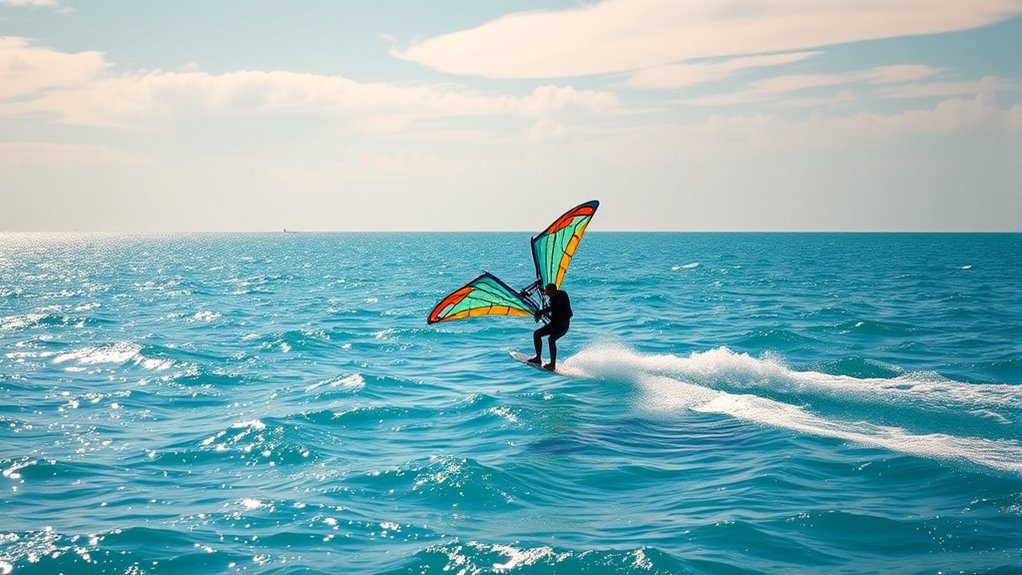

To maximize your light wind wingfoiling experience, choose larger, efficient foils that enhance lift in low winds. Position your body weight centrally over the board for stability and keep your movements smooth to maintain speed. Experiment with foot placement and shift your weight as needed for improved responsiveness. Stay aware of wind forecasts and anticipate gusts to make the most of calm days. Stick with it, and you’ll discover even more valuable techniques for those low wind adventures.
Key Takeaways
- Choose larger, efficient foils to generate lift in minimal wind conditions for better glide and stability.
- Stay aware of wind forecasts and local patterns to optimize riding times and conditions.
- Keep your body weight centered over the board while maintaining lightness on your feet for improved responsiveness.
- Experiment with foot placement and weight shifts to enhance ride quality and control in light winds.
- Practice patience and refine your technique, as consistent effort leads to better performance on calm days.
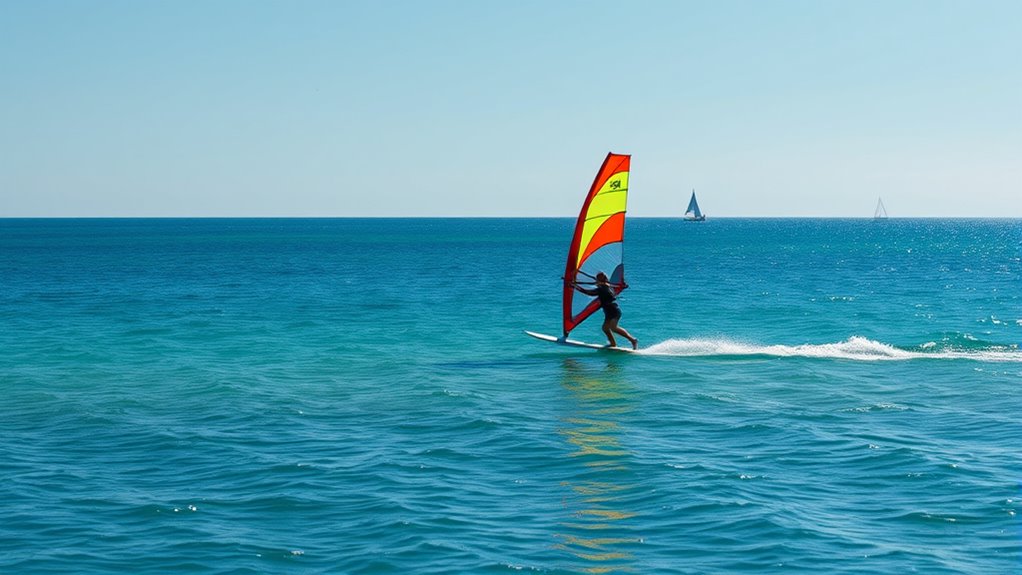
Have you ever wondered how to make the most of those light wind days on the water? If you’re into wingfoiling, you know that light wind can be a challenge, but it can also be an opportunity. The key lies in understanding your gear and how to maximize your potential in those gentle breezes. First off, the right foil design plays a pivotal role in your performance. A larger, more efficient foil will generate lift with less wind. Opting for a foil that’s specifically designed for low wind conditions can make all the difference. It’s all about finding that sweet spot where you can glide effortlessly, even when the breeze is barely whispering.
When you’re out there steering those light winds, pay close attention to wind forecasting. Knowing what to expect can help you make informed decisions about when and where to go. If the forecast predicts a slight increase in wind, head to your favorite spot early. You’ll want to take advantage of every gust. Wind forecasting can also alert you to local weather patterns that might help you catch some unexpected lift. Sometimes, a light breeze can turn into something more substantial if you’re in the right place at the right time.
Once you’re on the water, focus on your technique. In light winds, it’s essential to keep your body weight centered over the board. This helps you maintain balance and control, allowing the foil to do its job. You’ll want to be light on your feet and ready to react to any shifts in wind direction. Use your wing to catch as much wind as possible, angling it to harness the lift. Remember to keep your movements smooth and deliberate; sudden shifts can cost you valuable speed.
Focus on your technique: center your weight, stay light on your feet, and harness the wind effectively for a smooth ride.
Don’t forget to experiment with your stance. Sometimes, adjusting your foot placement can enhance your board’s responsiveness in those lighter winds. Try shifting your weight slightly forward or backward to see how it affects your ride. The more you practice, the more intuitive these adjustments will become.
Lastly, remember that patience is key. Those light wind days can test your skills and persistence, but they’re also incredibly rewarding. By mastering your gear, understanding the wind, and refining your technique, you’ll find that even the calmest days can lead to thrilling experiences on the water. Additionally, using a larger, more efficient foil can help you achieve energy savings and maintain lift in low wind conditions. So, get out there and enjoy the ride!

Windwing Foil V-Shape Windsurfing 5m² Inflatable Wind Wing Hydrofoil Inflatable Handheld Kitesurfing Ski Swing Foil Surfing Kite Racing Wind Wing for Beginner,High Acceleration Wing,Dark Gray,KVF
Inflatable Wing Surfing Specifications: This hand held inflatable surf kite wing is made of high quality abrasion resistant…
As an affiliate, we earn on qualifying purchases.
As an affiliate, we earn on qualifying purchases.
Frequently Asked Questions
What Gear Is Best for Light Wind Wingfoiling?
For light wind wingfoiling, you’ll want a larger wing to maximize hydrodynamic efficiency and a longer mast for better lift. A wider board will help you get on the foil quicker. Make sure you’re tuning your equipment properly; adjusting the angle of your wing and fin can markedly enhance performance. Experiment with different setups to find what works best for your style and the conditions. Enjoy those lighter days on the water!
How Do I Improve My Balance on Low Wind Days?
To improve your balance on low wind days, consider that studies show 70% of wingfoilers struggle with stability. Start with balance drills on flat ground, focusing on your stance adjustments. Position your feet shoulder-width apart and bend your knees slightly. Practice shifting your weight from heel to toe, which helps you adapt when you’re on the water. Consistent practice will enhance your control, making those light wind sessions much more enjoyable.
Can Beginners Wingfoil in Very Light Winds?
Yes, you can definitely wingfoil as a beginner in very light winds! Focus on light wind techniques to get the hang of it. Start by picking a larger wing that provides more lift, helping you stay afloat. Practice your balance and steering on calm water, and don’t rush the process. Remember, patience is key. As you gain confidence, you’ll find those light wind days can be just as enjoyable for learning.
How Do I Stay Motivated on Calm Days?
To stay motivated on calm days, focus on mindset strategies and goal setting. Set small, achievable goals like practicing your stance or balance. Visualize your progress and remind yourself that every session counts, even if conditions aren’t ideal. Try to reflect on past successes and what you want to improve. Surround yourself with supportive friends or join a community to share tips and keep your enthusiasm high. You’ll find motivation even when the wind isn’t blowing!
What Safety Tips Should I Follow in Light Winds?
In light winds, always prioritize wind awareness. Keep an eye on any changes in wind direction or intensity, as they can affect your ride. Familiarize yourself with emergency procedures—know how to self-rescue and signal for help if needed. Stay close to shore and avoid venturing too far out, especially if conditions seem unstable. Wear a personal flotation device, and never underestimate the importance of having a buddy system for added safety.
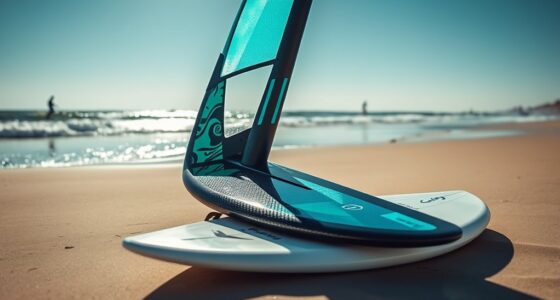
low wind wingfoiling board
As an affiliate, we earn on qualifying purchases.
As an affiliate, we earn on qualifying purchases.
Conclusion
So, when the wind whispers instead of roars, don’t let that stop you from soaring. Embrace the art of light wind wingfoiling, where each gentle breeze becomes your partner in dance. With the right techniques, you’ll glide over the water like a leaf on a summer breeze, discovering the thrill in the subtleties of the sport. Remember, it’s not just about the wind; it’s about the joy of riding, no matter how soft the gusts may be.
wingfoiling accessories for calm days
As an affiliate, we earn on qualifying purchases.
As an affiliate, we earn on qualifying purchases.
efficient wingfoiling foil for low wind
As an affiliate, we earn on qualifying purchases.
As an affiliate, we earn on qualifying purchases.