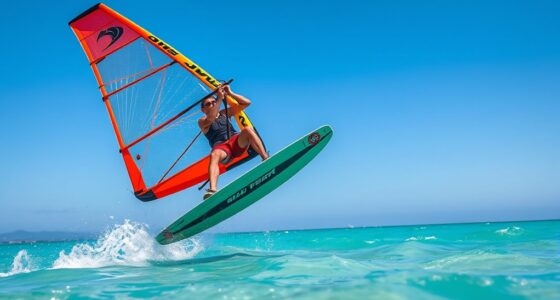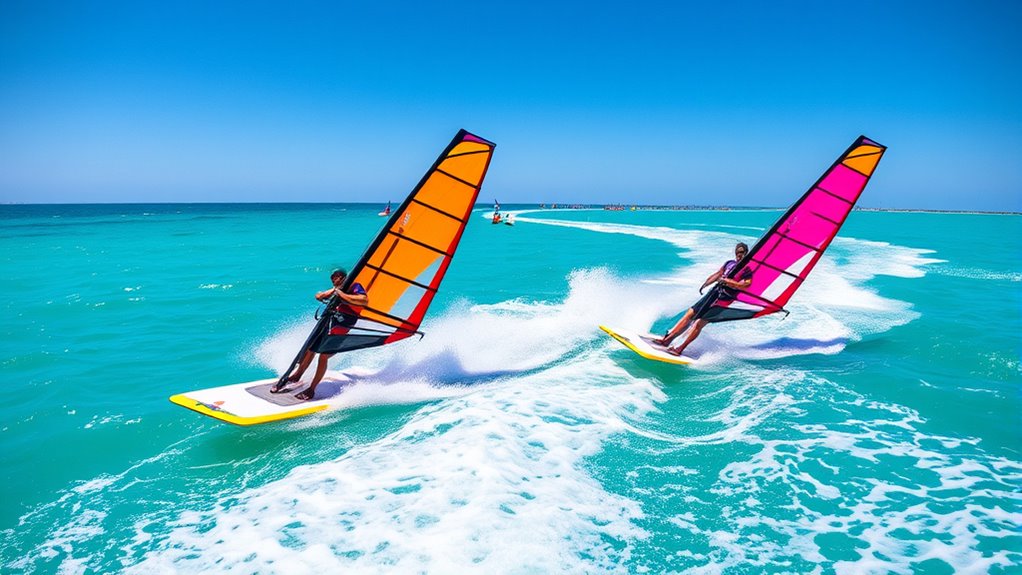

In wingfoil racing, you’ll tackle exciting formats on specially designed courses, each featuring strategic mark placements that challenge your navigation skills. You need to adapt quickly to changing wind conditions, choosing the right foils for peak performance. The rules guarantee fair competition, focusing on safety and adherence to course layouts. Mastering these elements will enhance your racing experience and outcomes. Keep going to discover more insights on tactics and skills that can elevate your performance.
Key Takeaways
- Wingfoil racing typically includes formats such as slalom, course racing, and freestyle, each emphasizing different skills and strategies.
- Courses are designed with various marks and wind conditions in mind, requiring adaptability and tactical navigation.
- Rules often dictate equipment specifications, including foil design and dimensions, to ensure fair competition among racers.
- Competitors must demonstrate mastery of skills, quick decision-making, and mental focus to excel in changing wind conditions.
- Races are structured to provide opportunities for learning and strategy development, enhancing overall performance and enjoyment.
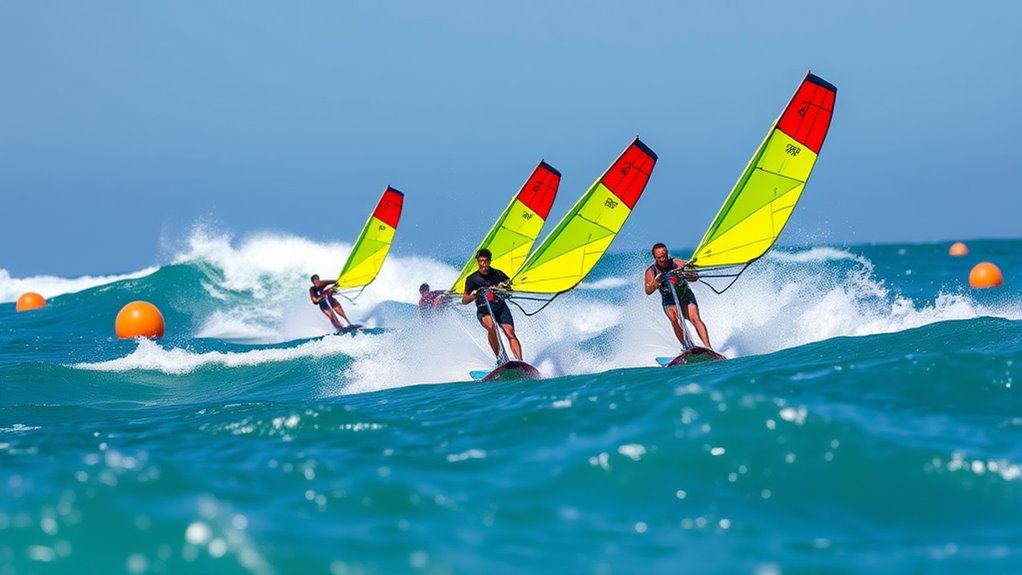
Have you ever wondered what makes wingfoil racing so exhilarating? It’s not just the thrill of gliding over water; it’s the unique combination of skills, strategy, and the right equipment that keeps you coming back for more. As you step onto your board, you realize that the design of your foil and the wind conditions play a pivotal role in your performance. The right foil design can dramatically affect your speed and maneuverability, giving you the edge you need to outperform your competitors.
In wingfoil racing, understanding how to read the wind conditions is essential. You’ve got to keep an eye on the breeze, as it can change in an instant. A light wind might seem manageable, but you quickly learn that it requires a different approach than racing in stronger winds. When the winds are light, you’ll need a foil that’s designed for lift and efficiency. On the other hand, when the wind picks up, you’ll want a foil that offers stability and speed. Choosing the right foil design according to the wind conditions can mean the difference between winning and losing.
Understanding wind conditions is crucial in wingfoil racing; the right foil design can be the key to victory.
As you navigate the course, you can’t ignore the importance of tactics. The placement of marks and the layout of the racing course require keen observation and quick decision-making. When you’re racing against others, every turn counts. You’ll need to anticipate how your competitors will react to changes in wind conditions and adjust your strategy accordingly. Staying ahead means knowing when to push hard and when to conserve energy.
The adrenaline rush you feel as you glide across the water, catching the perfect gust of wind, is unbeatable. You quickly learn that wingfoil racing isn’t just a test of speed; it’s a mental game as well. You’ll find yourself constantly adapting to the environment around you. The thrill of competing against others while battling the elements keeps you on your toes.
With every race, you gain experience that sharpens your skills. You start to appreciate the nuances of foil design and how they impact your performance in varying wind conditions. Each race becomes a learning opportunity, pushing you to refine your techniques and strategies. As you continue to race, you’ll discover that the exhilaration of wingfoil racing is not just about the finish line; it’s about mastering the art of balance, speed, and adaptability on the water. Additionally, having reliable backup power can ensure that your training sessions remain uninterrupted, allowing you to focus on perfecting your skills.

Surfing Kite Racing Surfboard Wind Wing,Wing Foil Kitesurfing,Inflatable Wing Wind Surfing Kite,for Beginner,4m²
【Wing Surfing Kite】: Our inflatable wing surfing kite is made of polyester material, has a light weight and…
As an affiliate, we earn on qualifying purchases.
As an affiliate, we earn on qualifying purchases.
Frequently Asked Questions
What Equipment Do I Need to Start Wingfoil Racing?
To start wingfoil racing, you’ll need essential wingfoil gear, including a wing, board, and foil. Look for a racing-specific board that’s lightweight and stable, paired with a high-performance foil for speed and maneuverability. Don’t forget a harness for better control and comfort during races. Safety gear like a helmet and impact vest is vital too. With the right racing equipment, you’ll be ready to hit the water and compete.
How Can I Improve My Wingfoil Racing Skills?
Practice makes perfect! To improve your wingfoil racing skills, focus on technique drills that enhance your balance and control. Spend time working on starts and shifts to build confidence. Develop a solid race strategy by studying your competitors and understanding wind patterns. Try to analyze your performance after each race, identifying areas for improvement. Remember, consistent practice and learning from your experiences will elevate your racing game to the next level!
Are There Age Restrictions for Participating in Wingfoil Racing?
Yes, there are age restrictions for participating in wingfoil racing. Most events have categories for youth participation, allowing younger athletes to compete, often under 18. You’ll find senior categories for older competitors, typically starting from 40 years and up. It’s important to verify specific race rules, as they can vary by event and location. Make sure you’re aware of these categories to ensure you’re racing in the right group.
Where Can I Find Wingfoil Racing Events Near Me?
You can find wingfoil racing events near you by checking local sailing and water sports clubs. They often host competitions and training sessions where you can participate or spectate. Websites and social media pages of these clubs usually post event schedules and updates. Don’t forget to connect with fellow enthusiasts; they can share valuable info about upcoming races in your area. Get involved and enjoy the thrilling world of wingfoil racing!
Is Wingfoil Racing Suitable for Beginners?
Yes, wingfoil racing can be suitable for beginners, especially with the right training. Many schools offer beginner courses that focus on safety and basic skills. You’ll learn essential techniques and how to handle equipment properly. Starting with proper instruction helps you build confidence on the water. Once you’ve mastered the basics, you can gradually shift into racing, making the experience enjoyable and safe as you progress.

Mystic 2023 Wingfoil Board Footstrap – Black
Adjustable in size
As an affiliate, we earn on qualifying purchases.
As an affiliate, we earn on qualifying purchases.
Conclusion
In the exhilarating world of wingfoil racing, every race is a dance on water, where skill and strategy glide hand in hand. As you embrace the thrill of the competition, remember that understanding the formats, courses, and rules is like having a secret map to victory. So, gear up, trust your instincts, and let the wind carry you toward the finish line. The adventure awaits—grab your wing and ride the waves of excitement!
wingfoil racing equipment kit
As an affiliate, we earn on qualifying purchases.
As an affiliate, we earn on qualifying purchases.

HoldPeak 866B Digital Anemometer Handheld Wind Speed Meter for Measuring Wind Speed, Temperature and Wind Chill with Backlight and Max/Min
Highly Accurate Wind Meter- Thanks to the sensitive dual temp sensors, 8 vanes, smooth fan shaft, the HoldPeak…
As an affiliate, we earn on qualifying purchases.
As an affiliate, we earn on qualifying purchases.