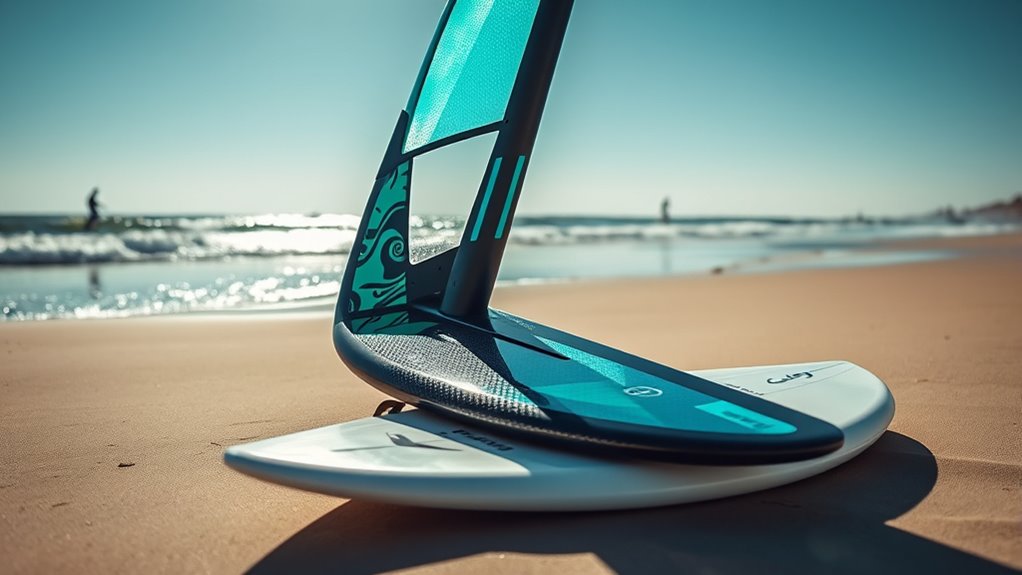

For ideal foil setup and tuning in wingfoiling, start with aluminum or carbon fiber foils based on your skill level. Choose the mast length that balances stability and performance for your conditions. Experiment with foil positioning to find the sweet spot for responsiveness and control. Tailor your wing size to wind conditions, as larger wings help in light winds while smaller ones boost agility. Get ready to refine your setup for the ultimate ride experience. There’s more to discover!
Key Takeaways
- Choose the right foil material: aluminum for beginners and carbon fiber for advanced riders seeking agility and speed.
- Adjust mast length based on skill; longer masts improve performance in choppy conditions, while shorter masts offer stability for novices.
- Fine-tune foil positioning on the board to balance responsiveness and stability according to your riding style and skill level.
- Experiment with wing size and shape; larger wings are better for light winds, while smaller wings enhance speed and control.
- Regularly test and iterate your setup to find the optimal configuration that enhances your riding experience and performance.
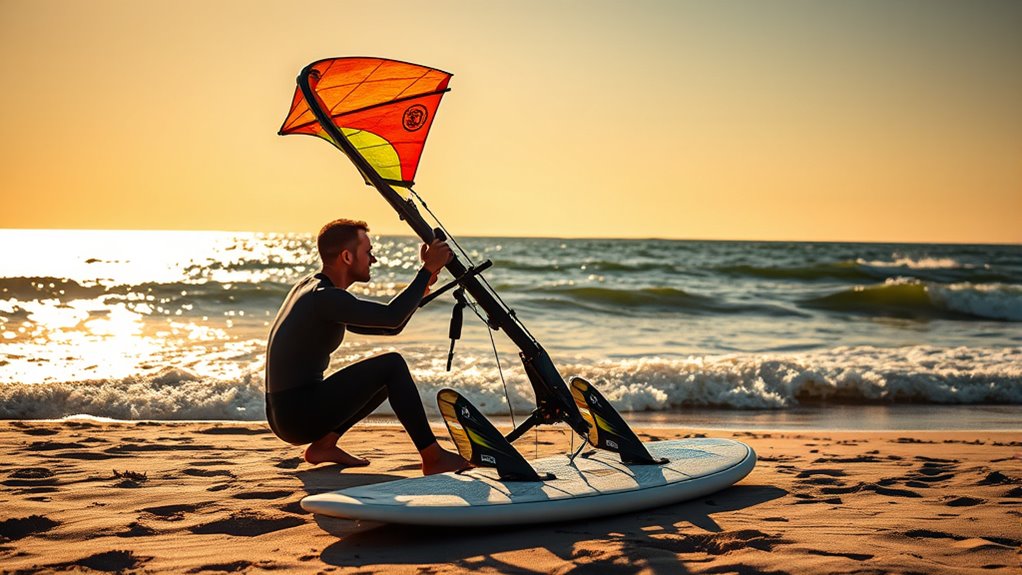
When you’re ready to hit the water, getting your foil setup and tuning just right can make all the difference in your wingfoiling experience. It’s essential to understand how the various components work together to achieve optimal performance. First, let’s talk about foil material and how it impacts your ride. Different materials, like aluminum and carbon fiber, offer unique benefits. Aluminum foils are generally more affordable and durable, making them a great choice for beginners or those who want a reliable option. On the other hand, carbon fiber is lighter and stiffer, which means you can achieve better performance and responsiveness. If you’re aiming for speed and agility, investing in a carbon fiber setup might be worth it.
Getting your foil setup right is crucial for an optimal wingfoiling experience, with material choice impacting performance significantly.
Next, consider the mast length. The mast serves as the vertical connection between your board and the foil. A longer mast allows for greater clearance above the water, which can be particularly advantageous in choppy conditions or when riding waves. If you’re just starting out, you might find a shorter mast easier to manage, as it offers more stability and control. However, as you gain experience, you’ll likely want to experiment with longer masts to unlock new levels of performance. Finding the right length for your riding style can take some trial and error, but it’s crucial in maximizing your wingfoiling experience.
Once you’ve chosen your foil material and mast length, it’s time to fine-tune your setup. Start with the position of your foil on the board. The placement can significantly affect your balance and maneuverability. Moving the foil closer to the tail can enhance your responsiveness, while positioning it toward the front can provide more stability. Don’t be afraid to shift it around until you find that sweet spot that feels just right for you.
Finally, don’t forget about your wing size and shape. Pairing the right wing with your foil setup is vital for achieving the performance you desire. A larger wing can help you get up on foil more easily, especially in lighter winds, while a smaller wing is better suited for high-speed riding.

Ho Stevie! FRP Thruster (3) Surfboard Fins - Stronger Than Regular Nylon Fins - Performance and Maneuverability - Includes Travel Case, Screws, Wax Comb and Fin Key
🏄♂️ THRUSTER FINS fit any surfboard that use Twin Tab or Single Tab fins (select which kind) -...
As an affiliate, we earn on qualifying purchases.
Frequently Asked Questions
What Is the Best Wing Size for Beginners?
For beginners, a wing size between 4 to 6 square meters is ideal. This range offers good stability and lift, helping you get up on the foil more easily. A larger wing size increases beginner suitability, as it provides more power and control, especially in lighter winds. As you gain confidence and skills, you can experiment with smaller wings to adapt to different conditions and improve your performance. Enjoy your time on the water!
How Do I Choose the Right Board for Wingfoiling?
Choosing the right board for wingfoiling is like picking the perfect canvas for a masterpiece. You’ll want to contemplate board materials, as lightweight options enhance performance, while durable materials withstand impacts. Think about fin configurations too; a twin fin setup offers stability, while a single fin can provide speed. Start with a wider board for balance, then explore narrower options as your skills improve. Your choice shapes your entire wingfoiling experience!
What Safety Gear Is Recommended for Wingfoiling?
When wingfoiling, you should definitely wear a helmet for safety to safeguard your head from falls or collisions. A wetsuit is also essential, providing protection from the cold water and potential injuries. Consider adding impact vests for extra cushioning against falls. Don’t forget about proper footwear; it’ll help you grip the board and keep your feet safe. Prioritizing safety gear ensures a more enjoyable and secure experience on the water.
How Can I Improve My Balance While Wingfoiling?
To improve your balance while wingfoiling, consider that 70% of your stability comes from your core strength. Start incorporating balance training and core exercises into your routine, like planks and stability ball workouts. Practicing on a balance board can also enhance your skills. When you’re out on the water, focus on keeping your knees slightly bent and your weight centered over the board. You’ll notice a significant difference in your stability and overall performance!
What Are the Common Mistakes to Avoid as a Beginner?
As a beginner, avoid common mistakes like neglecting your proper stance, which can throw off your balance. Make sure you’re standing with your feet shoulder-width apart and your knees slightly bent. Don’t forget about equipment inspection either; check your wing, board, and foil for any damage before hitting the water. Skipping these steps can lead to poor performance and safety issues. Focus on these basics, and you’ll progress more smoothly.
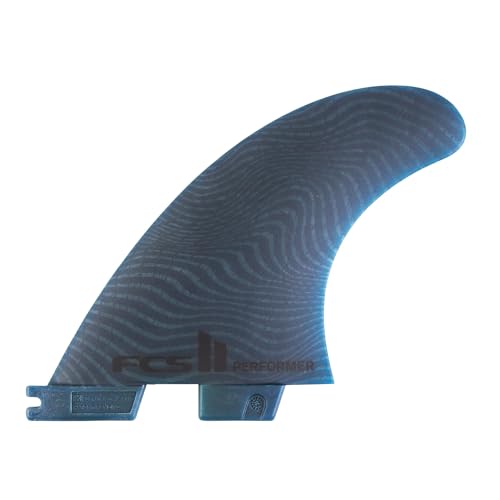
FCS Performer Eco Neo Glass Surfboard Fins (Large, Tri (3 Fins)), Blue
Well proportioned template with Inside Foil Technology (IFT).
As an affiliate, we earn on qualifying purchases.
Conclusion
In conclusion, nailing your foil setup and tuning is essential for an epic wingfoiling experience. Just like a finely tuned guitar, your gear needs the right adjustments to hit those sweet spots on the water. Don’t rush it—take your time to experiment and find what works best for you. Before you know it, you’ll be gliding effortlessly, feeling like a modern-day Poseidon as you conquer the waves. Now, get out there and enjoy the ride!

Rokia R Future Surfboard Fins | High-Performance Fiberglass Reinforced Surfboard Fin | G5 3 Pcs Set Board Fin Use for Softboard Hardboard Giliboard Surfing Longboard Shortboard (Blue&Black)
Future Fins Fit: General G5 model FUTURE fin is suitable for most M-series boards. Suitable for most types...
As an affiliate, we earn on qualifying purchases.

Abahub Surfboard Thruster Fins Set, Compatible with Future Style Fin Box, Fiberglass Reinforced 3 Pieces Surf Fin Set for Surf Boards, Surfing Longboard, Shortboard, With Screws and key, Blue
Classic Design: Depth 4.55 inches, base 4.37 inches, area 14.76 square inches. This classic fin design has been...
As an affiliate, we earn on qualifying purchases.