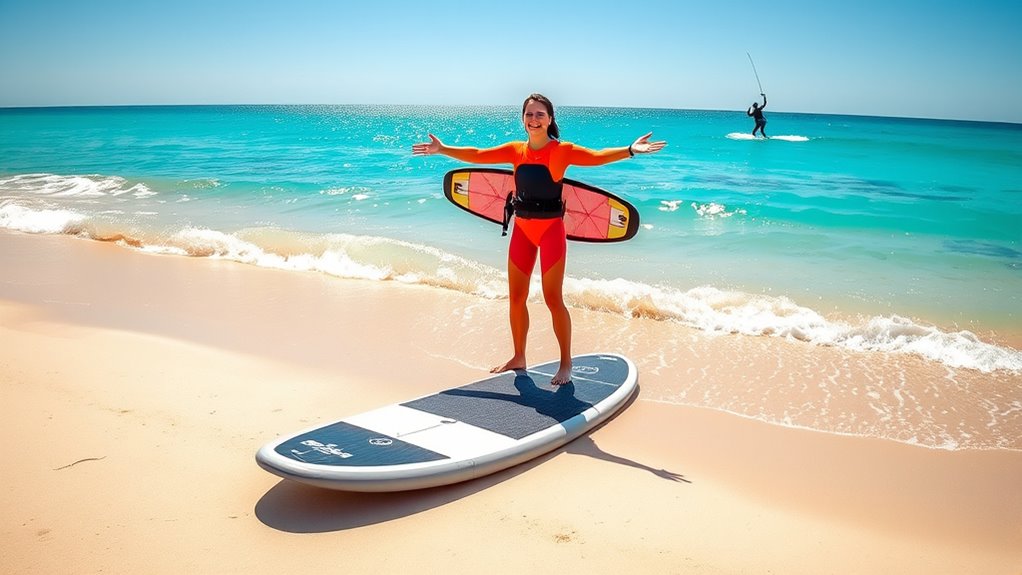

Wingfoiling 101 is all about combining elements of surfing, windsurfing, and kitesurfing for an exhilarating water experience. Start by familiarizing yourself with the equipment and prioritize safety by wearing a personal flotation device and helmet. Choose the right wing size based on your weight and skill level, beginning with a larger wing for easier lift-off. As you practice and refine your technique, you’ll gain confidence and skill. Keep exploring to uncover tips for mastering this exciting sport!
Key Takeaways
- Wingfoiling combines elements of surfing, windsurfing, and kitesurfing for an exhilarating water experience.
- Familiarize yourself with equipment and safety essentials like wearing a personal flotation device and helmet.
- Choose wing size based on your weight, skill level, and wind conditions for optimal lift and stability.
- Practice in lighter wind conditions to build confidence and enhance your technique effectively.
- Embrace the learning process with regular practice to improve your skills and enjoy the adventure.
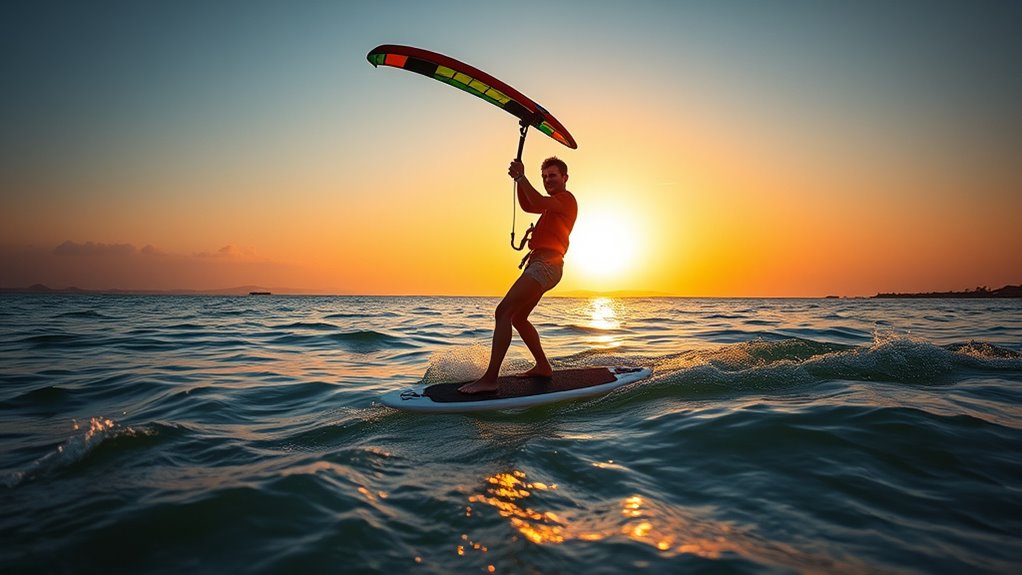
Have you ever wondered how it feels to glide effortlessly over water while harnessing the wind? Wingfoiling offers you that exhilarating experience, combining elements of surfing, windsurfing, and kitesurfing. As you learn to master this exciting sport, you’ll discover the joy of flying above the waves on a hydrofoil, which lifts you above the water as you gain speed. But before you set out, let’s explore the essentials of foil safety and wing sizing to help you get started on the right foot.
First and foremost, understanding foil safety is essential. You’ll want to familiarize yourself with the equipment and the environment before hitting the water. Always wear a personal flotation device (PFD) for safety, and consider wearing a helmet. It’s necessary to choose a location with minimal obstacles, as the foil can be sharp and can cause injury if not handled properly. Make sure you’re aware of your surroundings, especially when you’re learning, as it’s easy to lose balance and fall. Practicing in lighter wind conditions can help you gain confidence without being overwhelmed.
When it comes to wing sizing, selecting the right size wing is critical for your success and enjoyment. The size of your wing will depend on several factors, including your weight, skill level, and the wind conditions you plan to ride in. If you’re a beginner, a larger wing will provide you with more lift and stability, making it easier for you to get up on the foil. As you progress, you can downsize the wing for improved performance and maneuverability. Remember, it’s better to start with a wing that’s too big than one that’s too small, as you’ll find it challenging to get airborne if your wing doesn’t provide enough power.
As you begin your wingfoiling journey, practice makes perfect. Spend time getting comfortable with the equipment, and don’t hesitate to ask for guidance from experienced riders or instructors. They can offer valuable insights on technique and safety tips that’ll enhance your learning experience. Additionally, ensure you understand the various types of headphone jacks used in audio equipment, as this knowledge might be beneficial if you’re planning to listen to music while practicing. With patience and persistence, you’ll soon be gliding over the water, feeling that incredible rush of freedom and exhilaration that comes from mastering the art of wingfoiling. Enjoy every moment, as this adventure is just beginning!
wingfoiling beginner kit
As an affiliate, we earn on qualifying purchases.
As an affiliate, we earn on qualifying purchases.
Frequently Asked Questions
What Are the Best Conditions for Beginners in Wingfoiling?
The best conditions for beginners in wingfoiling are light to moderate wind, around 10 to 15 knots, and warm water temperatures, ideally above 65°F. These conditions help you maintain control while you get used to the equipment. Look for flat water or small waves, as this makes it easier to balance and practice. Always check the weather forecast before heading out to guarantee you’re set up for success!
How Do I Choose the Right Size Wing?
To choose the right size wing, think of it as finding the perfect dance partner. You’ll want to take into account your weight, skill level, and the wind conditions. Generally, lighter wings offer agility while larger wings provide lift. For wing size considerations, pick a wing that balances your weight against the wind’s power. When it comes to wing volume selection, aim for a size that keeps you comfortably afloat without overwhelming you. Enjoy the ride!
Is Wingfoiling Suitable for All Skill Levels?
Yes, wingfoiling is suitable for all skill levels. Beginners can start with larger wingfoil equipment for stability, while more advanced riders can explore different wingfoil techniques and smaller setups for agility. As you progress, you’ll gain confidence and improve your skills on the water. Just remember to take lessons if you’re new, and practice regularly to master the basics before tackling more complex maneuvers. Enjoy the thrill that wingfoiling offers!
Can I Wingfoil Without Prior Experience in Other Water Sports?
Sure, you can wingfoil without prior experience in other water sports! It’s almost like jumping into a pool without knowing how to swim, right? Surprisingly, many beginners find water sports compatibility works in their favor. Skills from other activities can transfer, but wingfoiling’s unique enough that you don’t need previous experience. You’ll learn quickly with practice and guidance, so don’t worry—just grab that wing and hit the water!
What Safety Gear Is Recommended for Wingfoiling?
For wingfoiling, it’s essential to wear a helmet for safety to protect your head from falls or collisions. Additionally, your wetsuit selection should be suited to the water temperature; a thicker wetsuit keeps you warm in cooler conditions, while a thinner one is ideal for warmer waters. Don’t forget other safety gear like impact vests and boots to enhance your protection while enjoying the sport. Stay safe and have fun!
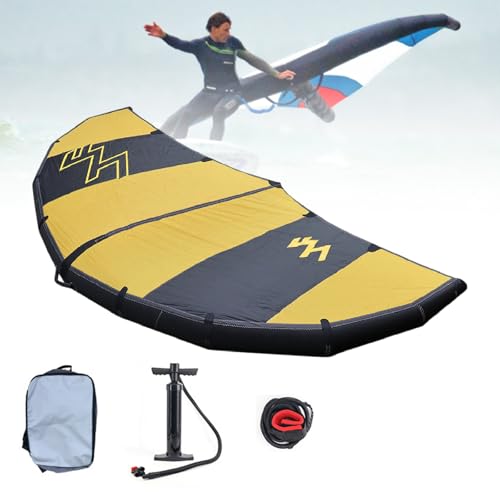
Inflatable Wind Wing Foil & Hydrofoil Board – Versatile Hydrofoil for Outdoor Water Sports, Perfect for Wingfoiling, Surfing, and Paddleboarding Adventures
Experience the thrill of the ocean with our 54ft² Surf Sail, designed for optimal wind performance and forward…
As an affiliate, we earn on qualifying purchases.
As an affiliate, we earn on qualifying purchases.
Conclusion
Now that you’ve got the basics of wingfoiling down, it’s time to grab your gear and hit the water! Just like those ancient sailors steering uncharted waters, you’ll discover the thrill of harnessing the wind and gliding over waves. Remember, practice makes perfect, and the more you ride, the more confident you’ll become. So, don your gear and embrace the adventure ahead—who knows, you might just find yourself dancing with the wind!
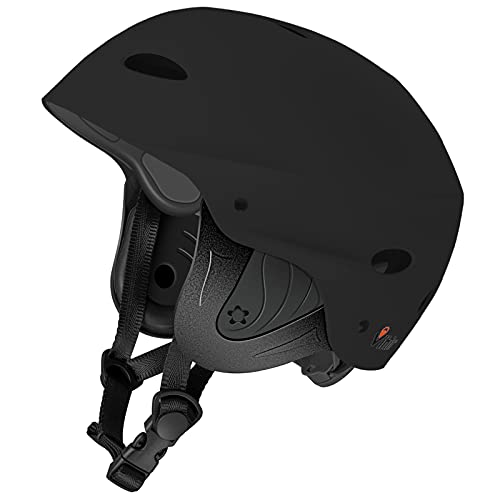
Adjustable Adult Water Sports Helmet with Ears,Perfect for Kayaking, Boating,Surfing
Note: The gray images have been changed to black, but they are actually gray; The black L images…
As an affiliate, we earn on qualifying purchases.
As an affiliate, we earn on qualifying purchases.

Sunlite Sports AquaFitness Deluxe Flotation Swimming Belt – Water Aerobics Equipment for Pool, Low-Impact Workout
【GREAT EXERCISE AID】The floatation belt provides buoyancy to keep you floating; ideal for cross-training, rehabilitative water exercises, and…
As an affiliate, we earn on qualifying purchases.
As an affiliate, we earn on qualifying purchases.