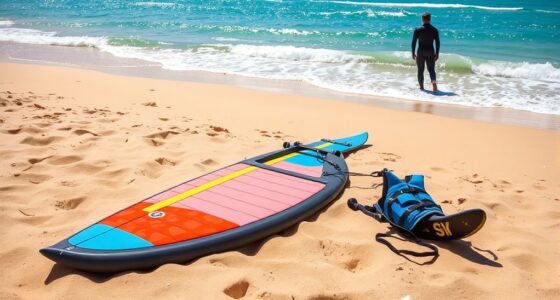

To navigate shore break safely with a wing, start by watching the waves from a safe distance to understand their timing and pattern. Focus on recognizing how each wave builds and breaks, so you can anticipate when to launch and land. Check your gear thoroughly, ensuring everything is in top condition to prevent failures. Staying vigilant, adjusting to changing conditions, and mastering wave behavior will boost your confidence and safety. Keep exploring to learn more essential tips for safe shore break winging.
Key Takeaways
- Observe and anticipate wave patterns and timing before entering to avoid being caught inside unexpectedly.
- Check your wing, harness, and board thoroughly to ensure all equipment is reliable and secure.
- Position yourself at the right distance from breaking waves, and align your approach with wave build-up for better control.
- Stay vigilant, continuously monitor surf conditions, and adjust your movements based on wave behavior.
- Practice safe entry and exit techniques, and be prepared to retreat or reposition if conditions become too risky.

Shore break can be one of the most challenging and dangerous conditions to navigate with a wing, especially if you’re new to the sport. The key to handling these powerful waves safely starts with understanding wave timing. Shore break waves tend to break quickly and unpredictably, so you need to pay close attention to how the surf is shaping up. Observe the pattern of the waves from a safe distance, noting how long between sets and how each wave builds. This awareness helps you anticipate when a wave is about to break, giving you precious seconds to prepare and position yourself correctly. Timing your movements to avoid being caught inside or under a breaking wave is essential, so stay vigilant and keep a mental note of the wave patterns.
Before even stepping into the water, equipment checks are indispensable. Your wing, harness, and board should be in top condition to guarantee they perform reliably when you need them most. Inspect your wing for any tears, delaminations, or loose seams that could compromise its integrity. Make sure the inflation valves work smoothly and that the bladder holds air properly. Check your harness for secure straps and comfortable fit, as a poorly fitting harness can hinder your control and balance during rough conditions. Your board should be free of cracks or dings, and fins should be firmly attached. Proper gear checks not only boost your confidence but also prevent avoidable accidents caused by equipment failure. Additionally, understanding wave dynamics can help you better predict how waves will break and improve your timing in challenging conditions.
wing surfboard gear check kit
As an affiliate, we earn on qualifying purchases.
As an affiliate, we earn on qualifying purchases.
Frequently Asked Questions
What Are the Best Times of Day to Avoid Dangerous Shore Break?
You should avoid dangerous shore break during high surf height and tidal changes, especially at peak tide times. Early mornings or late afternoons generally have calmer conditions, reducing the risk. Check local tide charts and surf reports before heading out. By timing your session around low tide and when tidal changes bring smaller surf, you can enjoy safer conditions and reduce the chance of injury while riding the shore break with your wing.
How Do Wind Conditions Affect Wing Safety Near Shore Break?
Imagine wind impact as a wild horse—you need control to stay safe. Strong, gusty winds can cause unpredictable wing behavior near shore break, increasing your risk of falls or injury. Always check wind conditions before entering the water, and wear proper safety gear like a helmet and impact vest. Light, steady winds make for safer conditions, giving you better control and a smoother ride over breaking waves.
What Gear Should I Carry for Emergency Rescue Situations?
When facing emergency rescue situations, you should carry essential gear like a whistle or signaling device for emergency signaling. A rescue throw rope or flotation device helps you assist others safely. Knowing rescue techniques, such as how to perform a self-rescue or assist others without putting yourself at risk, is vital. Always stay prepared with the right gear, and practice rescue procedures regularly to respond swiftly and effectively in emergencies.
How Can I Recognize Rip Currents Near Shore Break Zones?
Ever wonder what’s lurking beneath the surf? Rip current indicators often appear as calmer, darker patches or gaps in the breaking waves. Watch for unusual shoreline patterns—like a channel or a difference in wave height—that hint at danger. Near shore break zones, these rip currents can be swift, so stay alert. Recognizing these clues lets you avoid the deadly pull, keeping your surf experience safe and thrilling.
Are There Specific Signs Indicating Unsafe Shore Break Conditions?
You should watch for signs indicating unsafe shore break conditions, such as unusually high wave height or rapidly changing tide levels. Large, powerful waves crashing close to the shore can be dangerous, especially if the tide is rising quickly. If waves look steep or break too close to the sand, it’s a sign to exercise caution. Always pay attention to local advisories and observe how the tide and wave height fluctuate before entering the water.

GOLDEN HOUR Mens Waterproof Digital Sport Watches Wide Screen Easy Read Display Military Style with Blue Rubber Strap
[DIGITAL WATCH]: Imported EL backlit screen, the time can be clearly displayed in the backlight.The digital watch also…
As an affiliate, we earn on qualifying purchases.
As an affiliate, we earn on qualifying purchases.
Conclusion
Now that you know the key safety tips, you’re ready to take on the shore break with confidence. But remember, even the most experienced riders face unpredictable waves. Stay alert, trust your skills, and keep your guard up. One rogue wave could change everything in an instant. Are you prepared to handle whatever comes your way? Stay cautious, stay sharp—your next ride depends on it. The surf’s unpredictable nature means the real challenge is just around the corner.

FoilSolutions 2″ Wide Wing Foil Harness Hook – Wing Foil Hook for Wingfoiling & Foil Boards, Compatible with Harness Lines & Straps, Corrosion-Resistant, 1-Pack
Wide 2″ Harness Hook: Extra width provides added stability and reduces rotation under load for smoother wing foiling.
As an affiliate, we earn on qualifying purchases.
As an affiliate, we earn on qualifying purchases.

Lucid Ice Inflatable Hydrofoil Board Foil Surfboard 120L Inflatable Wing Foil Board with 5㎡ Inflatable Surf Wing Foil Wing Kite Wind Wingfoil with Hydrofoil F1060
Lucid Ice Inflatable Hydrofoil Board:The inflatable hydrofoil surfboard is made of new reinforced military-grade PVC material, which is…
As an affiliate, we earn on qualifying purchases.
As an affiliate, we earn on qualifying purchases.