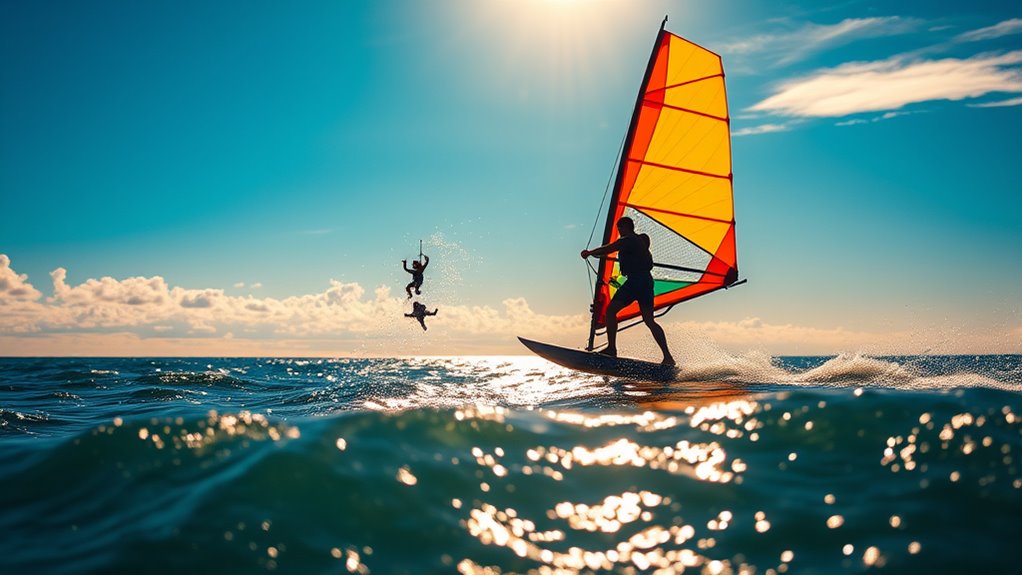

To launch in wingsurfing, position your board perpendicular to the wind and hold the wing into the wind. Lean back slightly for balance as you pull the wing towards you to generate lift. For landing, control your descent, keeping the wing steady above you while easing off power. Align the board with the wind before touchdown, and bend your knees to absorb impact. Master these techniques and you’ll discover even smoother rides and better performance on the water.
Key Takeaways
- Position the board perpendicular to the wind for an effective water start.
- Hold the wing into the wind, balancing slightly back while standing on the board.
- Maintain controlled descent by keeping the wing steady above during landing.
- Gradually ease off power and align the board parallel to the wind before touchdown.
- Guide the wing to the side during landing to prevent imbalance and ensure a smooth stop.

Wingsurfing can be an exhilarating way to harness the power of the wind, but mastering its techniques is essential for a smooth ride. One of the most critical skills you’ll need is effective wing control. This means understanding how to position and maneuver the wing to catch the wind efficiently. Start by practicing on land to get a feel for the wing’s weight and how it responds to your movements. When you’re comfortable, shift to water starts. This technique allows you to get up on your board quickly, which is key for enjoying your time on the water.
To begin a water start, position your board perpendicular to the wind. Hold the wing with both hands, ensuring it’s facing into the wind. As you stand on the board, lean slightly back to maintain balance. This is where wing control becomes essential; you’ll want to pull the wing gently towards you to create lift while keeping your body centered. As you feel the wind fill the wing, push against the board with your feet, and allow the wind to do its job.
Once you’ve mastered the water start, focus on your landing technique. Approach your landing area with a controlled descent. Keep the wing steady above you, using your body weight to manage the wing’s position. As you get closer to the water, gradually ease off the power by pulling the wing in towards your body. This will help you avoid a hard landing and allow for a more graceful shift back to the water.
When you’re ready to land, position your board parallel to the wind. As you touch down, keep your knees slightly bent to absorb the impact. Maintaining wing control during landing is essential; an uncontrolled wing can easily pull you off balance. Use your hands to guide the wing to the side as you come to a stop. This will help prevent any sudden pulls that could lead to a fall.
Practicing these techniques will enhance your wingsurfing experience and boost your confidence on the water. Remember, the more you practice wing control during both your water starts and landings, the smoother your rides will become. Over time, you’ll find that these techniques not only make your sessions more enjoyable but also allow you to explore new challenges with ease. Additionally, understanding optimal pressure range for your equipment can significantly impact your overall performance. So, get out there and embrace the thrill of wingsurfing!
Top picks for "techniqu launch land"
Open Amazon search results for this keyword.
As an affiliate, we earn on qualifying purchases.
Frequently Asked Questions
What Equipment Do I Need for Wingsurfing?
To get started with wingsurfing, you’ll need some essential wing surf gear. First, grab a suitable wing that matches your skill level and wind conditions. Next, invest in a board designed for wingsurfing, along with a foil if you’re planning to ride above the water. Don’t forget a harness for comfort and control, plus a wetsuit for warmth. With this equipment, you’re all set to hit the water and enjoy your wingsurfing adventure!
Is Wingsurfing Suitable for Beginners?
Yes, wingsurfing can be suitable for beginners, but it’s like learning to dance on water—exciting yet challenging. Start with wingsurfing beginner tips, such as mastering balance and understanding wind direction. Avoid common wingsurfing mistakes like overcomplicating maneuvers too soon. With patience and practice, you’ll find yourself gliding smoothly, feeling the thrill of freedom. Embrace the journey, and soon, you’ll be carving your path across the waves with confidence.
How Do I Choose the Right Wing Size?
To choose the right wing size, you need to consider your weight, skill level, and wind conditions. A larger wing provides more lift and is ideal for lighter winds, while a smaller wing offers better control in stronger winds. Wing size selection is vital; it impacts your performance and enjoyment. Trust your instincts and experiment to find what feels best for you. Remember, wing size importance can’t be overstated in ensuring a great wingsurfing experience.
What Safety Gear Should I Wear While Wingsurfing?
Did you know that nearly 30% of wingsurfers experience injuries each season? To stay safe while wingsurfing, you should wear protective clothing, like a wetsuit, to guard against cuts and scrapes. A safety harness is also vital, as it helps you maintain control and balance while steering the water. Don’t forget a helmet and impact vest for extra protection, ensuring you can enjoy the thrill without compromising your safety.
Can I Wingsurf in All Wind Conditions?
You can’t wingsurf in all wind conditions. Ideal wind patterns typically range from 10 to 25 knots for beginners, while experienced riders may handle stronger winds. Always check forecasts to avoid dangerous gusts. Additionally, confirm your equipment’s durability matches the conditions—using robust wings and boards designed for higher winds can prevent damage. If the winds are too light or too strong, it’s best to wait for safer conditions before hitting the water.
Conclusion
In the world of wingsurfing, mastering your launch and landing techniques is like learning the secret handshake of an exclusive club. As you glide over the water, remember that every graceful entry and exit is a dance with the wind. Embrace the thrill, and don’t shy away from the occasional tumble—it’s just the universe’s way of reminding you to keep your sense of humor alive. Soon, you’ll be soaring effortlessly, turning heads and winning hearts on the waves.