
To clean sand out of your beach towels and clothing, start by shaking them outdoors to dislodge most sand. Next, scrub off any stubborn sand using a damp cloth or gentle brush. Pre-treat sunscreen stains with stain remover and let it sit for 10-15 minutes. Wash towels on a cold cycle using a liquid detergent designed for stains, and verify all sand is gone before drying. You’ll find even more tips to tackle this task effectively.
Key Takeaways
- Shake out towels and clothing outside to dislodge most sand before washing.
- Use a gentle scrub brush on stubborn sand patches, slightly dampening them first.
- Pre-treat any sunscreen residue on clothing with stain remover for better cleaning.
- Wash towels on a cold cycle with liquid detergent designed for stain removal.
- Check for remaining sand after washing; repeat if necessary before drying.
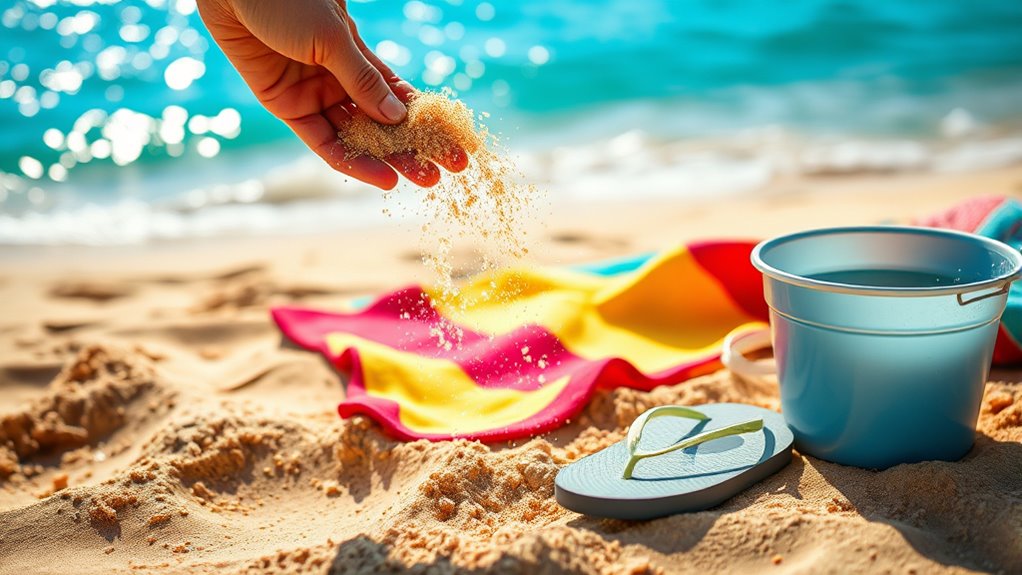
When you return from a day at the beach, the last thing you want is to deal with stubborn sand clinging to your towels and clothes. It’s frustrating when the fun of the day is overshadowed by the cleanup. To tackle this, start by organizing your beach bag effectively. A well-organized beach bag can help prevent sand from getting everywhere in the first place. Use separate pouches for wet items, dry clothing, and sunscreen. By keeping these items apart, you reduce the chances of sand mixing with everything else.
Once you’re home, the first step in cleaning your towels and clothes is to shake them out. Head outside and give each item a good shake. This will help dislodge most of the sand before it even makes it to your washing machine. You’ll be surprised at how much sand can be removed just by doing this simple step. Next, make sure you handle any sunscreen residue removal. Sunscreen can create a grimy layer that traps sand, making it even harder to clean.
For towels, you can use a gentle scrub brush or your hands to rub off any visible sand. If there’s a stubborn patch, dampen the area slightly and scrub it until the sand loosens up. After this, toss your towels into the washing machine. Use a cold cycle to prevent any potential shrinkage, and add in a bit of liquid detergent specifically designed for stain removal. This will help with both the sand and any lingering sunscreen residue.
For clothing, follow a similar approach. Give each piece a good shake outside, then check for any sandy pockets or seams before washing. If your clothes have a lot of sunscreen residue, pre-treat those areas with a stain remover. Let the treatment sit for about 10-15 minutes before washing.
After the wash cycle, don’t forget to check everything before drying. If you still see sand or residue, repeat the washing process. Once you’re satisfied, you can safely toss everything in the dryer or hang it outside. With these steps, you’ll keep your beach towels and clothes clean and ready for your next sunny adventure! Additionally, ensuring that your pest-free garden is well-maintained can provide an enjoyable outdoor experience that minimizes sand accumulation on your beach gear.
Frequently Asked Questions
Can Sand Damage My Washing Machine?
Yes, sand can damage your washing machine. It can get trapped in the drum and filter, causing wear over time. To minimize this risk, focus on machine maintenance by regularly checking and cleaning the filter. When washing items with sand, consider your detergent choice; a more effective detergent can help wash away particles. Always shake out excess sand before tossing items in the machine to keep everything running smoothly.
Is It Safe to Shake Towels Outdoors?
Yes, it’s safe to shake towels outdoors, and it can actually be beneficial. By doing this, you’re preventing sand from entering your home and minimizing the environmental impact of washing. Outdoor cleaning helps keep your washing machine free from debris. Just make sure you’re in a suitable area where the sand won’t disturb others. Enjoy the fresh air while you keep your towels clean and your space tidy!
How Often Should I Wash Beach Towels?
You should wash beach towels after every use, especially if they’re sandy. To keep them fresh, use effective sand removal techniques like shaking them out before washing. When you’re ready to dry them, consider towel drying tips like using a tumble dryer on low heat or air drying them in a well-ventilated area. This helps maintain their softness and longevity while ensuring they’re sand-free for your next beach trip!
What Fabric Types Attract More Sand?
Some fabrics are like magnets for sand! Materials such as terrycloth and cotton tend to attract more sand due to their texture and fibers, increasing sand adhesion. On the other hand, smoother fabrics like microfiber or synthetic blends repel sand better, making them ideal for beach outings. When choosing beach gear, consider these fabric types to minimize that gritty feeling after a fun day in the sun. You’ll enjoy your beach time more!
Can Saltwater Affect My Washing Process?
Yes, saltwater can affect your washing process. If you don’t rinse your clothes and towels properly, saltwater residue can remain, leading to fabric corrosion over time. This residue may cause colors to fade and fibers to weaken. To avoid these issues, always rinse your beach items thoroughly before tossing them into the washing machine. This’ll help preserve their quality and keep them looking fresh longer, so you can enjoy your beach days without worry.
Conclusion
In summary, don’t let sandy souvenirs spoil your summer fun! With simple solutions like shaking, brushing, and rinsing, you can easily eliminate those pesky grains from your beach towels and clothing. Remember, a little effort goes a long way in keeping your beach gear clean and comfy. So, next time you hit the shore, you’ll know just how to tackle that troublesome sand and enjoy a stress-free seaside experience. Happy beaching!