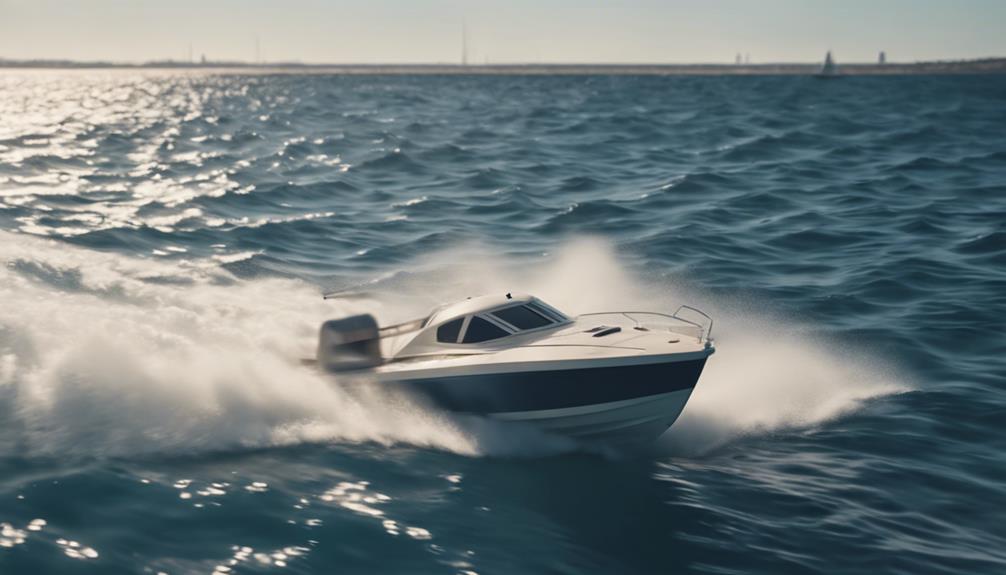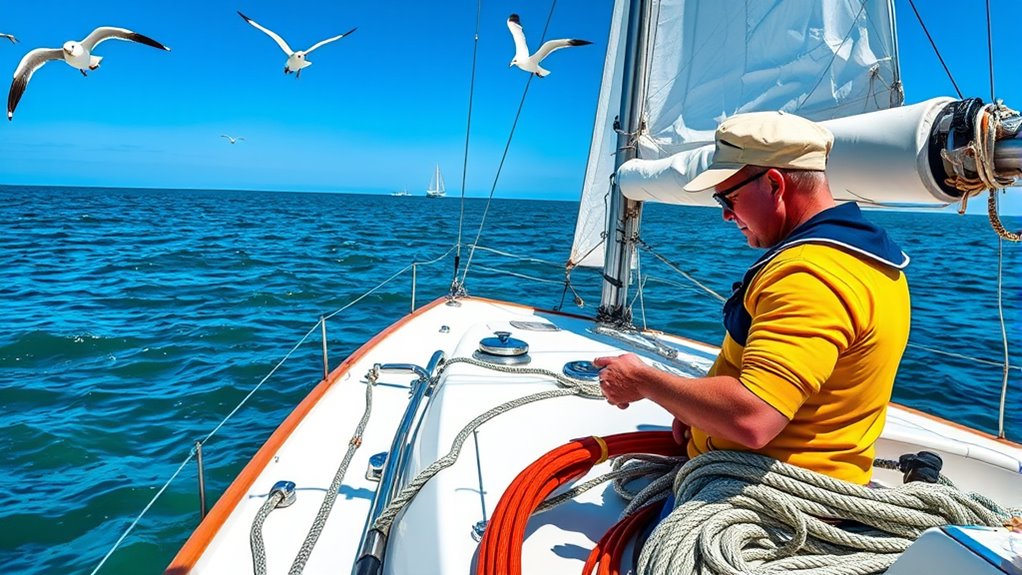

To prepare your sailboat for an ocean passage, start by charting your route and marking waypoints. Check your safety equipment, guaranteeing life jackets and a VHF radio are accessible. Perform a thorough boat inspection, focusing on the rigging, sails, and engine condition. Stock enough food and water for your crew, prioritizing hydration. Finally, assign roles and conduct safety drills. You’ll want to cover these critical preparations to guarantee a smooth journey, so keep going for more tips.

Get sports gear delivered free with Prime
- Fast, free delivery on millions of items
- Prime Video, Amazon Music and more included
- Member-only deals all year
Key Takeaways
- Conduct thorough navigation planning by studying charts, marking waypoints, and understanding tides and weather patterns before departure.
- Inspect safety equipment, ensuring life jackets, VHF radio, first aid kit, and flares are accessible and in good condition.
- Perform a comprehensive boat inspection, checking rigging, sails, engine, and carrying extra fuel for emergencies during the passage.
- Calculate and store sufficient food and water for the crew, prioritizing non-perishable items and proper hydration throughout the journey.
- Prepare the crew by assigning roles, conducting safety drills, and educating them on emergency procedures to ensure readiness for any situation.

Preparing for an ocean passage can feel intimidating, but with the right approach, you can guarantee your sailboat is ready for the journey ahead. First off, you need to delve into navigation planning. This is crucial; it’s not just about knowing where you’re going, but also understanding the conditions you might face along the way. Start by studying charts and plots for your route. Make sure to mark waypoints and potential hazards, so you can navigate confidently. Familiarize yourself with the tides, currents, and weather patterns that could impact your passage. You’ll want to invest in a reliable GPS and have backup navigation tools, like paper charts and a compass, just in case technology fails you.
Next, turn your attention to safety equipment. You can’t afford to overlook this aspect. Check that your life jackets are in good condition and easily accessible for everyone on board. Make sure you’ve got a reliable VHF radio for communication and distress signals. A first aid kit is a must; ensure it’s stocked with essential supplies. Additionally, consider carrying flares or an emergency beacon. These can be lifesavers in critical situations. Don’t forget about fire extinguishers; check their expiration dates, and ensure they’re placed in accessible locations.
When you’re preparing your boat, inspect the rigging and sails. Look for any wear and tear that needs addressing; replacing frayed lines now can save you a lot of trouble later. Ensure your engine is in top shape, as you may need it for entering harbors or in emergencies. Check the fuel levels and oil, and consider carrying extra fuel for long passages.
You should also assess your provisions. Calculate how much food and water you’ll need, keeping in mind the number of crew members and the duration of your passage. Stock up on non-perishable items and sufficient drinking water, as staying hydrated is crucial. Additionally, consider making refreshing drinks to keep everyone hydrated and energized during the journey.
Finally, don’t underestimate the importance of a well-prepared crew. Make sure everyone knows their responsibilities and has a basic understanding of sailing and safety protocols. Conduct drills to guarantee everyone is comfortable and ready for any situation that might arise. With thorough navigation planning and well-equipped safety measures, you can set out on your ocean passage with confidence.
marine GPS navigation system for sailboats
As an affiliate, we earn on qualifying purchases.
As an affiliate, we earn on qualifying purchases.
Frequently Asked Questions
How Do I Choose the Right Route for My Ocean Passage?
To select the appropriate route for your ocean passage, start with navigation planning. Assess your destination and potential waypoints. Use weather routing tools to analyze prevailing winds and currents, which will help you avoid rough seas. Consider any seasonal weather patterns that could impact your journey. Finally, stay flexible; adjust your route as conditions change to ensure safety and efficiency. With thorough planning, you’ll navigate successfully and enjoy your adventure.
What Should I Pack for Personal Comfort During the Journey?
You should pack clothing essentials like lightweight, moisture-wicking layers to keep comfortable while sailing. Don’t forget a good hat and sunglasses for sun protection. For personal hygiene, bring biodegradable soap, a toothbrush, toothpaste, and any personal care items you can’t live without. A small towel and travel-sized toiletries can make a big difference too. Staying comfortable and clean will help you enjoy the journey much more!
How Can I Manage Seasickness While Sailing?
To manage seasickness while sailing, consider medication options like over-the-counter antihistamines or prescription patches. They can help prevent nausea effectively. If you prefer natural remedies, try ginger in various forms—tea, candies, or capsules. Staying hydrated and eating small, bland snacks can also ease symptoms. Position yourself in the center of the boat, where motion’s least intense, and focus on the horizon. Fresh air and deep breathing can work wonders, too!
What Communication Devices Should I Bring for Emergencies?
In the vast ocean, communication is your lifeline. For emergencies, bring a reliable marine radio and a satellite communication device. The marine radio grants you instant connection to nearby vessels and coast stations, like a beacon in the night. Meanwhile, satellite communication guarantees you can reach anyone, anywhere, even when you’re far from shore. Equip yourself with these devices, and you’ll navigate the unpredictable waters with confidence and security.
How Do I Handle Unexpected Weather Changes at Sea?
To handle unexpected weather changes at sea, you need to stay vigilant. Monitor the weather regularly using reliable apps or radios, and always have storm preparedness plans ready. If conditions worsen, adjust your sails early to reduce strain and keep your boat stable. Secure loose items and ensure everyone’s wearing life jackets. Trust your instincts; if a storm hits, find a safe harbor or make necessary adjustments to navigate through it safely.
Conclusion
As you stand on the deck, the horizon stretching like a canvas awaiting your brush, remember that preparation is your compass. With every bolt tightened and every sail unfurled, you’re not just readying your boat; you’re forging a bond with the sea. Embrace the salty breeze and the whispers of adventure calling from the depths. You’re not just sailing; you’re commencing on a journey where the ocean cradles your dreams, and every wave tells a story waiting to be written.
Columbus Day / Indigenous Peoples' Day Picks
long weekend sales
As an affiliate, we earn on qualifying purchases.