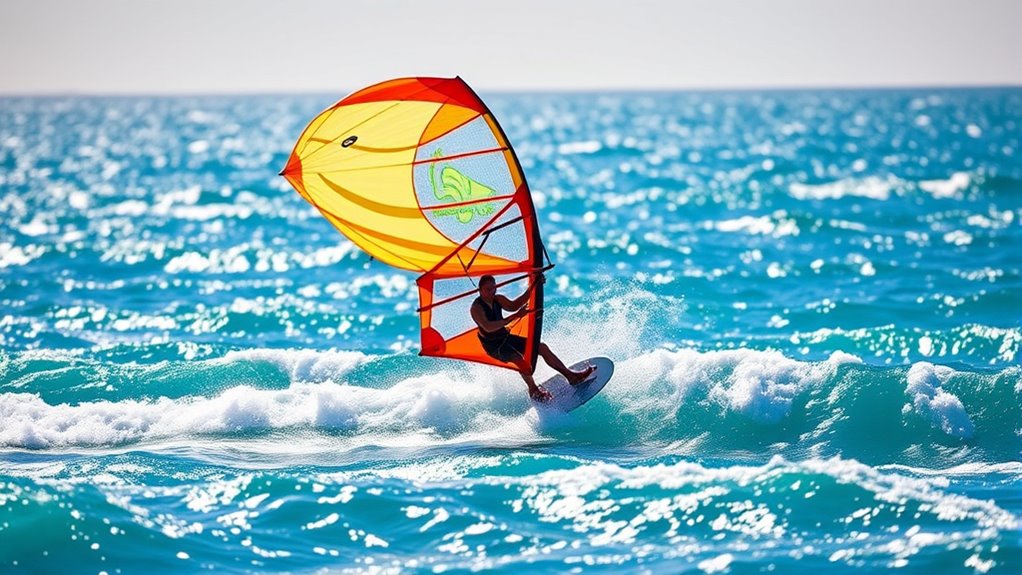

Mastering upwind and downwind riding with the wing is vital for enhancing your performance and control on the water. To ride upwind, focus on your body positioning and adjust your angle to 30-45 degrees to effectively harness the wind. For downwind riding, aim for around 90 degrees to gain speed as the wind fills your sail directly. Both techniques demand awareness of your surroundings and safety precautions. Stick around to discover essential tips for improving your skills further.
Key Takeaways
- Upwind riding requires a body positioning shift forward, optimizing balance and speed against the wind at a 30 to 45-degree angle.
- Downwind riding benefits from a wider wind angle of approximately 90 degrees, resulting in increased speed and a direct wind fill.
- Awareness of surroundings is crucial in both riding techniques to avoid obstacles and ensure safety during maneuvers.
- Properly adjusting your sail and angle is essential for effective wind harnessing, enhancing control and ride quality in both directions.
- Practicing these techniques improves your understanding of wind dynamics, leading to more enjoyable experiences in kitesurfing, windsurfing, and wing foiling.
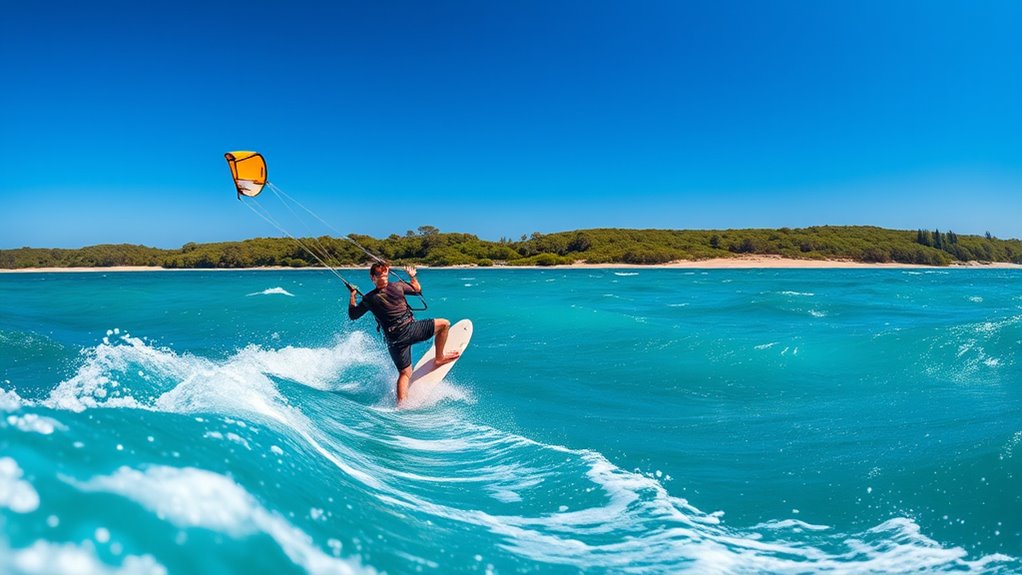
Have you ever wondered how mastering upwind and downwind riding can change your experience on the water? When you get the hang of these techniques, you’ll not only enhance your skills but also enjoy a smoother ride and greater control. Understanding wind angles is vital to this process. Whether you’re kitesurfing, windsurfing, or wing foiling, knowing how to read the wind can make the difference between a frustrating day and an exhilarating one.
When you ride upwind, you’re fundamentally working against the wind. It may seem challenging at first, but with the right technique, you can make it feel effortless. Positioning your body correctly and adjusting your sail or wing to the ideal angle is key. Aim for a wind angle of about 30 to 45 degrees when heading upwind. This angle allows you to harness the wind effectively, giving you the lift you need to glide smoothly. Keep in mind that body positioning is just as important; shift your weight forward to maintain speed and balance.
Downwind riding, on the other hand, opens up a different dimension of fun. You’ll want to aim for a wider wind angle, around 90 degrees, which allows the wind to fill your sail or wing more directly. This can give you a thrilling speed boost. However, it’s vital to be cautious; downwind riding can come with its own set of challenges. You may find yourself picking up speed quickly, which can lead to instability if you’re not prepared. Always be aware of your surroundings and other riders, as close encounters can lead to accidents.
Safety considerations cannot be overstated in either scenario. When riding upwind, you’ll want to keep a vigilant eye on your surroundings, as the wind can change unexpectedly. Also, make sure to wear appropriate safety gear, like a helmet and impact vest, to protect yourself in case of a fall. While downwind riding can be exhilarating, you should also be mindful of possible obstacles in your path, such as buoys or other watercraft. Additionally, practicing evidence-based insights can help you better understand the dynamics of wind and enhance your overall riding experience.
As an affiliate, we earn on qualifying purchases.
Frequently Asked Questions
What Equipment Is Best for Upwind and Downwind Riding?
For upwind and downwind riding, the best equipment combines a stable wing and a customizable board. You’ll want a wing that offers excellent stability, allowing you to maintain control even in challenging conditions. Consider a board that you can customize to fit your riding style, enhancing your overall performance. Don’t forget to experiment with different sizes and shapes, as finding the right balance will markedly improve your upwind and downwind capabilities.
How Do Wind Conditions Affect My Ride?
Wind conditions can critically impact your ride. You might think that any wind is good, but it’s essential to consider wind direction and gust impact. If the wind’s direction isn’t favorable, you’ll struggle to maintain control. Gusts can catch you off guard, making it tough to stay balanced. Always assess the conditions before heading out, so you can adjust your approach and enjoy a smoother, safer ride.
Can Beginners Learn Upwind and Downwind Riding Easily?
Yes, beginners can learn upwind and downwind riding with practice and patience. By focusing on wind awareness, you’ll build your skills more effectively. Start in light winds to boost your confidence, gradually tackling stronger conditions as you improve. It’s all about feeling the wind and how it interacts with your wing. Remember, every ride is a chance to learn, so don’t rush the process—enjoy the journey and celebrate your progress!
What Safety Gear Should I Use While Riding?
When you’re riding, you’ve gotta think of safety like it’s your superhero cape! Start with a sturdy helmet for head safety, ensuring it fits snugly. Don’t forget impact protection gear—like pads for your knees and elbows. These pieces keep you safe from unexpected falls and bumps. A personal flotation device is also smart, especially if you’re near water. Trust me, these essentials can make your riding experience both thrilling and secure!
Are There Specific Techniques for Different Wing Sizes?
Yes, specific techniques do vary with wing size and your skill level. With larger wings, you’ll need to focus on managing power and control, especially in high winds. Smaller wings allow for more agility, so you can practice sharper turns and quick direction changes. As your skill level increases, adapt your techniques to match the wing size, ensuring you maintain balance and efficiency while riding. Always prioritize comfort and safety as you progress.
Conclusion
As you glide effortlessly upwind, you might just spot a fellow rider cruising downwind, sharing a knowing smile. It’s funny how, in those moments, you realize that every gust and wave can bring you closer to others who share your passion. Maneuvering with your wing becomes more than just a skill; it’s a dance with nature and a chance encounter with like-minded souls. So, embrace the ride—upwind or downwind—and enjoy the journey together.