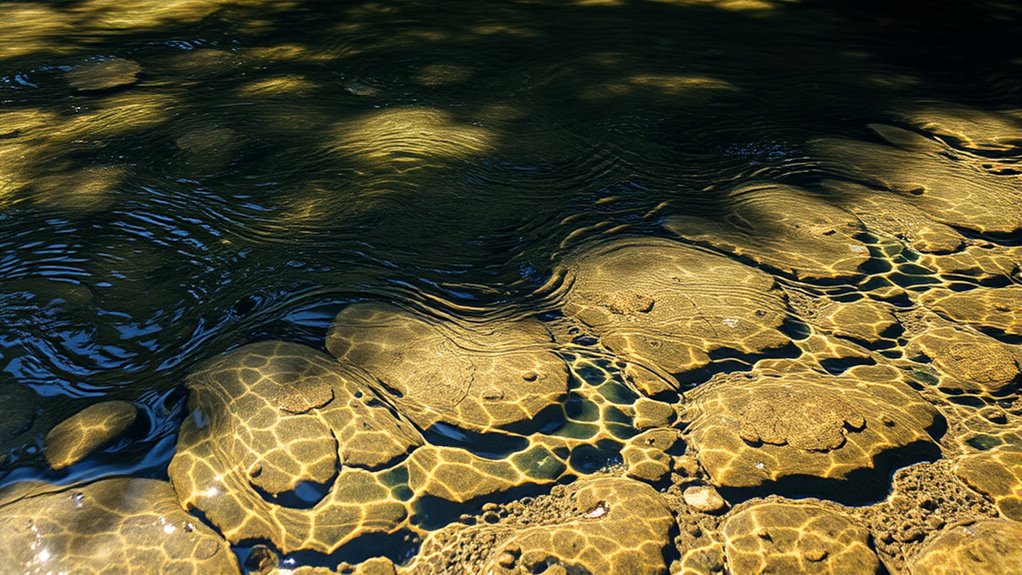

When you observe water surface textures, look for ripple patterns that reveal hidden gusts and flow changes. Sharp, irregular ripples or sudden shifts in ripple direction often signal gusts or turbulence beneath the surface. Crossed or swirling ripples can point to obstacles or eddies caused by gusts, while stretched or broken ripples indicate increased energy or swift flow. Continuing to explore these cues helps you uncover subtle water movements and underlying forces at play.
Key Takeaways
- Look for sudden changes or irregularities in ripple size and direction, indicating gusts impacting water surface patterns.
- Observe the emergence of new or intensified ripples that contrast with existing flow, signaling gust-induced disturbances.
- Detect localized ripple alignments that deviate from the main flow, suggesting the influence of hidden gusts or wind bursts.
- Note abrupt shifts in ripple pattern complexity or breakage, which may reveal transient gusts or flow disruptions.
- Compare ripple patterns over time to identify temporary surface changes caused by hidden gusts or airflow variations.

Understanding water texture is essential for interpreting water quality and ecosystem health. When you observe a body of water, the way it moves and the patterns it creates can reveal a wealth of information. One of the most noticeable features is water flow, which can range from gentle currents to rapid streams. Water flow influences the formation of surface ripples, which are tiny waves that dance across the water’s surface. These ripples aren’t just decorative; they serve as visual clues to the underlying water dynamics. For instance, smooth, uniform ripples often indicate steady, slow-moving water, while irregular or chaotic ripples suggest turbulence or sudden changes in flow. Recognizing these patterns allows you to gauge the energy and stability of the water body.
Water flow and ripples reveal underlying water dynamics and ecosystem health.
As you watch surface ripples, pay attention to their size, shape, and movement. Small, evenly spaced ripples typically form when the water moves gently, often caused by a slight breeze or minimal current. Larger, more irregular ripples can signal stronger water flow or disturbances beneath the surface. When water moves swiftly, ripples may become elongated or broken, reflecting the increased energy in the system. Conversely, in stagnant or slow-moving water, ripples tend to be faint or absent altogether. By understanding these subtle differences, you can infer whether the water is calm or turbulent, which is *essential* for *evaluating* conditions for aquatic life and overall water quality.
Additionally, the direction of surface ripples provides insights into water flow patterns. They often align with the current’s direction, helping you identify flow pathways. When ripples cross or swirl, it might indicate obstacles or eddies disrupting the flow, hinting at underlying features like rocks or submerged structures. These surface cues can also reveal hidden gusts—sudden bursts of wind or flow changes that can influence erosion, sediment transport, and nutrient distribution within the ecosystem. Recognizing these signals helps you anticipate shifts in water behavior, which is *indispensable* for environmental monitoring, safety, and understanding ecosystem dynamics.
Furthermore, understanding water texture can help you identify the presence of hidden gusts—sudden bursts of wind or flow changes that can influence erosion, sediment transport, and nutrient distribution within the ecosystem. Recognizing these signals helps you anticipate shifts in water behavior, which is *indispensable* for environmental monitoring, safety, and understanding ecosystem dynamics. In essence, paying close attention to water flow and surface ripples empowers you to read the story written on the water’s surface. Each ripple and current pattern acts as a clue, revealing the unseen forces at play beneath. By honing your ability to interpret these subtle cues, you gain a deeper understanding of water quality, ecosystem health, and the subtle gusts that influence aquatic environments. This awareness allows you to make more informed observations and decisions, whether you’re monitoring a stream, *evaluating* a pond, or simply appreciating the natural flow of water around you.

H128 Handheld Thermal Camera, 240 x 240 TISR Resolution, 24h Battery Life Thermal Imaging Camera, 25 Hz Infrared Camera with Temperature Alarm, -4℉~ 842℉ Temp Range, IP65 Protection Level
Enhanced Clarity with 240x240 TISR Resolution: Equipped with TISR technology, the H128 infrared camera elevates your thermal imaging...
As an affiliate, we earn on qualifying purchases.
Frequently Asked Questions
How Can Water Texture Indicate Approaching Weather Changes?
To spot approaching weather changes, pay attention to water texture, which can reveal subtle signs like ripples or smoothness. If you notice increased rippling or choppy water, it often indicates rising wind speeds and changing cloud movement. Wind shear, where wind speed or direction shifts at different heights, can also cause water disturbances. Recognizing these signs helps you anticipate weather shifts before they become obvious.
What Equipment Best Assists in Reading Subtle Water Textures?
Imagine you’re a weather detective, and your tools are your secret weapons. Sensor tools like high-resolution cameras and water flow sensors help you spot subtle visual cues—ripples, sheen, or flickers—that reveal hidden gusts lurking beneath the surface. These devices sharpen your senses, allowing you to read water textures with precision. With the right equipment, you turn silent water signals into a vivid forecast, staying one step ahead of changing weather.
Are There Regional Differences in Water Texture Patterns?
Regional variations in water texture patterns often reflect local environmental conditions and cultural influences. You’ll notice differences based on climate, water flow, and landscape, which shape subtle textures. Cultural practices also influence how water appears and interacts with its surroundings. By observing these regional differences, you can better understand the unique characteristics of each area, helping you adapt your approach when reading water textures across various environments.
How Does Water Texture Vary With Different Water Bodies?
You’re diving into how water texture varies across different water bodies, and it’s a fascinating journey. The current flow changes from swift in rivers to gentle in lakes, shaping the surface ripples accordingly. In oceans, the texture is often more turbulent with choppy waves, while ponds have calmer, glassy surfaces. Recognizing these differences helps you understand the environment better and predict hidden gusts lurking beneath the surface.
Can Water Texture Analysis Predict Gust Strength Accurately?
You wonder if water texture analysis can predict gust strength accurately. By examining texture patterns, you can identify subtle surface changes associated with gusts. While this method offers valuable insights, it’s not foolproof, as gust prediction also depends on other factors like wind speed and direction. Overall, analyzing water texture improves gust prediction accuracy, but it should be combined with other methods for the best results.
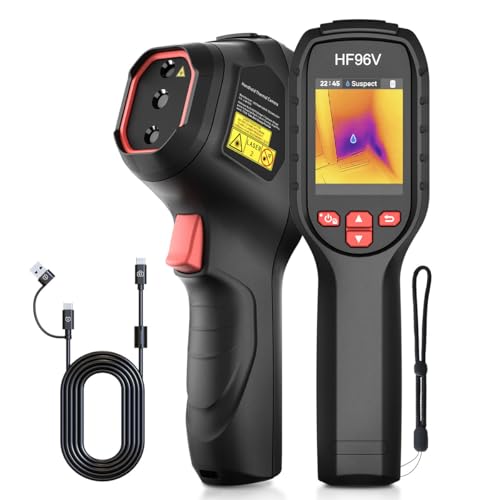
HF96V Thermal Camera with Visual Camera & Laser Pointer, Intelligent Scene Detection, 240 * 240 Super Resolution Thermal Imaging Camera,25 Hz, 50° FOV, -4°F to 1022°F, IP54 Infrared Camera
【Dual Cameras】Built-in 96x96 IR camera and 640x480 visible camera, the HF96V thermal imager offers 3 image modes (Fusion/Thermal/Visual)...
As an affiliate, we earn on qualifying purchases.
Conclusion
So, as you master reading water texture, you tap into nature’s secret language, sensing hidden gusts before they strike. It’s like having a compass in the wilderness, guiding your every move. Remember, even in a world of modern tech, the old ways still hold wisdom—like the sailors of old, who trusted the water’s whispers. Stay attuned, trust your instincts, and let the water’s song lead you to safer shores.

MILESEEY TR10 Thermal Imaging Camera,Super Resolution 192 x 192 Thermal Camera,25 Hz Refresh Rate, -4°F to 1022°F Handheld Infrared Imager,8-Hour Battery Life Infrared Camera
【High Definition Thermal Imaging】The MILESEEY TR10 delivers enhanced 192×192 thermal clarity infrared sensor. Its 25Hz high refresh rate...
As an affiliate, we earn on qualifying purchases.

TOPDON TC002C Duo Thermal Camera, Compatible with Any USB-C iPhone, iPad & Android Device, 512 x 384 Super Resolution, 256 x 192 IR Resolution Thermal Imager, -4°F~1022°F Temp Range -Grey
UNIVERSAL USB-C COMPATIBILITY: As an upgraded version of TC002C, the TOPDON TC002C Duo now works seamlessly with all...
As an affiliate, we earn on qualifying purchases.