
To eliminate ear pain fast while snorkel equalization, start early and equalize before you feel discomfort, using gentle techniques like the Valsalva maneuver with relaxed, deep breaths. Make certain your mask fits snugly to prevent leaks and promote comfort. Focus on steady breathing to help open your Eustachian tubes naturally, avoiding holding your breath or rapid breathing. Practice these methods consistently, and you’ll find equalization becomes easier over time—continue below to discover more tips for a pain-free experience.
Key Takeaways
- Start equalizing early during descent with gentle Valsalva or swallowing to prevent pressure buildup.
- Breathe deeply and calmly through your nose to relax and open the Eustachian tubes effectively.
- Ensure your mask fits snugly to reduce facial tension and facilitate easier equalization.
- Avoid holding your breath; use steady, controlled nasal breaths to maintain pressure balance.
- Descend gradually, pausing to equalize frequently and prevent ear pain before it starts.
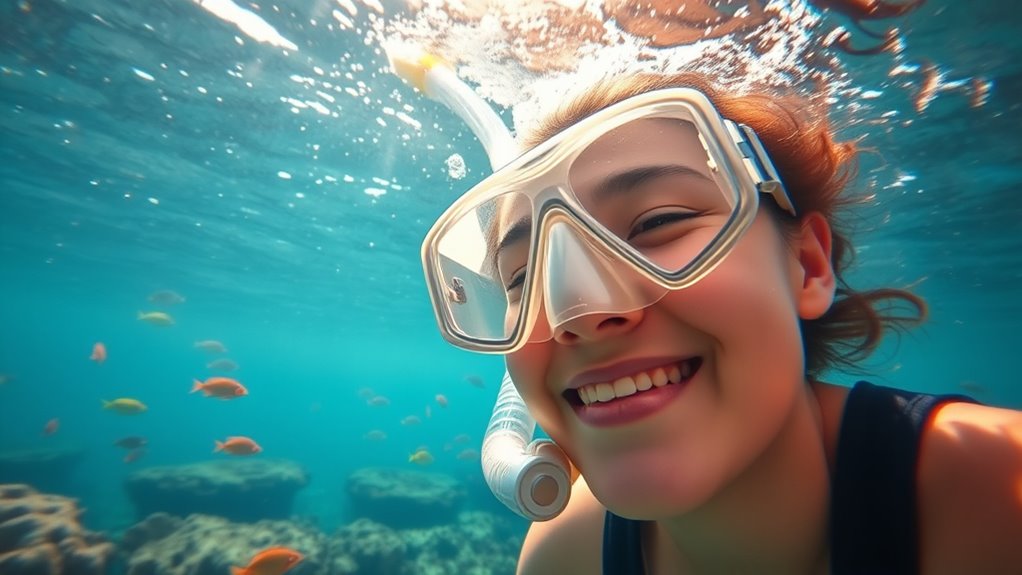
Have you ever wondered how divers prevent discomfort and balance issues while ascending or descending underwater? The secret lies in mastering equalization techniques that keep your ears comfortable and pressure balanced. Even if you’re just snorkeling, understanding how to manage ear pressure can make your experience more enjoyable. One of the most important aspects is focusing on your breathing techniques. Proper breathing helps regulate your internal pressure, making equalization easier. When you breathe calmly and deeply through your nose, it creates a natural rhythm that can help open your Eustachian tubes, allowing air to flow and equalize the pressure in your middle ears. Avoid holding your breath or making rapid, shallow breaths, as these can increase pressure differences and lead to discomfort or pain.
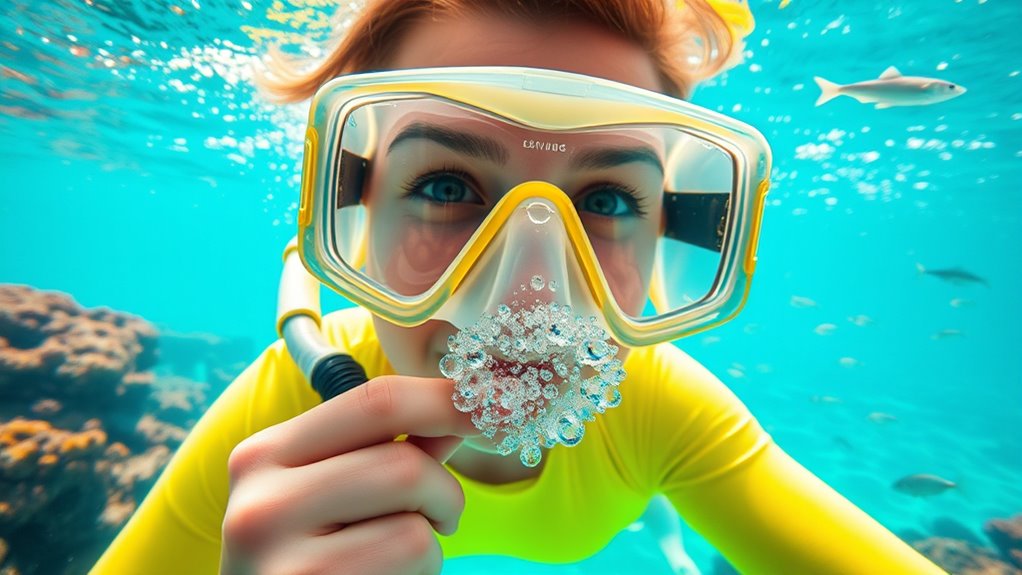
Another essential factor is ensuring your mask fit. A well-fitting mask creates a seal that prevents water from entering and allows you to breathe comfortably through your snorkel. When your mask fits snugly, it reduces the likelihood of water leaks that can distract you from focusing on equalization. It also helps maintain proper pressure around your face, which can aid in ear pressure management. If your mask is loose or uncomfortable, you might subconsciously tense up, making it harder to relax your breathing and perform effective equalization. Take the time to select a mask that molds well to your face, ensuring a secure, comfortable fit without being too tight. This will make breathing easier and help you stay calm, which is essential for effective equalization. Developing good ear pressure management techniques can significantly improve your overall comfort underwater.
As you descend into the water, start equalizing early and often—don’t wait until you feel pain. Use simple techniques like the Valsalva maneuver, gently blowing against pinched nostrils with your mouth closed, to open your Eustachian tubes. Combine this with deep, controlled breaths to maintain a steady internal pressure. Remember, your breathing technique is your most powerful tool; staying relaxed and breathing slowly helps you avoid overexertion and unnecessary discomfort. Maintaining a good mask fit also supports your ability to focus on these techniques without distraction. With practice, you’ll find it becomes second nature to manage pressure efficiently, preventing ear pain and ensuring a comfortable, safe snorkeling experience. Keep these fundamentals in mind, and you’ll be better prepared to handle equalization smoothly on every dive.

Viginsul Mask Fins Snorkeling Gear for Adults, Full Face Snorkel Mask & Adjustable Swim Fins Snorkel Set, Panoramic View Snorkel Mask Dry Top Anti-Fog Anti-Leak
YOUR BEST SNORKEL PARTNER – Thanks to the short fins and foldable snorkel design, our snorkeling gear for…
As an affiliate, we earn on qualifying purchases.
As an affiliate, we earn on qualifying purchases.
Frequently Asked Questions
Can Equalization Techniques Prevent Ear Barotrauma During Deep Dives?
You can prevent ear barotrauma during intensive dives by practicing proper pressure equalization techniques. These methods help maintain ear drum safety by balancing the pressure in your middle ear with the surrounding water pressure. Regularly equalizing as you descend ensures your eardrum isn’t subjected to sudden pressure changes, reducing the risk of injury. Consistent pressure equalization is essential for safe diving and avoiding discomfort or damage to your ears.
Are There Any Risks Associated With Over-Equalizing?
Imagine overfilling a balloon until it bursts—that’s similar to over-equalizing your ears. Over-equalizing can cause pressure buildup, risking ear damage like ruptured eardrums. While equalization techniques aim to balance pressure, pushing too hard can lead to pain, vertigo, or long-term damage. Always equalize gently and listen to your body, avoiding excessive force to prevent injury during your dives.
How Long Does It Typically Take to Master Equalization Skills?
Mastering equalization skills varies for everyone, but with consistent practice and ear training, you’ll notice progress within a few sessions. It generally takes a few weeks of regular practice to become comfortable with equalizing, especially if you focus on sensitivity and listening skills. Keep practicing consistently, and over time, your ability to equalize quickly and comfortably will improve, reducing ear discomfort and enhancing your snorkeling experience.
Can Equalization Techniques Be Used for Other Water Activities?
Imagine you’re diving into a deep lake, wondering if your equalization skills can help during water sports. Yes, they can! These techniques improve your comfort and safety in various activities like freediving or underwater rugby. Mastering equalization enhances your swimming techniques, preventing ear pain and allowing longer, more enjoyable sessions. So, the skills you develop for snorkeling can certainly be adapted to other water activities, making your experience safer and more fun.
Is There Equipment That Can Assist With Ear Equalization?
You can find equipment like ear plugs and nasal sprays that assist with ear equalization. Ear plugs help block water and pressure, making it easier to manage discomfort, while nasal sprays can open nasal passages, aiding in pressure regulation during water activities. Using these tools together can prevent ear pain, especially if you’re prone to discomfort or need extra support for equalization underwater. Always choose appropriate products for your needs and consult a professional if unsure.

Aluminum Alloy Ear Equalization Training Tool with 3 Balloons for Snorkeling Underwater Diving Beginner (red)
[Professional Ear Pressure Equalization] Effectively balances ear pressure during dives by creating a sealed oral chamber. Through specific…
As an affiliate, we earn on qualifying purchases.
As an affiliate, we earn on qualifying purchases.
Conclusion
Now that you know how to quickly equalize your ears, you can enjoy snorkeling without pain. Imagine you’re on a dream vacation, ready to explore vibrant reefs, but ear pain hits. Remember, using the right techniques can make all the difference. Just like Sarah, who struggled with discomfort until she mastered equalization, you too can dive confidently. Don’t let ear pain hold you back—equip yourself with these tips and make every snorkeling adventure unforgettable.

Mask Seal
ENHANCED MASK SEAL – Features a silicone-based formula that creates a superior seal between your mask skirt and…
As an affiliate, we earn on qualifying purchases.
As an affiliate, we earn on qualifying purchases.

Ear Pressure Relief Suction Device,Airplane Ear Pressure Relief Inner Ear Equalization Tool for,Migraine Ear Pressure Relief Products,Reduces Tension with 3 Sizes Earplugs(Grey)
Instant relief of ear pressure: Gently stimulates the inner ear using gentle air suction to quickly relieve tinnitus…
As an affiliate, we earn on qualifying purchases.
As an affiliate, we earn on qualifying purchases.