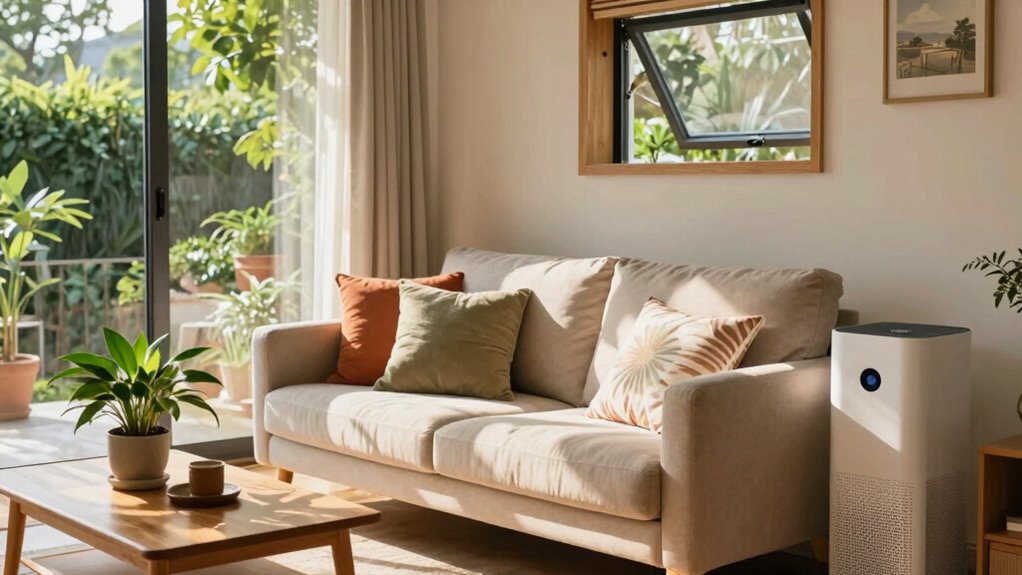
The cheapest way to reduce VOCs at home is by improving ventilation—open windows and use exhaust fans during and after activities like cooking or cleaning. Choose low-VOC or zero-VOC paints, cleaners, and household items to minimize chemical emissions. Incorporate houseplants like snake plants or peace lilies, which naturally filter toxins. Regular cleaning and maintaining proper humidity also help. Keep VOC levels low over time with simple habits; if you want to learn more, keep exploring practical tips and tricks.

Get sports gear delivered free — and shop member deals
- Fast, free delivery on millions of items
- Access to Prime Big Deal Days deals on October 6–7
- Prime Video, Amazon Music and more included
Key Takeaways
- Increasing natural ventilation by opening windows is a free, effective way to reduce indoor VOC levels.
- Regular cleaning and dusting minimize dust and chemical buildup that contribute to VOC emissions.
- Using low-VOC or zero-VOC products, such as paints and cleaning supplies, reduces chemical sources.
- Incorporating indoor plants naturally filters VOCs without added costs.
- Properly maintaining ventilation systems ensures consistent air quality without additional expenses.
As an affiliate, we earn on qualifying purchases.
How Can I Improve Indoor Air Quality With Proper Ventilation?
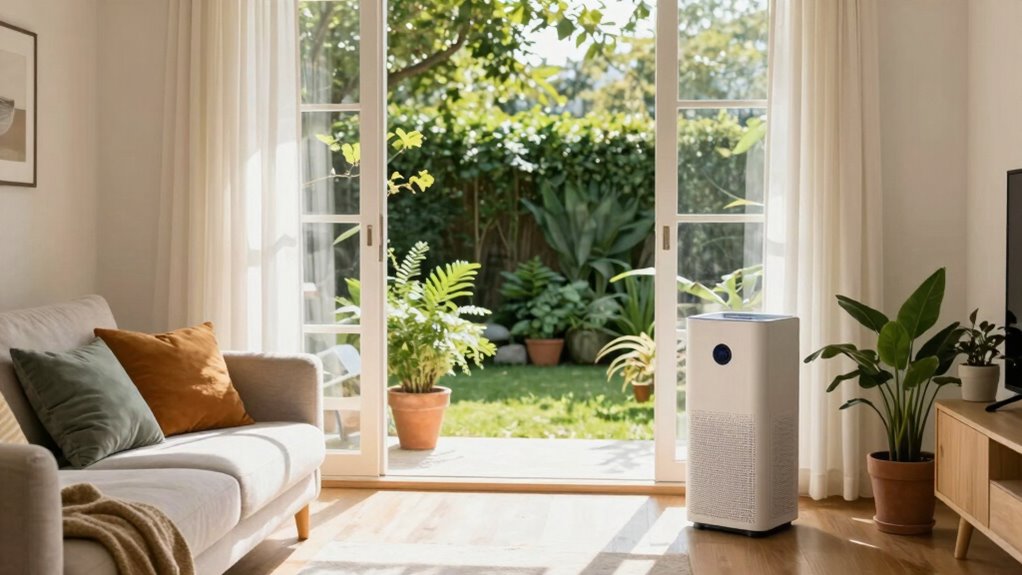
Have you ever wondered how proper ventilation can profoundly improve your indoor air quality? By increasing air exchange, you remove pollutants, including VOCs, that accumulate inside your home. Using effective ventilation systems guarantees a steady flow of fresh air while expelling stale, contaminated air. Natural ventilation—opening windows and doors—can be effective, especially in mild weather. Mechanical systems like exhaust fans and HVAC units with fresh air intake help maintain consistent air quality. Properly designed ventilation reduces indoor pollutants, lowers humidity, and prevents mold growth, creating a healthier environment. Exploring new frontiers in digital content can also highlight innovative ways to enhance indoor spaces. Regularly maintaining these systems ensures they function at their best. Implementing good ventilation practices is a cost-effective way to improve your indoor air quality without relying on gadgets or filters alone. Additionally, maintaining optimal humidity levels can reduce indoor pollutants and enhance overall air quality. Effective ventilation also minimizes the accumulation of microplastics in dust, which can significantly impact your health. Research indicates that astrological compatibility may even influence how we perceive our living spaces, enhancing our overall well-being. Understanding the role of air fryer cooking techniques can further contribute to creating a healthier indoor environment.
What Low-VOC Products Should I Use in My Home?
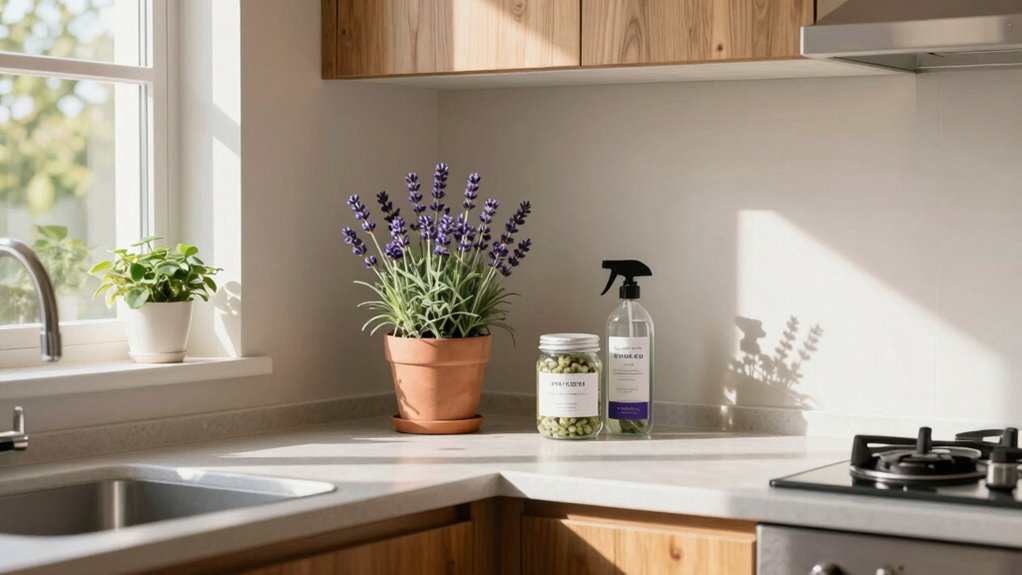
Switching to low-VOC paints and eco-friendly cleaning products can markedly reduce indoor air pollution. These options emit fewer harmful chemicals, making your home healthier. Additionally, proper lighting techniques can enhance the overall ambiance of your space while ensuring a comfortable atmosphere. Consider choosing products labeled as low-VOC or zero-VOC for a safer environment. Additionally, opting for luxury lifestyle products that prioritize sustainability can enhance both comfort and air quality in your home. Incorporating indoor air quality strategies, such as regular ventilation, can further improve your home’s atmosphere. Furthermore, using educational resources on eco-friendly practices can empower homeowners to make informed choices about their indoor environment. Implementing support and boundaries in your home care routines can also help maintain a healthier living space for family and children.
Choosing Low-VOC Paints
Wondering how to choose the best low-VOC paints for your home? Start with your paint selection by checking labels for low-VOC or zero-VOC certifications. These indicate products with minimal volatile organic compounds, reducing indoor air pollution. Before you paint, prioritize surface preparation—clean and sand surfaces to assure smooth, even coverage, which helps the paint adhere better and last longer. Look for paints labeled as “low-emission” or “eco-friendly,” and compare brands for the lowest VOC content. Keep in mind, some low-VOC paints may cost a bit more, but the healthier indoor environment is worth it. Proper surface prep combined with careful paint selection makes your project safer and more effective, minimizing VOC release and improving air quality in your home.
Eco-Friendly Cleaning Products
Choosing the right cleaning products can markedly improve your home’s indoor air quality, especially after selecting low-VOC paints. Opt for eco-friendly, natural cleaning products made from plant-based ingredients to reduce VOC emissions. These products often have fewer synthetic fragrances and harsh chemicals, making them safer for your indoor environment. To enhance freshness and air quality, make certain proper natural ventilation when cleaning, opening windows and doors regularly. Incorporate indoor plants like snake plants or pothos, which naturally filter toxins and VOCs from the air. Using these strategies together creates a healthier home environment, minimizes VOC exposure, and supports sustainable living. Your choice of eco-friendly cleaners, combined with good ventilation and indoor plants, makes a significant difference. Furthermore, using low-VOC products can greatly reduce harmful emissions in your home. Additionally, consider using a bike generator to produce renewable energy while you clean, promoting sustainability in your home. Furthermore, using eco-friendly products not only benefits your health but also contributes to a cleaner planet. Regularly utilizing NEAT methods for physical activity can also help in maintaining overall well-being while you create a healthier home. Additionally, choosing plants that thrive in low-light conditions can enhance your indoor environment while further improving air quality.
How Can I Minimize VOCS Daily With Simple Habits?
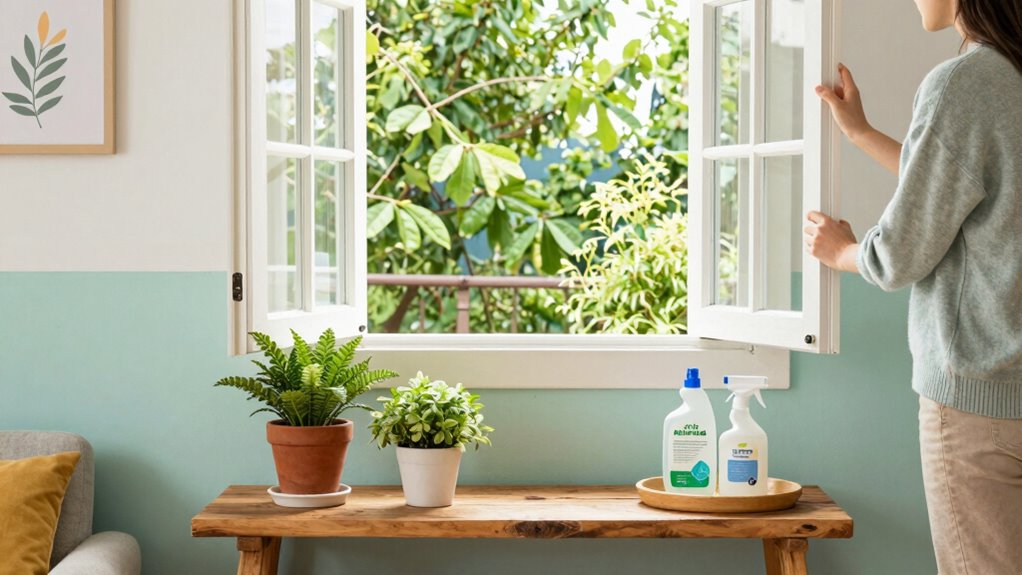
You can reduce VOCs daily by increasing ventilation whenever possible, like opening windows or using exhaust fans. Additionally, using proper DIY tools can help you apply low-VOC products more effectively and evenly. Opt for low-VOC products and avoid strong-smelling chemicals to keep indoor air cleaner. Regularly cleaning your space also helps maintain better air quality and minimize VOC buildup; consider using an air purifier to further enhance air quality. Additionally, embracing inner strength through mindful practices can further enhance your commitment to a healthier living environment. Incorporating color accuracy considerations in your decor choices can also contribute to a more pleasant atmosphere. Implementing soundproofing techniques in your home can further improve overall indoor air quality by reducing the need for noisy ventilation systems.
Increase Ventilation Regularly
Regularly increasing ventilation is one of the simplest yet most effective ways to reduce VOC levels in your home. Improving air circulation helps remove indoor pollutants and brings in fresh air, diluting VOC concentrations. You can do this easily through window ventilation, especially during times when VOC emissions are highest, like cooking or cleaning. Consistently opening windows creates a natural flow of fresh air, reducing indoor VOC buildup.
- Open windows daily, even if just for a few minutes
- Use exhaust fans in kitchens and bathrooms
- Create cross-ventilation by opening multiple windows
- Ventilate during and after activities that release VOCs
- Keep interior doors open to foster better air circulation
Additionally, air quality can be significantly enhanced by utilizing plants that naturally absorb VOCs, further improving your indoor environment.
Choose Low-VOC Products
Opting for low-VOC products is one of the simplest ways to keep indoor air cleaner every day. Choose paints, cleaning supplies, and furniture labeled low-VOC or VOC-free. This reduces the amount of harmful chemicals released into your home. To further minimize VOCs, consider using an air purifier equipped with VOC sensors, which can detect and alert you to chemical levels in real time. By monitoring VOCs, you can identify sources and take action quickly. Regularly replacing or upgrading these products guarantees ongoing low emissions. Small changes like these make a big difference in maintaining healthier indoor air, especially when combined with good ventilation habits. Additionally, understanding the role of air exchangers in improving indoor air quality can enhance your efforts. Staying vigilant about product choices helps create a safer, cleaner living environment with minimal effort. Incorporating low-VOC cleaning supplies into your daily routine can significantly reduce your exposure to harmful chemicals.
Maintain Clean Indoor Air
Wondering how to keep indoor air clean every day? Simple habits can make a big difference in reducing VOCs. Start by improving air filtration—use HEPA filters in your HVAC system or portable air purifiers to trap airborne pollutants. Additionally, maintaining proper ventilation is essential to ensure that fresh air continuously circulates, helping to dilute any VOCs present. Maintain proper humidity levels, ideally between 30-50%, to prevent VOCs from becoming more concentrated and to inhibit mold growth. Keep surfaces clean to reduce dust and chemical buildup that can emit VOCs. Ventilate regularly by opening windows or using exhaust fans, especially when cooking or using cleaning products. Finally, avoid clutter and stored chemicals, which can off-gas over time. These small steps help create a healthier indoor environment, minimizing VOCs without costly gadgets. Additionally, incorporating music therapy into your daily routine can further enhance your overall well-being and create a calming atmosphere.
How Does Regular Cleaning Help Reduce VOCs?
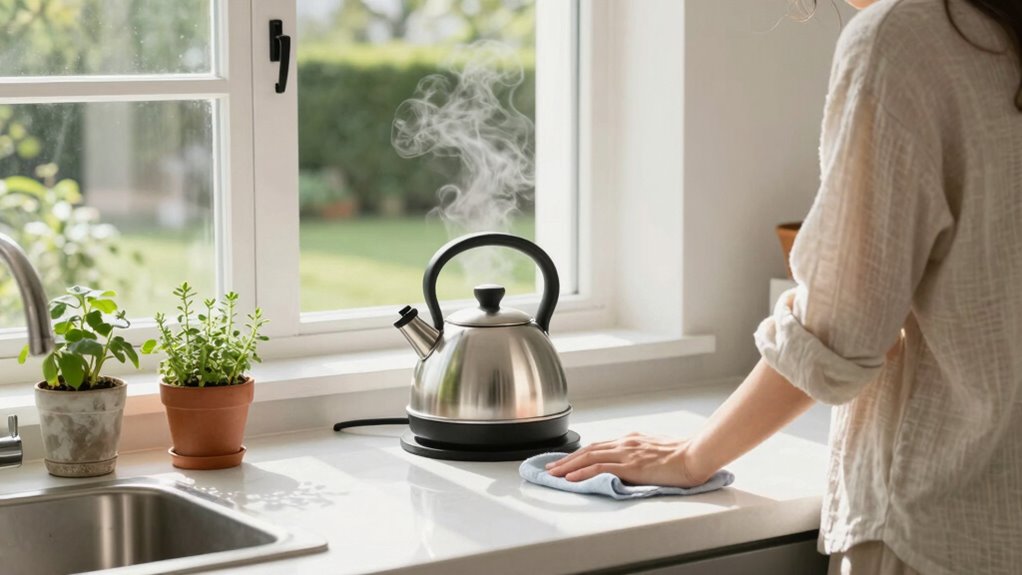
Have you ever considered how cleaning routines can impact indoor air quality? Regular cleaning helps reduce VOCs by removing dust, dirt, and chemical residues that can emit these harmful compounds. Using air purifiers with HEPA filters can trap airborne VOC particles, further improving air quality. Consistent dusting and vacuuming prevent the buildup of pollutants on surfaces and floors. Additionally, controlling humidity levels through proper ventilation or dehumidifiers discourages mold growth, which can contribute to VOC emissions. Washing fabrics, curtains, and bedding regularly also minimizes chemical residues and allergens. Overall, routine cleaning not only keeps your space tidy but also actively reduces sources of VOCs, creating a healthier environment without needing expensive gadgets.
Which Houseplants Naturally Purify Indoor Air?
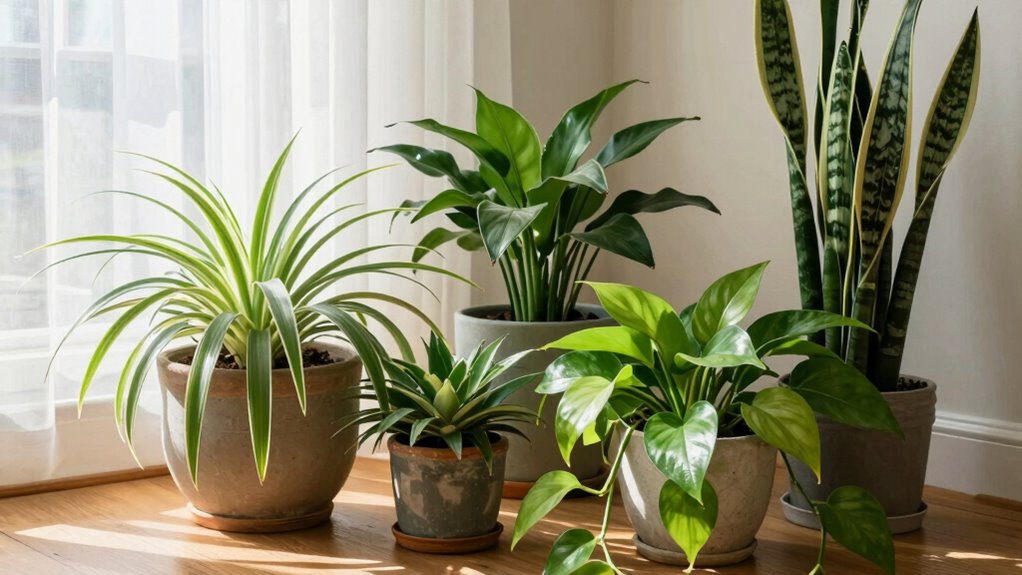
Many houseplants can naturally purify indoor air by absorbing toxins through their leaves and roots. These natural air filters help reduce VOC levels without needing gadgets. Some plants are especially good at this, including air purifying herbs and popular houseplants. Incorporating these into your home can improve air quality effortlessly.
Here are five top choices:
- Snake Plant (Sansevieria)
- Peace Lily
- Aloe Vera
- Spider Plant
- Boston Fern
These plants not only add greenery but also act as natural air filters, helping you breathe cleaner air daily. They’re easy to care for and can boost your home’s overall environment, making them a smart, inexpensive way to combat VOCs naturally.
What Household Items Emit VOCs, and How Can I Avoid Them?
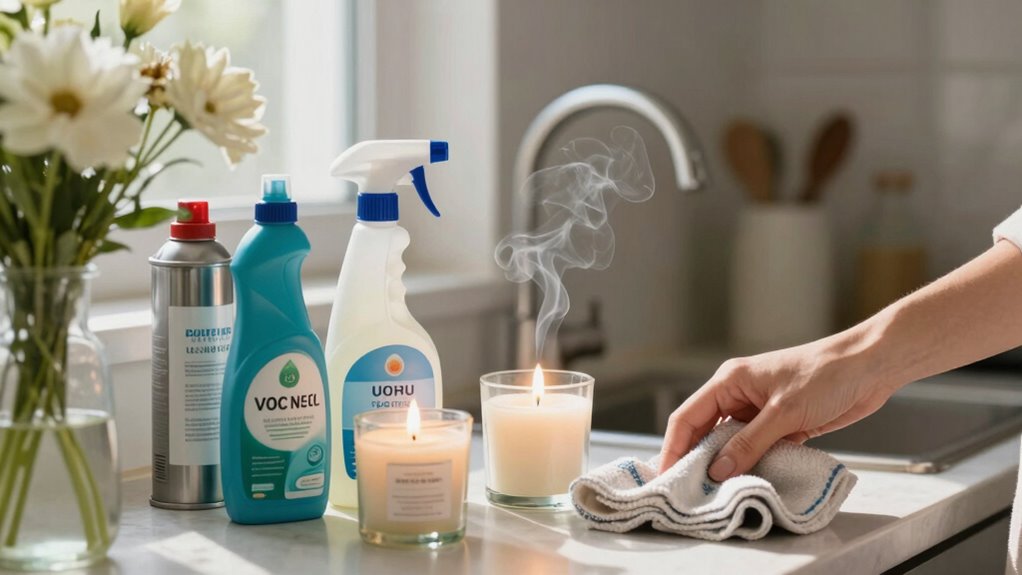
Many household items, like cleaning products, paints, and air fresheners, release VOCs that can affect your indoor air quality. By learning to identify these sources, you can take steps to reduce your exposure. Simple tips, such as proper ventilation and choosing low-VOC alternatives, help keep your home safer.
Common Household VOC Sources
Everyday household items can be significant sources of volatile organic compounds (VOCs), often releasing these chemicals into the air without you realizing it. Knowing common sources helps you reduce exposure. Items like cleaning products and air fresheners emit VOCs, especially when used frequently. New furniture and carpets off-gas chemicals, which can linger for weeks. Paints and solvents release VOCs during and after application. Candles and incense burn releases VOCs into the air. To monitor and improve air quality, consider using VOC detectors and an air purifier. These tools can help you identify sources and filter out harmful chemicals, making your home safer and healthier. Being aware of these sources allows you to take simple steps to reduce VOC emissions and improve indoor air quality.
Identifying VOC Emissions
You can identify VOC emissions in your home by paying attention to specific items known to release these chemicals. Common VOC sources include household products like paints, cleaning supplies, air fresheners, and new furniture. These items often emit VOCs, especially when new or used frequently. To better understand your air quality, consider air quality monitoring devices that detect VOC levels. Monitoring helps you spot hidden sources and assess whether your indoor environment is safe. Be aware that some appliances, such as printers and kitchen gadgets, can also emit VOCs during use. Recognizing these sources allows you to take early action to reduce exposure. Staying vigilant about VOC sources and monitoring your air quality is key to maintaining a healthier home environment.
Tips to Minimize Exposure
Certain household items are known to emit VOCs, especially when new or used frequently, making it important to choose products carefully. To minimize exposure, start by avoiding strongly scented cleaners, air fresheners, and paints. Use natural alternatives like vinegar or baking soda whenever possible. Consider investing in an air purifier with HEPA and activated carbon filters, which can offer air purifier benefits by reducing VOCs. VOC detection devices can help you identify sources of emissions in your home. Additionally, increase ventilation by opening windows and using exhaust fans. Store chemicals in well-ventilated areas or outside your living space. Regularly clean and dust surfaces to prevent VOC buildup, and opt for low-VOC or zero-VOC products to create a healthier environment.
How Can I Check My Indoor Air Quality Affordably?
Wondering how to keep tabs on your indoor air quality without breaking the bank? You can start with simple, affordable methods. Air quality sensors are budget-friendly and provide real-time data on VOC levels. These devices are easy to install and give quick insights into your home’s air quality. Additionally, ventilation strategies like opening windows or using exhaust fans can substantially improve air flow and reduce pollutants. Regularly checking and adjusting these strategies helps maintain a healthier environment. Here’s a quick overview:
| Method | Cost | Effectiveness |
|---|---|---|
| Air quality sensors | Low | Accurate, instant readings |
| Ventilation strategies | Free | Improves air circulation |
| DIY air testing kits | Very low | Detects VOCs, but less precise |
| Monitoring apps | Free/Low | Tracks air quality over time |
These options make indoor air quality checks accessible and affordable.
When Should I Consider More Advanced, Yet Budget-Friendly, Solutions?
While simple, affordable methods can help you monitor VOC levels day-to-day, there are times when more advanced tools become worthwhile. If you notice persistent symptoms like headaches or respiratory issues despite basic measures, consider upgrading. Budget-friendly options like smart air purifiers with integrated sensors can automatically adjust filtration based on air quality. You might also find value in standalone air quality sensors that provide detailed VOC readings over time. When your household has new sources of VOCs, such as renovations or new furniture, advanced tools help you track changes more precisely. Additionally, if you’re planning long-term solutions, investing in smart devices guarantees ongoing monitoring without constant manual checks. These solutions give you a clearer picture of your air quality, enabling better decisions for a healthier home.
How Can I Build a Healthier Home Environment on a Budget?
Creating a healthier home environment doesn’t have to cost a fortune. Start with simple air filtration by regularly opening windows to increase ventilation and reduce VOC buildup. An affordable air purifier with a HEPA filter can effectively remove airborne pollutants, including VOCs, improving air quality without breaking the bank. Keep your home clean by frequently dusting and vacuuming to eliminate dust and allergens that can trap VOCs. Use natural cleaning products instead of harsh chemicals to limit additional toxins. Houseplants like spider plants or pothos can also help naturally filter indoor air, providing a cost-effective boost. Finally, avoid clutter, which can trap dust and VOCs, and prioritize fresh air circulation. These small, budget-friendly steps considerably contribute to a safer, healthier living space.
What Are Easy Ways to Keep VOC Levels Low Over Time?
Maintaining low VOC levels over time requires consistent habits and mindful choices. You can do this by regularly ventilating your home to remove indoor pollutants and using air purifiers designed to target VOCs. Incorporate indoor plants, like snake plants or pothos, which naturally absorb toxins and improve air quality. Keep surfaces clean to reduce dust and chemical buildup that can release VOCs. Avoid storing new furniture or paints indoors for extended periods, as they emit VOCs over time. Additionally, guarantee proper humidity levels to prevent mold growth, which can worsen indoor air quality. By adopting these simple practices, you keep VOCs at bay and create a healthier living environment.
Consistently ventilate, keep surfaces clean, use air purifiers, and add indoor plants to reduce VOC levels naturally.
- Use air purifiers with activated carbon filters
- Add indoor plants for natural detoxification
- Ventilate regularly by opening windows
- Keep your home clean and dust-free
- Limit storage of new or chemical-laden items
Frequently Asked Questions
Are There Affordable DIY Methods to Reduce VOCS at Home?
Yes, you can reduce VOCs at home with affordable DIY methods. Start by improving ventilation—open windows regularly and create DIY ventilation systems to circulate fresh air. Use natural remedies like houseplants, which can absorb VOCs, and avoid synthetic air fresheners. These simple steps cost little but make a significant difference, helping to lower VOC levels and improve your indoor air quality without expensive gadgets.
How Can I Tell if My Home’s VOC Levels Are Unsafe?
You can tell if your home’s VOC levels are unsafe by monitoring indoor air quality and paying attention to symptoms like headaches, dizziness, or respiratory issues. Check for common VOC sources such as new furniture, cleaning products, or paints. Use affordable air quality monitors to get real-time data. If levels spike when certain items are used, it indicates poor indoor air quality, and you should improve ventilation or reduce VOC sources.
What Are Common Household Items That Unintentionally Emit VOCS?
Imagine your home as a busy marketplace, filled with VOC sources like cleaning supplies, air fresheners, and paints quietly releasing chemicals through off-gassing. Common household items such as furniture, carpets, and candles also emit VOCs. These items add to the air’s chemical mix without you realizing it. To reduce exposure, ventilate often, choose low-VOC products, and limit the use of scented items, letting fresh air clear the marketplace’s unseen emissions.
Do Air Purifiers Effectively Lower Indoor VOC Concentrations?
Air purifiers can be effective for VOC removal if they have high-efficiency filters like activated carbon or HEPA filters designed for VOCs. Their efficiency depends on the quality and size of the unit, the room size, and how well you maintain them. While they can lower indoor VOC concentrations, they’re not a complete solution. Combining air purifiers with proper ventilation is the best way to improve indoor air quality.
Can Adjusting Temperature and Humidity Reduce VOC Emissions?
Think of adjusting temperature and humidity as your home’s secret weapon—like a knight’s shield—for improving indoor air quality. You can reduce VOC emissions from common sources by keeping humidity around 30-50% and temperatures moderate. This helps minimize VOC release, making your environment healthier. By managing these factors, you actively curb emission sources, making your home safer without fancy gadgets, and creating a more comfortable, fresh space to breathe.
Conclusion
So there you have it—ditch the expensive gadgets and embrace your inner air quality hero. With simple habits, affordable products, and a touch of green thumb magic, you can turn your home into a fresh breeze without breaking the bank. Who knew that the cheapest fix is just a few mindful choices away? Now, go on, breathe easy—your wallet and lungs will thank you!
Fall Picks
fall essentials
As an affiliate, we earn on qualifying purchases.