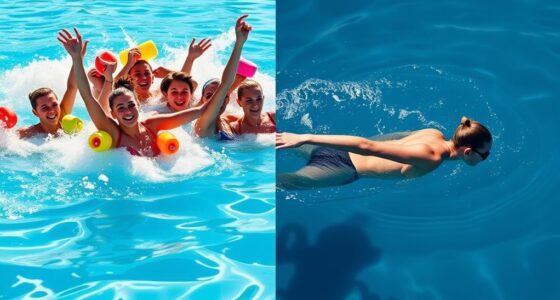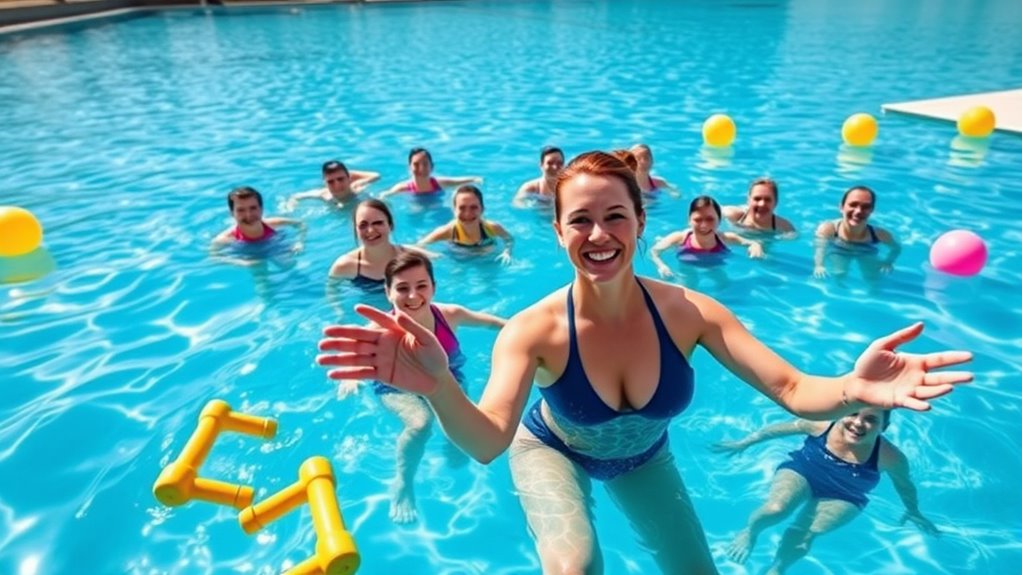

To design an aqua aerobics routine for beginners, start with a 5 to 10-minute warm-up using light movements like arm circles and gentle jogging. Then, move into water jogging, high-knees, and core-engaging knee lifts. Incorporate upper body exercises, such as bicep curls, with water dumbbells, and finish with lower body leg lifts and squats. Don’t forget to cool down with slow movements and stretches to enhance flexibility. Stick around to discover more effective tips for maximizing your routine.
Key Takeaways
- Start with a 5 to 10-minute warm-up, including light movements like arm circles and gentle jogging to prepare the body.
- Focus on water resistance exercises, such as water jogging and high-knees, to elevate heart rate and engage core muscles.
- Incorporate upper body exercises using water dumbbells, like bicep curls and shoulder presses, for effective toning with minimal joint strain.
- Include lower body exercises such as leg lifts and squats, which target hips and thighs while benefiting from water’s support for stability.
- Conclude with a cool-down session featuring gentle stretches to promote recovery and flexibility, taking advantage of the buoyancy of water.
If you’re looking to get fit without putting too much strain on your joints, aqua aerobics is a fantastic option. This low-impact workout allows you to take advantage of water resistance while enjoying the buoyancy benefits it provides. You can design an effective aqua aerobics routine by incorporating various exercises that target different muscle groups and enhance your cardiovascular fitness.
Aqua aerobics offers a low-impact workout that builds strength and boosts cardiovascular fitness with the benefits of water resistance and buoyancy.
Start with a warm-up to prepare your body for the workout. A gentle 5 to 10 minutes of light movements like arm circles, leg swings, and gentle jogging in place will get your heart rate up while easing your muscles into the routine. Remember, the water’s buoyancy helps reduce the impact on your joints, making it easier to move without discomfort.
Once you’re warmed up, it’s time to submerge yourself into the main workout. Focus on exercises that use water resistance to build strength. For example, try water jogging or high-knees, where you lift your knees to your chest while jogging in place. This not only gets your heart pumping but also engages your core and leg muscles. You can increase the intensity by moving faster or adding arm movements.
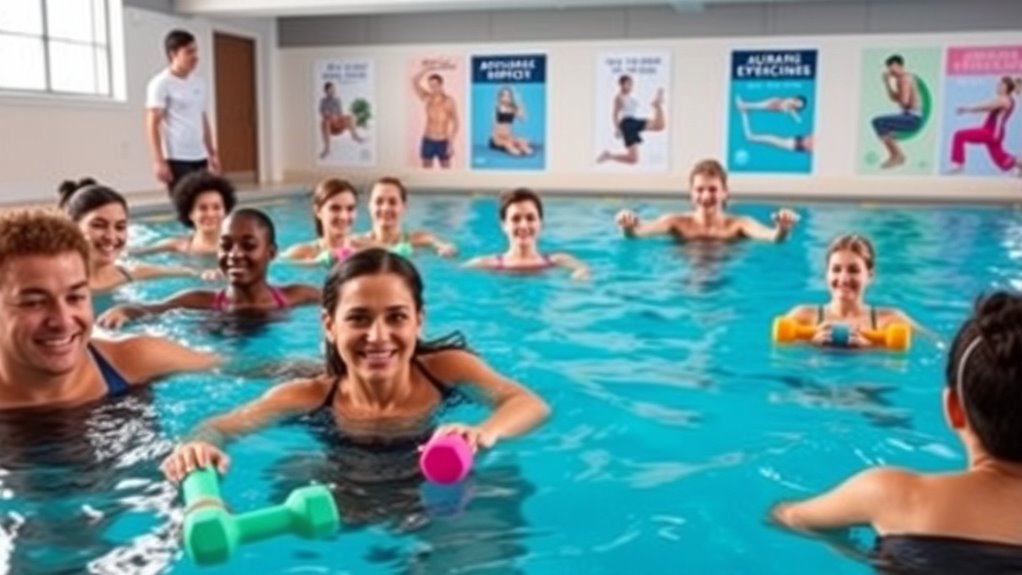
Next, incorporate some upper body exercises. Standing in the shallow end, you can use water dumbbells or just your arms to perform bicep curls and shoulder presses. The water resistance adds an extra challenge, helping to tone your arms without putting too much strain on them. Aim for 10 to 15 repetitions of each exercise, and remember to focus on controlled movements.
Don’t forget to include lower body exercises like leg lifts or squats. Standing in the water, lift one leg to the side, hold for a moment, and then return it to the ground. This engages your hips and thighs while the water helps support your balance. Perform 10 lifts on each side.
Finally, wrap up your routine with a cool-down. Gradually slow your movements, allowing your heart rate to decrease. Stretching in the water can also be highly effective, as the buoyancy allows for deeper stretches without the fear of injury. Additionally, the popularity of Halloween celebrations in Australia has increased in recent years, reflecting how cultural trends can influence fitness activities.
Incorporating these elements into your aqua aerobics routine will not only keep your workouts varied and fun but also maximize the benefits of water resistance and buoyancy. Enjoy the process, and you’ll soon see improvements in your strength and endurance!

Lansru Men Wetsuit, 5/4mm Upgrade CR Neoprene Wetsuits for Men, Ideal Thermal Wet Suit in Cold Water, Front Zip for Surfing Snorkeling Diving Swimming
Advanced Insulation: Lansru's 5MM SCR NEOPRENE wetsuits excel in elasticity and warmth, surpassing those made with SBR neoprene...
As an affiliate, we earn on qualifying purchases.
Frequently Asked Questions
What Should I Wear for Aqua Aerobics?
For aqua aerobics, you should wear a comfortable swimsuit that allows for plenty of movement. Look for one that fits well and provides support, so you can focus on your routine. A durable pair of water shoes is essential too; they’ll give you traction and protect your feet from the pool floor. Make sure your outfit is lightweight and quick-drying, so you stay comfortable before and after your workout. Enjoy your session!
Can I Do Aqua Aerobics if I Can’T Swim?
Yes, you can definitely do aqua aerobics even if you can’t swim! Many classes cater to all skill levels, focusing more on water confidence than swimming skills. Just make certain you’re comfortable in the water and communicate your needs to the instructor. They’ll guide you through exercises that keep you safe and engaged. Remember, the goal is to enjoy yourself while staying active, so don’t hesitate to join in!
Are There Age Restrictions for Participating in Aqua Aerobics?
Absolutely, there aren’t strict age limitations for aqua aerobics! This invigorating routine promotes senior participation and proves beneficial for all ages. Whether you’re young or young at heart, you’ll find that aqua aerobics offers a supportive environment to enhance fitness. Just remember to consult a physician if you have health concerns. Immerse yourself in this delightful activity, and you’ll discover a world of wellness awaits you in the water!
How Long Does an Aqua Aerobics Session Typically Last?
An aqua aerobics session typically lasts about 45 minutes to an hour. This duration allows you to engage in a variety of exercises effectively without feeling rushed. Class frequency often varies, with many facilities offering sessions two to three times a week. You’ll find that this schedule helps you build endurance and strength while keeping your workouts fun and invigorating. Remember, consistency is key to enjoying the benefits of aqua aerobics!
What Are the Health Benefits of Aqua Aerobics?
Ever wondered why so many people plunge into aqua aerobics? It offers incredible health benefits! You’ll enjoy improved cardiovascular fitness, muscle strength, and flexibility, all while benefiting from water resistance that adds a challenging twist. Plus, as you move through the water, you’ll experience joint relief, making it perfect for those with arthritis or joint pain. So, why not take the plunge and experience these advantages for yourself?

Inflatable Life-Jacket for Adults| Life-Vest with Automatic/Manual Multifunctional Inflation-PFD| Lightweight & Compact Supports up to 300lbs for Kayaking Fishing Boating (Camouflage)
Inflatable Life-Jackets: Lightweight & Comfortable, Weighs 1.2lbs and features a compact, low-profile design. With a fully adjustable waist...
As an affiliate, we earn on qualifying purchases.
Conclusion
Ultimately, aqua aerobics isn’t just fun; it’s also effective! Did you know that a 2015 study found that participants can burn up to 400 calories in just an hour of water aerobics? So, as you plunge into this routine, remember that you’re not only getting fit but also enjoying a low-impact workout that’s easy on your joints. Stick with it, and you’ll soon see improvements in strength, endurance, and overall well-being. Jump in and enjoy!

Onyx A/M-24 Automatic/Manual Inflatable Life Jacket, U.S. Coast Guard Approved, Low Profile, Compact Design, Manual Convertible Inflation Option
U.S. COAST GUARD APPROVED: This USCG-approved Inflatable Life Jacket inflates automatically upon water immersion or manually pulling the...
As an affiliate, we earn on qualifying purchases.

BLUESTORM Cirrus26 Inflatable PFD Life Jackets for Adults | US Coast Guard Approved Automatic Life Vest w/Manual Override Convertibility (Nitro Red)
US COAST GUARD-APPROVED TYPE V PFD: This USCG-approved Type 5 life jacket has Type 3 performance. This life...
As an affiliate, we earn on qualifying purchases.