
Wave height calibration is essential for ensuring your sensors give accurate, reliable data. By comparing your equipment against trusted standards, you can correct deviations caused by aging, environmental effects, or drift. Regular calibration maintains sensor precision, which is critical for weather forecasts, maritime safety, and ocean research. Properly calibrated sensors help you avoid costly errors and make better-informed decisions. Keep exploring to uncover the engineering secrets that keep your measurements trustworthy and precise.
Key Takeaways
- Calibration uses controlled wave generators or certified standards to ensure sensor readings match true wave heights.
- Regular calibration detects and corrects sensor drift caused by environmental factors like corrosion and temperature changes.
- Implementing software or hardware adjustments aligns sensor output with known standards for accurate measurements.
- Continuous calibration maintains data reliability, preventing small errors from escalating into significant measurement inaccuracies.
- Self-calibration features and routine checks extend sensor lifespan and ensure high-precision wave height data for critical applications.
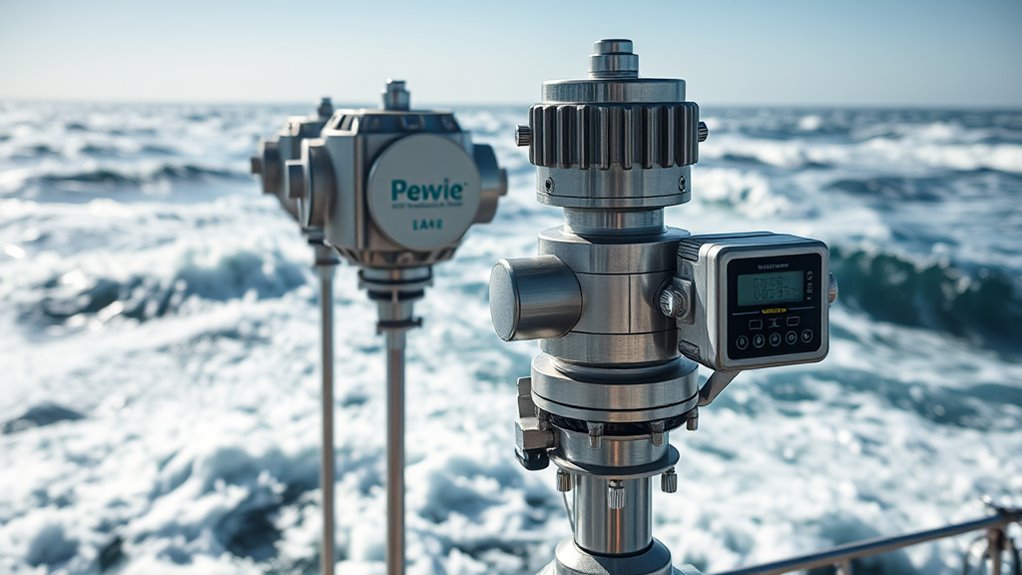
Have you ever wondered how scientists guarantee that wave height measurements are accurate? It all comes down to ensuring sensor accuracy through meticulous calibration procedures. When measuring ocean waves, even small errors can lead to significant misinterpretations, affecting everything from weather forecasting to maritime safety. That’s why calibration is a fundamental step in maintaining the reliability of wave height sensors. You need to understand that calibration isn’t a one-time task; it’s an ongoing process that involves adjusting your sensors to match known standards. This process helps account for sensor drift, environmental changes, and aging components, all of which can impact measurement precision over time.
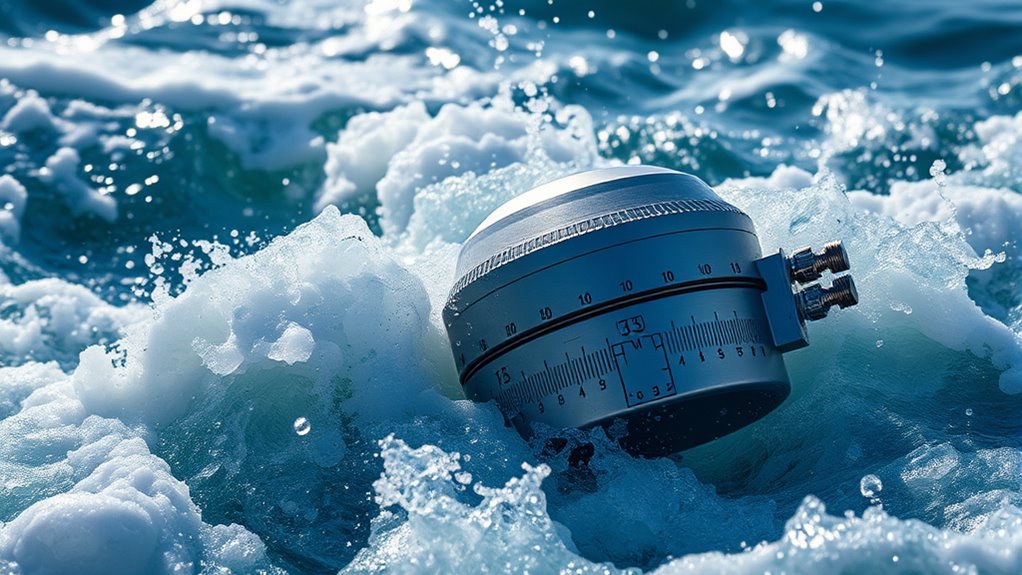
The calibration procedures typically start with establishing a baseline. You’ll compare the sensor’s readings against a highly accurate reference standard, often a controlled wave generator or a certified calibration device. When you perform these comparisons, you’re looking for deviations that might indicate your sensor isn’t providing accurate data. If discrepancies are found, you’ll adjust the sensor’s output—either through software calibration, hardware adjustments, or both—to align its readings with the known standard. This step is *essential* because it corrects for any inherent inaccuracies present at the time of deployment. Proper calibration ensures that your sensor’s data reflects the true wave height, giving you confidence in your measurements.
You should also be aware that environmental factors can influence sensor performance. Saltwater corrosion, temperature fluctuations, and biofouling can all affect sensor accuracy over time. That’s why routine calibration checks are necessary, especially after severe weather events or prolonged exposure to harsh conditions. Regular calibration not only maintains accuracy but also extends your sensor’s lifespan by catching issues early before they compromise data integrity. Many advanced sensors now incorporate self-calibration features, making it easier to perform routine adjustments remotely or automatically. Despite these innovations, manual calibration procedures remain *crucial* for verifying sensor performance against trusted standards.
In essence, guaranteeing accurate wave height measurements hinges on rigorous calibration procedures designed to optimize sensor accuracy. By consistently comparing your sensors against known references and making necessary adjustments, you *assure* your data remains trustworthy. This continuous process of calibration is the backbone of reliable wave measurement systems, allowing scientists and maritime professionals to make informed decisions based on precise, dependable data. Without it, you risk basing critical actions on flawed information, which could have serious consequences for safety, navigation, and scientific research.

Portable Smart Ultrasound Height Measurement Tool, High Precision Digital Stadiometer for Adults & Kids, Portable Height Measure Device for Home, Gym, Clinic
1. High-Precision Measurement: Equipped with advanced ultrasound technology, this smart height measurement tool provides accurate readings up to…
As an affiliate, we earn on qualifying purchases.
As an affiliate, we earn on qualifying purchases.
Frequently Asked Questions
How Often Should Wave Height Calibration Be Performed?
You should perform wave height calibration regularly to account for sensor drift, which can affect accuracy over time. Typically, calibration frequency depends on your environment and usage, but many experts recommend checking every few months or after extreme conditions. By staying vigilant and calibrating on schedule, you guarantee your measurements remain precise, preventing errors caused by sensor drift and maintaining reliable data for your ocean or wave studies.
What Are Common Errors in Wave Height Measurement?
Isn’t it ironic how simple errors can distort vital data? When measuring wave height, common mistakes include neglecting sensor drift, which causes inaccuracies over time, and skipping data validation, leading to faulty readings. These errors undermine reliability, making calibration indispensable. You must regularly check sensors and validate data to guarantee precise measurements, safeguarding against the silent creep of drift and errors that compromise your results.
Which Tools Are Most Accurate for Calibration?
When choosing tools for calibration, you want ones that guarantee precise sensor calibration and reliable data validation. High-quality laser rangefinders and ultrasonic sensors often provide the accuracy you need. Regularly calibrate your instruments against known standards and perform data validation to detect errors early. This approach helps maintain measurement consistency, minimizes errors, and ensures your wave height data remains trustworthy and precise over time.
How Does Environmental Noise Affect Calibration Accuracy?
Environmental noise, like sensor interference and ambient fluctuations, can substantially impact calibration accuracy. When these external factors are present, they introduce errors by disrupting sensor readings, making it harder to obtain precise measurements. You need to account for these influences by filtering out interference and stabilizing conditions. Doing so ensures your calibration remains accurate, despite environmental challenges, ultimately improving the reliability of your wave height measurements.
Can Calibration Techniques Be Automated for Real-Time Monitoring?
You can definitely automate calibration techniques for real-time monitoring through autonomous calibration and sensor automation. By integrating advanced algorithms and smart sensors, you enable your system to self-adjust and maintain accuracy without manual intervention. This approach reduces errors caused by environmental noise and ensures continuous, reliable data collection. Embracing automation not only streamlines calibration processes but also enhances your ability to respond swiftly to changing ocean conditions.
ocean wave sensor calibration kit
As an affiliate, we earn on qualifying purchases.
As an affiliate, we earn on qualifying purchases.
Conclusion
By mastering wave height calibration, you guarantee your measurements are precise and reliable, which can profoundly impact your project’s success. Don’t let skepticism hold you back—accuracy isn’t just about equipment; it’s about confidence in your data. When you trust your calibration process, you make better decisions and avoid costly mistakes. Embrace these engineering secrets, and you’ll always stay a step ahead, turning challenges into opportunities for innovation and excellence.
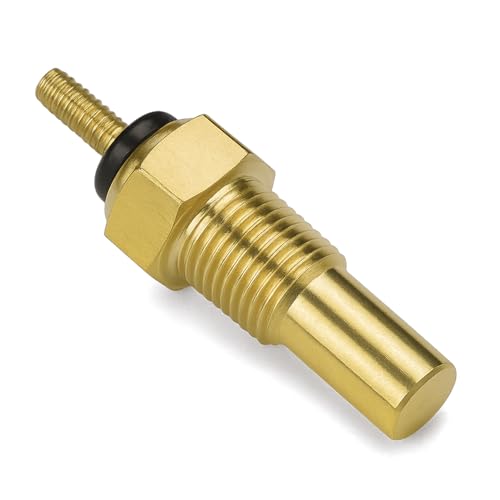
STS Parts Exhaust Riser Temperature Sensor/Sender Alarm – Compatible with Volvo Penta 3862500, 3861997, Sierra 18-7513 – 1/8" NPT Marine Engine Temp Sensor Replacement
⚓ Direct Replacement – Brand new exhaust riser temperature sensor / sender with over-temperature alarm function for Volvo…
As an affiliate, we earn on qualifying purchases.
As an affiliate, we earn on qualifying purchases.

25mm Calibration Bar, Accurate Micrometer Calibration, Standard Caliper Calibration Block Rod Bar for Detection Revising Calibrating
STAINLESS STEEL MATERIAL: The outside micrometer is made of premium stainless steel, so it is not easy to…
As an affiliate, we earn on qualifying purchases.
As an affiliate, we earn on qualifying purchases.