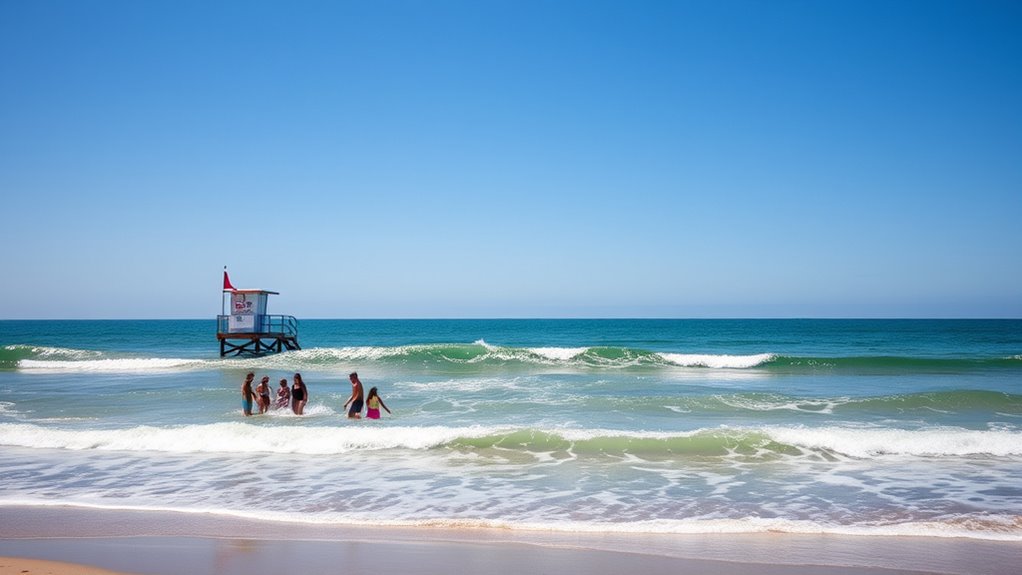

Beach safety is essential, especially when it comes to rip currents and tide changes. Always pay attention to the beach flags: green means safe, while red warns of danger. If you find yourself caught in a rip current, stay calm and swim parallel to the shore until you’re free. Lifeguards monitor conditions and can provide help. By understanding these basics and observing safety signals, you can enjoy the beach while staying safe. Discover more tips for a secure beach experience!
Key Takeaways
- Familiarize yourself with beach flag meanings to understand current ocean conditions and ensure safe swimming.
- Recognize indicators of rip currents, such as color differences in water and waves breaking farther out.
- Stay calm if caught in a rip current; swim parallel to the shore to escape before heading back.
- Always swim in designated areas supervised by lifeguards, who monitor conditions and provide safety signals.
- Stay informed about tide changes and ocean conditions to maximize enjoyment while prioritizing safety.

When you head to the beach, it’s essential to prioritize safety so you can enjoy your day without worry. Understanding the environment around you plays a crucial role in ensuring a safe and pleasurable experience. One of the most important aspects of beach safety involves recognizing the meanings of beach flags. These flags serve as visual warnings that indicate current ocean conditions, which can help you make informed decisions while enjoying the water. For example, a green flag means it’s safe to swim, while a yellow flag indicates moderate surf, suggesting you should exercise caution. A red flag signals dangerous conditions or strong currents, and in such cases, it’s wise to stay on the shore.
Prioritizing safety at the beach involves understanding beach flag meanings to navigate ocean conditions wisely.
As you spend time at the beach, you may hear about rip currents, which can be swift and potentially dangerous. Knowing how to identify these currents can save lives. Look for differences in water color, waves breaking farther out, or foam and debris moving away from the shore. If you find yourself caught in a rip current, it’s crucial to stay calm. Instead of fighting against the current, you should swim parallel to the shore until you’re out of its grip. Once you’re free, you can swim back to the beach at an angle. This technique, often taught in surf rescue techniques, is vital for anyone who enjoys ocean swimming.
It’s also important to pay attention to local lifeguards. They’re trained in surf rescue techniques and can provide assistance if needed. If you see a lifeguard signaling for swimmers to exit the water, take heed of their warnings. They’re looking out for your safety and are well-versed in the beach flag meanings and any changing conditions.
Before you hit the waves, consider familiarizing yourself with the beach layout and any potential hazards. Always swim in designated areas where lifeguards are present. Not only does this ensure a safer experience, but it also provides peace of mind knowing help is nearby if you need it. By understanding beach flag meanings and how to navigate rip currents, you’ll be better prepared to enjoy your time at the beach while keeping safety at the forefront of your mind. Additionally, knowing how to identify rip currents can significantly enhance your safety while swimming in the ocean. So, grab your sunscreen, stay informed, and make the most of your beach day!
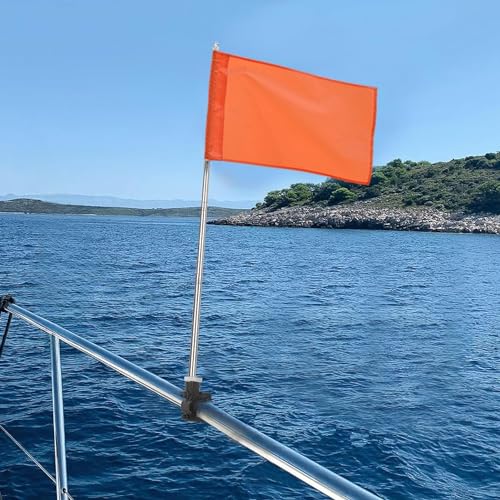
Orange Boat Flag with Replacement Flag, 12” x 18” Water Ski Flag with 52" Retractable Boat pole & Firm Holder, Durable Boating Safety Skier Down Flag for Swimming, Surfing
【Sturdy Quality】FLAGMESAGE boat safety flag is constructed from premium nanometer material and a stainless steel pole that is…
As an affiliate, we earn on qualifying purchases.
As an affiliate, we earn on qualifying purchases.
Frequently Asked Questions
What Should I Do if I See Someone Caught in a Rip Current?
If you see someone caught in a rip current, act quickly. Yell to them to stay calm and swim parallel to the shore to escape the current. If you’re trained, use rescue techniques like a flotation device or throw them something that floats. Avoid diving in yourself unless absolutely necessary. Always follow prevention strategies, like informing lifeguards or calling for help. Your swift response can save a life.
Are Certain Beaches More Prone to Rip Currents Than Others?
Yes, certain beaches are more prone to rip currents due to their beach geography and surf conditions. Areas with steep shorelines, narrow inlets, or strong wave action often experience stronger currents. If you’re planning to swim, check local surf reports and pay attention to warning signs. Knowing the beach’s characteristics can help you stay safe and enjoy your time in the water without unnecessary risks. Always be aware of your surroundings!
How Can I Recognize Dangerous Tide Changes?
To recognize dangerous tide changes, keep an eye on tide prediction charts and local beach signage. You’ll notice signs warning about strong currents or sudden tide shifts. If you see water receding quickly, that’s a sign to stay alert. It’s like watching a scene from a classic beach movie where danger lurks. Always trust your instincts and leave the water if conditions look sketchy, even if it seems like a chill day.
Can Rip Currents Occur During Low Tide?
Yes, rip currents can occur during low tide. While it might seem safer, these currents can still form due to waves breaking over sandbars or beach erosion. Always stay alert, even when exploring tide pools, as conditions can change rapidly. If you’re caught in a rip current, don’t panic—swim parallel to the shore until you’re out of its grip. Remember, safety at the beach is always a priority, regardless of the tide.
What Flotation Devices Are Safe to Use in the Ocean?
When you’re at the beach, using a life jacket is one of the safest options. Imagine a child splashing around in the waves, wearing a brightly colored life jacket, floating confidently while you watch from the shore. Inflatable rings can also be fun, but they’re not as dependable in rough conditions. Always choose a personal flotation device that’s Coast Guard-approved to make certain you stay safe while enjoying the ocean’s beauty.

Anchor-Man Inflatable Bodyboard Water Rescue Sled Inflatable Floating Mat Inflatable Jet Ski Sled Board for Professional Emergency Rescue by Lifeguards, Fire & Rescue, Big Wave Surfing
The inflatable rescue board is a lightweight and portable device used for surfing and saving people at sea….
As an affiliate, we earn on qualifying purchases.
As an affiliate, we earn on qualifying purchases.
Conclusion
When you hit the beach, remember that knowledge is your best lifeguard. By understanding rip currents and tide changes, you’re not just playing it safe; you’re staying one step ahead. Always keep an eye on the water and follow safety guidelines. Don’t let a fun day turn into a dangerous situation—stay alert and trust your instincts. With these tips, you’ll be riding the waves instead of getting swept away. Enjoy the sun, but stay smart!

Beach Warning Flags Aluminum Sign – Beach Sign, Aluminum Sign, Warning Flags Sign (7 x 10 Inches)
Handmade In The USA
As an affiliate, we earn on qualifying purchases.
As an affiliate, we earn on qualifying purchases.

Kemp USA 50-Inch Red Lifeguard Rescue Tube with White Guard Logo Durable Throwable Flotation Device for Pools and Open Water Lifeguard Accessories Survival Kit Professional Safety Buoy
Premium Quality Foam: Crafted from durable, high-quality foam, this 50-inch lifeguard rescue tube is designed to endure harsh…
As an affiliate, we earn on qualifying purchases.
As an affiliate, we earn on qualifying purchases.