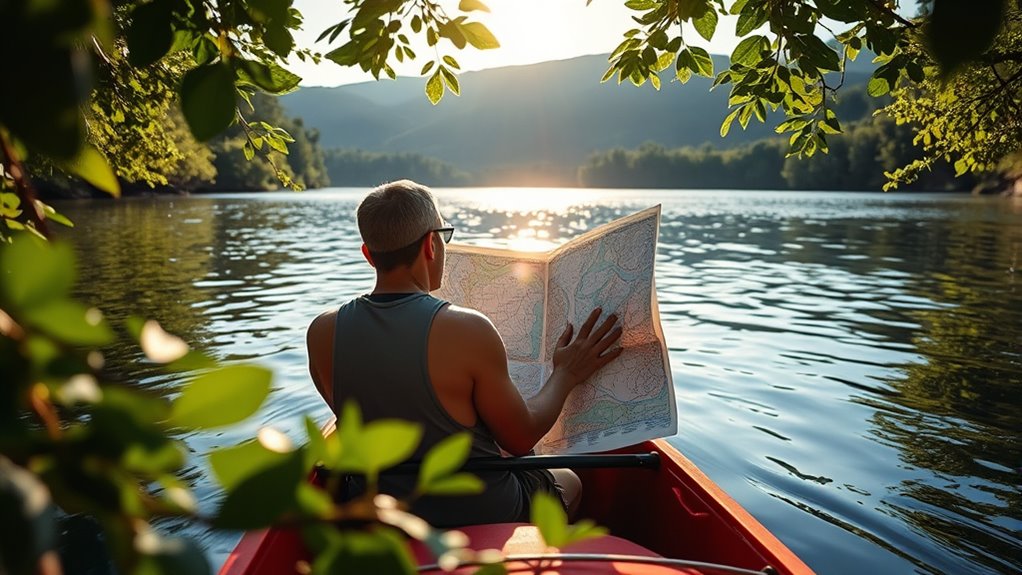
Mastering navigation skills is crucial for your canoeing adventures. You can’t rely solely on instincts; understanding maps and currents is key. Topographic maps help you assess the landscape, identify hazards, and plan routes effectively. Meanwhile, observing currents offers insights into water flow, which aids your navigation choices. Don’t forget to check weather patterns and carry backup tools like a compass and map for added safety. Keep going, and you’ll uncover more essential tips for your journey.
Listen free for 30 days with Audible
Thousands of audiobooks and originals — cancel anytime.
As an affiliate, we earn on qualifying purchases.
Key Takeaways
- Mastering topographic maps is crucial for understanding land features, currents, and potential hazards while canoeing.
- GPS devices provide real-time tracking, but always carry a backup map and compass for reliability in navigation.
- Regularly check weather forecasts and learn to interpret cloud patterns to anticipate changes and ensure safety on the water.
- Observing currents helps identify terrain features, such as rapids or depth changes, aiding in safer navigation decisions.
- Familiarizing yourself with local waterways before excursions boosts confidence and enhances overall safety during canoe trips.
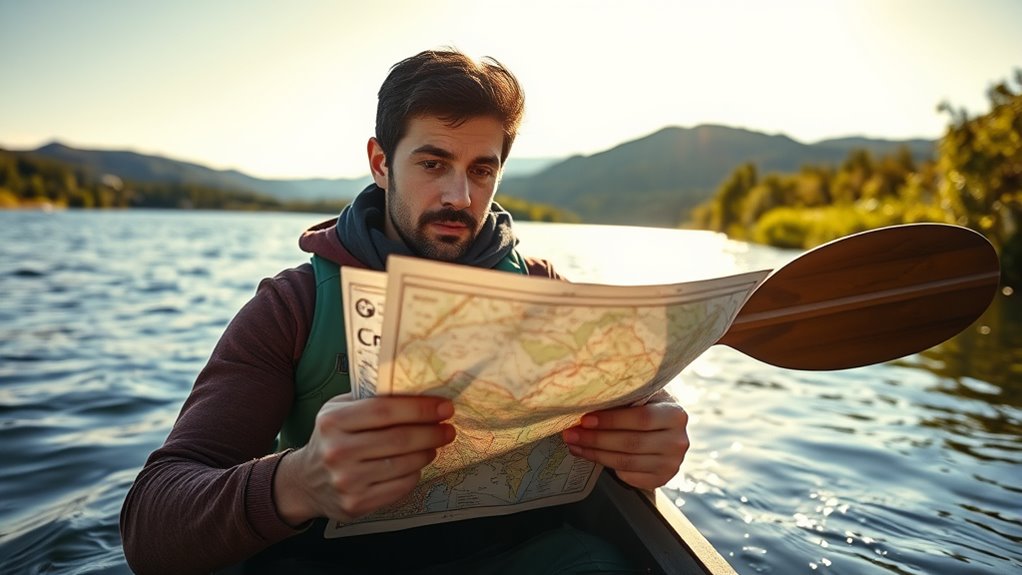
Whether you’re paddling on a tranquil lake or steering a winding river, mastering navigation skills is indispensable for every canoeist. You can’t rely solely on your instincts; understanding how to read maps and currents is pivotal to ensure a safe and enjoyable journey. Start by familiarizing yourself with the area you plan to explore. Topographic maps reveal not just the layout of the land but also important features like currents and obstacles. Knowing how to interpret these maps will help you choose the best route and avoid potential hazards.
Mastering navigation skills is essential for canoeists; understanding maps and currents ensures a safe and enjoyable journey.
While maps are invaluable, GPS usage can markedly enhance your navigation skills. A GPS device provides real-time location tracking, giving you the confidence to explore new waters without the fear of getting lost. It’s a handy tool, especially in unfamiliar territories, allowing you to mark waypoints and track your progress. Just remember, technology can sometimes fail, so it’s wise to carry a backup map and compass.
Weather interpretation is another essential skill every canoeist should develop. Before you head out, check the weather forecast to guarantee safe conditions. Understanding how to interpret cloud patterns and wind direction can help you predict changes in weather, allowing you to adjust your plans as necessary. For instance, darkening clouds can signal an approaching storm, prompting you to find shelter or return to shore. Always keep an eye on the sky, and don’t hesitate to change your route if the weather takes a turn for the worse.
Once you’re on the water, pay attention to the currents and their effects on your canoe. Observing how the water flows can give you clues about the terrain ahead. If you notice a stronger current, it may indicate a rapid or a change in depth. This knowledge allows you to navigate more effectively, choosing the safest path while enjoying the beauty of your surroundings. Additionally, just as intelligent tutoring systems provide personalized learning experiences to enhance educational outcomes, developing your navigation skills can lead to improved confidence and enjoyment in your canoeing adventures.
Practicing these navigation skills not only boosts your confidence but also enhances your overall experience. The more you understand maps, GPS, and weather patterns, the better equipped you’ll be to tackle new adventures. So, whether you’re gliding across a serene lake or maneuvering through a lively river, take the time to hone your navigation skills. They’re indispensable tools that will serve you well in your canoeing journey.
As an affiliate, we earn on qualifying purchases.
Frequently Asked Questions
What Equipment Do I Need for Effective Canoe Navigation?
For effective canoe navigation, you’ll need a few necessary pieces of equipment. A reliable GPS device will help you track your route, while waterproof maps guarantee you can read them even in wet conditions. Don’t forget a compass to assist in orientation when electronic devices fail. A dry bag is also crucial for keeping your gear protected. With these tools, you’ll navigate waterways confidently and enjoy your canoeing adventures.
How Can I Improve My Map-Reading Skills?
To improve your map-reading skills, start by envisioning the map as a treasure map, guiding you to hidden gems. Focus on landmark recognition; identify key features in the terrain, like hills or rivers, that stand out. Practice terrain analysis by comparing maps with the actual landscape. Get familiar with symbols and scales, and regularly challenge yourself with new maps. The more you explore, the sharper your skills’ll become, leading you confidently on your adventures.
What Are Common Navigation Mistakes to Avoid?
To avoid common navigation mistakes, focus on accurate landmark identification and stay aware of tide changes. Relying solely on maps can lead you astray—always compare what you see around you. Don’t underestimate the importance of currents and tides; they can shift your position unexpectedly. Make sure you regularly check your bearings and adjust your route accordingly. By keeping these tips in mind, you’ll navigate more confidently and safely on the water.
Is It Necessary to Have a Compass?
Yes, you need a compass. While GPS devices can guide you with precision, a compass offers reliability when technology fails. It helps you stay oriented, especially when the sun’s hidden or landmarks aren’t visible. Relying solely on GPS can lead to disorientation if the battery dies. By carrying a compass and knowing how to use it, you’ll navigate efficiently, combining technology with traditional skills to guarantee you’re always on the right path.
How Do I Choose the Right Canoe for Navigation?
When choosing the right canoe for navigation, consider stability and tracking. A longer canoe typically handles better in various weather conditions, so check the forecast before heading out. Guarantee it’s made from durable materials for easy canoe maintenance. Look for features like built-in storage for gear and a comfortable seat. Think about your skill level, too; a beginner-friendly design can make navigation smoother and more enjoyable on the water.
Conclusion
Mastering navigation skills is essential for any canoeist, and while you might think it’s too complicated, it’s easier than you think. By practicing map reading and understanding currents, you’ll build confidence in your abilities. Don’t let the fear of getting lost hold you back; each trip is an opportunity to learn and improve. So grab your map, trust your instincts, and enjoy the adventure that awaits on the water. You’ve got this!
NFL season / tailgating Picks
team gear
As an affiliate, we earn on qualifying purchases.