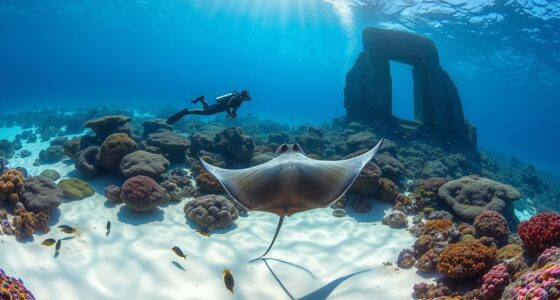
Under marine life interaction laws, it’s illegal to disturb or interfere with protected species like dolphins, sea turtles, or whales. You can’t approach too closely, make loud noises, feed, or touch them, especially in marine protected areas. Violating these rules can lead to hefty fines or legal action. These laws aim to preserve marine ecosystems and ensure animals aren’t stressed or harmed. To understand what activities are strictly forbidden, keep exploring the specifics of marine protection regulations.
Key Takeaways
- Approaching marine animals too closely or disturbing their natural behaviors is illegal.
- Making loud noises near marine life to scare or attract them is prohibited.
- Feeding, touching, or harassing protected species like sea turtles and dolphins is illegal.
- Entering or fishing in designated marine protected areas without permission can result in penalties.
- Collecting or trading protected marine species without authorization is strictly forbidden.
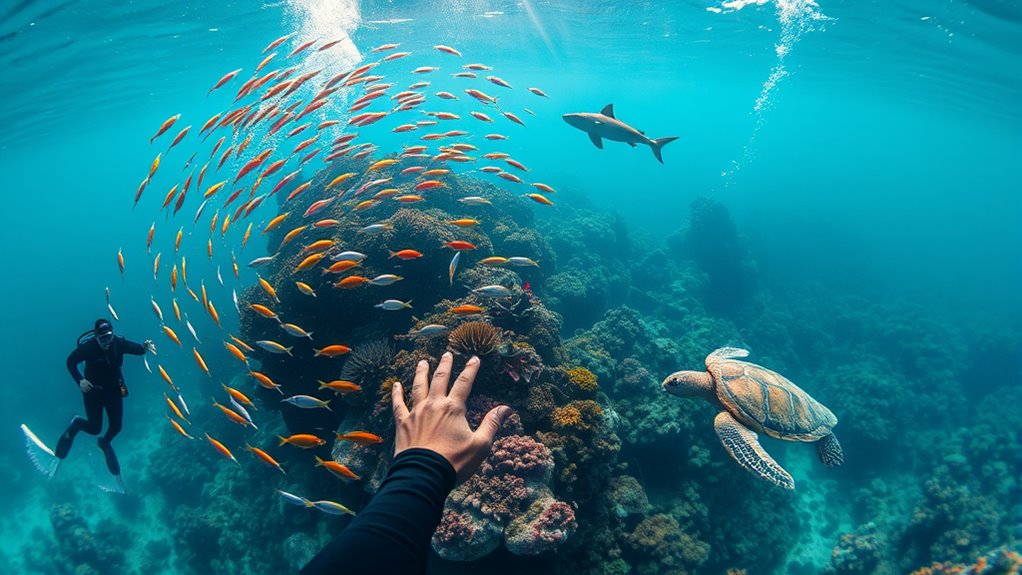
Have you ever wondered how laws protect the diverse marine life that inhabits our oceans? These laws are designed to prevent harm, ensure sustainability, and preserve the incredible variety of species that rely on marine ecosystems. One key aspect involves harassment regulations, which make it illegal to disturb or interfere with marine animals, especially protected species. These rules are in place to prevent behaviors that could cause stress, injury, or even death to marine creatures. If you’re snorkeling or diving, for example, touching or chasing certain animals might seem harmless, but it can be a violation of these regulations. Marine protected species, such as sea turtles, dolphins, and certain whale species, are especially vulnerable and often have strict protections under the law. Disturbing these animals not only causes them stress but can also have broader ecological consequences, upsetting the balance of their habitats.
Laws explicitly prohibit harassment of protected species, aiming to minimize human impact on their natural behaviors. These harassment regulations include restrictions on approaching too closely, making loud noises, or attempting to feed or touch marine animals. For instance, disturbing a nesting sea turtle or chasing dolphins to get closer for a photo can lead to hefty fines or legal action. The laws recognize that these animals need undisturbed environments to feed, reproduce, and thrive. When you comprehend these regulations, you become part of the effort to protect marine life rather than unintentionally harming it. Additionally, marine life laws often include penalties for illegal collection or trade of protected species, helping to combat illegal activities that threaten their survival.
Furthermore, many countries have designated marine protected areas where certain activities are restricted or forbidden. Fishing, anchoring, and even boat speeds may be limited to reduce stress on protected species. If you’re steering near these zones, it’s vital to follow posted guidelines. Violating harassment regulations or entering restricted zones can lead to legal penalties, but more importantly, it harms the marine ecosystems you’re trying to enjoy and learn about. The goal of these laws isn’t to restrict fun but to encourage responsible interaction with marine environments.

Inflatable Life-Jacket for Adults| Life-Vest with Automatic/Manual Multifunctional Inflation-PFD| Lightweight & Compact Supports up to 300lbs for Kayaking Fishing Boating (Camouflage)
Inflatable Life-Jackets: Lightweight & Comfortable, Weighs 1.2lbs and features a compact, low-profile design. With a fully adjustable waist...
As an affiliate, we earn on qualifying purchases.
Frequently Asked Questions
Can I Take Shells or Coral From the Ocean as Souvenirs?
You might wonder if you can take shells or coral from the ocean as souvenirs. While shell collection is often allowed, coral harvesting is usually illegal to protect marine ecosystems. Removing coral can harm reefs and disrupt marine life. Always check local laws before collecting shells or coral. Respect the environment by leaving these natural treasures where they are, ensuring marine habitats stay healthy for everyone and preserving their beauty for future visitors.
Are Fishing Apps or GPS Devices Illegal to Use?
Using fishing apps or GPS devices isn’t inherently illegal, but you need to check local fishing regulations. Many areas allow the use of fishing technology, but some have GPS regulations that restrict certain devices, especially in protected waters. Always verify the rules before you fish, so you stay compliant and avoid fines. Responsible use of fishing technology helps protect marine life and ensures sustainable fishing practices.
Is It Legal to Feed or Touch Marine Animals?
Imagine you’re tipping the balance of nature—feeding or touching marine animals counts as marine animal harassment, and it’s illegal wildlife interaction. You shouldn’t feed or touch them because it can disrupt their natural behavior and habitat. Laws are in place to protect marine life, and engaging in such activities could lead to fines or penalties. Always admire from a distance, respecting their space and keeping the ocean safe for everyone.
Can I Keep a Small Marine Creature as a Pet?
Keeping a small marine creature as a pet isn’t simple. You need to consider proper aquarium maintenance to ensure its health and safety. Additionally, many marine species require special permits, so you should check your local regulations before acquiring one. Failing to obtain marine species permits or neglecting proper care can lead to legal issues and harm the animal. Always research thoroughly and follow laws to enjoy a responsible, legal marine pet experience.
Are There Restrictions on Drone Use Over Marine Protected Areas?
Did you know drone regulations help protect over 25% of the world’s marine protected areas? You should be aware that flying drones over these zones often comes with strict restrictions. Using drones for aerial photography can disturb wildlife or breach conservation rules. Always check local laws before flying, as many protected areas prohibit drone use entirely or require special permits to avoid harming marine ecosystems.

Onyx A/M-24 Automatic/Manual Inflatable Life Jacket, U.S. Coast Guard Approved, Low Profile, Compact Design, Manual Convertible Inflation Option
U.S. COAST GUARD APPROVED: This USCG-approved Inflatable Life Jacket inflates automatically upon water immersion or manually pulling the...
As an affiliate, we earn on qualifying purchases.
Conclusion
So, next time you’re near the water, think twice before touching or taking marine creatures. You might believe you’re harmless, but the laws are stricter than you think—and breaking them can lead to serious consequences. What other surprises hide beneath the surface? Stay informed, respect the marine world, and remember: the ocean’s secrets are protected for a reason. Will you risk unknowingly crossing a line that could cost you more than you imagined?

BLUESTORM Cirrus26 Inflatable PFD Life Jackets for Adults | US Coast Guard Approved Automatic Life Vest w/Manual Override Convertibility (Nitro Red)
US COAST GUARD-APPROVED TYPE V PFD: This USCG-approved Type 5 life jacket has Type 3 performance. This life...
As an affiliate, we earn on qualifying purchases.

BLUESTORM Cirro 26 Automatic/Manual Inflatable Life Jacket PFD for Adults (Apex Black) | US Coast Guard (USCG) Approved Self Inflating Life Vest Preserver
US COAST GUARD-APPROVED TYPE V PFD: This USCG-approved Type V lifejacket with Type III performace, inflates automatically upon...
As an affiliate, we earn on qualifying purchases.