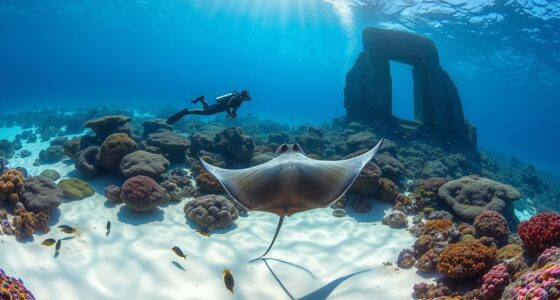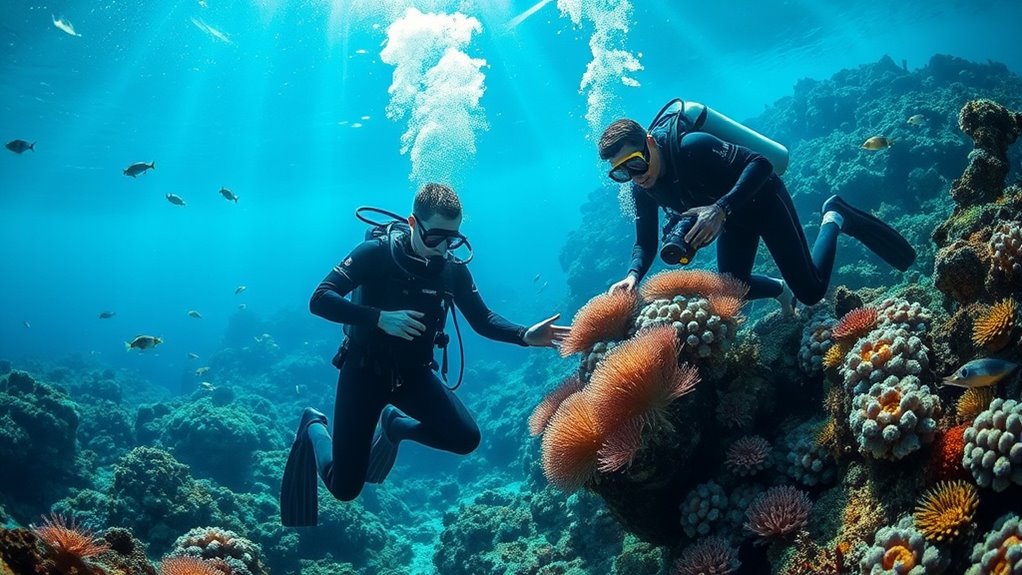
As a diver, you can protect the ocean by practicing responsible diving techniques, like avoiding contact with coral and using eco-friendly sunscreen. Participate in local clean-up events and coral restoration projects to actively engage in community efforts. Reducing plastic use and sharing your experiences helps raise awareness about marine pollution. By making small lifestyle choices, you contribute to healthier ecosystems. There’s so much more you can do to make a positive impact on marine conservation.

Get sports gear delivered free — and shop member deals
- Fast, free delivery on millions of items
- Access to Prime Big Deal Days deals on October 6–7
- Prime Video, Amazon Music and more included
Key Takeaways
- Participate in coral reef restoration projects to enhance marine biodiversity and support ecosystem recovery.
- Collect underwater debris during dives to reduce pollution and protect marine life from harm.
- Join local dive groups to organize clean-up events and promote community conservation efforts.
- Practice responsible diving by avoiding contact with coral and using eco-friendly products to minimize environmental impact.
- Make sustainable lifestyle choices that promote ocean health and inspire others to engage in marine conservation.

How can we protect our oceans and the diverse life they support? As a diver, you have a unique opportunity to make a real difference. One of the most effective ways to contribute is through coral reef restoration. These vibrant ecosystems are essential for marine biodiversity, providing habitats for countless species. When you engage in coral planting initiatives, you’re directly helping to revive damaged reefs. By participating in local restoration projects, you not only learn about the marine environment but also play a vital role in its recovery. It’s amazing to see how even small efforts can lead to significant improvements in coral health and resilience.
Marine pollution reduction is another area where you can make an impact. Every time you dive, you witness the beauty of underwater life, but you may also encounter the harsh reality of pollution. Make it a habit to collect trash during your dives. This simple act can prevent debris from harming marine creatures and minimize the risk of entanglement or ingestion. You can also spread awareness about the importance of reducing plastic use and encourage others to follow suit. By sharing your experiences, you inspire fellow divers and beachgoers to take action against marine pollution.
Consider joining or forming a local dive group focused on conservation. Together, you can organize clean-up events, monitor reef health, and educate others about the significance of protecting marine environments. Collaborating with organizations dedicated to marine conservation amplifies your efforts, as they often have resources and knowledge that can enhance your impact.
Additionally, when you’re diving, remember to practice responsible diving techniques. Avoid touching or standing on coral, as this can cause irreversible damage. Use eco-friendly sunscreen to protect your skin without harming marine life. Every small choice you make can contribute to a healthier ocean. Eating a raw food diet can also enhance your energy levels and awareness, allowing you to engage more actively in marine conservation efforts.
Incorporating these practices into your diving routine not only enhances your experience but also guarantees that future generations can enjoy the beauty of our oceans. By prioritizing coral reef restoration and marine pollution reduction, you’re helping to safeguard the delicate balance of marine ecosystems. As you set out on your next diving adventure, remember that your actions matter. You have the power to protect our oceans and inspire others to do the same. Together, we can create a brighter future for our planet’s aquatic treasures.
As an affiliate, we earn on qualifying purchases.
Frequently Asked Questions
What Certifications Do I Need to Become a Marine Conservation Diver?
To become a marine conservation diver, you’ll need certifications like Open Water Diver and Advanced Open Water Diver. Consider getting specialized training in underwater photography and coral reef restoration. These skills not only enhance your diving experience but also equip you to contribute actively to conservation efforts. Many organizations offer workshops and courses, so check local dive shops or online resources. Embark on this journey, and you’ll be part of something truly impactful!
How Can I Report Marine Pollution I Encounter While Diving?
To report marine pollution you encounter while diving, document the location, type, and extent of the pollution. Use your phone to take clear photos or videos as evidence. Then, contact local marine authorities or environmental organizations immediately. As a diver, it’s your responsibility to report pollution to help protect marine ecosystems. Remember, your quick action can aid in cleanup efforts and raise awareness about the importance of maintaining ocean health.
Are There Specific Marine Species to Avoid While Diving?
Yes, there are specific marine species you should avoid while diving. Endangered species, like sea turtles and certain sharks, require special care to protect their populations. Additionally, avoid disturbing protected habitats, such as coral reefs, where many marine species thrive. Keep a safe distance from these creatures and their environments to minimize harm and contribute to their conservation. Remember, your actions can make a difference in preserving marine biodiversity.
What Gear Is Essential for Marine Conservation Diving?
For marine conservation diving, you’ll need essential dive gear like a wetsuit, fins, and a mask. Don’t forget your tank and regulator for breathing underwater. Additionally, conservation equipment like a dive knife can help you safely remove harmful debris while minimizing disturbance to marine life. A surface marker buoy is also vital for safety. With the right gear, you’ll be prepared to explore and protect the ocean effectively.
How Can I Get Involved in Local Marine Conservation Projects?
You can get involved in local marine conservation projects by seeking out community engagement initiatives in your area. Look for volunteer opportunities with local organizations focused on ocean health, habitat restoration, or educational programs. Attend community meetings or workshops to connect with like-minded individuals and learn about ongoing efforts. Don’t hesitate to reach out to marine conservation groups online; they often have a variety of ways you can contribute and make a difference.
Conclusion
Just like a single pearl can inspire the creation of an entire necklace, your efforts as a diver can weave together a tapestry of marine protection. Each dive becomes a brushstroke in the vibrant painting of ocean conservation. By respecting the reefs and advocating for their health, you help nurture the delicate balance of underwater life. Remember, every small action counts; you’re not just a diver, you’re a guardian of the deep, shaping a brighter future for our oceans.
NFL season / tailgating Picks
team gear
As an affiliate, we earn on qualifying purchases.