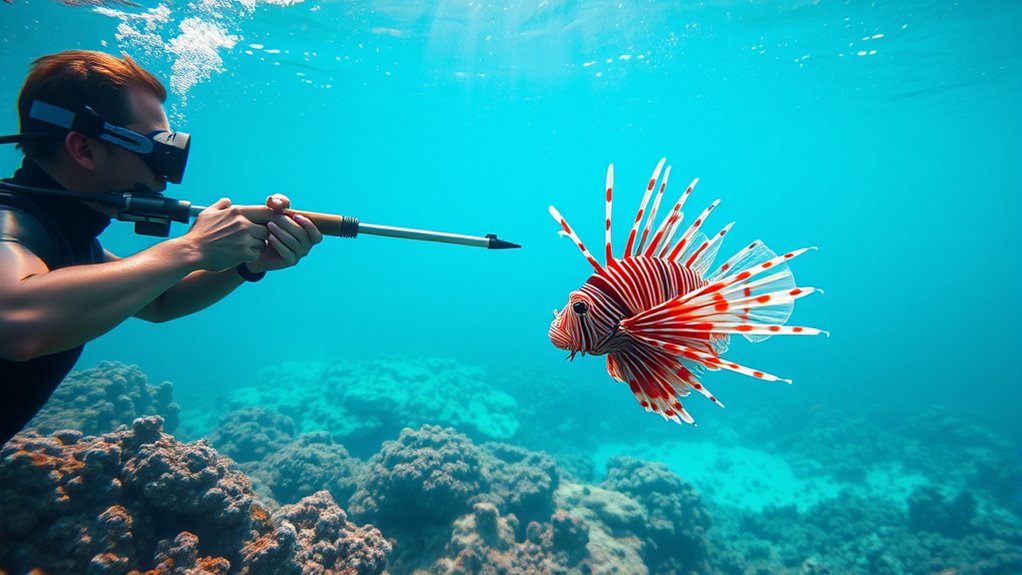

When spearfishing for lionfish, it is crucial to follow ethical and sustainable practices. Respect local laws, use proper gear to avoid harming reefs or non-target species, and focus on responsible harvesting to prevent ecological imbalance. Participate in organized removal efforts and consider turning the invasive fish into a sustainable food source. By doing so, you help protect marine ecosystems while ensuring your actions are environmentally friendly. Keep exploring to discover how these practices make a real difference.
Key Takeaways
- Practice responsible spearfishing by following local regulations and targeting only invasive lionfish to support ecosystem health.
- Use proper safety techniques to handle venomous lionfish carefully, preventing injuries during removal.
- Employ sustainable gear and minimal impact methods that avoid damaging coral reefs and non-target species.
- Participate in organized culling efforts led by conservation groups to maximize effectiveness and ethical standards.
- Promote lionfish consumption as a sustainable, eco-friendly solution to control their invasive population.

The lionfish invasion has become a pressing concern for marine ecosystems worldwide. These vibrant yet deadly fish pose a serious threat to native species and coral reefs, disrupting the delicate balance of underwater environments. As a diver or spearfisher, you play an essential role in invasive species control, helping to curb the spread of lionfish and protect local biodiversity. Engaging in sustainable harvesting isn’t just about catching fish; it’s about doing so responsibly to guarantee the long-term health of the ecosystem. When you hunt lionfish, it’s imperative to follow ethical guidelines that prioritize the preservation of marine life and minimize environmental impact.
Responsible spearfishing involves understanding the importance of sustainable harvesting. You should target lionfish in a manner that limits unnecessary damage to surrounding habitats and other marine creatures. Use appropriate gear and techniques to avoid disturbing coral reefs or unintentionally harming non-target species. Always be mindful of your surroundings, and avoid overharvesting in one area to prevent creating a vacuum that could invite other invasive species or disrupt the local food chain. If regulations are in place, adhere to size limits, bag limits, and designated hunting zones. These rules are designed to maintain ecological balance and support the long-term effectiveness of invasive species control efforts.
Ethical spearfishing also means respecting the local community and marine environment. Educate yourself on the best practices for lionfish removal, and consider participating in organized culling events led by conservation groups. These initiatives often focus on sustainable harvesting methods that maximize the removal of lionfish while minimizing harm to native fish populations and coral reefs. By doing so, you contribute to a collective effort that aims to restore native ecosystems and reduce the lionfish’s destructive impact.
Moreover, you should handle lionfish carefully due to their venomous spines, which pose a risk to yourself and others. Proper training and equipment are essential to guarantee safety during removal. Once caught, you can promote the consumption of lionfish as an eco-friendly solution, turning an invasive problem into a potential food resource. This approach aligns with sustainable harvesting principles by reducing waste and supporting local economies. Recognizing that natural materials are often used in crafting eco-conscious equipment can further enhance responsible practices and reduce environmental impact.
Top picks for "lionfish invasion spearfish"
Open Amazon search results for this keyword.
As an affiliate, we earn on qualifying purchases.
Frequently Asked Questions
How Does Spearfishing Impact Lionfish Populations Long-Term?
You might wonder how spearfishing affects lionfish populations long-term. By practicing sustainable harvesting, you help control their numbers without disrupting the ecological balance. Removing lionfish responsibly guarantees they don’t overpopulate, which could harm native species and reef health. Your efforts support a balanced ecosystem, making spearfishing an effective tool for managing lionfish while preserving marine biodiversity for future generations.
Are There Legal Restrictions on Lionfish Spearfishing Worldwide?
You should know that legal restrictions on lionfish spearfishing vary worldwide. International regulations and conservation policies aim to control invasive populations and protect marine ecosystems. Some countries have established specific permits or bans, while others encourage spearfishing as a control method. Always check local laws before you dive, as adherence helps support conservation efforts and prevents illegal activities that could harm marine biodiversity.
What Safety Precautions Should Spearfishers Take When Hunting Lionfish?
Did you know that lionfish venom can cause severe pain and allergic reactions? When hunting lionfish, always wear protective gear like gloves and a wetsuit to prevent stings. Use a buddy system to keep each other safe, especially since lionfish can be aggressive. Stay alert, handle fish carefully, and make sure your equipment is in good condition. These precautions help you enjoy spearfishing safely while protecting yourself from hazards.
Can Promoting Lionfish Removal Harm Native Fish Populations?
You might wonder if promoting lionfish removal could harm native fish populations. While removing lionfish helps control their invasive spread, it can also raise bycatch concerns if not done carefully. Overharvesting or unintended capture of native species could disrupt the ecological balance. To avoid this, you should follow responsible spearfishing practices, targeting lionfish specifically and minimizing impact on native fish, ensuring ecological stability remains intact.
How Do Ethical Considerations Vary Among Different Spearfishing Communities?
You’ll find that ethical considerations differ across spearfishing communities due to varying cultural norms and conservation priorities. Some prioritize sustainable practices and respect for local traditions, ensuring their actions support ecosystem health. Others may focus more on recreational or competitive aspects, sometimes risking overharvesting. Understanding these differences helps you navigate responsible spearfishing, balancing cultural values with the need to protect marine environments and maintain ethical standards within each community.
Conclusion
As you immerse yourself in controlling the lionfish invasion, remember that your actions are like a double-edged sword—carefully balancing ecological impact and ethical responsibilities. Spearfishing can be a powerful tool, but only if wielded with respect and awareness. By choosing responsible practices, you’re helping restore the reef’s harmony, turning you into a guardian rather than a destroyer. Together, your efforts can be the lighthouse guiding the reef back to health amidst turbulent waters.