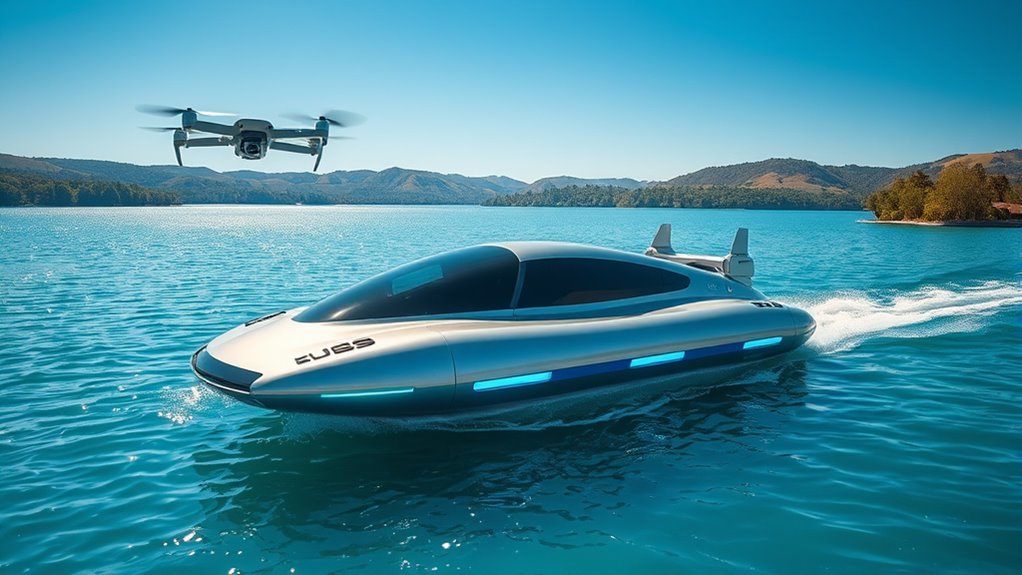

The future of hovercraft is bright with electric and autonomous designs transforming transportation. You’ll glide effortlessly over land and water, enjoying a silent and eco-friendly ride powered by renewable energy. Advanced navigation systems guarantee safe travel across diverse terrains, while self-piloting capabilities enhance safety and efficiency. Imagine a world where hovercraft communicate with each other and infrastructure, redefining how you travel. There’s so much more to explore about these innovations and their impact on transportation.
Key Takeaways
- Future hovercraft will utilize electric and sustainable propulsion methods, minimizing environmental impact compared to traditional vehicles.
- They will feature silent operation powered by renewable energy sources, enhancing user experience and reducing noise pollution.
- Advanced navigation systems will enable hovercraft to traverse diverse terrains safely, with real-time data for obstacle and weather management.
- Autonomous technology will allow self-piloting capabilities, improving safety and creating interconnected transportation networks.
- The integration of modern display technology will enhance the user experience, redefining transportation landscapes for eco-friendly travel options.
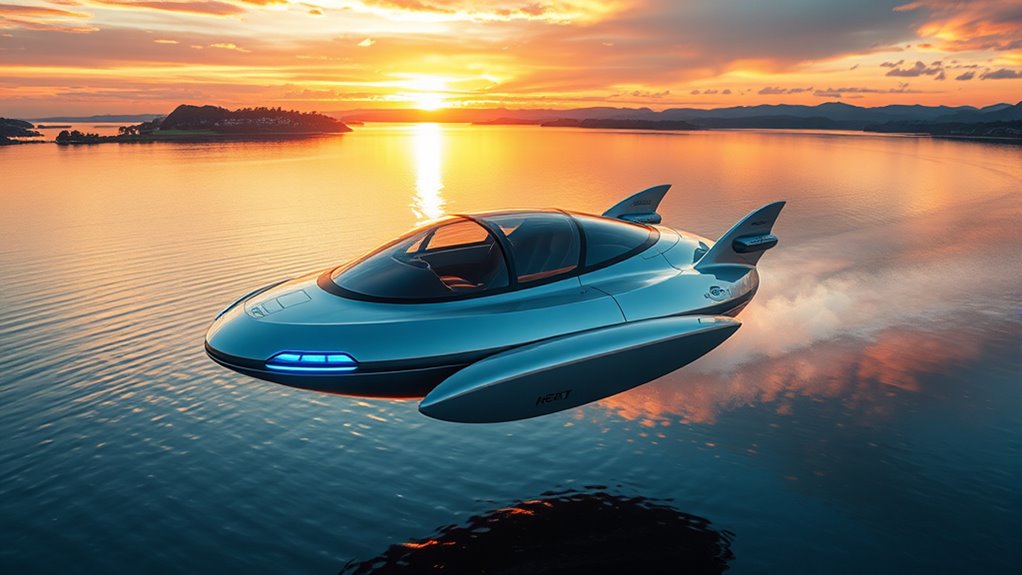
Have you ever envisioned gliding effortlessly over land and water? The hovercraft of the future is set to transform that dream into reality, thanks to innovations in electric and autonomous designs. You might be surprised to learn that these vehicles are not just a concept of science fiction; they’re becoming a tangible part of our transportation landscape. With advancements in sustainable propulsion, you can expect hovercraft to operate with minimal environmental impact, redefining how we think about travel.
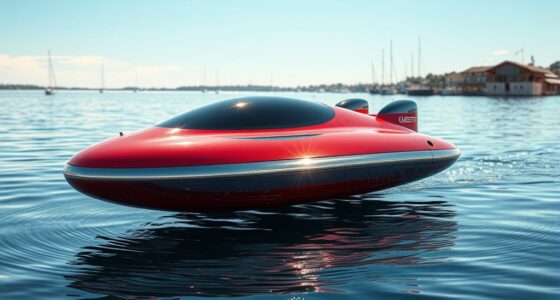
Picture this: stepping aboard a sleek, electric hovercraft that silently lifts off the ground. The buzz of engines is replaced by a whisper of technology designed to harness renewable energy sources. This sustainable propulsion isn’t just a trend; it’s a necessity for the future of transportation. As climate change continues to challenge our world, electric hovercraft can provide an eco-friendly alternative to traditional vehicles. With their low emissions and reduced noise pollution, you’ll feel good about your choice to glide over landscapes without leaving a heavy footprint.
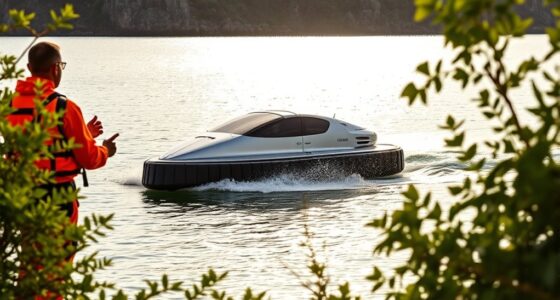
Navigating through diverse terrains? No problem. The future hovercraft will come equipped with advanced navigation systems that make travel safer and more efficient. Envision this: you’re on a journey across a vast lake, and your hovercraft seamlessly adjusts its course based on real-time data. These systems will utilize GPS, radar, and advanced sensors to ensure you reach your destination without delay. You won’t need to worry about pesky obstacles or difficult weather conditions. The hovercraft will do the heavy lifting, allowing you to enjoy the ride without the stress. Additionally, the incorporation of dynamic contrast ratios in display technologies can enhance your viewing experience while navigating.
As autonomous technology continues to evolve, you’ll likely see hovercraft that can pilot themselves, freeing you from the responsibilities of navigation. Your hovercraft will communicate with other vehicles and infrastructure, creating a network of information that enhances safety and efficiency on the water and land. You can sit back, relax, and let technology take the wheel—or rather, the hover.

JGSMYXGS Rc Ships RC Hovercraft Boat for Land and Water 2.4GHz Remote Control Amphibious Vehicle Toy with Double Power,Electric Watercraft RC Toy Boats Gifts for Boys Girls
★Water and land amphibious air cushion boat; suitable for multiple venues, where to come to where.High performance motor;…
As an affiliate, we earn on qualifying purchases.
As an affiliate, we earn on qualifying purchases.
Frequently Asked Questions
What Are the Environmental Benefits of Electric Hovercraft?
Electric hovercraft offer significant environmental benefits, primarily through renewable energy usage and pollution reduction. By utilizing clean energy sources, you can reduce reliance on fossil fuels, leading to fewer greenhouse gas emissions. This shift not only helps combat climate change but also minimizes air and noise pollution, creating a healthier environment. Plus, with advancements in technology, electric hovercraft are becoming increasingly efficient, making them a sustainable choice for transportation and recreation.
How Do Hovercraft Compare to Traditional Boats in Fuel Efficiency?
Hovercraft generally offer better fuel efficiency compared to traditional boats, primarily due to their unique design improvements. They glide over water, minimizing drag and reducing fuel consumption markedly. While traditional boats rely on displacement, hovercraft use air cushion technology, allowing them to traverse various terrains with less energy. So, if you’re looking for a more fuel-efficient option, hovercraft could be the way to go, especially in specific applications where their advantages shine.
What Industries Are Most Likely to Adopt Autonomous Hovercraft?
You’ll likely see autonomous hovercraft adopted in industries like maritime surveillance and disaster response. In maritime surveillance, these hovercraft can patrol vast areas efficiently, tracking illegal activities or environmental changes. For disaster response, they’ll navigate difficult terrains and reach areas that traditional vehicles struggle to access, delivering supplies or conducting search and rescue missions. Their versatility and ability to operate in various conditions make them ideal for these essential industries.
How Will Hovercraft Regulations Change With New Technologies?
Regulations for hovercraft will transform faster than a speeding bullet as new technologies emerge. You’ll see legal frameworks adapt to accommodate electric and autonomous designs. Safety standards will tighten, ensuring these hovercraft operate securely in various environments. Expect agencies to collaborate globally, creating uniform regulations that promote innovation while prioritizing public safety. As you navigate this evolving landscape, staying informed will be vital for addressing compliance and leveraging technological advancements effectively.
What Are the Biggest Challenges for Hovercraft Development?
The biggest challenges for hovercraft development include implementing innovative propulsion systems and enhancing cargo handling capabilities. You’ll need to address efficiency and performance while ensuring safety and reliability. Balancing weight and power is crucial, as is optimizing designs for various terrains. Additionally, maneuvering regulatory hurdles can slow down progress. Staying ahead in research and design will help you tackle these challenges and make hovercraft more viable for diverse applications.
autonomous hovercraft navigation system
As an affiliate, we earn on qualifying purchases.
As an affiliate, we earn on qualifying purchases.
Conclusion
As you look to the horizon, imagine gliding effortlessly over water and land in a sleek, electric hovercraft. The hum of innovation surrounds you, intertwining with your dreams of a greener future. Suddenly, you spot a child playing by the shore, eyes wide with wonder. In this moment, you realize that the advancements in hovercraft technology aren’t just about transportation; they’re about preserving the world for future generations. Together, we’re paving the way for a brighter tomorrow.
eco-friendly hovercraft
As an affiliate, we earn on qualifying purchases.
As an affiliate, we earn on qualifying purchases.
self-piloting hovercraft
As an affiliate, we earn on qualifying purchases.
As an affiliate, we earn on qualifying purchases.