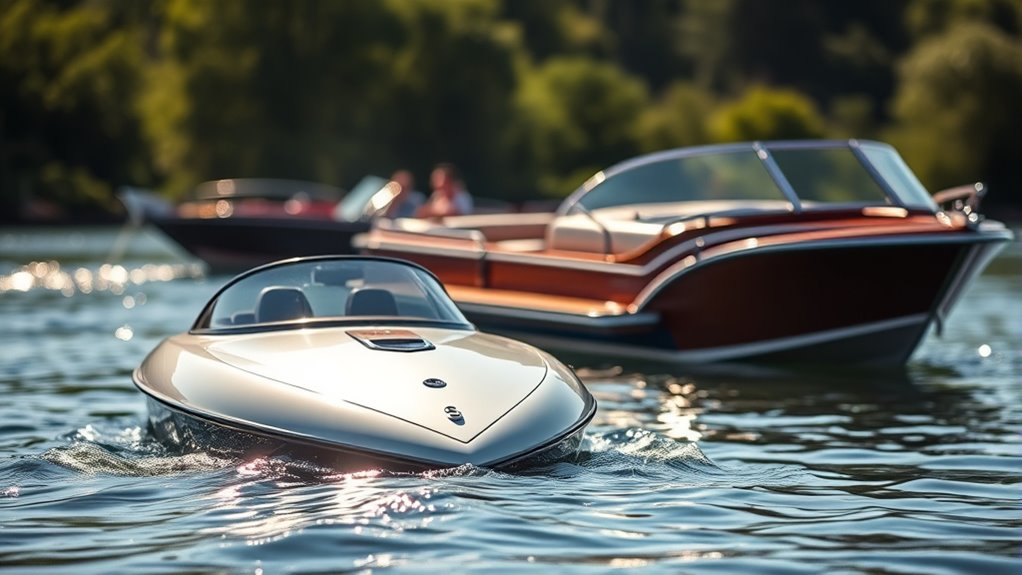
The history of jet boat design starts with Sir William Hamilton’s innovative water jet propulsion system in the mid-20th century. This breakthrough allowed boats to glide over shallow waters, redefining speed and maneuverability. As manufacturers adopted Hamilton’s ideas, jet boats evolved with lighter materials and advanced technologies, enhancing performance and user experience. Modern models prioritize safety, efficiency, and eco-friendliness, showcasing ongoing innovation in the industry. Explore how this journey continues to shape today’s jet boats.
Key Takeaways
- Sir William Hamilton introduced the first practical water jet propulsion system in the mid-20th century, revolutionizing boat design and performance.
- Early jet boats emphasized speed and maneuverability, building on Hamilton’s foundational concepts for enhanced capabilities.
- Design advancements over the years have focused on improving materials, engineering techniques, and overall efficiency in jet boat performance.
- Modern jet boats feature user-friendly designs, advanced navigation systems, and enhanced safety measures to cater to recreational and professional users.
- The 21st century has seen technological innovations, including eco-friendly engines and computer-aided design, further pushing the boundaries of jet boat capabilities.
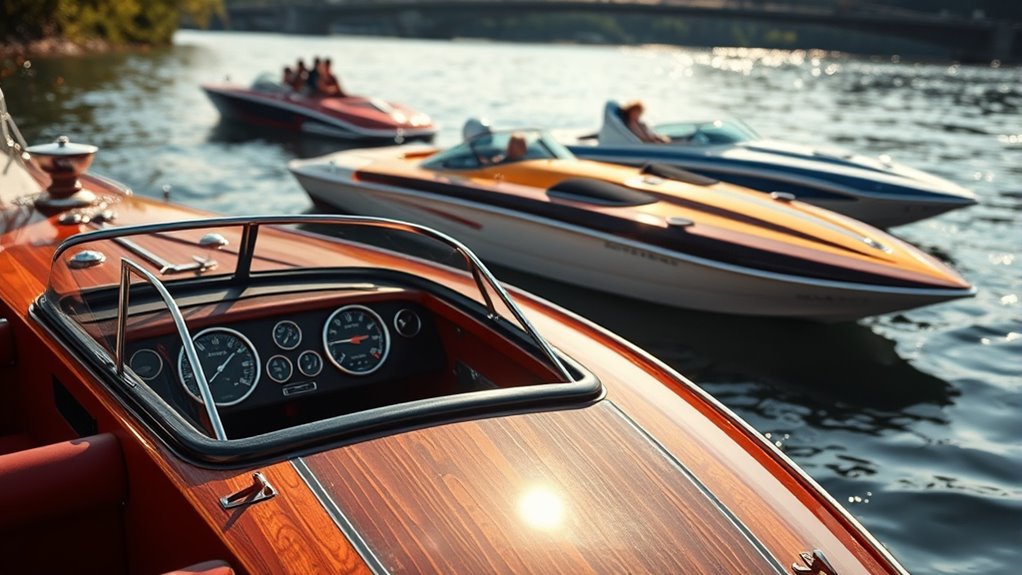
When you plunge into the history of jet boat design, you’ll discover a fascinating evolution driven by innovation and performance needs. The journey begins in the mid-20th century with the visionary Sir William Hamilton, who introduced the first practical jet propulsion system for boats. His groundbreaking design utilized a water jet to propel the vessel, allowing it to glide over shallow waters where traditional propellers would struggle. This propulsion evolution marked a significant shift in boating technology, enabling faster speeds and greater maneuverability.
The history of jet boat design is a remarkable journey of innovation, beginning with Sir William Hamilton’s revolutionary water jet propulsion system.
You’ll find that Hamilton’s original concept was not just about speed but also about versatility. Early jet boats were designed for steering through rivers and lakes, where shallow depths often posed a challenge. As you explore the timeline, you’ll see how the design innovations that followed Hamilton’s work began to refine the jet boat concept. Manufacturers quickly adopted and adapted his ideas, leading to enhanced performance and efficiency. Each new model built upon its predecessors, integrating advanced materials and engineering techniques that made boats lighter and more powerful.
As jet boat design progressed, so did the focus on user experience. You’ll notice that modern models incorporate features that cater to both recreational and professional needs. From spacious cockpits to advanced navigation systems, today’s jet boats are equipped for comfort and reliability. This evolution reflects a broader understanding of what boat enthusiasts desire, emphasizing not just performance but also safety and convenience.
The propulsion evolution in jet boats continued into the 21st century, with manufacturers embracing technological advancements like computer-aided design and fuel-efficient engines. These innovations have further enhanced speed, agility, and environmental sustainability. You’ll appreciate how modern jet boats can now reach impressive speeds while minimizing fuel consumption, making them more appealing to eco-conscious consumers. Additionally, the jet boat industry has drawn parallels to animated movies that touch hearts, showcasing how emotional depth can enhance user experience.
As you explore deeper, you’ll find that the jet boat community thrives on collaboration and shared knowledge. Enthusiasts and engineers often exchange ideas, pushing the boundaries of what’s possible in jet boat design. This spirit of innovation ensures that the industry remains dynamic, with fresh concepts constantly emerging.
In reviewing the history of jet boat design, you’ll realize it’s a story of continuous improvement. From Hamilton’s original vision to today’s sleek, high-performance models, the journey reflects humanity’s quest for excellence on the water—a journey that continues to evolve as new challenges and technologies arise.

RC Boat Thruster, RC Boat Jet Pump Pusher Set Gray 26mm Thruster with 540 Brush Motor Radiator Tube for RC Jet Drive Boat Jet Boat DIY Accessory
- Powerful Drive Shaft: 4mm steel shaft with high-speed bearings
- Secure Non-slip Nut: Gear transmission with locking nut for stability
- High Power Performance: Solid structure for strong, stable propulsion
As an affiliate, we earn on qualifying purchases.
As an affiliate, we earn on qualifying purchases.
Frequently Asked Questions
What Materials Are Commonly Used in Modern Jet Boat Construction?
Modern jet boat construction commonly uses composite materials like fiberglass and carbon fiber for their lightweight strength and durability. These materials offer excellent corrosion resistance, making them ideal for harsh marine environments. You’ll also find aluminum and stainless steel in the hull and engine components, as they provide additional strength and resistance to wear. By combining these materials, manufacturers create jet boats that are both efficient and long-lasting, perfect for your adventures on the water.
How Do Jet Boats Compare to Traditional Propeller Boats in Performance?
Jet boats often outperform traditional propeller boats, especially in shallow waters. Their unique hull design allows for better maneuverability and quicker acceleration. While propeller efficiency can be higher in deeper waters, jet boats eliminate the risk of propeller cavitation and damage in rocky conditions. You’ll find jet boats can navigate areas where propeller boats can’t, giving them an edge in versatility and performance, especially in rivers and lakes with varying depths.
What Are the Safety Features of Modern Jet Boats?
Modern jet boats come equipped with several vital safety features to guarantee your on-water experience is secure. These include reinforced hull designs that enhance durability and stability, as well as automatic bilge pumps that prevent flooding. Many models also integrate advanced navigation systems and collision avoidance technology, giving you greater awareness of your surroundings. Additionally, jet boat safety gear like life jackets and fire extinguishers are often standard, keeping you and your passengers protected.
Can Jet Boats Operate in Shallow Waters Effectively?
Yes, jet boats can effectively operate in shallow waters. For instance, if you’re steering a river with only a few feet of water, a jet boat’s design allows for shallow water travel without the risk of propeller grounding. Unlike traditional boats, jet boats draw minimal water, reducing grounding risks considerably. This ability makes them ideal for exploring backwaters or narrow streams where conventional boats might struggle. Just be cautious of sudden changes in depth!
What Maintenance Is Required for Jet Boat Engines?
To keep your jet boat engine in top shape, you’ll need to focus on two key areas: engine lubrication and cooling system maintenance. Regularly check and change the oil, ensuring your engine runs smoothly. Inspect the cooling system for any leaks or blockages, and flush it periodically to prevent overheating. Don’t forget to clean the water intake and replace any worn parts. Consistent upkeep will enhance performance and prolong the life of your engine.
Conclusion
As you glide across the water in a modern jet boat, think of the journey that brought you here. Each wave represents a piece of history, from Hamilton’s innovative spirit to today’s sleek designs. The roar of the engine echoes the passion of countless engineers who transformed dreams into reality. Just as the river carves its path through the landscape, jet boats have reshaped the way we experience the world, merging adventure with the elegance of progress.