
Jet boats use jet propulsion, which sets them apart from traditional propeller-driven boats. Instead of spinning propellers, they draw in water and expel it at high speeds, giving you quicker acceleration and the ability to navigate shallow waters where props struggle. This system enhances maneuverability and efficiency, allowing for tighter turns and better handling in various conditions. If you want to explore more about their advantages and maintenance, keep going.
Key Takeaways
- Jet boats use jet propulsion, drawing in water and expelling it for thrust, unlike traditional boats that rely on rotating propellers.
- Jet propulsion allows for quicker acceleration and better maneuverability compared to propeller-driven boats.
- Jet boats can navigate shallow waters where propellers would struggle, making them ideal for rocky or shallow areas.
- The absence of visible propellers reduces the risk of catching underwater obstacles, enhancing safety during exploration.
- Jet propulsion provides tighter turns and quicker response times, improving handling in various water conditions.
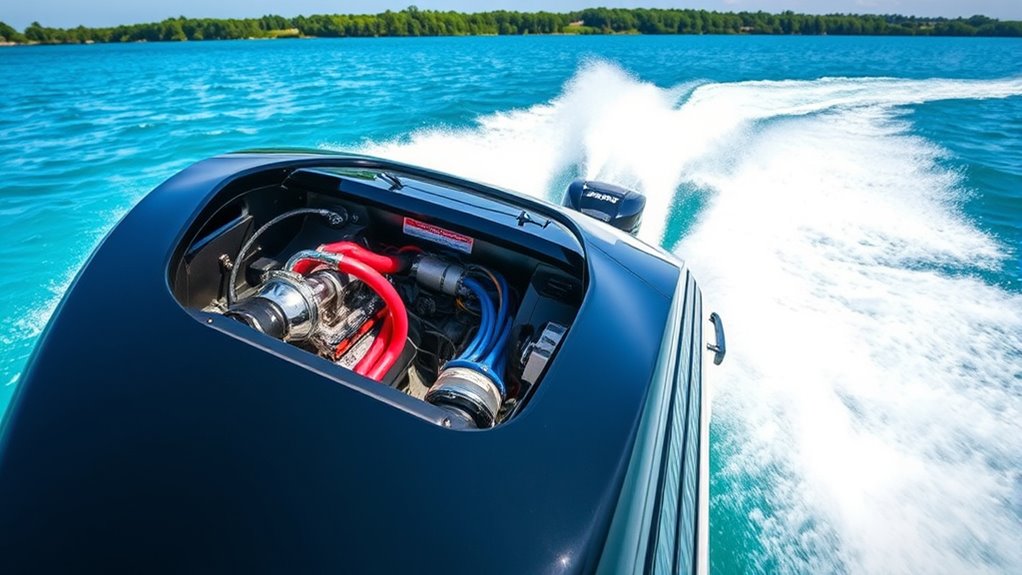
Have you ever wondered what makes jet boats so unique? At first glance, they might look similar to traditional boats, but the propulsion system sets them apart. Instead of propellers, jet boats utilize a jet propulsion system, which draws water in and expels it out at high speeds, creating thrust. This design not only allows for quicker acceleration but also enables the boat to navigate in shallow waters where traditional props would struggle. If you’re thinking about getting into jet boating, understanding how this propulsion method works is key to maximizing your experience.
One of the significant advantages of jet propulsion is the efficiency and maneuverability it offers. With no visible propeller to get caught up in underwater obstacles, you can enjoy exploring rocky or shallow areas without the constant worry of damaging your boat. The jet drive system allows for tighter turns and quicker response times, making it easier to handle in various conditions. However, this doesn’t mean you’re free from responsibilities. Regular engine maintenance is essential for guaranteeing that your jet boat runs smoothly. Neglecting the engine can lead to issues that might affect performance and safety.
When maintaining your engine, you’ll want to pay attention to several key areas, including oil levels, fuel quality, and the cooling system. Keeping a close eye on these components can help prevent problems and ensure a long lifespan for your boat. It’s always a good idea to consult your owner’s manual for specific maintenance schedules and tips. Don’t forget to check the impeller as well; it’s a critical part of the jet drive system that needs to be in good condition to function properly.
Safety precautions are also paramount when operating a jet boat. Always wear a life jacket, and make sure your passengers do the same. Jet boats can reach high speeds, and in the event of an accident, having that extra layer of protection could be invaluable. Familiarize yourself with local boating laws and regulations, as well as any potential hazards in the waters you plan to explore. Additionally, understanding optimal conditions for jet propulsion can enhance your boating experience by ensuring the best performance from your craft.
Frequently Asked Questions
What Are the Advantages of Jet Propulsion Over Traditional Propellers?
Jet propulsion offers several advantages over traditional propellers. First, it enhances marine safety by reducing the risk of injuries from exposed blades, making it safer for swimmers and wildlife. Second, jet propulsion tends to have a lower environmental impact since it can operate in shallow waters without disturbing the seabed. This design reduces the likelihood of sediment disturbance, protecting aquatic ecosystems while maintaining high performance and maneuverability in various water conditions.
Can Jet Boats Operate in Shallow Waters?
Absolutely, jet boats can glide through shallow waters with ease! Unlike traditional propellers, which can struggle with underwater obstacles, jet propulsion allows you to navigate tight spots without worrying about getting stuck. This makes shallow water navigation a breeze. You’ll find that jet boats often have a higher clearance, reducing the risk of damage from debris or hidden rocks below. So, you can confidently explore those scenic, shallow waterways without a hitch!
How Do Jet Boats Handle Rough Water Conditions?
Jet boats handle rough water conditions surprisingly well thanks to their wave handling and stability features. You’ll notice they can quickly adapt to choppy waters, providing a smoother ride compared to traditional boats. Their design allows you to maintain control even when facing large waves. With a low center of gravity and powerful jet propulsion, you’re less likely to experience bouncing or pitching, making your experience safer and more enjoyable.
What Maintenance Does a Jet Propulsion System Require?
You’re cruising along, the wind in your hair, when you remember maintenance is key to keeping that thrill alive. Regularly check your cooling system to prevent overheating, and don’t skip the impeller inspection—it’s essential for peak performance. Keep an eye out for any debris that could cause damage. By staying on top of these tasks, you’ll guarantee smooth sailing and the same excitement each time you hit the water.
Are Jet Boats More Fuel-Efficient Than Propeller Boats?
Jet boats can offer better fuel economy than propeller boats, especially in shallow waters or when maneuvering at low speeds. However, the efficiency comparison really depends on the specific models and conditions. If you’re looking for a versatile option for various environments, a jet boat might suit you well. Just keep in mind that factors like engine type and weight also play a significant role in overall fuel efficiency.
Conclusion
In the world of watercraft, jet boats stand out like a beacon, showcasing the power of jet propulsion over traditional propellers. By harnessing water in a unique way, these vessels offer agility and speed that can make your heart race. Whether you’re slicing through waves or steering through shallow waters, you’ve got the thrill of jet propulsion on your side. So, next time you’re out on the water, remember: speed and maneuverability are just a jet away!