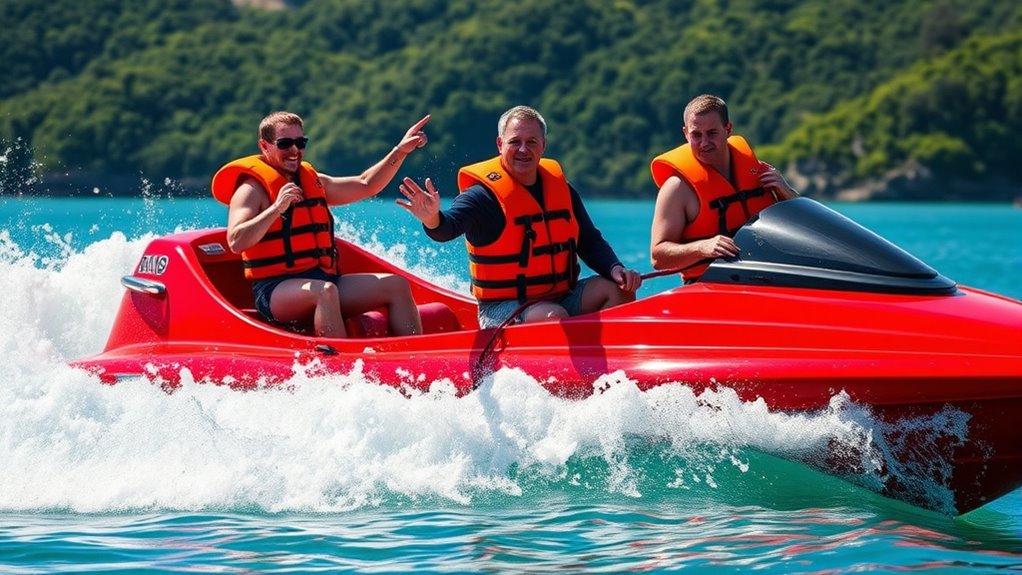

Jet boat safety drills are crucial for you and your passengers to be ready for emergencies. By practicing procedures like engine failure or capsize, you’ll learn the right actions to take. Familiarizing everyone with rescue equipment, such as life jackets and flares, boosts confidence and helps reduce anxiety. Regular drills keep your skills sharp and ensure quick responses when it counts. To enhance your knowledge on effective safety drills, keep exploring the essentials of emergency preparedness.
Key Takeaways
- Conduct safety briefings before departures to explain emergency procedures and clarify passenger roles during emergencies.
- Regularly practice emergency scenarios, such as man-overboard situations, to ensure passengers are prepared for real incidents.
- Ensure all rescue equipment, including life jackets and first aid kits, is accessible, functional, and properly maintained.
- Simulate equipment failure and communication loss during drills to build confidence and improve response times.
- Reflect post-drill on performance, reinforcing lessons learned to enhance overall safety preparedness for future emergencies.

Have you ever considered how crucial safety drills are when operating a jet boat? You might think they’re just a formality, but practicing emergency procedures can be the difference between a safe outing and a dangerous situation. When you’re out on the water, things can change rapidly, and knowing how to respond can save lives. Familiarizing yourself with rescue equipment and ensuring everyone on board understands their role can make a critical difference.
Before you even set off, it’s essential to conduct a safety briefing. Gather your passengers and go over the emergency procedures. Explain what they should do in case of an emergency, like a sudden engine failure or a capsize. Make sure everyone knows where the rescue equipment is stored, and demonstrate how to use it. This could include life jackets, flares, and first aid kits. By doing this, you’re not just preparing them for the worst-case scenario; you’re also helping to ease any anxiety they might have about being on the water.
Regular drills can help reinforce these procedures. For instance, practice what to do if someone falls overboard. Assign roles to your passengers, so they know whether to throw a life ring, call for help, or keep their eyes on the person in the water. When everyone knows their responsibilities, the chances of a successful rescue increase considerably. You can even simulate situations where you lose communication or experience equipment failure. These drills may feel awkward at first, but they’re invaluable in building confidence.
Another critical aspect is guaranteeing your rescue equipment is accessible and functional. Check your life jackets regularly to ensure they’re not damaged and are the right size for each passenger. Regularly inspect your flares and first aid supplies as well. When it’s time for a drill, make sure everyone knows how to access this equipment quickly. In an emergency, every second counts.
Finally, after each drill, take a moment to discuss what went well and what could improve. This reflection helps solidify the lessons learned and keeps everyone engaged. Remember, safety isn’t just about having the right equipment; it’s about being prepared to use it effectively. Additionally, practicing emergency procedures can significantly increase your readiness for unexpected situations. So, the next time you head out on a jet boat, take those safety drills seriously. They could make all the difference in an emergency.

Inflatable Life-Jacket for Adults| Life-Vest with Automatic/Manual Multifunctional Inflation-PFD| Lightweight & Compact Supports up to 300lbs for Kayaking Fishing Boating (Camouflage)
Inflatable Life-Jackets: Lightweight & Comfortable, Weighs 1.2lbs and features a compact, low-profile design. With a fully adjustable waist...
As an affiliate, we earn on qualifying purchases.
Frequently Asked Questions
What Should I Do if I Capsize My Jet Boat?
If you capsize your jet boat, stay calm and assess your situation. First, signal for help using emergency signaling devices, like a whistle or flares. If you’re safe to do so, attempt capsize recovery by swimming to the boat and climbing back on. If it’s not possible, stay with the boat for flotation and visibility. Remember to keep your life jacket on and wait for assistance while conserving energy.
How Do I Assess Weather Conditions Before Heading Out?
Before heading out, check weather forecasting services to get the latest updates. Look for wind patterns that could affect your trip; strong winds can create choppy waters. Use apps or websites that provide real-time data, and don’t forget to pay attention to any alerts. If conditions seem unstable or unpredictable, it’s best to postpone your outing. Safety’s key, and being informed can make all the difference in your adventure.
What Personal Safety Gear Is Essential for Jet Boating?
When you’re jet boating, vital personal safety gear includes life jackets and waterproof gear. Always wear a properly fitted life jacket to guarantee you stay buoyant in case of an emergency. Waterproof gear, like a jacket and pants, keeps you dry and warm, which is essential for your comfort and safety. Don’t forget to pack a whistle and a first aid kit, too, for added security while you’re out on the water.
How Can I Prepare for Mechanical Failures While on the Water?
Prepare for potential problems by prioritizing proactive preparations. Always carry emergency communication devices, like a VHF radio or satellite phone, ensuring you can call for help if needed. Pack essential safety equipment, including a first aid kit, life jackets, and fire extinguishers, to address various emergencies. Regularly inspect your boat’s mechanical systems, and practice troubleshooting techniques so you can tackle mechanical failures calmly and confidently when you’re out on the water.
What Are the Local Regulations for Jet Boating Safety?
To guarantee safe jet boating, you need to familiarize yourself with local licensing requirements and navigation rules. Check if you need a boating license or specific permits in your area. Always follow the navigation rules to maintain safety for yourself and others on the water. This includes understanding right-of-way situations, speed limits, and markers. Staying informed will help you enjoy your jet boating experience while minimizing risks and legal issues.

Onyx A/M-24 Automatic/Manual Inflatable Life Jacket, U.S. Coast Guard Approved, Low Profile, Compact Design, Manual Convertible Inflation Option
U.S. COAST GUARD APPROVED: This USCG-approved Inflatable Life Jacket inflates automatically upon water immersion or manually pulling the...
As an affiliate, we earn on qualifying purchases.
Conclusion
In the world of jet boating, safety isn’t just a checklist; it’s your lifeline. Think of it like steering a river: calm waters can turn turbulent in an instant. Just like a seasoned captain who’s weathered storms, your preparedness through drills can mean the difference between a smooth ride and a capsized adventure. So, take these safety drills to heart. They’re not just practices; they’re your compass, guiding you through the unpredictable twists and turns of the water.

BLUESTORM Cirrus26 Inflatable PFD Life Jackets for Adults | US Coast Guard Approved Automatic Life Vest w/Manual Override Convertibility (Nitro Red)
US COAST GUARD-APPROVED TYPE V PFD: This USCG-approved Type 5 life jacket has Type 3 performance. This life...
As an affiliate, we earn on qualifying purchases.

BLUESTORM Cirro 26 Automatic/Manual Inflatable Life Jacket PFD for Adults (Apex Black) | US Coast Guard (USCG) Approved Self Inflating Life Vest Preserver
US COAST GUARD-APPROVED TYPE V PFD: This USCG-approved Type V lifejacket with Type III performace, inflates automatically upon...
As an affiliate, we earn on qualifying purchases.