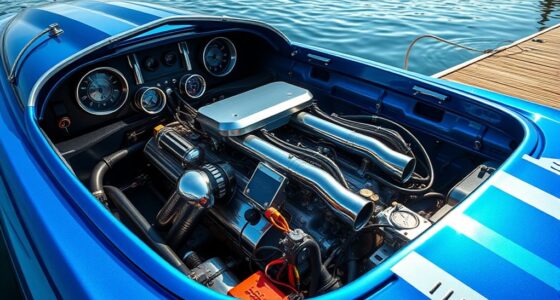
When operating a jet boat, you need to familiarize yourself with the throttle, steering, and reverse functions for better handling. Practice maneuvering in open waters to build confidence and learn to make gentle steering adjustments. Always wear a life jacket and check that safety equipment is onboard before you head out. Remember to monitor your surroundings and be ready for quick speed changes. Keep going to discover more tips on driving techniques and maintenance.
Key Takeaways
- Familiarize yourself with throttle, steering, and reverse controls to enhance responsiveness during operation.
- Always wear a life jacket and ensure safety equipment is functional before setting out.
- Practice gentle steering adjustments and keep your eyes on the horizon for better maneuverability.
- Regularly inspect maintenance items like oil levels and the jet pump to ensure optimal performance.
- Consistent practice will improve your confidence and driving skills on the water.

Operating a jet boat can be an exhilarating experience, especially when you understand the basics. The right driving techniques and controls can make all the difference in how smoothly your ride goes. First and foremost, it’s essential to familiarize yourself with the controls. The throttle, steering, and reverse can feel different from a traditional boat, so spend some time getting comfortable with them before you hit the water. A jet boat’s responsiveness to throttle adjustments allows for quick acceleration, but that means you must be prepared for sudden changes in speed.
Familiarize yourself with jet boat controls for a smooth and exhilarating ride on the water.
When you’re ready to get started, remember that safety precautions are paramount. Always wear a life jacket and ensure that everyone aboard does the same. Double-check that your boat’s safety equipment, such as flares and first aid kits, is onboard and in good condition. Before you set out, review the waterways you’ll be maneuvering through. Knowing the area can help you avoid hazards like shallow waters or hidden obstacles that could damage your jet boat or cause an accident.
As you start driving, keep your eyes on the horizon and be aware of your surroundings. Jet boats are agile, but that agility requires constant attention. Practice turning and maneuvering in open water before attempting to steer through tighter spaces. Utilize gentle adjustments to the steering to maintain control, especially in choppy waters. You’ll find that a steady hand and quick reflexes can help you adapt to changes in conditions.
Regular maintenance is vital to keep your jet boat running smoothly. After each outing, check the oil levels, inspect the jet pump, and clean any debris from the intake grate. These maintenance tips can extend the life of your boat and enhance its performance. It’s also wise to consult your owner’s manual for specific maintenance schedules and guidelines, as each model may have unique requirements. Additionally, consider looking into energy-efficient models to reduce overall fuel consumption and enhance sustainability while enjoying your boating experience.
Finally, don’t forget that practice makes perfect. The more you drive, the more comfortable and skilled you’ll become. Embrace every opportunity to learn and improve your driving techniques. With the right safety precautions and maintenance tips in mind, you can fully enjoy the thrill of operating a jet boat while ensuring a safe and pleasurable experience on the water. So, get out there, have fun, and make the most of your time on the waves!

Seastar Jet Boat Control
As an affiliate, we earn on qualifying purchases.
As an affiliate, we earn on qualifying purchases.
Frequently Asked Questions
What Are the Best Safety Gear Items for Jet Boating?
The best safety gear items for jet boating include reliable life jackets and effective communication devices. Always wear a life jacket that fits properly, ensuring you stay safe in case of an emergency. Equip your boat with a VHF radio or a mobile phone in a waterproof case to stay connected with others. Don’t forget to have a first aid kit on board, as it’s essential for handling any unexpected situations that may arise.
How Do Weather Conditions Affect Jet Boat Performance?
Weather impacts your jet boat performance like a conductor shaping an orchestra. Windy days can create choppy water conditions, making your ride feel like a rollercoaster. Rain can diminish visibility and affect how your boat handles. Hot weather might lead to engine overheating, while cold can thicken the oil, slowing you down. Always check the forecast before heading out; understanding these elements guarantees you stay safe and enjoy your adventure on the water.
Can Jet Boats Operate in Shallow Waters?
Yes, jet boats can operate in shallow waters, thanks to their unique design. You’ll find that their maneuverability allows for agile navigation even where traditional boats struggle. When you’re in shallow water, use careful throttle control to avoid sucking up debris. With practice, you can master shallow water navigation, allowing you to explore hidden spots and enjoy a thrilling ride while keeping your jet boat safe from potential damage.
What Is the Average Fuel Consumption of a Jet Boat?
The average fuel consumption of a jet boat typically ranges from 5 to 15 gallons per hour, depending on its size and engine performance. You’ll find that fuel efficiency can vary based on how you drive it, the weight being towed, and water conditions. By maintaining a steady speed and avoiding rapid acceleration, you can improve your fuel efficiency, helping you enjoy longer outings without frequent refueling stops.
How Do I Maintain My Jet Boat’s Engine?
Maintaining your jet boat’s engine is like nurturing a fine relationship; it requires attention and care. Regularly check your oil levels and change the filter as needed to keep it running smoothly. Don’t forget to inspect the cooling system and clean the intake grate. For troubleshooting tips, listen for odd sounds and watch for performance dips—these clues can save you headaches later. A little maintenance goes a long way in keeping your adventure alive!

Hardcore Life Jacket 2 Pack Paddle Vest for Adults; Coast Guard Approved Type III PFD Life Vest Flotation Device; Jet ski, Wakeboard, Kayak; Ideal Extra Pontoon Boat Life Jacket Blue
Highly Versatile Life Jacket Design: Perfect for a range of activities, from fishing and waterskiing to boating and…
As an affiliate, we earn on qualifying purchases.
As an affiliate, we earn on qualifying purchases.
Conclusion
Operating a jet boat can be an exhilarating experience, but mastering driving techniques and controls is essential for safety and fun. Did you know that 70% of jet boat accidents occur due to operator inexperience? By familiarizing yourself with throttle control, steering techniques, and emergency maneuvers, you can substantially reduce your risk on the water. So, practice often and stay aware—great adventures await when you’re confident in your skills!
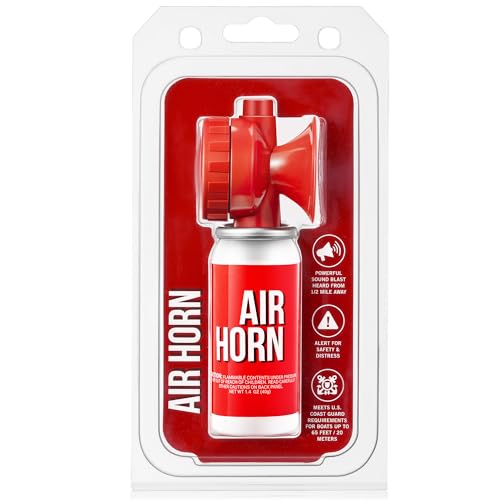
Saillong 1 Pack 1.4oz Boat Air Horn for Safety, Loud Marine Air Horns Can, Mini Small Blow Fog Bear Horn, Emergency Use for Sporting Events, Boat, Animal Alarm
Powerful Sound, Heard from 1/ 2 Mile Away: this boat air horn delivers a very loud, attention grabbing…
As an affiliate, we earn on qualifying purchases.
As an affiliate, we earn on qualifying purchases.

GreatNeck MS191 Mariner's Tool Set 191-Pc, Boat Tool Kit for Maintenance, Rust Resistant Boating Essentials, Includes Wrench, Socket, and Screwdriver Set
Comprehensive Onboard Tool Coverage: Covers common maintenance needs for boats, trailers, and small engines with SAE and metric…
As an affiliate, we earn on qualifying purchases.
As an affiliate, we earn on qualifying purchases.