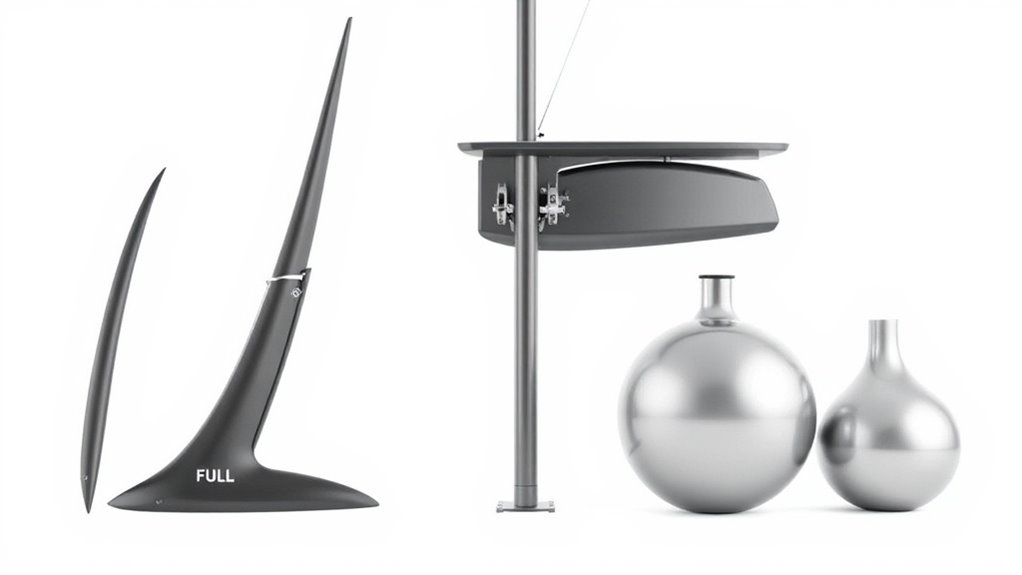

Understanding keel designs is essential for optimizing your boat’s performance. Fin keels offer speed and agility, perfect for racing. Full keels provide excellent stability, making them great for long voyages. Lifting keels give you flexibility to navigate shallow waters. Bulb keels lower your center of gravity, enhancing stability and performance. Each design has its pros and cons based on your sailing needs. If you want to discover more about how each type impacts your sailing experience, keep exploring!
Key Takeaways
- Fin Keels offer speed and agility, ideal for racing yachts, with minimal drag and quick rudder response due to their slender shape.
- Full Keels provide excellent stability and tracking for long voyages, but can hinder speed in lighter winds due to their weight.
- Lifting Keels are versatile, allowing navigation in shallow waters when retracted and enhancing stability and efficiency when lowered.
- Bulb Keels feature a weighted bulb that lowers the center of gravity, improving stability without significant drag while maintaining performance across conditions.
- Choosing the right keel design is crucial for optimizing a vessel’s stability, speed, and handling based on specific sailing needs.

Have you ever wondered how keel designs influence a boat’s performance? The keel plays a essential role in a vessel’s hydrodynamic efficiency, and understanding its design can substantially impact your sailing experience. Whether you’re cruising or racing, the type of keel can determine how well your boat tracks through the water and responds to winds. Various designs exist, such as fin, full, lifting, and bulb keels, each offering unique benefits based on your sailing needs.
Keel designs significantly affect boat performance, influencing hydrodynamic efficiency and responsiveness in various sailing conditions.
Fin keels are commonly found on modern racing yachts. They extend downward from the hull, providing stability while minimizing drag. The slender shape allows for quicker response to rudder input, making it easier to maneuver. If you’re looking to maximize speed, a fin keel is a solid choice. However, keep in mind that the hydrodynamic efficiency can depend heavily on the keel’s construction material. Lightweight materials like fiberglass or carbon fiber can enhance performance by reducing the overall weight of the boat.
On the other hand, full keels provide excellent stability and tracking but can hinder speed. These keels extend further back and add more weight, which can be advantageous in heavy seas. If you’re sailing in rough conditions or during long voyages, you might appreciate the steady handling a full keel provides. However, the trade-off often involves slower speeds, especially in lighter winds.
Lifting keels, as the name suggests, can be raised or lowered, allowing for versatility. When you’re in shallow waters, you can retract the keel to navigate safely. When it’s time to hit deeper waters, you can lower it for improved hydrodynamic efficiency. This adaptability makes lifting keels an excellent option for cruisers who frequent varied sailing environments.
Bulb keels combine aspects of fin and full keels. They feature a weighted bulb at the bottom, which lowers the center of gravity, enhancing stability without the added drag of a full keel. This design allows you to sail efficiently in various conditions while maintaining performance. Choosing the right keel material selection is essential for achieving the desired balance between weight and strength.
Moreover, the aesthetics of a boat’s design can also be enhanced by steampunk and Victoriana-inspired elements, which can provide a unique character to your vessel. Ultimately, the right keel design aligns with your sailing style and the conditions you’ll encounter. Understanding these nuances can help you make informed decisions, enhancing your overall experience on the water. So, whether you’re racing or cruising, consider how different keel designs can elevate your performance.

Bluewater Sailing on a Budget
As an affiliate, we earn on qualifying purchases.
As an affiliate, we earn on qualifying purchases.
Frequently Asked Questions
How Does Keel Design Affect a Yacht’s Speed?
Keel design directly impacts a yacht’s speed by influencing hydrodynamic efficiency and stability. A well-designed keel reduces drag, allowing you to glide through water more smoothly. If you choose a keel that enhances stability, you’ll maintain better control, especially in rough conditions, which can also affect your speed. Ultimately, the right keel design balances these factors, helping you achieve ideal performance on the water while maximizing your enjoyment during each voyage.
What Materials Are Commonly Used for Keels?
You’ll find that common keel materials include cast iron, lead, and fiberglass. Each offers different benefits for keel durability. Cast iron and lead provide weight and stability, while fiberglass is lightweight and resistant to corrosion. When considering keel material selection, think about how these factors impact your yacht’s performance. You want something that balances durability with efficiency to ensure your vessel handles well while maintaining speed on the water.
Can Keel Designs Be Modified After Construction?
Yes, keel designs can be modified after construction, though it’s often complex and requires careful planning. You’ll need to take into account the structural integrity and balance of your vessel. Keel modifications can enhance performance or adapt to your sailing needs. Remember, proper keel maintenance is essential before any alterations. Consulting a marine engineer can help you understand the best options for your specific design and ensure modifications are done safely and effectively.
What Is the Average Cost of a Custom Keel?
A custom keel can cost between $3,000 and $15,000, depending on the design and materials. Imagine the thrill of your boat gliding through the water, perfectly balanced with a keel tailored just for you. But don’t forget, you’ll also need to contemplate keel installation costs, which can add another $1,000 to $5,000. So, as you dream of seamless sailing, remember to budget wisely for that unique keel customization you desire.
How Do Different Keels Perform in Various Water Conditions?
Different keels perform uniquely in various water conditions. In choppy waters, a full keel offers excellent stability, while a fin keel provides better speed and maneuverability. If you’re sailing in shallow waters, a lifting keel can be a game changer. Regardless of your choice, regular keel maintenance is essential to guarantee peak performance and stability. Keeping your keel in top shape directly impacts your sailing experience and safety on the water.

Bluewater Sailing on a Budget
As an affiliate, we earn on qualifying purchases.
As an affiliate, we earn on qualifying purchases.
Conclusion
In the grand tapestry of sailing, choosing the right keel design is like selecting the perfect partner for a dance. Each type—fin, full, lifting, or bulb—offers its own unique rhythm and grace on the water. By understanding these options, you’re not just making a decision; you’re inviting a world of adventure and elegance into your sailing experience. So, embrace the journey ahead and let your keel be the guiding star on your nautical escapades!

Keel Guard for Fiberglass Boat Bass Aluminum Boats, Boat Keel Protector Guard Hull Protector Shield Protects from Rocks Ramps Scratches Damage, Self-Adhesive DIY 5 Inch Wide x 4 Feet to 9 Feet Length
Reliable Keel Guards for Boats: Our boat keel guard protect your boat keel from sand, rocks, concrete ramps,…
As an affiliate, we earn on qualifying purchases.
As an affiliate, we earn on qualifying purchases.
bulb keel stabilizer
As an affiliate, we earn on qualifying purchases.
As an affiliate, we earn on qualifying purchases.