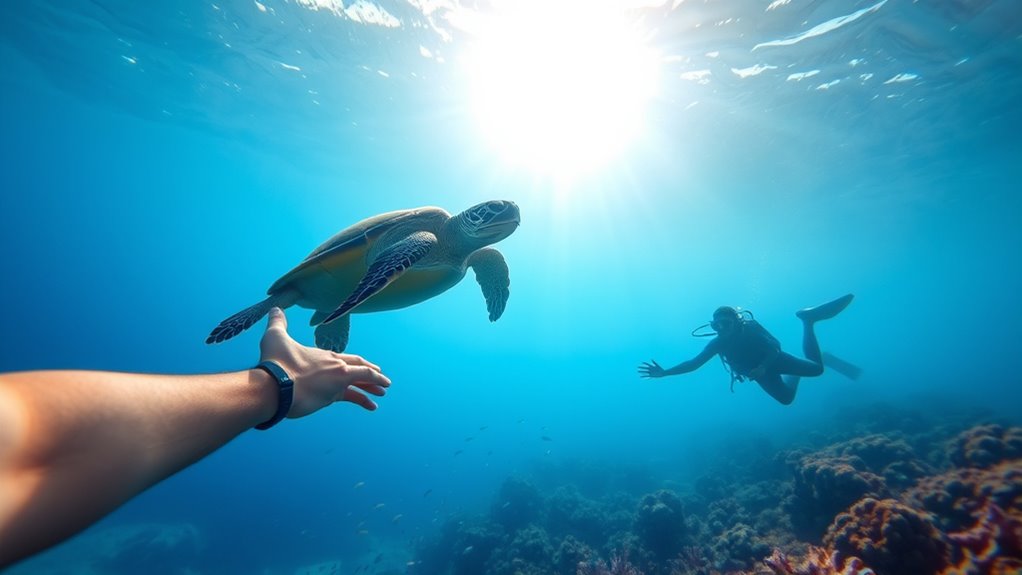

To protect sea turtles, keep a safe distance of at least 10 to 15 feet when observing them. Use binoculars or camera zoom to see details without getting too close. Avoid approaching nesting or feeding areas, and always follow posted signs or guidelines. Respect their natural behaviors and habitat to prevent stress or disturbance. If you want to learn more about responsible observation practices, there’s additional important information to contemplate.
Key Takeaways
- Maintain a minimum distance of 10 to 15 feet from sea turtles to prevent disturbance.
- Use binoculars or camera zooms to observe turtles without approaching closely.
- Avoid approaching nesting beaches or feeding areas to minimize habitat disruption.
- Follow posted signs and guidelines in protected areas to ensure safe observation practices.
- Report any distressed or entangled turtles to authorities, avoiding direct interference.
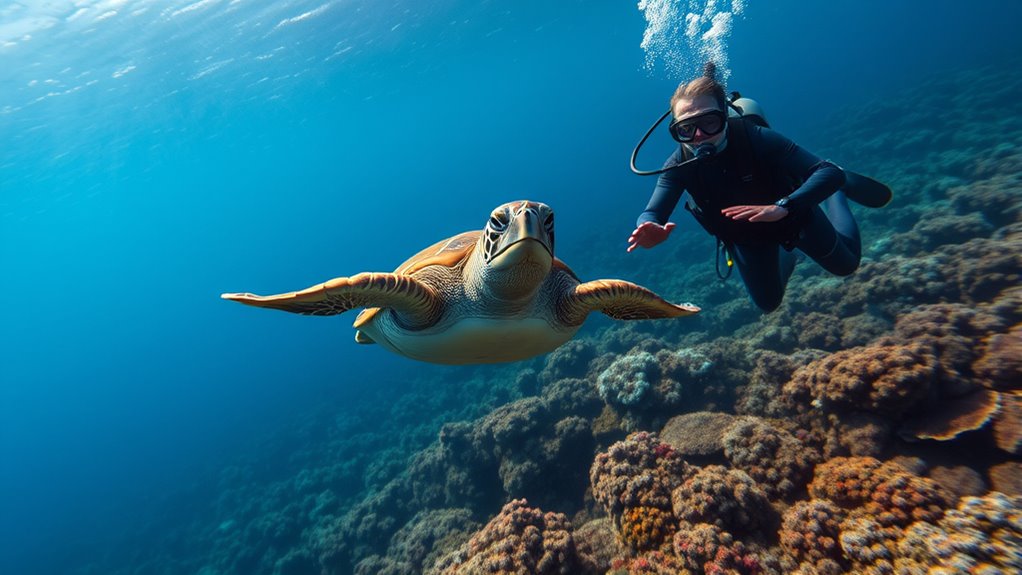
Are you wondering how to stay safe around sea turtles? Maintaining a respectful distance is essential for their well-being and your safety. Sea turtles are sensitive creatures that thrive in specific habitats, which are critical for their survival. When you’re near their nesting beaches or feeding grounds, it’s important to avoid disturbing them. Approaching too closely can cause stress, disrupt their natural behaviors, and even lead to injuries. To protect these gentle animals, local conservation programs often emphasize habitat preservation, ensuring that their environments remain undisturbed. By respecting their habitat, you help support their population and reduce the likelihood of accidental harm.
If you encounter a sea turtle in the wild, remember that rescue operations are typically handled by trained professionals. These teams are equipped to safely assist injured or distressed turtles without causing further harm. As a bystander, your role is to observe from a safe distance and avoid interfering. Getting too close can scare the turtle, causing it to retreat into the water or dig away from potential threats. It’s best to keep at least 10 to 15 feet away, especially during nesting or when juveniles are present. Using binoculars or a camera zoom lens can help you observe without intruding on their space. Always follow posted signs and guidelines in protected areas, as these are designed to minimize human impact and promote habitat preservation. Respecting safe distance protocols isn’t just about staying out of their way; it’s about actively supporting conservation efforts. Minimizing your impact reduces stress on the animals and helps prevent accidental injuries or disruptions. If you see a turtle in distress or entangled in fishing lines or debris, report it immediately to local authorities or conservation organizations. These groups have the expertise and equipment needed to conduct rescue operations safely and effectively. Your cooperation can make a difference in the turtle’s recovery and future safety.
Frequently Asked Questions
Can I Touch or Hold a Sea Turtle if I Encounter One?
You shouldn’t touch or hold a sea turtle if you encounter one. Touching regulations are strict because handling dangers can harm the turtle and disrupt its natural behavior. Even if it seems harmless, your interaction can cause stress, injury, or spread disease. Respect the animal’s space, observe from a distance, and enjoy watching it in its habitat without risking its health or violating safety guidelines.
What Should I Do if a Sea Turtle Approaches Me?
Imagine a sea turtle gently approaching you during your dive. If this happens, stay calm and avoid touching it, respecting touching restrictions. You should slowly back away, maintaining a safe distance, and focus on observation tips like watching its behavior without disturbing it. Remember, approaching or trying to touch a turtle can harm it and break regulations. Your goal is to enjoy observing while protecting these amazing creatures.
Are There Specific Times When Sea Turtles Are More Active?
Sea turtles tend to be more active during their seasonal migration periods, which usually occur in spring and fall. They’re also more active during feeding times, often near reefs or seagrass beds. You might notice increased movement when they’re searching for food or migrating. To stay safe, observe from a respectful distance, especially during these active periods, and avoid disturbing their natural behaviors.
How Do Water Conditions Affect Safe Viewing Distances?
Ah, the thrill of observing sea turtles in their natural habitat—if only water conditions cooperated. When water clarity is poor or currents are strong, you should keep your distance; murky waters hide turtles and make close approaches dangerous. Strong currents can stir up sediments, reducing visibility, and risking disturbance. So, you better heed nature’s cues—wait for clearer waters and calmer currents to enjoy your turtle encounter safely.
Can Noise Pollution Impact Sea Turtle Behavior Near Beaches?
Noise pollution can critically impact sea turtle behavior near beaches. You might not realize it, but noise interference from boats, construction, or crowds causes behavioral disruption, confusing turtles and stressing them out. This can make them more cautious or force them to abandon nesting sites altogether. To protect these creatures, it’s essential that you minimize noise and maintain respectful distances, helping guarantee they feel safe and undisturbed during vital activities.
Conclusion
By respecting sea turtles’ space, you become a guardian of their world. Imagine a young girl who gently watched a turtle surface, realizing her quiet respect assisted the creature thrive. Just like her, your mindful distance ensures these ancient creatures continue to grace our oceans. Remember, a small act of kindness—keeping a safe distance—can make a big difference. Protecting sea turtles isn’t just good karma; it’s essential for their survival and ours.