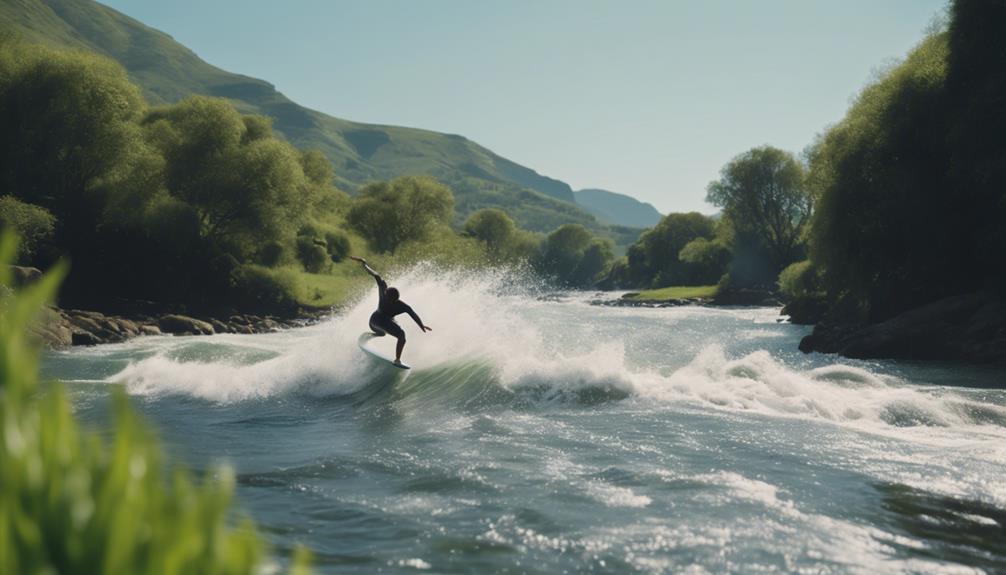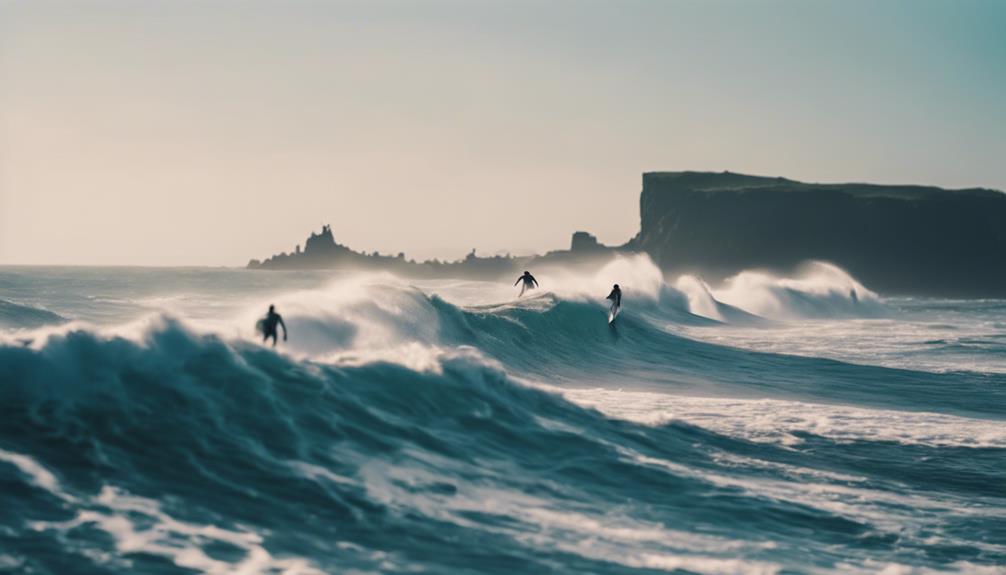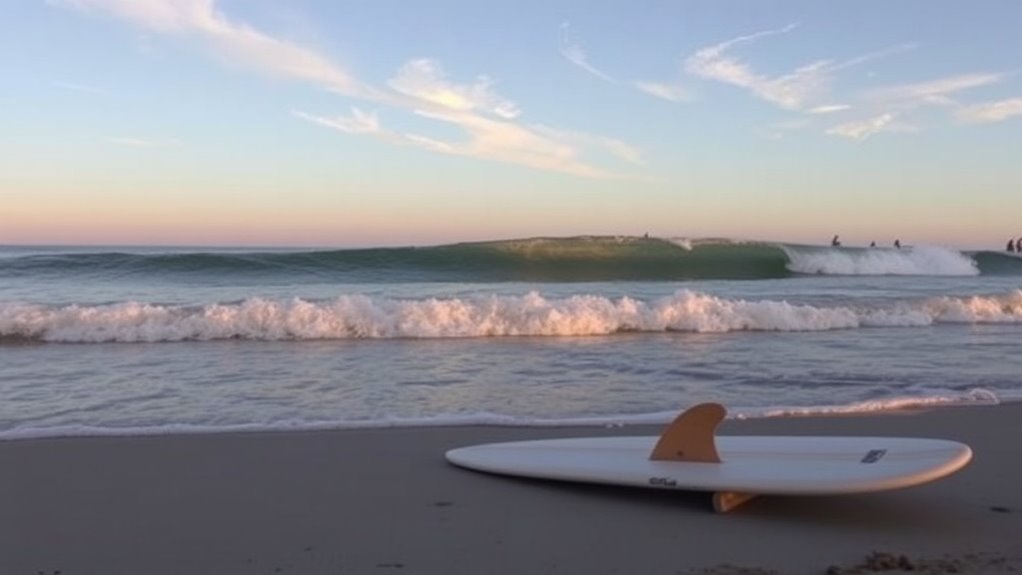

When you’re checking wave forecasts, look at swell size, period, and wind direction. Higher swell sizes usually mean more thrilling rides, while a longer period (10+ seconds) indicates cleaner, more organized waves. Offshore winds create better conditions, while onshore winds can make the surf choppy. By understanding these factors, you’ll be able to predict surf conditions more accurately. This insight can lead to better planning for your next surf adventure and more enjoyment in the water.
Key Takeaways
- Wave height is the primary indicator of surf conditions, with larger waves indicating more thrilling but potentially challenging rides.
- Swell period measures the time between waves; longer periods (10+ seconds) suggest better quality surf with organized swells.
- Wind direction and speed greatly influence wave quality, with offshore winds creating cleaner waves compared to onshore winds which can cause chop.
- Combining wave height, swell period, and wind conditions gives a clearer picture for assessing surf suitability and planning.
- Environmental awareness enhances surfing experiences and promotes sustainable practices, respecting the ocean ecosystem during surf sessions.
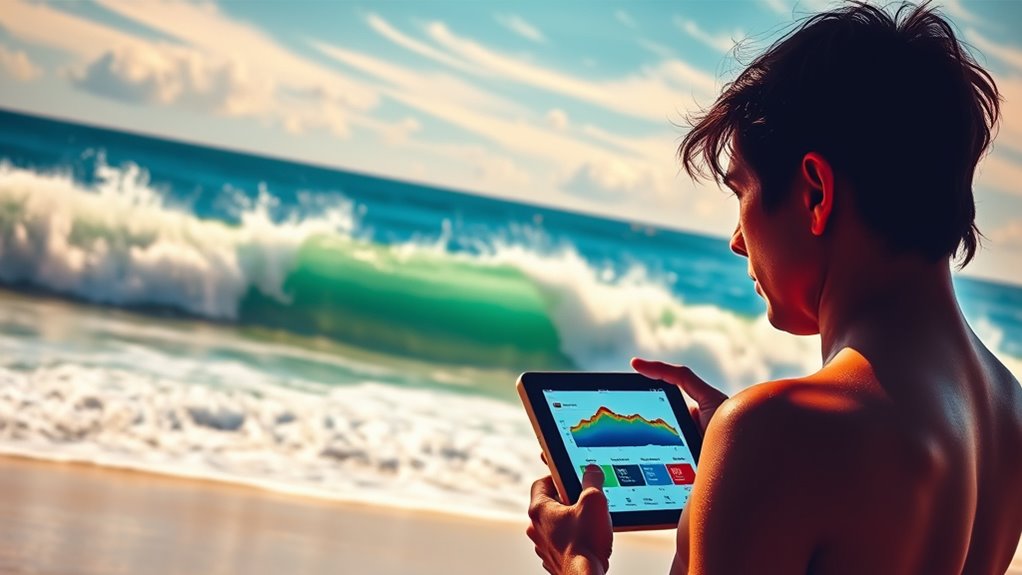
How can you make sense of wave forecasts? Understanding wave forecasts isn’t just about checking if the waves are rideable; it’s a combination of several factors that include swell size, period, and direction. These elements play a crucial role in determining the conditions you’ll encounter out on the water. The first thing you’ll want to look at is wave height, which is often the first indicator of what to expect when you arrive at your favorite surf spot. Higher wave heights typically mean more thrilling rides, but they can also signify challenging conditions, especially for less experienced surfers.
Understanding wave forecasts involves more than just checking wave height; consider swell size, period, and wind conditions for the best surf experience.
Next up is swell period, which refers to the time it takes for two successive waves to pass a certain point. A longer period usually indicates that the waves have traveled a greater distance, often leading to better quality surf. When you check forecasts, keep an eye out for swells with periods of 10 seconds or more if you’re looking for more organized waves. If the swell period is short, you might find choppy conditions that aren’t as enjoyable.
Wind influence is another essential aspect. Wind affects the surface of the water, creating choppy conditions if it’s blowing onshore. Conversely, offshore winds can groom the waves, making them cleaner and more fun to ride. When you read a forecast, pay attention to the wind speed and direction, as these factors can markedly change the wave conditions. If you see strong winds forecasted, especially onshore, it’s best to reconsider your plans for that day.
When you combine the elements of wave height, swell period, and wind influence, you’ll start to develop a clearer picture of what to expect. You might find that a day with moderate wave heights and a longer swell period, complemented by light offshore winds, could offer some of the best surfing conditions. On the other hand, a day with high winds and short periods may lead to a less enjoyable experience, even if the wave heights seem enticing. Additionally, understanding environmental considerations can enhance your overall experience while surfing and ensure you are respecting the ocean and its ecosystems.

HEADWATERS STUDIO Wooden Surfboard Wall Decor Growth Chart – Surfboard Art Decor for Kids Room, Wood Surfboard Kids Sizing Chart, Surf Boards Art, Height Board Surfer Decor – Brown Wave (9.5"x 46")
Brown Wave, 9.5" x 45" Surfboard-inspired Growth Chart: A functional and stylish piece that blends seamlessly into nurseries,…
As an affiliate, we earn on qualifying purchases.
As an affiliate, we earn on qualifying purchases.
Frequently Asked Questions
How Do I Interpret Wave Heights in Different Measurement Units?
To interpret wave heights in different measurement units, you’ll need to understand the common units used, like feet and meters. For conversion, remember that 1 meter equals about 3.28 feet. If you see wave heights in feet and want them in meters, divide by 3.28. Likewise, multiply meters by 3.28 to get feet. Keeping these wave height units in mind will help you understand forecasts better and make informed decisions.
What Tools Can I Use to Track Real-Time Wave Conditions?
When it comes to tracking real-time wave conditions, “a stitch in time saves nine.” You can rely on buoy data for accurate measurements of wave height and frequency. Additionally, surf cams provide a visual perspective, letting you see the conditions as they unfold. Together, these tools give you a thorough understanding of the surf, ensuring you’re always prepared for your next session. So, make sure to check them regularly!
How Do Local Weather Conditions Affect Wave Forecasts?
Local weather conditions greatly affect wave forecasts. When local wind picks up, it can create choppier waters and increase wave height. Conversely, calm winds often lead to smoother seas. Atmospheric pressure also plays a role; low pressure usually indicates stormy conditions, which can generate larger swells. Keeping an eye on these factors helps you anticipate changes in wave conditions, ensuring you’re prepared for what’s coming when you hit the water.
Are There Specific Times of Year for Optimal Surfing Waves?
When it comes to surfing, “April showers bring May flowers” also applies to waves! The best surfing months often align with seasonal swells, which vary by region. In many areas, late summer and fall deliver the most consistent and powerful waves. However, winter can also produce epic surf depending on your location. Keep an eye on local patterns, and you’ll catch those prime swells at just the right time!
Can I Predict Wave Conditions Based on Historical Data?
Yes, you can predict wave conditions based on historical data. By using historical data analysis, you can identify patterns in wave sizes and frequencies. Predictive modeling can help you estimate future wave conditions by analyzing past trends and variables. You’ll find that certain months often yield better surf than others, so tracking these patterns allows you to plan your sessions more effectively. Just remember, nature can be unpredictable, so stay flexible!
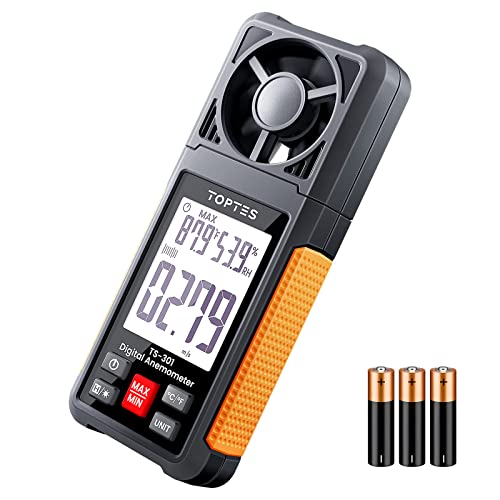
TopTes TS-301 Digital Anemometer, Wind Speed Meter with 2.26-inch Big Backlight LCD Screen, Air Flow Meter for Sailing Surfing Drone Flying RC Plane Golf Shooting HVAC
Easy to Read with 2.26-inch LCD Backlit Screen: The TopTes Anemometer features a large 2.26" LCD screen for…
As an affiliate, we earn on qualifying purchases.
As an affiliate, we earn on qualifying purchases.
Conclusion
Charting wave forecasts is like reading a treasure map; understanding swell size, period, and direction leads you to the perfect surf. By paying attention to these key elements, you can ride the waves with confidence and skill. So, whether you’re a seasoned pro or just starting out, take the time to decode the forecasts. With practice, you’ll turn the ocean’s rhythms into your own personal playground, making every surf session an adventure worth chasing.

SWELL Wakesurf Creator H3X Plus – The Best Wake Shaper – Extendable Length, Rotating with Hydrodynamic Texture
GUARANTEED TO CREATE LONGER AND LARGER WAVES – The 3rd Installment of the SWELL Wakesurf Creator(TM) will give…
As an affiliate, we earn on qualifying purchases.
As an affiliate, we earn on qualifying purchases.
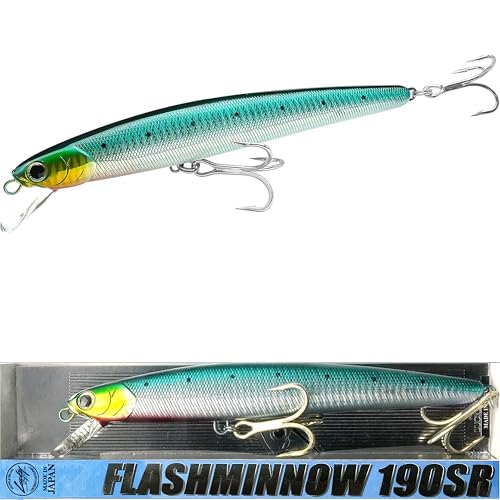
LUCKY CRAFT FlashMinnow 190SR Fishing Lures, 7-1/2" Floating Minnow Jerkbait, 2-3 ft Depth, Long Casting, Offshore Saltwater Fishing Gear for Halibut, 614 Pacific Sardine
Saltwater Fishing Lures Action: 7-1/2" floating minnow jerkbait runs 2-3 ft with tight flash and a twitch-pause cadence,…
As an affiliate, we earn on qualifying purchases.
As an affiliate, we earn on qualifying purchases.