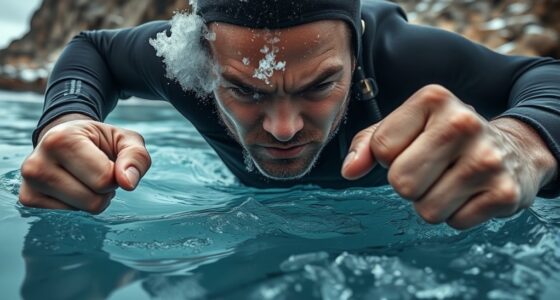

To improve your stroke efficiency in freestyle swimming, focus on refining your technique. Master a comfortable breathing rhythm, breathing every 2-3 strokes, while keeping your head low to minimize drag. Aim for your fingertips to enter the water first with a smooth, angled entry. Combine these elements for better timing and propulsion. Regular practice of these techniques will enhance your overall performance, making swimming more enjoyable. There’s more to discover that can take your skills to the next level.
Key Takeaways
- Focus on developing a consistent breathing rhythm, typically every 2-3 strokes, to enhance momentum and reduce fatigue.
- Keep your head low and close to the water when breathing to maintain streamline body position and minimize drag.
- Ensure your fingertips enter the water first during hand entry, which reduces resistance and promotes a smooth glide.
- Practice rhythmic breathing and precise hand entry together to improve coordination and overall stroke efficiency.
- Regularly incorporate drills that target both breathing technique and hand entry to reinforce muscle memory and boost confidence.
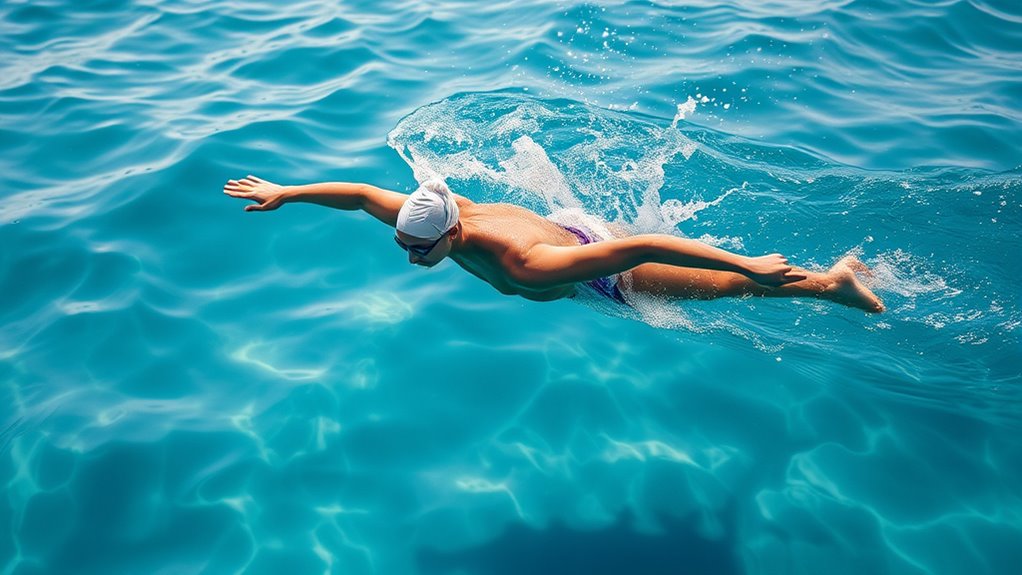
When you immerse yourself in freestyle swimming, mastering your technique can make all the difference in your performance. You might find that focusing on two critical aspects—your breathing rhythm and hand entry technique—can vastly improve your efficiency in the water. By honing these skills, you’ll not only swim faster but also conserve energy, allowing you to maintain your stamina for longer distances.
Let’s start with your breathing rhythm. It’s essential to develop a pattern that feels comfortable for you. Ideally, you want to breathe every two or three strokes, depending on your level of comfort and the distance you’re swimming. As you turn your head to breathe, practice keeping it low and close to the water’s surface. This minimizes drag and helps maintain your body alignment. If you lift your head too high, you disrupt your body position, which can slow you down. Focus on inhaling quickly and deeply, then exhaling underwater as you stroke. This rhythm creates a seamless flow, allowing you to keep your momentum without interrupting your stroke.
Develop a comfortable breathing rhythm to enhance your freestyle swimming technique and maintain your momentum in the water.
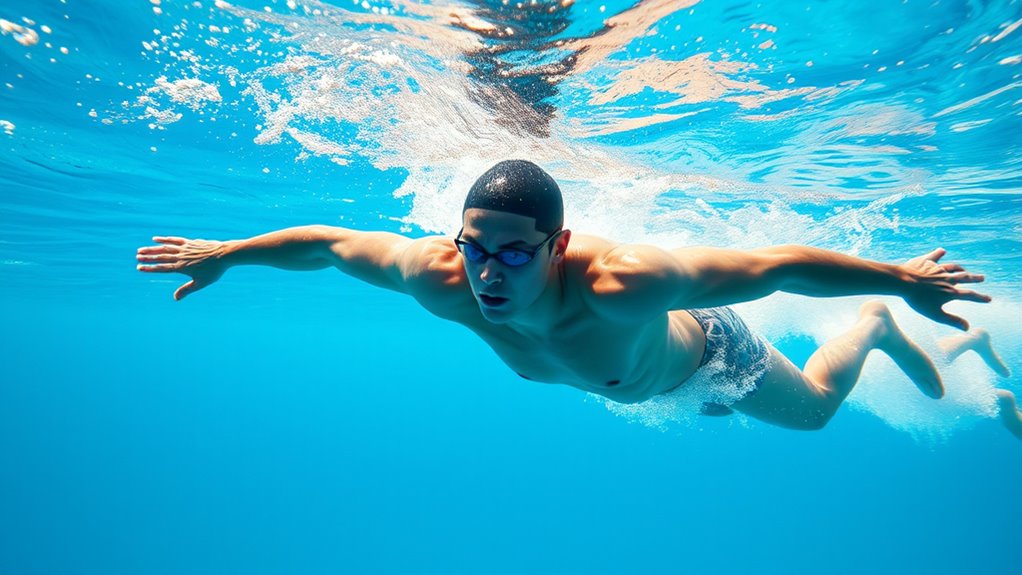
Now, let’s discuss the hand entry technique. Your hand should enter the water in a way that optimizes your stroke. Aim to have your fingertips enter first, followed by the rest of your hand. This angled entry reduces resistance and helps you glide smoothly into your stroke. Once your hand is in the water, extend it forward fully before beginning the catch phase. This ensures you’re maximizing your reach and engaging your core muscles effectively. A common mistake is to allow the hand to splash into the water; instead, aim for a quiet entry that sets the tone for an efficient stroke.
Combining a fluid breathing rhythm with an effective hand entry technique can elevate your freestyle swimming. As you practice, pay attention to how these elements interact; a rhythmic breath can improve your timing, while a precise hand entry can enhance your propulsion. Regular drills focusing on these aspects will help you develop muscle memory, making your technique more second nature.
Over time, you’ll notice that not only does your performance improve, but you’ll also feel more confident in the water. Embracing these techniques will lead to a more enjoyable swimming experience, whether you’re training for a competition or simply enjoying a leisurely swim. So immerse yourself, focus on your breathing and hand entry, and watch your freestyle technique flourish!
Frequently Asked Questions
How Often Should I Practice Freestyle Swimming for Improvement?
To improve your freestyle swimming, aim for at least three to four practice sessions a week. This training frequency helps you build muscle memory and enhances your technique. Consistency is key; even shorter, focused sessions can lead to significant progress. Make sure to incorporate drills that target your stroke form, breathing, and endurance. Over time, you’ll notice improvements in your efficiency and speed, making your practice more rewarding. Stay committed!
What Are Common Mistakes Beginners Make in Freestyle Swimming?
Common mistakes beginners make in freestyle swimming include poor breathing rhythm and incorrect hand entry technique. You might be holding your breath too long or gasping for air, disrupting your stroke. Additionally, if your hand enters the water too wide or too far in front, it can throw off your balance. Focus on a smooth, rhythmic breath and practice a clean, streamlined hand entry to enhance your overall efficiency in the water.
How Can I Prevent Shoulder Injuries While Swimming Freestyle?
You can dodge shoulder injuries like a pro by prioritizing shoulder mobility and sticking to solid warm-up routines. Picture your shoulders as rubber bands; if they’re stiff, they’ll snap! Before diving in, dedicate time to dynamic stretches and rotator cuff exercises. This prep keeps your muscles limber and ready for action. During your swim, focus on proper technique, and don’t forget to listen to your body—it’s your best coach!
What Equipment Can Help Enhance My Freestyle Swimming Technique?
To enhance your freestyle swimming technique, consider using training aids like paddles, fins, and pull buoys. These tools can improve your grip, propulsion, and body position in the water. Incorporating swim drills, such as catch-up drill or fingertip drag, will help you focus on your stroke mechanics. Regularly practicing with these aids and drills will boost your efficiency and overall performance in freestyle swimming, making your workouts more effective and enjoyable.
Is It Necessary to Take Swimming Lessons for Freestyle Improvement?
Taking swimming lessons for freestyle improvement isn’t strictly necessary, but it can be incredibly beneficial. A coach offers personalized feedback that can speed up your progress. You might find that self-assessment techniques help you identify areas for improvement, but nothing beats having an expert’s eye on your technique. With lessons, you’ll refine your stroke more effectively, ensuring you swim efficiently and confidently. Consider coaching if you’re serious about enhancing your skills.
Conclusion
By refining your freestyle swimming technique, you’ll glide through the water like a sleek dolphin, effortlessly cutting through waves. Remember, it’s all about efficiency—every stroke counts. Focus on your breathing, body position, and arm movements to open up your full potential. With practice, you’ll not only swim faster but also enjoy the journey in the pool. So, plunge in, keep honing your skills, and watch as your performance transforms into a beautiful dance with the water.