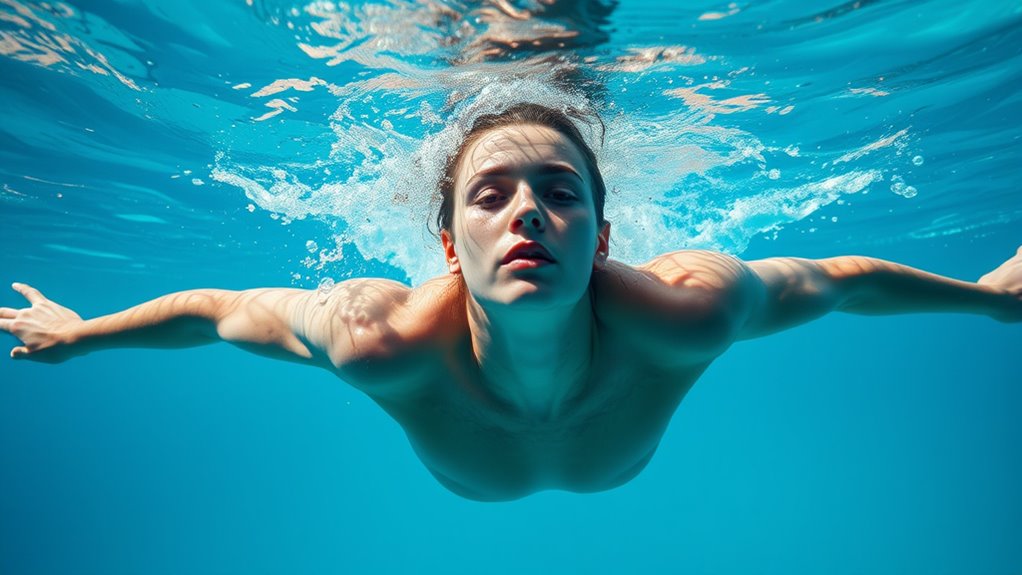

Mastering rhythmic breathing techniques is essential for improving your swimming performance. Coordinate your breath with your strokes, exhaling underwater to streamline your body and set up for efficient inhalation. Practice deep, full breaths instead of shallow ones, and maintain a neutral head position while breathing. This keeps your body aligned and reduces drag. Regular practice not only builds lung capacity but also enhances your overall comfort in the water. Discover more tips to refine your technique and boost your efficiency.
Key Takeaways
- Coordinate breathing with strokes by inhaling every 2 or 3 strokes to maintain a natural rhythm and avoid gasping for air.
- Exhale underwater to prepare for a smooth and efficient inhalation, keeping your body streamlined to reduce drag.
- Focus on deep, full breaths to fully oxygenate your muscles, enhancing endurance and performance.
- Maintain a neutral head position while breathing, turning your head just enough to avoid resistance and keep a streamlined form.
- Practice rhythmic breathing consistently to build lung capacity, improve comfort in water, and enhance overall swimming performance.
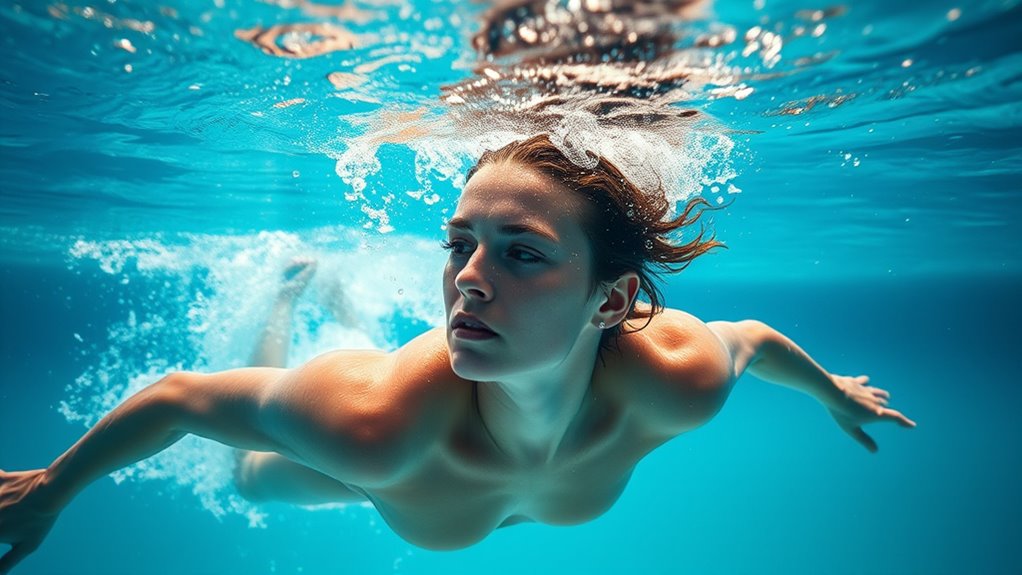
Breathing techniques are essential for swimmers looking to enhance their performance and efficiency in the water. Mastering breath control can considerably impact your speed and endurance, allowing you to swim longer distances with less fatigue. One of the most effective ways to improve your breath control is by developing rhythmic breathing patterns. By focusing on your inhalation techniques, you can create a smoother, more fluid stroke that maximizes your oxygen intake while minimizing disruption to your rhythm.
Mastering breath control through rhythmic patterns boosts speed and endurance, enabling swimmers to cover longer distances with ease.
When you swim, it’s fundamental to establish a consistent breathing pattern. This means coordinating your breath with your strokes. For instance, if you’re swimming freestyle, consider inhaling every two or three strokes. This allows your body to maintain a natural rhythm, ensuring you’re not gasping for air and disrupting your stroke. As you practice, pay attention to how your body moves through the water. When you exhale underwater, you’re not just releasing air; you’re also setting yourself up for a more efficient inhalation. This process helps keep your body streamlined and reduces drag.
Inhalation techniques play an essential role in your overall efficiency. Instead of taking shallow breaths, focus on taking deep, full breaths. This technique will help you fill your lungs completely, providing your muscles with the oxygen they need to perform at their best. To practice this, you can try breathing drills during your workouts. For example, swim a lap while breathing every three strokes, then alternate with breathing every five strokes. This variation helps you adapt to different breathing patterns and builds your endurance.
Don’t forget to keep your head in a neutral position while breathing. Tilting your head too far can cause your body to rotate and create unnecessary resistance. Instead, turn your head just enough to get your mouth above the water. This way, you can inhale without losing your streamlined position.
As you incorporate these rhythmic breathing patterns into your routine, you’ll likely notice improvements in both your speed and comfort in the water. The key is consistency—practice your breath control and inhalation techniques regularly, and you’ll soon find that your swimming becomes more efficient. With time and effort, you’ll develop the lung capacity and control needed to enhance your overall performance, making your time in the pool even more enjoyable. Additionally, engaging in mindfulness through unplugging can enhance your focus and connection with your breathing while swimming. So, immerse yourself, focus on your breathing, and watch your skills flourish!

Mares Puck 4 Wrist Dive Computer | Entry-Level Watch-Style One Button Control Underwater Scuba Diving Computer, Black/Aqua
CUSTOMIZABLE DIVE ALGORITHM - The Puck 4 diving computer features the Bühlmann ZH-L16C algorithm with adjustable gradient factors,...
As an affiliate, we earn on qualifying purchases.
Frequently Asked Questions
How Can I Improve My Lung Capacity for Swimming?
To improve your lung capacity for swimming, focus on lung exercises that enhance breath control. Incorporate diaphragmatic breathing into your routine, as it helps maximize oxygen intake. Try interval training, where you swim at high intensity followed by controlled breathing periods. Also, consider practicing pursed-lip breathing to strengthen your lungs. Regularly incorporating these techniques will boost your endurance and overall performance in the water, making each stroke feel easier.
What Are the Benefits of Bilateral Breathing?
Bilateral breathing offers several benefits. It helps you establish a balanced breathing rhythm, allowing for more effective air exchange on both sides of your body. This balance improves your stroke technique, keeps your head stable, and enhances your overall efficiency in the water. By practicing bilateral breathing, you’ll also develop better awareness of your surroundings, making you a more adaptable swimmer, especially during competitions or in open water settings.
How Does Breathing Affect My Swimming Speed?
Breathing directly affects your swimming speed by influencing your breathing control and oxygen efficiency. When you master your breathing patterns, you maintain a steady rhythm that helps you glide through the water more effortlessly. Efficient oxygen intake powers your muscles, allowing you to swim faster and longer. If you struggle with your breath, you might tire more quickly, slowing you down. Focus on your breathing, and you’ll see improvements in your speed.
Can Breathing Techniques Help With Anxiety in Swimming?
Yes, breathing techniques can definitely help with anxiety in swimming. By incorporating mindfulness exercises and relaxation techniques, you can calm your mind and focus on your breath. Practicing rhythmic breathing before and during your swim allows you to center yourself, reducing feelings of panic. When you concentrate on your breathing, it shifts your attention away from anxiety, enabling you to swim more confidently and enjoyably.
How Often Should I Practice Breathing Techniques Outside of Swimming?
You should practice breathing techniques daily, ideally for 10-15 minutes. This regular practice enhances your breathing awareness and builds mental focus, making it easier to integrate these techniques during your swim. Try different environments to see what works best for you—calm spaces for relaxation or more dynamic settings for challenge. Consistency is key; the more you practice, the more natural and effective your breathing will become in the water.

Suunto Zoop Novo Wrist Scuba Diving Computer, Black, Without USB
Operating modes: air, nitrox, gauge and freedom modes
As an affiliate, we earn on qualifying purchases.
Conclusion
Mastering rhythmic breathing patterns is like finding your rhythm in a dance; it enhances your performance and keeps you in sync with the water. By incorporating these techniques into your training, you’ll not only improve your endurance but also increase your comfort in the pool. So, take a deep breath, let the water embrace you, and trust that with practice, your breathing will flow as smoothly as your strokes. Keep swimming, and let every breath count!

Cressi Neon Watch Computers, Black/Blue
The Neon is an intuitive, reliable dive computer with a fancy style. It will become easily your best...
As an affiliate, we earn on qualifying purchases.
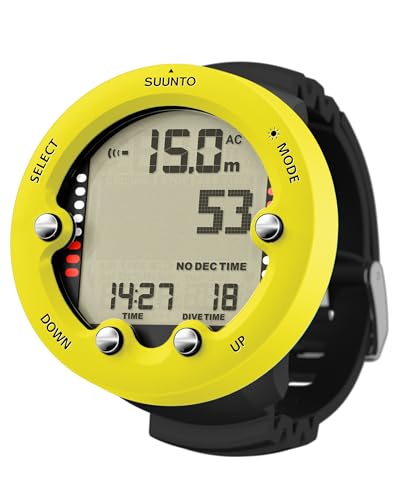
SUUNTO Zoop Novo Wrist Scuba Diving Computer, Lemon Yellow
Operating modes: air, nitrox, gauge and freedom modes
As an affiliate, we earn on qualifying purchases.